|
Welcome back to Dry Powder. I’m Bill Cohan, writing to you from my place upstate, but my thoughts are with all of our readers in Los Angeles during this scary time.
Tonight, the view from Wall Street on the media M&A landscape heading into Trump II—how the SpinCo phenomenon might shake out, the consumer trends that Zaz, Roberts, Iger, et al. are banking on, etcetera—now that the so-called dealmaker-in-chief is returning to the White House.
But first…
|
- Fubo’s “lucky” investors: Someone got really lucky with Fubo, according to one of my most trusted Wall Street sources. This person wrote to me implying that someone, or multiple someones, had a pretty good inkling that Disney would be buying the sports streamer out of the blue on Monday, and acted on that knowledge to great profit. Some 35 million Fubo shares traded all of last week, at prices between $1.20 and $1.50 a share. On Monday, though, after the announcement of the deal, some 680 million Fubo shares traded, at around $6 per share. On Tuesday, the stock traded as high as $6.45 a share. So, as an illustrative example: If someone bought some 2 million shares, or about 6 percent of the volume traded last week, at a cost of around $3 million, that stock would now be worth $13 million. Not bad work if you can get it.
My source also pointed out that unknown parties made a killing buying $2 Fubo January 17 calls, which had been trading at a low of around one penny each, on the theory that it was unlikely the stock would trade above $2 per share by January 17, since the shares had been trading at less than $2 since August. Well, someone bought those calls, and on Monday, with the stock trading above $6 per share for the first time in two years, those calls were suddenly worth $4 each. So, to once again put it in illustrative terms: If you bought, say, 1,000 calls for two cents each, that would have cost you $2,000 (each call contract is 100 shares, so 1,000 calls equals 100,000 shares, bought at two cents each is $2,000), and now those calls are worth something like $440,000, according to my trader friend. A pretty tasty return in a few days.
Just a coincidence? Dumb luck? Perhaps somebody knew something that the rest of the market didn’t and traded upon that information? Once upon a time, the S.E.C. would open an investigation, but that doesn't seem to happen much anymore…
|
|
|
|
Wall Street has caught M&A fever anticipating the incoming Trump
administration, but C.E.O.s may soon regret placing big bets on a scenario rife with what ifs…
|
|
|
|
Wall Street is gearing up for a big year in M&A. The dealmaker-in-chief is returning to the White House, regulations will supposedly be easing, the U.S. stock markets remain near all-time highs, interest rates seem to have stabilized along with inflation—and both, hopefully, are headed down, at least at the Federal Reserve level. One thing I’ve learned over the years is that once the Wall Street deal machine gets primed, there is no stopping it.
But who wins and who loses in all the dealmaking frenzy? Certainly among the winners are the bankers, who manage to haul away billions in fees, and the deal principals, who always figure out ways to get paid. Who gets left holding the bag? Often the shareholders of the companies being acquired or sold off. Did they sell out at too high a price, or too low? Should they hold on, or run for the exits?
|
|
|
|
A MESSAGE FROM OUR SPONSOR
|
|
|
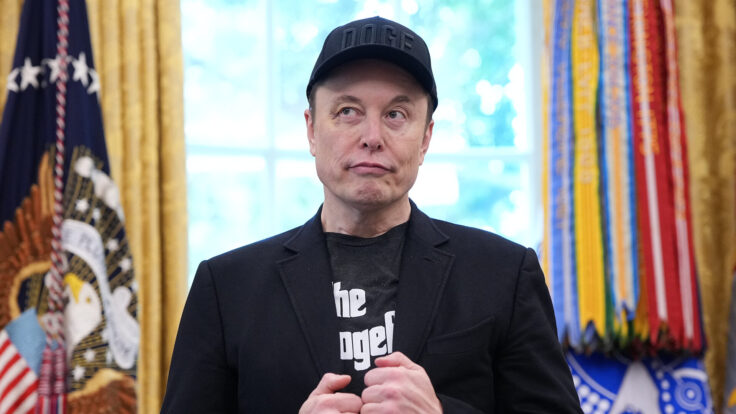
Some deals, of course, are easier to figure out than others. I don’t think you’ll find a single investor who’d complain about the $54.20 a share in cash they got from Elon Musk for Twitter. And, in a bizarre twist of fate, Musk wouldn’t either. He probably doesn’t care that he’s lost the $24 billion in equity that he invested, or that he’s paying $1.3 billion, or so, in annual interest payments to keep current on the $13 billion of Twitter bank debt. His net worth, now around $425 billion, has more than doubled since the deal closed in October 2022, and he’s now taken on yet another role as our shadow president, with growing transatlantic ambitions. (Does Larry Ellison care that the $1 billion he invested in Twitter is lost? Probably not. He’s now the world’s fourth-richest person, with a net worth of around $200 billion.)
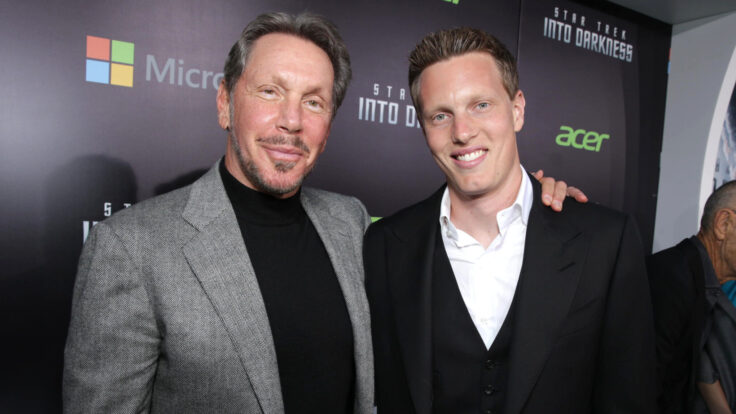
Meanwhile, should the non-Redstone shareholders in Paramount Global sell out to the new owners on a pro-rata basis, or stay put and hope for a better day under the leadership of David Ellison, Jeff Shell, and RedBird Capital’s Gerry Cardinale? That’s a much tougher call. Paramount Global could trade up into the $30-plus-per-share range, as its deal engineers are betting, once Skydance is combined with the Paramount studio, costs are taken out, and whatever the Ellisons have planned on the technology front is implemented. But the stock could just as easily trade down as up. (As per usual, this is not investment advice.)
There are a lot of what ifs. After all, even after using $1.5 billion of Ellison/RedBird cash to pay down Paramount Global’s debt, the combined company will still have around $14 billion of net debt. When you cut right through it, the Ellison/RedBird deal for Paramount Global is a sophisticated bet on the fate of a highly leveraged company. I’ve seen many leveraged recaps start off with excitement and promise only to fizzle out, with the shareholders who held on, hoping for the best, getting screwed. One dated study, from 1995, found that 31 percent of all leveraged recaps done between 1985 and 1988 came a cropper. (There haven’t been so many leveraged recaps since those days, given how poorly many of them performed.)
In any event, it’s clear that investors are still trying to figure out what to make of the new Paramount Global: Since the deal was struck some six months ago, the stock has been treading water, down around 4 percent, even as the S&P 500 has increased 7 percent in the same period. That’s not a vote of confidence.
|
|
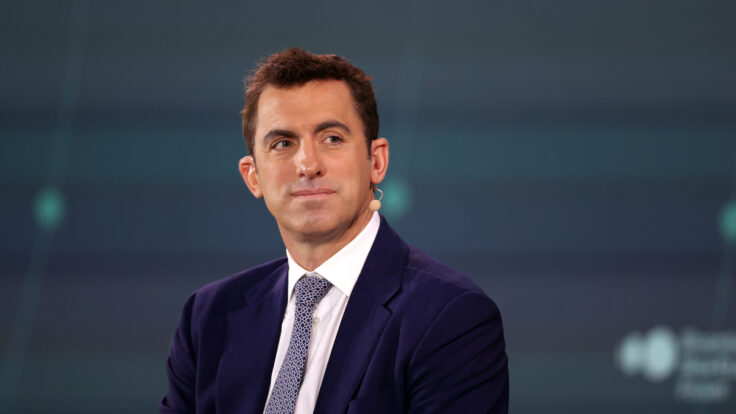
It’s no coincidence that our friend David Zaslav decided, just a few weeks after Comcast’s Brian Roberts announced that he was spinning off NBCU’s cable assets into a “well-capitalized SpinCo”—an announcement made after the election—to reorganize his Warner Bros. Discovery internally so that the company is positioned to do the same thing with its own linear assets. Rich Greenfield at LightShed Partners wrote on Monday that he doesn’t see why WBD needs to own the Food Network or HGTV, and that they “could find a better home inside NBCU’s SpinCo that would like to own cable networks they can build digital ecosystems around,” all amplifying Wall Street’s M&A arms race.
Rich added, “Could CNN be more valuable inside Paramount or as part of a CNN/CBS joint venture?” The reason for these moves, I’m thinking, involves Donald Trump, but not because he’s promising to reduce the regulatory rigor on Wall Street. Rather, because the chaos he sows is good for cable news—or at least it was during Trump I.
|
|
|
|
Chances are that Roberts and Zaz still remember Les Moonves’s quip that Trump’s brand of crazy “may not be good for America, but it’s damn good for CBS.” Indeed, like so many other C.E.O.s, Zaz, Roberts, Bob Iger, and the younger Ellison are betting their money bigtime on Trump. Not by parading down to Mar-a-Lago like Mark Zuckerberg, or donating to Trump’s inauguration like Tim Cook, or paying $40 million to license a documentary about Melania, like Jeff Bezos—although Iger still needs to explain his decision to cave to Trump, to the tune of $16 million, on the Stephanopoulos lawsuit—but in a more subtle way.
They’re hoping that the inevitable Trump follies will once again be good for business, and will thereby bolster the ratings of their downtrodden linear TV and cable networks. It’s a gamble, for sure. Obviously, if they’re right, and Trump is once again a boon for ratings, those spun-off cable businesses will perform better than anticipated, making the spin offs a success (at least for a while) and they will look very smart indeed and likely be rewarded by the markets. Unless, of course, investors wonder why they spun them off at all instead of keeping them, which would, of course, have the opposite effect.
There was a time, before the pandemic and during peak Trump I, when
NBCU was generating close to $9 billion in adjusted EBITDA per year. That made all of NBCU worth around $100 billion. Not bad, considering Comcast bought NBCU from GE for around $30 billion after the 2008 financial crisis.
However, according to Comcast’s public filings, NBCU generated only around $3 billion in “adjusted EBITDA” in 2023—down from $3.6 billion in 2022 and $5.1 billion in in 2021. (Loyal readers know well my taste for these adjustments, but I’ll save my fury for another day…) If the company generated substantially less than $3 billion of adjusted EBITDA in 2024, the narrative will be clear: The business is rapidly losing steam.
We don’t yet know what the income statement will look like for the cable businesses Comcast plans to spin off, but as the parentco has announced that it’s keeping NBC, Bravo, and Peacock, among other pieces, there’s little question that SpinCo’s 2024 adjusted EBITDA will be well below the $3 billion that all of NBCU generated in 2023. (For the first nine months of 2024, Comcast’s media division generated the same $2.8 billion that it did for the first nine months of 2023, bolstered I’m sure by the Olympics.)
The big question, then, is whether the crazy of Trump II will bring eyeballs back to MSNBC, CNN, and CNBC like it did during Trump I. If viewers return at the level they did before, that would bode well for the proposed Comcast SpinCo and the likely WBD spinco, at least during the first two years of Trump II, when the proposed spin-offs are likely to occur. After that, who knows? But if ratings recover significantly, the Wall Street hype machine will pump up the SpinCos, both as publicly traded companies on their own and
as potential “platform companies” for rolling up other fading cable assets. It might also give CBS and Paramount’s forlorn cable channels the same kind of boost that Moonves once boasted about by saying the quiet part out loud.
On the other hand, if Trump II doesn’t generate cable news viewership equivalent to Trump I—or if Trump’s proposed health secretary miraculously pushes through a ban on pharmaceutical ads—it could spell curtains for these spincos. (Can you imagine MSNBC without pharma ads?) Trump is certainly trying to do his part via his ongoing bromance with Elon, his nutty cabinet picks, his call to deport millions, his plans to impose tariffs and to buy Greenland and reclaim the Panama Canal.
And yet, as faithful readers of my partner Dylan Byers know by now, viewers have conspicuously tuned out this show. “When a sports team loses, its fans don’t hang around for the postgame show,” Steve Battaglio recently wrote in the Los Angeles Times. “The same goes for the tribal habits of cable news audiences.” Since the election, he reported, MSNBC’s ratings have fallen 46 percent compared to the first 10 months of 2024. CNN’s ratings have fallen 33 percent. Are people inured to Trump, and sick of his antics? Are they less concerned now that he’s term-limited to four years? Or have they simply moved on from cable news as a format for getting their information? As one former leading Democratic politician said to me over the holidays, “Let’s just all stay in our bubble until this whole thing passes.”
It certainly feels like there’s been a sea change, and the people who once watched MSNBC and CNN as a religious experience are now happy to tune out. And while the Trump show might momentarily preserve some of the value of liberal (or center-left) news networks, that value is indeed fleeting, as Zaz and Roberts ostensibly know well. This reality could spell trouble for the M&A prospects of these spincos, and everything Hollywood and Wall Street have riding on these deals. Many of us were put off by what Moonves said seven years ago about Trump and CBS. But he was right. Sequels, of course, rarely generate as much cash.
|
|
|
|
Join Emmy Award-winning journalist Peter Hamby, along with the team of expert journalists at Puck, as they let you in on the conversations insiders are having across the four corners of power in America: Wall Street, Washington, Silicon Valley, and Hollywood. Presented in partnership with Audacy, new episodes publish daily, Monday through Friday.
|
|
|
|
An insider-friendly tip sheet from Matthew Belloni, who spent 14 years in the trenches at The Hollywood Reporter and five before that as an entertainment lawyer. Subscribers also receive What I’m Hearing+, a companion email from Eriq Gardner focused on entertainment law, the streaming industry, and more.
|
|
|
Need help? Review our FAQ page or contact us for assistance. For brand partnerships, email ads@puck.news.
You received this email because you signed up to receive emails from Puck, or as part of your Puck account associated with . To stop receiving this newsletter and/or manage all your email preferences, click here.
|
|
Puck is published by Heat Media LLC. 107 Greenwich St, New York, NY 10006
|
|
|
|



_01JGYJG3KHR06STGDFW2VQKWZY.png "salesforce")