Hello and welcome back to Dry Powder.
Thanks for being a part of Puck, our new media company covering the intersection of Wall Street, Washington, Silicon Valley, and Hollywood. And thanks for reading Dry Powder. If you're enjoying these private emails, consider sharing the subscription link with a friend.
In today's column: Bill Ackman vs. Carl Icahn, Steve Tusa vs. Larry Culp, and how to invest like Warren Buffett if you aren't Mark Spitznagel.
SPONSORED BY 

The inside conversation on Wall Street about Pershing’s new investment thesis, the wisdom of Warren Buffett, and JPMorgan in the penalty box. The bloom is off the rose for Netflix, which has dropped some 40 percent in value ever since Wall Street decided that the former hyper-growth technology platform has become something decidedly less sexy: a maturing, cash-positive media company. As my partner Matt Belloni recently wrote, this is more than just a correction as part of the broader Nasdaq sell-off. Investors are afraid that more competition and weakening subscriber growth portends a harder, more costly path forward. So naturally my friend Bill Ackman, the hedge fund investor, has stepped forward to buy the dip.
Ackman’s thesis is simple: the Netflix stock is oversold. On Friday, January 21, Ackman’s firm, Pershing Square Capital Management, began accumulating more than 3.1 million shares—a position worth more than $1 billion. From a recent low of around $354 a share on January 24, the stock has rebounded to around $384 a share, potentially giving Ackman a profit of some $90 million already. (He has not disclosed the average purchase price on his 3.1 million shares.) In a letter to his investors, Ackman praised Netflix for its strong recurring revenue, “best-in-class” management team, formidable “pricing power,” and the possibility of “substantial margin expansion” over a growing—albeit somewhat less rapidly than desired—subscriber base.
It’s hard to argue with Ackman’s thesis. He wrote that he was pleased the market’s overreaction to the less-than-robust subscriber numbers in the last quarter gave him an opportunity to buy in at a 40 percent discount. “We are pleased to add Netflix to our portfolio,” Ackman wrote. “Many of our best investments have emerged when other investors whose time horizons are short term, discard great companies at prices that look extraordinarily attractive when one has a long-term horizon.”
In this regard, Ackman seems to be taking a page from his one-time nemesis, Carl Icahn, the billionaire investor who took the other side of Ackman’s Herbalife trade. Ackman was, for years, shorting the Herbalife stock, betting that it would collapse when customers, regulators and other investors figured it was nothing more than an elaborate multi-level marketing scheme. Icahn went long. But Icahn was right and Ackman was wrong, at least as far as the Herbalife stock was concerned. Ackman lost around $1 billion on his short, while Icahn made a bundle.
Icahn was also an early believer in Netflix. About a decade ago, after co-founder Reed Hastings decided to split the company up into two parts, a streaming service and a DVD rental business—remember those?—shareholders revolted, selling the stock wildly. Icahn perceived things differently. Like Ackman today, he saw that Hastings was a visionary thinker who foresaw that streaming video would become a phenomenon, and that Ted Sarandos, Hastings’ now co-C.E.O., was developing successful original content along with Netflix’s movie library. At that moment, House of Cards was on the immediate horizon. Icahn loaded up on the Netflix stock at around $60 a share and sold it years later for around $300 a share, making five times his money, simply by seeing something that others had missed. Anyone could have done it and made five times their money. Icahn did. That’s what billionaires do, I guess.
ADVERTISEMENT 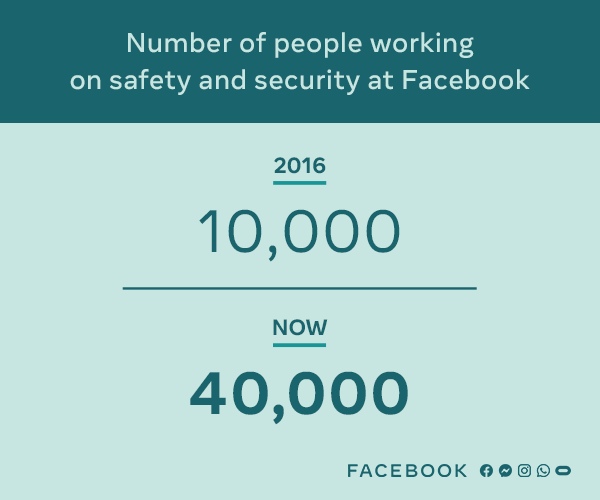
Facebook puts your safety and security front-and-center Since July, Facebook’s safety and security teams have taken action on:
But our work to stop bad actors is never done. Learn more about how we're working to help you connect safely.
JPMorgan in the Penalty Box?
Ever since Eliot Spitzer reached a landmark settlement with the big Wall Street banks, two decades ago, investment bankers are no longer supposed to be able to corral their research analysts to write favorable reports on the companies the bankers cover. In theory, there is now a wall separating the two, freeing up the analysts to come to their own conclusions about the prospects for the companies they cover without feeling the consequences in his or her wallet of writing a negative report about a potential banking client.
That system seems to be working, at least at JPMorgan Chase. But there have been repercussions. As I reported in December, Steve Tusa is the research analyst at JPMorgan Chase who covers GE, the once-revered conglomerate that C.E.O. Larry Culp is now busy unwinding. Tusa has been writing about GE since 2001, when Jeff Immelt succeeded Jack Welch as C.E.O., and is so highly respected among investors for his prescience about GE’s considerable troubles that he has earned the sobriquet, The Ax: the most authoritative voice in GE’s stock on Wall Street.
Tusa changed his tune about GE for the worse, starting in 2013 after a big earnings miss, and he remains negative in his outlook. He put a price target on the stock of $55 a share last year, when the stock was trading at around $100 a share. That’s a gutsy thing to do considering that GE has historically paid many millions of dollars in fees annually to Wall Street banks, with JPMorgan Chase often scooping up many of those millions, including for advising GE on the break-up and sale of GE Capital and for advising on the sale of NBCUniversal to Comcast.
To his considerable credit, Tusa has been right about GE’s prospects. What was once the world’s most valuable company, worth $600 billion, is now a shadow of its former greatness, with a market value of around $100 billion, and that’s before Culp carves it up into three pieces, starting in 2023 and 2024. As I wrote in December, Tusa’s November 29 research report was savage, criticizing Culp for selling a big GE healthcare business to his old company, Danaher, for about half of what Tusa believes it was worth, costing GE’s shareholders billions of lost value. He also criticized Culp for gorging on $120 million of restricted stock by resetting his pay package at the depths of the pandemic, in 2020. After GE reported its fourth-quarter 2021 performance a week ago, Tusa struck again, in a pointed way. On January 24, he criticized the company’s disclosure around its earnings as the “worst… least transparent set of numbers we have ever seen in the 20 years following the group, forcing high-level analysis for now” as opposed to the deep, detailed dive that Tusa has usually performed. Tusa added that GE’s revised earnings projections for 2022 and 2023 were suddenly “well below consensus” among Wall Street analysts and that his own earnings projections for the company remain even lower than the revised lower numbers. Ouch.
Inside JP Morgan, there is now a feeling that Culp may be essentially putting JPMorgan Chase in the penalty box and out of the flow of GE’s considerable investment banking business, much of which seems to be going to Paul Taubman at his eponymous boutique PJT Partners. “He’s ticked off and annoyed at Tusa,” said one JPMorgan Chase senior executive who is familiar with the attenuated situation, and described the relationship between Culp and Tusa as strained. “We don’t know what will happen in the future,” the executive continued. (A spokesperson for JPMorgan Chase declined to comment on the dispute, and a GE spokeswoman did not respond to my request for a comment.)
ADVERTISEMENT 
Buying Like Buffett
The Nasdaq has been a roller coaster ever since the Fed announced its continued intention to begin tapering, most recently snapping a 3-week losing streak with a huge rally on Friday. As I have been writing about for years, small investors, like me and you (well, some of you), are at a severe disadvantage at times like these, when it’s almost a certainty that we are due for a serious market correction, for both stocks and bonds, after more than a decade of increases, bringing stocks to by far their highest valuations ever and interest rates to their lowest levels ever (and bond prices conversely to their highest levels).
What do you do, I’ve often wondered, when you know in your bones that a market correction is looming, or already here, but you have a portfolio filled with years of big gains? You can sell everything, of course, and then pay around a 25 percent capital gains tax on your proceeds. But that’s an immediate concession that you believe the market will fall at least 25 percent, since selling your stocks and paying the tax will leave you 25 percent poorer. You can short stocks, I guess, or an index (if you can figure out how). But then you are taking on the considerable risk that your losses are potentially unlimited while your upside is capped. Not for nothing did John Maynard Keynes say back in the 1930s that “markets can stay irrational longer than you can stay solvent.”
Hedge fund managers, private equity moguls and managers of institutional money can take refuge in credit default swaps or by signing up with Universa Investments, Mark Spitznagel’s uber-successful hedge fund that does fabulously well when the financial markets tank. But small investors can’t really buy credit default swaps—premiums are too large, and it’s difficult to imagine a counterparty selling CDS to a bunch of small investors (although that’s an idea)—and Spitznagel hasn’t opened his fund to small investors, although I’ve tried unsuccessfully to convince him to do so.
So what are regular investors to do, you ask? Last summer, I gave a talk at the delightful Sun Valley Writers Conference, in Idaho, about the dangers of the Federal Reserve’s Quantitative Easing policies—now almost starting to be unwound after some 13 years—and how those policies had driven bond and stock prices to absurdly high levels. And that it would not end well because it never ends well when people take absurd risks without properly being compensated for those risks. (The talk is available online.) An audience member asked me what I would recommend doing when you know a correction is coming and you aren’t able to buy protection or invest in a hedge fund that provides protection. My answer then was the same one I offer now: Unless you believe the stock market is going to collapse more than 25 percent—the amount you would have to pay in capital gains taxes—I would sit tight, maybe even use this as a buying opportunity as Bill Ackman did with Netflix and his hero, Warren Buffett, likes to do at times likes these. (So far in 2022, the S&P 500 is down 7.6 percent year-to-date and the Nasdaq is down 13 percent.)
People are funny. If they covet, say, a house that suddenly becomes 25 percent cheaper, or more, as they did after the 2008 financial crisis, people don’t say, “Oh, I’m not interested anymore in that house and won’t be until the price goes back up 25 percent.” No, they thank their lucky stars they can buy their dream home for 25 percent less and snap it up. But when it comes to stocks, the reaction seems to be different. As long as stock prices are high and going higher, people get excited and think nothing about paying those high prices. FOMO. YOLO, ya know. Instead, they should celebrate the market correction as the chance to buy great companies on the cheap. If Netflix’s shareholders give you the chance to buy the stock at a 40 percent discount, it seems to me that that’s a rare opportunity to buy, not a signal to sell.
That's all for now. I'll be back in your inbox on Wednesday with more Dry Powder.
Thanks, Bill
FOUR STORIES WE'RE TALKING ABOUT 
Netflix execs are verklempt. But could a lower valuation return some competitive normalcy to the rest of the industry? MATTHEW BELLONI 
A conversation with Fiona Hill about the Russia-Ukraine crisis, Putin's next move, and where the White House goes from here. JULIA IOFFE 
Ari Emanuel has now negotiated a fifth hour for Joe & Mika, and helped Stephanie Ruhle take over for BriWi. What's next? DYLAN BYERS 
In media, the new trend is the flight to scarcity. And the subscription reset impacting Netflix will soon descend on publishers, too. BRIAN MORRISSEY 
You received this message because you signed up to receive emails from Puck.
Was this email forwarded to you?
Sent to {{customer.email}}
Puck is published by Heat Media LLC.
For support, just reply to this e-mail. For brand partnerships, email ads@puck.news |


SHARE