Happy Sunday.
Welcome back to Dry Powder. Today, my thoughts on Katie Haun's new crypto venture fund, the next Bill Ackman, and the mystery of whatever transpired this week between Warren Buffett and Goldman Sachs.
Thanks for reading, Bill
The biggest risk-takers on Wall Street these days are looking west, to crypto funds on Sand Hill Road, or east, to the mother of all fire sales in Moscow. Plus: What I’m hearing about Buffett’s $27 million Goldman Sachs snub. Katie Haun, the formidable former federal prosecutor turned Andreessen Horowitz crypto zealot, just raised a $1.5 billion fund to invest in early stage crypto and Web3 startups—a massive bet on a still-unproven sector (at least by most people’s standards). Web3 may be beloved by venture capitalists but it remains largely untested by consumers and regulators. But Haun’s investing and fundraising success is enough to make some crypto skeptics reconsider their opposition to the phenomenon or at least to test their theses once more. Many people are wondering whether the new games, NFTs, marketplaces and other platforms built on blockchain technology and digital tokens will become the eventual successors to the likes of Facebook and Google. Others wonder whether the narrative surrounding Web3 has shifted from optimistic to overhyped.
For what it’s worth, I’ve gotten to know Katie decently well over the past six months or so. She is whip smart, has an unbelievable resume—Stanford Law School, Supreme Court clerk, imposing federal prosecutor—and has made the unlikely leap from the U.S. Attorney’s office in the Northern District of California to Sand Hill Road, focused on crypto, first at a16z and now at her own, $1.5 billion venture-capital fund, Haun Ventures. I would not bet against Katie Haun. Her track record at a16z, including investing in Open Sea and Coinbase, could well make her one of the most successful early seed-capital investors in recent memory, which helps explain why the “smart money” has flocked to Haun Ventures.
I think she raised that $1.5 billion fund in two months or so. Very impressive. On the other hand, whether Web3 becomes the successor to the likes of Google and Facebook remains to be seen. Some days I agree with Bill Gates, who told me recently for my upcoming documentary, Finding Satoshi, that Bitcoin and other cryptocurrencies are just a way for investors to speculate—something he noted people have done for centuries. It’s just another mania, Gates said, and for some people that will be OK and end well; for others, of course, that will end badly depending on when they got in and which technologies or coins they invested in. Either way, speculation and getting caught up in manias is part of human nature.
Other days, I think Bitcoin and Ethereum and Web3 will be the most liberating, democratizing and evolutionary event of our lifetimes and should be taken incredibly seriously by every living human being on the planet. To get a sense of how convincing the crypto zealots can be, take a gander at Michael Saylor’s 80-minute, December 2021 interview with Tucker Carlson—yes, that Tucker Carlson, who has the good sense just to shut up and let Saylor talk. Saylor, of course, is the C.E.O. of Microstrategy, a publicly traded enterprise software company with a market value of $5.3 billion. Saylor has invested his company’s cash in Bitcoin and then borrowed billions more money and invested the vast majority of the proceeds into Bitcoin. Microstrategy’s Bitcoin stash is worth $5.5 billion, or $200 million more than Saylor’s company. Go figure.
Catching the Falling Knife
Trading on Russia’s stock exchange has partially resumed, with plenty of restrictions and massive risks for gutsy investors. Indeed, an emerging markets hedge fund team at BlackRock had its worst trading loss ever trying to catch the falling knife. This misadventure has reminded me of some past historical examples of financiers who have risked it all on distressed securities or defaulting emerging markets.
I have two favorite stories. The first goes back to the early 1990s and my days at Lazard. After a few months of sitting around doing nothing in 1989—for the first few months at Lazard, nobody even knew I was there—I got staffed on the restructuring of Revco Drug Stores, which had been one of the biggest early leveraged buyouts, sponsored by the L.B.O. group at Salomon Brothers. Salomon overpaid for the company and overleveraged it. By 1989, Revco found itself in bankruptcy.
Lazard was hired to represent the “debtor,” as Revco was then known, in the context of the bankruptcy proceeding. I got put on the deal because the associate who was originally staffed on it had the temerity to take a vacation. The senior bankers on the deal used his vacation as the moment to kick him off the deal team and replace him with yours truly.
I knew nothing about bankruptcy, of course. But over the next two-plus years, after regular trips to Twinsburg, Ohio, where Revco was based, my Lazard colleagues and I had managed to divvy up the Revco carcass among the aggrieved creditors. The plan or reorganization—as the official divvying up of the estate is known in bankruptcy court—called for some senior creditors to get cash and new debt and the junior creditors to get new Revco stock that we valued at $7.47 a share, based on my careful analysis.
Naturally, the junior creditors didn’t particularly want the stock of the new Revco; after two-plus years of waiting, they wanted cash and as much of it as they could possibly get. That’s when the Chicago billionaire Sam Zell, known on Wall Street as the “Grave Dancer,” came along and offered to pay $7.47 in cash to any creditor who would sell him his or her stock in the reorganized Revco. Zell was a believer in Revco. He and his colleagues at a Zell-affiliated company, who had been advising the junior creditors, saw value where their clients didn’t and Zell decided to swoop in. That’s how he got control of the company, in 1992, out of bankruptcy, with a much reduced debt load.
It was an incredibly clever maneuver that few before him had ever considered. Zell spent $250 million getting control of Revco. Three years later, in 1995, he sold Revco to Rite Aid and pocketed some $364 million for his remaining 20 percent of the company, a fortune back in those days. According to Forbes, between 1992, when he bought the company, and 1995 when he sold the company, Zell “quadrupled” his equity investment. Talk about catching a falling knife.
Then there is Bill Ackman’s $27 million investment in a bunch of credit default swaps at the outbreak of the pandemic in a three-week period in February and March 2020. I’ve written extensively about Ackman’s trade, which I described in September 2020 as the “greatest trade of all time,” and it is, if you take into account the time value of money, an important concept in finance.
Ackman’s bet essentially had two parts: He first figured that bond and stock investors would freak out in March 2020, as the extent of the economic impact of the pandemic became more widely known and appreciated. His second bet was that the Federal Reserve would ride to the rescue and bail out the financial markets, as it did in the 2008 financial crisis. Ackman was right on both accounts. In the course of a couple of weeks, the yield on the average junk bond, trading around 5 percent at the end of February 2020, exploded to 11.5 percent a few weeks later. Investors were freaking out, just as Ackman had bet they would. The value of his credit default swaps, for which he had paid a premium of $27 million, exploded to be worth $2.6 billion.
Ackman then sold the credit default swaps and plowed much of his winnings into his portfolio of existing stocks and turned bullish, after a huge bearish bet. He figured that the Federal Reserve would once again bail out the financial system. Once again, he was right. In short order, both the stock and bond markets recovered, rapidly and somewhat unbelievably, and Ackman’s stock portfolio increased by another $1 billion. In roughly three weeks' time, Ackman had turned a $27 million wager into $3.6 billion, one of the greatest examples of financial alchemy ever in such a short amount of time.
Anyone could have done it, I suppose, if they had had the insight that Ackman had. But as far as I can figure only Ackman did. His personal take? Who knows for sure, but 20 percent of $3.6 billion is roughly $720 million. Not bad for three weeks of work. And he didn’t do much to make the money other than to catch a falling knife.
Will investors take similar risks, and reap commensurate rewards, in Russia? Some will, I’m sure, or already have, even if the geopolitical dangers (and reputational risks) are far higher. Russia, like Revco, still has plenty of value—primarily its vast oil reserves and natural resources—if you know where to look. Is the ruble really worth a penny or less in the long run? Are interest rates in Russia going to remain at 20 percent forever? Both seem unlikely. But who has the cajones to make such a wager at that moment? After the Cold War, Russia finally gained access to international capital markets. Now it’s cut off from the global financial system, leaving China to buy up its most distressed assets or other hedge fund investors whose names we don’t yet know. Perhaps the next Bill Ackman is in Beijing or Shanghai, hoping his or her longshot bet on Russia will pay off.
A Warren Buffett Mystery
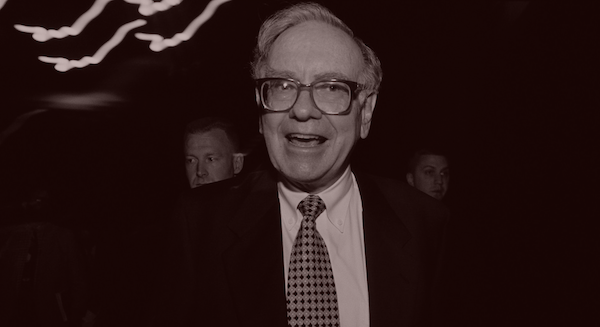
In a $11.6 billion, all-cash acquisition of Alleghany this week, Warren Buffett cut the price that Berkshire would pay for the insurance company by nearly $2 a share, or $27 million, specifically to avoid covering the investment banking fee that Alleghany paid to Goldman Sachs, its longtime banker and adviser on the deal. If it weren’t explicitly laid out on page three of the Alleghany proxy statement, I never would have believed this could be true. This is bizarre on any number of levels.
First, it’s not as if Goldman is not getting paid. It will still collect its $27 million fee for the work it did for Alleghany—you know, the usual investment banking jujitsu, advising on the deal, issuing a fairness opinion, and so on. But Buffett’s decision means that Goldman’s $27 million fee will effectively be paid by Alleghany’s shareholders, who instead of getting $850 a share in cash, will get $848.02, or $1.98 per share in cash less than they would otherwise have received.
What’s also bizarre is that this information was contained in the proxy, albeit in one simple reference and never repeated, leaving Wall Street to speculate as to what happened and why. If Alleghany’s proxy had just stated, without further explanation, that its shareholders were getting $848.02 in cash, or about $11.6 billion, then the world would be none the wiser for it. Yes, it would look strange that Buffett and Alleghany had negotiated an odd number, a very odd number, but that happens more than you think, as both sides give up more than they would like to give up to get a deal done. After all, in these situations pennies per share can often mean millions of dollars.
Why would Alleghany point out why its shareholders weren’t getting $850 per share? It’s so strange, especially since in the context of an $11.6 billion deal, a fee of $27 million is chump change, or 23 basis points, an absurdly low M&A fee in a deal of this size. Maybe Buffett thought that his all-cash offer of $850 per share, a premium of 25 percent above the closing price of Alleghany stock on the day before he announced his offer, was “fair” on its face for Alleghany shareholders and didn’t require Goldman’s “fairness opinion” to ratify that view. That seems unlikely, though. Buffett knows better. He knows that Alleghany would have a fiduciary responsibility to its shareholders to get a fairness opinion. Goldman, as Alleghany’s “longtime banker,” according to Barron’s, would have been the likely choice for that assignment.
What makes this even stranger is that Buffett and Goldman have a great and longstanding investment banking relationship, too. Officially, Buffett may not like investment bankers very much. But occasionally he has found a few that were useful to him, principally Byron Trott, a longtime Goldman banker who was once described as “Warren Buffett’s most beloved banker.” It was Trott’s idea, in 2008, for Buffett to invest $5 billion, in the form of a preferred stock, into Goldman at the height of the financial crisis. When Trott left Goldman, in 2009, to set up his own advisory and investment firm, he got a big boost from Buffett.
In September 2008, when GE was having serious financial problems, Trott, then still at Goldman, introduced Buffett to Jeff Immelt, the GE C.E.O. Trott helped arrange for Buffett to invest $3 billion of new preferred equity into GE on similar terms to how Buffett had, a week or so earlier, invested $5 billion in Goldman. Based on the Buffett investment, Goldman raised another $12 billion in equity for GE from the public markets and other institutional investors. (It was a deal led by David Solomon, now the firm’s C.E.O.) For that $12 billion deal, Goldman and the other underwriters split fees of $182 million.
So it seems likely that Solomon and Buffett have the sort of mutual trust that emanates from having made money together. And Buffett hasn’t been shy over the years in praising Goldman Sachs, for good reason. Buffett made some $3.1 billion on his 2008 investment in Goldman. That $3.1 billion can cover many investment banking sins.
Of course, Buffett, now 91, can do whatever he likes, including potentially forcing the company he’s acquiring to include an annoying deal point in a proxy statement. Whether Goldman is pissed remains to be seen. (A spokesman for the bank didn’t respond to a request for comment. But it’s hard to imagine anyone at Goldman would do anything to run the risk of souring the relationship, at least publicly.) Alleghany sold itself to Buffett without an auction—a typical Buffett tactic—but there is a 25-day “go-shop” provision that allows the company to try to find a higher offer than Buffett’s without paying Buffett a break-up fee.
Buffett’s deals rarely get topped. But, surprisingly, the Alleghany stock closed Friday at $860 per share, some 1.4 percent above Buffett’s $848.02 cash offer, suggesting that the market is hoping for a higher price from another buyer. (It won’t be Buffett and may not happen—causing those people who bought the Alleghany stock above Buffett’s offer to get burned.)
I know C.E.O.s don’t like paying investment bankers. But this stands out as a truly bizarre situation. I would love to know what the catalyst for this was, Warren. You know how to reach me.
FOUR STORIES WE'RE TALKING ABOUT 
If Apple wins the top prize for CODA, it will have achieved in two years what Amazon and Netflix couldn’t accomplish in a decade. MATTHEW BELLONI 
The governor’s relative silence on Russia and Ukraine may appeal in Florida, but it could also be the first folly of his ’24 candidacy. TINA NGUYEN 
With the Warner-Discovery merger closing on April 11, the executive ranks are rife with speculation over Zaslav's rumored org chart. DYLAN BYERS 
Outgoing C.E.O.s have a habit of hanging around. But Chapek needs to forget about Iger, execute his plan, and let Disney succeed. WILLIAM D. COHAN 
You received this message because you signed up to receive emails from Puck.
Was this email forwarded to you?
Sent to {{customer.email}}
Puck is published by Heat Media LLC.
For support, just reply to this e-mail. For brand partnerships, email ads@puck.news |


SHARE