Welcome back to Dry Powder. I’m Bill Cohan. Like me, you’re
probably wondering what comes next now that David Ellison’s $111 billion, $31-per-share deal for Warner Bros. Discovery is complete, and David Zaslav is some $800 million richer, thanks to his virtuoso M&A performance. While Zaz takes a victory lap, Ellison faces the hard task of transforming the combined ParaBros into a credible Netflix rival while extracting $6 billion in “synergies,” likely meaning thousands of layoffs. I’ve had a few days to dig into the
deal, and below I’ll get into the challenges facing the Ellisons—such as starting out with a daunting 6.6x debt-to-EBITDA ratio—and touch on the potential regulatory scrutiny from a couple state attorneys general.
Also mentioned in this issue: Leon Black, Marc Rowan, Susan Estrich, Dennis Cinelli, Larry Ellison, Gunnar Wiedenfels, Rob Bonta, Phil
Weiser, and many more…
But first… |
- Apollo’s
Leon–Epstein drama, cont’d: It’s been a bit of a seesaw week for Apollo Global Management and Leon Black, its co-founder and largest shareholder, who has operated in exile for the past few years following his resignation from the firm due to some Epstein-adjacent and personal complexifiers. On the one hand, Apollo is one of the three underwriters of the $54 billion credit facility backing the $111 billion Paramount Skydance–Warner Bros. Discovery deal that
I’ve been covering fervently for months. So that will probably be a ka-ching of sorts. But alas, shareholders have filed a class action against Apollo, Leon, and C.E.O. Marc Rowan in a Manhattan court, alleging that the firm defrauded them for nearly five years over its alleged business dealings with Epstein.
The recent batch of Epstein emails reveals that the late pedophile repeatedly tried to get Apollo executives involved in his deals, though nothing appears
to have come of his efforts. The shareholders also claim that Apollo’s repeated denials about doing business with Epstein were untrue, and that the stock declined following the release of the latest tranche of emails—wiping away $12 billion of market cap. (A spokesman for Apollo declined to comment.)
Marc offered a few bons mots about his involvement, or lack thereof, with Epstein during a recent appearance on Bloomberg. “Whether through good judgment or good fortune, this is not
someone I built a personal or business relationship with,” he said. “If a relationship is one meeting over 20 years and a couple of unreturned emails, then that’s a relationship. But other than that, he was Leon’s tax advisor—we ran a partnership, not a company, and back then, Leon’s tax position was relevant to my tax position. Other than that, I’m very sorry and didn’t see what Jeff was doing. I didn’t like him for my own reasons. He wasted my time, and now even from the grave, he’s wasting my
time.” - More Leon-related litigation…: Meanwhile, Wigdor LLP, the plaintiff law firm that has long been Leon’s nemesis, just filed a countersuit against him in New York state court. The suit accuses Leon of filing “frivolous and malicious lawsuits” against the firm to intimidate clients who attempt to hold him accountable for his alleged misbehavior. In other words, Wigdor is suing Leon for suing them, claiming his lawsuits have impeded their business.
Got that? As I’ve previously written, Leon sued Wigdor for “malicious prosecution” over what his attorney Susan Estrich has called the firm’s “irrational vendetta against him.” (The case was dismissed in March 2025. At the time Estrich said they planned to appeal, but it’s not clear whether they
have.)
Wigdor seems particularly peeved that Leon has brought suits against the firm for representing clients who have (so far, unsuccessfully) sued him. The complaint reiterates the allegations that Wigdor and its clients have made against Leon over the years, including by his onetime mistress Guzel Ganieva, with whom Leon acknowledged a consensual affair;
Cheri Pierson, who accused Black of raping her in Epstein’s Manhattan townhouse; and a woman identified as “Jane Doe,” who alleged Epstein passed her along to Black for sexual favors. Leon has vehemently denied all the accusations and said he never met Pierson or Jane Doe. (Ganieva’s suit was dismissed; the Pierson lawsuit was dismissed/withdrawn with prejudice by Wigdor; and Wigdor no longer represents Jane Doe, who is now representing herself.)
“This lawsuit is another bogus
attempt by Wigdor to attack Mr. Black under false pretenses,” Estrich said in a statement. “Wigdor has abused the legal system, manipulated the media, and they are desperate to avoid being held accountable for their own failings.” In response, Raymond Audain, Wigdor’s attorney at Giskan Solotaroff & Anderson, said in a statement, “This case is about whether wealthy individuals can
weaponize the justice system to silence not just their accusers, but also the attorneys who represent them. While too many foundational American institutions have been co-opted and corrupted by billionaires, our courts have, thankfully, remained guarantors of equal justice. Retaliating against lawyers for representing survivors subverts not just the principle of equality under the law, but also the American legal system.”
For those who want even more Leon, he will be testifying on May 13
before the House Committee on Oversight and Government Reform about his knowledge of all things Epstein and Ghislaine Maxwell, and what the committee calls the “mismanagement of the federal government’s investigation.” Said a spokesman for Leon about the May hearing: “Mr. Black paid Epstein for tax and estate planning work and he had no awareness of Epstein’s criminal activity. He looks forward to answering the committee’s questions, providing additional clarity and furthering
their work.”
|
And now, on to the Ellisons… |
|
|
On an investor call Monday, Ellison promised that ParaBros would generate $18 billion in
EBITDA in 2026—including at least $6 billion in dreaded “synergies.” But good luck growing revenue while cutting the combined company to the bone. |
|
|
Now the hard work truly begins for David Ellison, whose $111 billion, $31-per-share
deal for Warner Bros. Discovery—struck at nearly a 5x multiple on the company’s predeal stock price—will pocket C.E.O. David Zaslav some $800 million in proceeds, a reward for running one of the greatest M&A processes in recent history. Ellison has already promised at least $6 billion in synergies, widely understood to mean thousands of layoffs across the combined company, as he vows to transform ParaBros into a veritable Netflix rival.
Only a year ago,
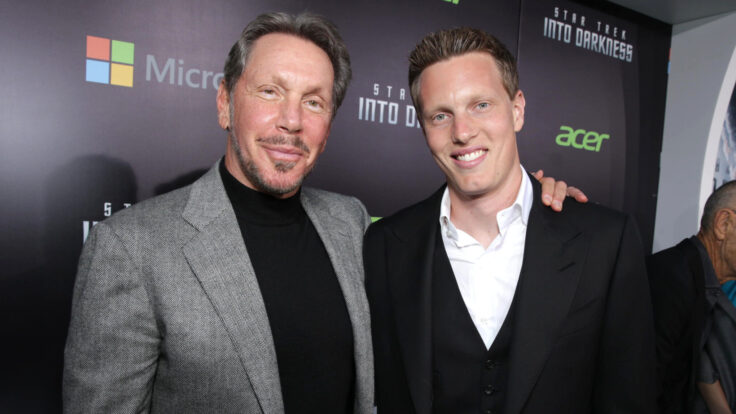
Ellison was just the 42-year-old nepo baby of one of the world’s richest men, overseeing a single small movie studio. Now, he and his father will control one of the largest media and entertainment conglomerates on the planet. On Monday, during a conference call with Wall Street analysts, Ellison laid out his ambitious plan for the company—including how it intends to pay down its shocking $79 billion of debt, including $54 billion of new debt commitments from Apollo, Bank of America, and
Citigroup. He also announced that his father, Larry, along with RedBird Capital, had committed to ponying up $47 billion of equity—one of the largest equity checks ever written. (It’s unclear whether the three Middle Eastern sovereign wealth funds that originally pledged $26 billion of equity are still involved. They are no longer defined as investors in the signed merger agreement.)
Ellison spoke in the high-minded language of a freshly minted deal champ. “This is not
about consolidation,” he insisted. “It’s about reinventing the business. We want to expand our reach and enhance our ability to create the world’s most compelling stories and experiences. And we’re incredibly excited about this transaction, and it will accelerate that ambition.” According to Dennis Cinelli, PSKY’s newly appointed chief financial officer, the combined ParaBros will generate about $69 billion in pro forma revenue in 2026, as well as $18 billion in EBITDA—inclusive
of those $6 billion-“plus” of synergies.
On the call, the Paramount Skydance team offered some clues about where these synergies might come from: “optimizing the combined real estate footprint,” “corporate overhead,” marketing “efficiencies,” migrating to a “single enterprise resource planning” system, etcetera. There was no specific mention of potential cost cuts from combining CBS News and CNN, as many are nervously anticipating, or from merging HBO Max and Paramount+, as Ellison has
ordained. But the bigger question, for me, comes down to whether ParaBros can actually generate $12 billion in EBITDA this year, exclusive of the hoped-for cost savings.
For the past two years, WBD has generated EBITDA of $8.7 billion, while PSKY generated just under $3 billion in 2025. In its letter to shareholders last month, PSKY predicted it would generate $3.8 billion in EBITDA in 2026—an increase of 27 percent. Can the PSKY crew achieve that? It’s too early to say, but the stakes
are high, especially given the highly leveraged capital structure of the combined entity. (Usual disclosure: Through a recent transaction, Zaslav is a de minimis investor in Puck; RedBird Capital, the Ellisons’ partner in PSKY, is a minority shareholder.) |
As Netflix co-C.E.O. Ted Sarandos has been fond of saying, the PSKY–WBD deal is one of the
largest leveraged buyouts on record. With $79 billion of debt and $12 billion of EBITDA, the leverage ratio is 6.6x right out of the gate. Fitch has already downgraded PSKY’s long-term debt rating to junk, and S&P Global has placed all of PSKY’s debt on credit watch, with negative implications. Not surprisingly, Ellison & Co. are promising a quick paydown of debt, although members of the executive team said on the analyst call that the company has no plans to sell any of the PSKY or WBD assets.
David Ellison indicated that PSKY–WBD would reach a debt-to-EBITDA ratio of 3x within three years of closing the deal, with investment-grade credit rating “metrics” by then. We’ll see.
Zaz’s reign atop WBD has received plenty of criticism, but he did ably pay down a big chunk of the $55 billion in debt he took on when he bought WarnerMedia from AT&T. Yes, he probably shouldn’t have agreed to that debt obligation, but he did, and his board rewarded him and C.F.O. Gunnar
Wiedenfels handsomely for getting the company’s finances under control. At the time of the sale, WBD’s net debt was around $30 billion, with a leverage ratio of 3.4x. Obviously, PSKY is starting with both a higher leverage ratio and more debt. The pressure on Ellison and Cinelli to achieve those $6 billion in synergies, and to generate the promised EBITDA, will be enormous. Thank goodness for Larry’s deep pockets. |
You may have noticed that in the days immediately surrounding February 27, when the merger agreement was
signed, PSKY stock rose by around one-third—before moving downward on Tuesday as markets recoiled from the news coming out of Iran (before moving back up again today). I was wondering why the PSKY stock moved up so smartly. Usually, an acquirer’s stock wouldn’t experience that kind of jump, especially after agreeing to increase its bid by 63 percent over the course of a sale process and larding the combined company with $79 billion in debt.
Looking over PSKY’s various S.E.C.
filings, I may have found the answer. It turns out that, for their $47 billion, Larry Ellison and RedBird Capital are purchasing new Class B PSKY shares at a price of $16.02 per share—a premium of some 59 percent above where the stock was trading a day or so before the deal was cut. That’s quite a vote of confidence in the PSKY business plan, and no wonder the stock moved up once that information began to leak out. If Larry is willing to pay $16 a share, maybe mere mortals should too—not that
this is investment advice.
On the analyst call, PSKY announced that a newly formed independent committee of its board of directors, with its own legal and financial advisors, had come up with the price of $16.02 at which Larry and RedBird invested. But no explanation was offered for how that number was derived or why. I’d hoped to speak with the PSKY crew before my deadline to understand the thinking on that number, but it didn’t happen. It remains something of a mystery, at least to
me.
Meanwhile, Ellison still needs to maneuver his megadeal past regulators in the European Union. (Team PSKY believes U.S. approval is already secured.) But as evidenced by PSKY’s robust, regulatory-related, $7 billion breakup fee—and by its novel ticking fee concept of $650 million per quarter, which kicks in if the deal hasn’t closed by the end of the third quarter—the Ellisons don’t appear to be losing sleep about getting this deal past the goal line, in Europe or elsewhere.
David said on the call that both Germany and Slovenia had approved the deal.
But at least two U.S. state attorneys general are considering opening an investigation into the deal—Rob Bonta in California and Phil Weiser in Colorado. Bonta has been particularly aggressive, saying his office will conduct a “vigorous” review of the proposed transaction. But neither was mentioned on Monday’s call, and it’s worth noting that it is very difficult for state A.G.s
to block a merger, even when they want to. They can, of course, delay its closing while investigating, which could end up costing PSKY real money.
The state A.G.s could also demand remedies, such as divestitures or behavioral restrictions. In 2018, you may recall, T-Mobile reached a $26 billion deal to acquire Sprint, reducing the number of U.S. wireless carriers from four to three. Trump’s D.O.J. and the F.C.C. approved the deal after the D.O.J. forced some Sprint
divestitures—effectively creating Dish Network in the process. But 13 state A.G.s joined together to file a lawsuit to block it. In 2020, a federal judge sided with T-Mobile, and the deal closed.
I know Ellison and his executive team think getting the WBD deal through the regulators is a slam dunk, that Trump can’t wait to get his hands on CNN, and that the Europeans will play ball. Maybe. Zaz isn’t so sure. At a town hall for WBD employees last week, after the deal was confirmed, he said
there was no guarantee the regulators would approve it, despite the PSKY crowd making it sound like it was over. “If it doesn’t close,” he said, “we get $7 billion, and we get back to work.” |
|
|
Puck founding partner Matt Belloni takes you inside the business of Hollywood, using exclusive reporting and insight to explain
the backstories on everything from Marvel movies to the streaming wars. |
|
|
Puck’s daily political newsletter from Washington on what’s really happening in this town, from the White House to the Pentagon
to Capitol Hill, K Street, and the campaign trail. |
|
|
|
|
PETER HAMBY & ABBY LIVINGSTON |
|
|
Need help? Review our
FAQ page or contact us for assistance. For brand partnerships, email ads@puck.news.
You received this email because you signed up to receive emails from Puck, or as part of your Puck account associated with {{customer.email}}. To stop receiving this newsletter and/or manage all your email preferences, click here. |
Puck is published by Heat Media LLC. 107 Greenwich St., New York, NY 10006 |
|
|
|