• Washington
  • Wall Street
  • A.I.
  • Hollywood
  • Media
  • Fashion
  • Sports
  • Art
  • Join Puck Newsletters What is puck? Authors Podcasts Gift Puck Careers Events
  • Join Puck

    Directly Supporting Authors

    A new economic model in which writers are also partners in the business.

    Personalized Subscriptions

    Customize your settings to receive the newsletters you want from the authors you follow.

    Stay in the Know

    Connect directly with Puck talent through email and exclusive events.

  • What is puck? Newsletters Authors Podcasts Events Gift Puck Careers
Dry Powder

Hello, and welcome back to Dry Powder.


Thanks for being a part of Puck, our new media company covering the intersection of Wall Street, Washington, Silicon Valley, and Hollywood. 


In today's email: John Malone, David Zaslav, John Stankey, and why Steven Newhouse may be the true shareholder power behind the scenes of the soon-to-be Warner Bros. Discovery combination.
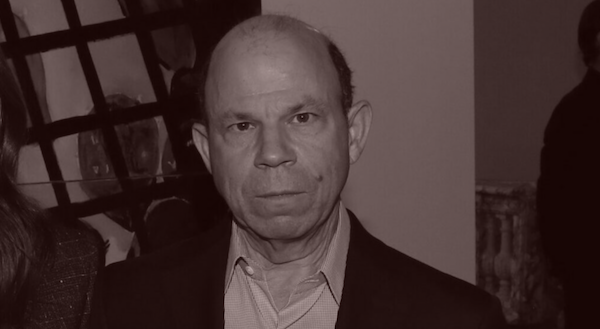
steven newhouse

The Secret Power Behind Zazworld

It’s the Newhouses, not John Malone, who will have the leverage to help Zaslav steer the soon-to-be Warner Bros. Discovery toward streaming glory.

William Cohan

WILLIAM D. COHAN

The conventional wisdom has it that John Malone—or Dr. John Malone as he is referred to in public securities filings, presumably because of his Ph.D. in operations research from Johns Hopkins University—is the power behind David Zaslav’s throne, and that Malone will be the man pulling Zaslav’s strings as he prepares to take control of Hollywood’s latest flashy toy, Warner Bros. Discovery. And that might make some sense, at least in a New York-L.A. parlor game sort of way. 


Malone, a multi-billionaire, was one of the pioneers in the cable industry and he remains a powerhouse through his various Liberty Media entities. He and Zaslav have been friends for decades, dating back to when Zaslav was an executive at GE, which then owned NBC, and he and Tom Rogers and Bob Wright and Jack Welch wanted to create what became CNBC. Zaslav’s first stop back then was to see Malone, in Colorado, to get his support for the new channel and to make sure that Ted Turner and CNN—Malone was a big backer of Turner and his cable news creation—had no intention of creating a competing business network. (He didn’t.) And, of course, Malone is also a member of Zaslav’s board of directors at Discovery and one of that company’s largest shareholders, with an economic stake equal to around 1 percent and a voting stake equal to around 20 percent. He has been an important mentor to Zaslav over the years, and one of his most enthusiastic backers.


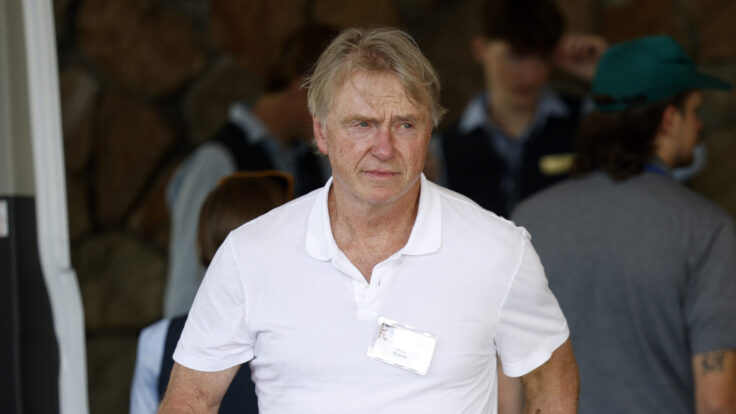
But when the Warner Bros. Discovery deal is done and dusted, perhaps as soon as April, it will actually be Steven Newhouse, not Malone, who will be the biggest shareholder in Zaslav’s new company. Newhouse, now 65 years old, is the low-key and affable chairman of Advance Communications, best known for its ownership of Conde Nast—the publisher of The New Yorker, Vogue, and Vanity Fair (where I was a special correspondent for 13 years), among other publications. Advance also owns the company that sponsors the Ironman competitions and holds a majority stake in Reddit, the powerful online message board. But the bulk of the Newhouse family’s wealth, estimated by Bloomberg at around $19 billion these days, comes from its ownership stakes in cable companies, specifically Discovery and Charter Communications, in which it has a roughly 13 percent stake worth around $13.3 billion. 


According to Discovery’s recently filed proxy statement related to the Warner Bros. Discovery deal, the Newhouses will own nearly 200 million shares of Warner Bros. Discovery, or 8.3 percent of the company’s 2.4 billion shares outstanding, making them the largest shareholders in the company. The two next largest shareholders of Warner Bros. Discovery are slated to be the massive asset-management companies, The Vanguard Group, with a 7.8 percent ownership stake, and BlackRock, Inc., with a 6.8 percent ownership stake. Both Vanguard and BlackRock were big AT&T shareholders and also owned a smaller amount of shares in Discovery before the announcement of the combination. It’s important to note that by the terms of the agreement, AT&T shareholders will own 71 percent of Warner Bros. Discovery and Discovery’s shareholders will own the remaining 29 percent. In other words, the Discovery shareholders stake in the new company has been meaningfully diluted down as part of the deal, but not in a bad way. (Better, I guess, to be a smaller fish in a bigger pond.) For his part, according to the proxy, Malone will have an ownership stake in Warner Bros. Discovery below 1 percent.  


The Newhouses will also be relative powerhouses on the new Warner Bros. Discovery board of directors. The new board will have 13 members, seven appointed by AT&T and six appointed by Discovery Communications. The Newhouses will have two of the 13 seats on the board. Steven Newhouse will have one of those seats and Steven Miron, a senior executive at Advance, will have the other. Both Newhouse and Miron are designated as “Class III” directors on the new board, meaning they will serve for three years after the deal closes, and then will be up for re-election on an annual basis thereafter. Malone is also one of Zaslav’s appointees to the board. He is a “Class II” board member, meaning he will serve for two years, and then will be up for re-election on an annual basis thereafter. 


The other Discovery appointees to the new board will be Zaslav, of course, as well as Robert Bennett, a longtime Discovery board member and one of the founding executives of Malone’s cable empire, and Paul Gould, a managing director of Allen & Co. the boutique investment bank, which advised Zaslav on the deal, although not Gould, who was on the Discovery board. AT&T has yet to designate its seven board members to the new Warner Bros. Discovery board, but it will be the one to appoint the board chairman.

Indeed, it is likely to be the Newhouses, not Malone, who are the muscle behind Warner Bros. Discovery. Their leverage was apparent as the deal was coming together. According to the proxy statement, almost exactly one year ago—on March 2, 2021—Zaslav and John Stankey, the C.E.O. of  AT&T, met in person to continue a conversation about the possible deal that had started in earnest on February 13. In addition to meeting with Stankey, Zaslav called Newhouse representatives to see if they would relinquish the “special rights” the family had given its ownership of a preferred stock in Discovery, essentially a provision giving the Newhouses veto power over any deal greater than $250 million. 


As the company's largest shareholder, the Newhouses had some serious leverage to block the blockbuster, if they chose to do so. On April 29, after months of negotiation, Stankey and Zaslav agreed to a term sheet for the deal that would give AT&T shareholders 71 percent of Warner Bros. Discovery and allowed AT&T to transfer $43 billion of its debt onto the WarnerMedia assets. The next day, according to the proxy, the Newhouses conveyed to Zaslav that they would need to be “appropriately compensated” before relinquishing their “special rights.” As a precondition of a deal, after all, the “special rights” lever was worth something—a lot of somethings, actually. And the Newhouses weren’t going to give up those rights without a return on their investment. On May 12, the Discovery board discussed the need to appoint a special independent committee to work with the Newhouses and win their blessing for the merger. Without the support of the Newhouses, according to the proxy, there would be no deal.


Later that day, with Robert Bennett as chairman, the independent committee had its first meeting and decided to retain Wachtel Lipton, as legal advisor, and Perella Weinberg Partners as its financial advisor. The committee had to act quickly. Zaslav and Stankey wanted to announce the deal on Monday, May 17, and the leaks to the press about it had already started. The various advisors kicked into high gear, with Paul Weiss communicating on behalf of the Newhouses with Wachtel and RBC Capital Markets, also on behalf of the Newhouses, interacting with Perella Weinberg. 


According to the proxy, the Newhouses initially requested compensation in excess of $2 billion, in the form of additional shares in the Warner Bros. Discovery, to support the deal and to give up their “special rights,” as well as three seats on the new board of the directors. Outlandish opening gambits are standard practice on Wall Street, especially when you have what other people want or need to accomplish something bigger. It was the job of the independent committee and its legal and financial advisers to manage the negotiations with Newhouses by lowering their ask while also making them feel very well compensated for their troubles. And that is, of course, what happened. 


In the end, on the afternoon of May 16, in exchange for their support of the deal, the Newhouses agreed to get some $787 million worth of additional shares in the new company, beyond what the straight math would have dictated, plus two board seats. The independent committee and its advisors had done their job. Whereas based on straight math, the Newhouses would have been entitled to around 6.7 percent of the ownership of Warner Bros. Discovery, their leverage gave them 8.3 percent of the company, a sweetener of 24 percent. That same day, the Discovery board of directors approved the side deal with the Newhouses—pretty much the final impediment to completing the big deal with AT&T, which was announced the following morning.


It was yet another example of one of my favorite Wall Street aphorisms, this one from Gus Levy—the former senior partner of Goldman Sachs back in the day—that “something well bought is half sold.” In other words, if you demand, and get, something like a special veto provision as part of your initial investment in a company, it may turn out to be worth something like three-quarters of a billion dollars one day. 

Based on my reading of the proxy materials and numerous conversations with people in and around this fascinating deal, the time has come to put to bed the assertion that Malone will be calling the shots at Warner Bros. Discovery or that he had a hand in the sudden firing of Jeff Zucker, from CNN, last week (as has been much rumored) or that he’ll be setting the editorial policy at CNN, as he blurted out during a November interview on CNBC. I am told that it’s “delusional” and “beyond absurd” to think that Malone had a role in the Zucker mess or that Malone would have anything to do with the editorial content at Warner Bros. Discovery. Sure, he’s been an important mentor to Zaslav for a long time and he has a seat on the board of directors. He’ll continue to be an influential voice. But with a less than 1 percent stake in the company, Malone’s economic interests lay elsewhere. The same cannot be said of the Newhouses. 


And one other side note of interest: As a former Wall Street banker, I can’t resist trying to tally up the fees the bankers will get once the deal closes. According to the proxy, Allen & Co. will get $75 million for its work advising Discovery (although the proxy makes clear that none of that fee will go to Paul Gould, the Allen & Co. banker who is on the Discovery board and who will be on the board of Warner Bros. Discovery.) JPMorgan Chase, which came into the process much later and, like Allen & Co., also provided a fairness opinion to the Discovery board, will get a fee of $15 million for its advice and another $140 million of fees related to the financing it is providing for the deal. AT&T’s advisers Lion Tree and Goldman Sachs, are estimated to be receiving $47.8 million and $43.1 million respectively. 


The proxy does not share the information on how much Perella Weinberg got paid for its week or so of work negotiating with the Newhouses for their payoff. Nor does it disclose what the flotilla of lawyers, including Sullivan & Cromwell, Debevoise & Plimpton and Paul Weiss, will get for its hours and hours of billable service. But you can rest assured it’s a bundle.

FOUR STORIES WE'RE TALKING ABOUT

cocktail

‘Mockingbird,’ Part Deux

Buried in an Alabama court document is a bombshell revelation: Harper Lee’s estate has paved the way for a future sequel...

ERIQ GARDNER

money bag

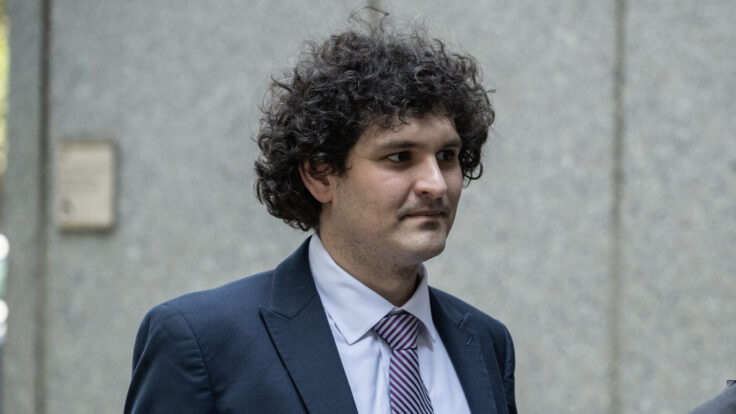
The Notorious S.B.F.

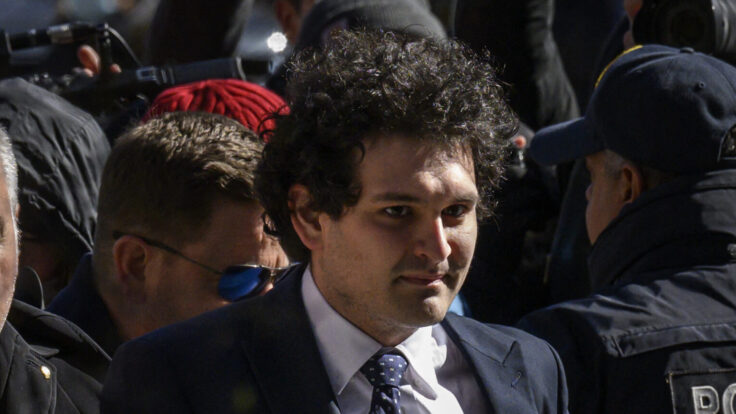
Sam Bankman-Fried epitomizes a new generation of mega-donors who are playing big-money politics by leveraging applied math.

THEODORE SCHLEIFER

ufo

Media's Post-Hysteria Pivot

A decade of doomscrolling, hyper-partisanship, and news gluttony is evolving toward something more enlightened.

BRIAN MORRISSEY

card

The Zucker-Cuomo-Kilar Love Triangle

What I'm hearing about the report from The Times, a damning statement from Gollust, and a fortuitously-timed liquidity event.

DYLAN BYERS

 
swash divider
Facebook Twitter Instagram LinkedIn

You received this message because you signed up to receive emails from Puck.


Was this email forwarded to you?

Sign up for Puck here.


Sent to {{customer.email}}

Unsubscribe


Puck is published by Heat Media LLC.
64 Bank Street
New York, NY 10014


For support, just reply to this e-mail.

For brand partnerships, email ads@puck.news

SEE THE ARCHIVES

SHARE
Try Puck for free

Sign up today to join the inside conversation at the nexus of Wall Street, Washington, A.I., Hollywood, and more.

Already a member? Log In


  • Daily articles and breaking news
  • Personal emails directly from our authors
  • Gift subscriber-only stories to friends & family
  • Unlimited access to archives

  • Exclusive bonus days of select newsletters
  • Exclusive access to Puck merch
  • Early bird access to new editorial and product features
  • Invitations to private conference calls with Puck authors

Exclusive to Inner Circle only


Latest Articles from Wall Street

Lesley Stahl
William D. Cohan • February 16, 2022
Lesley’s Choice
In a candid chat, the longtime 60 Minutes star correspondent explained her fraught decision to stay on after perhaps the most bizarre week in the show’s history. “It’s just been obviously the hardest chapter of my career,” she said. “This was by far the worst experience I’ve been involved in, or even witnessed.”
Jeff Immelt
William D. Cohan • February 16, 2022
The Emancipation of Jeff Immelt
The disgraced-ish former GE executive has been on a journey of personal discovery to reinvent his legacy and perhaps make amends—even when the facts don’t fit his new narrative. But not everyone who worked with him is ready to forgive or forget.
Howard Marks
William D. Cohan • February 16, 2022
The A.I. Bubble Truthers Cry Wolf
As several of the leading A.I. companies prepare to go public and see their valuations soar above the $1 trillion mark, a number of Wall Street contrarians are trying to remind everyone that we’ve seen this movie before.


Larry Ellison, David Ellison
William D. Cohan • February 16, 2022
Inside ParaBros’ $49B Debt Blockbuster
The $111 billion Paramount Skydance–Warner Bros. merger deal is cruising toward the finish line, and it looks like nothing will stop it. Even if the California A.G. is trying.
Scott Goodwin
William D. Cohan • February 16, 2022
Goodwin Hunting
Long before Wall Street rushed for the exits, Diameter Capital co-founder Scott Goodwin warned that A.I. would “ruthlessly eliminate” software companies. Now, amid a market correction, he’s buying the panic.
Marc Busain
William D. Cohan • February 16, 2022
Spilling the Tea
Once a predictable cashflow business, Lipton has become a test case for how private equity leverage is holding up these days amid a less forgiving economic environment. The company’s new management team is confident they can turn things around.


Paul Atkins
William D. Cohan • February 16, 2022
All the Light We Cannot S.E.C.
Trump’s S.E.C. is pushing to eradicate Wall Street’s quarterly reporting requirement—an idiotic proposal that his administration believes will “make I.P.O.s great again.” Let’s count all the ways this could backfire…


Get access to this story

Enter your email for a free preview of Puck’s full offering, including exclusive articles, private emails from authors, and more.

Verify your email and sign in by clicking the link we just sent.

Already a member? Log In


Start 14 Day Free Trial for Unlimited Access Instead →


Latest Articles from Wall Street

Elon Musk
William D. Cohan • February 16, 2022
Is Elon Already a Trillionaire?
If the inevitable and possibly imminent SpaceX I.P.O. debuts anywhere near its rumored valuation, investors will effectively ratify Musk as a sovereign financial ecosystem unto himself.
Wes Edens
William D. Cohan • February 16, 2022
East of Edens
Wes Edens, the billionaire entrepreneur and NBA owner, is attempting to restructure New Fortress Energy in London, where the courts are much friendlier to equity holders—the hot new trend for American companies, and a potential win for Edens, who is otherwise having a pretty bad week.
Ryan Cohen
William D. Cohan • February 16, 2022
GameStop of Thrones
Meme stock king Ryan Cohen is the laughingstock of Wall Street after launching an absurd bid to buy eBay for $56 billion—largely with cash and equity that GameStop doesn’t have. The market isn’t taking the proposal seriously, but the math itself is actually pretty interesting…


Sam Bankman Fried
William D. Cohan • February 16, 2022
S.B.F. Is Out of Options
This week, a thoroughly annoyed Judge Lewis Kaplan rejected, with prejudice, Sam Bankman-Fried’s long-shot bid for a new trial. That leaves his fate in the hands of the Second Circuit—which will almost certainly rule against him—or worse… in the hands of Donald Trump.
Orlando Bravo
William D. Cohan • February 16, 2022
Heavy Medallia
The highly levered software company is becoming a morality tale for this inflection point in the private-credit journey. How will Thoma Bravo, Blackstone, Apollo, KKR, and Antares Capital interpret this moment?
Sam Bankman-Fried
William D. Cohan • February 16, 2022
S.B.F. Alternate Histories & Ellison “Ticking Fee” Fears
Even as he withdrew his latest plea, Sam Bankman-Fried has been pushing another argument in the court of public opinion: that if FTX hadn’t been forced into bankruptcy, his biggest investments would be worth some $114 billion by now. Plus, notes on Zaslav’s golden parachute—and how a state antitrust intervention could sweeten the deal.


Brightline Train
William D. Cohan • February 16, 2022
The Great Train Bankruptcy
A rare, privately owned U.S. rail line between Miami and Orlando is proving popular with riders, but a $6 billion debt pile is pushing Brightline and its hedge fund owners toward a likely restructuring reckoning.
Get access to this story

Enter your email to get access to one article and free previews of our private emails from Puck authors and editors.

OR

Already a Member? Sign in


Latest Articles from Wall Street

Jamie Dimon
William D. Cohan • February 16, 2022
The Wall Street Iran Bounce
The economy is slowing and the Middle East is on fire, but the Big Five banks are printing record profits and stock markets keep hitting new highs. Is this the last song before the music stops, or were the bears wrong all along?
Bill Ackman
William D. Cohan • February 16, 2022
Ackman Family Values
Amid his double-I.P.O. roadshow and latest attempt to buy Universal Music Group, Bill Ackman has gone public with a bizarre personal drama at Table, his family office—with the lofty goal of teaching other billionaires that it’s better to fight their legal battles on X than settle in the shadows.
Leon Black
William D. Cohan • February 16, 2022
Leon Black From the Ashes, Part III
The erstwhile Apollo executive has more to say about his entanglements with Epstein, Ron Wyden, and his latest foe, The New York Times.


David Ellison
William D. Cohan • February 16, 2022
The Curious Case of Warner’s Eleventh-Hour Bidder
Just as Paramount was finalizing its offer to steal WBD from Netflix, a mysterious Singaporean company suddenly offered to top both bids with $32.50 per share. Was the whole thing a fraud?
Donald Trump
William D. Cohan • February 16, 2022
Wall Street’s Iran “Bear Trap”
Markets are pricing in a wide range of Iran war scenarios, from a quick bounceback to a prolonged global recession. Even professional contrarians warn that investors may be sucked into a bear trap if Trump abruptly changes course. But as the Mooch observes, hubris is one hell of a drug.
Sam Bankman-Fried
William D. Cohan • February 16, 2022
The Walls Are Closing in on Sam Bankman-Fried
The FTX founder’s appeals for a new trial have fallen on deaf ears, and his mother’s intervention appears to have backfired. Now, with the Justice Department going nuclear and Republicans lining up to ensure Trump doesn’t issue a pardon, S.B.F. may be running out of chances to escape his fate.


Marc Rowan
William D. Cohan • February 16, 2022
What Happens if a $40 Trillion Bubble Bursts?
There’s been a simmering anxiety since the fall that trouble is brewing in the private-credit market, and high-profile redemption requests have only added to the panic. There may be cockroaches in the system, but Wall Street superstars Marc Rowan and Jon Gray insist it’s all just a bunch of bad actors on the periphery.


  • Terms
  • Privacy
  • Contact
  • FAQ
  • Careers
© 2026 Heat Media All rights reserved.
Create an account

Already a member? Log In

CREATE AN ACCOUNT with Google
OR YOUR EMAIL

OR

Use Email & Password Instead

USE EMAIL & PASSWORD
Password strength:

OR

Use Another Sign-Up Method

Become a member

All of the insider knowledge from our top tier authors, in your inbox.

Create an account

Already a member? Log In

Verify your email!

You should receive a link to log in at .

I DID NOT RECEIVE A LINK

Didn't get an email? Check your spam folder and confirm the spelling of your email, and try again. If you continue to have trouble, reach out to fritz@puck.news.

CREATE AN ACCOUNT with Google
CREATE AN ACCOUNT with Apple
OR USE EMAIL & PASSWORD
Password strength:

OR
Log In

Not a member yet? Sign up today

Log in with Google
Log in with Google
Log in with Apple
Log in with Apple
OR USE EMAIL & PASSWORD
Don't have a password or need to reset it?

OR
Verify Account

Verify your email!

You should receive a link to log in at .

I DID NOT RECEIVE A LINK

Didn't get an email? Check your spam folder and confirm the spelling of your email, and try again. If you continue to have trouble, reach out to fritz@puck.news.

YOUR EMAIL

Use a different sign in option instead

Member Exclusive

Get access to this story

Create a free account to preview Puck’s full offering, including exclusive articles, private emails from authors, and more.

Already a member? Sign in

Free article unlocked!

You are logged into a free account as unknown@example.com

ENJOY 1 FREE ARTICLE EACH MONTH

Subscribe today to join the inside conversation at the nexus of Wall Street, Washington, A.I., Hollywood, and more.

START 14-DAY FREE TRIAL

  • Daily articles and breaking news
  • Personal emails directly from our authors
  • Gift subscriber-only stories to friends & family
  • Unlimited access to archives
  • Bookmark articles to create a Reading List
  • Quarterly calls with industry experts from the power corners we cover