Happy Wednesday, and welcome back.
You're reading Dry Powder. Today, some reflections and fresh reporting on the Bob Iger-Bob Chapek succession drama, and what C.E.O.s can learn from Wall Street when it comes to releasing the reins.
Thanks, Bill
Outgoing C.E.O.s have a habit of hanging around, from time to time, ever since the days of Jack Welch. But Chapek needs to forget about Iger, execute his business plan, and let that trove of incredible Disney assets run free. Nobody likes it when the old boss hangs around the hoop causing trouble. I’m no Carolina fan (I went to Duke, after all), but I do feel a tad bit sorry for Hubert Davis, the first-year coach of the U.N.C. Men’s basketball team, whenever the television camera pans over to Roy Williams, the legendary old coach, sitting a few rows behind the U.N.C. bench, scowling or joking around or, you know, passing judgment on how well his successor is or is not doing in real time. (Good luck to Coach K’s successor, Jon Scheyer, who takes over next year while his predecessor enjoys a lifetime contract at Duke and keeps his office in the Schwartz-Butters Athletic Center.)
It could be worse. The billionaire Howard Schultz, the quasi founder of Starbucks and a failed presidential candidate, is making his third return as C.E.O., albeit on an “interim” basis starting next month, since he bought a lone Starbucks, in Seattle, in 1987 and turned it into a global juggernaut with a market value these days of $100 billion. It’s not exactly clear why Schultz, now 68 years old, came to the rescue of his baby once again. The company is portraying it as a normal turn of events following the five-year reign of C.E.O. Kevin Johnson, prompted by Johnson’s resignation. But something doesn’t feel right. Frankly, it’s pretty weird, all things considered, especially since the Starbucks stock was up 53 percent during Johnson’s tenure. Schultz has said he will work with Mellody Hobson, the Chicago private-equity mogul who is on the Starbucks board, in helping to pick in short order another of his replacements.
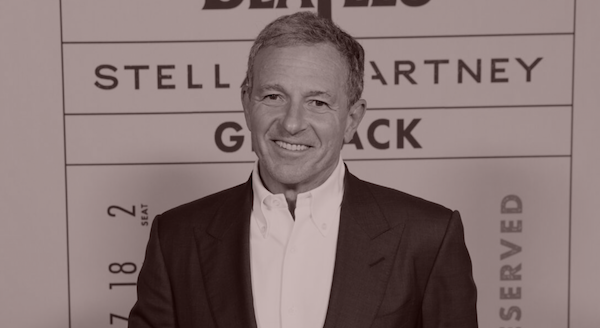
Then there is what’s going on at Disney between Bob Chapek and Bob Iger, the company’s new C.E.O. and its old C.E.O., respectively. According to a rather stunning article by Alex Sherman, at CNBC, Chapek and Iger, once very close, no longer speak. The proximate cause of their rift, according to Sherman, pertains to Iger’s Schultzian decision to return to the reins of Disney, shortly after abruptly stepping down, to help manage the company through the onset of the Covid-19 crisis. On April 12, 2020, Iger gave an interview to Ben Smith, then the media columnist at The New York Times, explaining his rationale. He leaned into his singular experience, deal-making prowess, likability, and facility with markets, but packaged his decision in lay terms. “[P]articularly since I ran the company for 15 years,” Iger wrote Smith, putting it about as succinctly as possible.
Iger, who had initially been underestimated as Michael Eisner’s successor at Disney, inarguably earned the right to be more than a bit overbearing. His return to Disney undoubtedly helped to stabilize the company, with its investments in live production and theme parks and cruises, amid a global pandemic. But during his aforementioned 15 year tenure, Iger had also demonstrated his own discomfort with succession. Potential understudies, like Tom Staggs and Kevin Mayer, left the company after what seemed like very public apprenticeships. Indeed, Iger had postponed his retirement three times before he reversed himself again two years ago.
Chapek, who lacks Iger’s otherworldly polish, appeared blind-sided by the return, presumably confident at the time that he had vanquished his competitors and finally earned the crown himself. “Chapek was furious when he saw the story,” Sherman reported, especially since he was already reporting to Iger, who remained the chairman of the Disney board of directors. (Representatives for Iger and Chapek did not respond to requests for comment.)
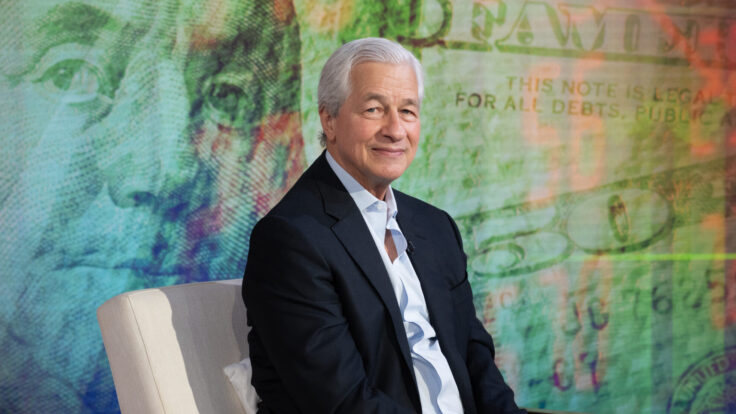
The inability of an outgoing leader to truly disengage happens less than you might think. On Wall Street, there are always power struggles, especially at the top, but generally speaking, once the gig is up, it’s up. (Corporate governance is one of the key responsibilities of a board of directors, after all.) I can’t recall a time when Bill Harrison, Jamie Dimon’s predecessor at JPMorgan Chase, butted into what Dimon was doing at the bank. Harrison was probably glad to be gone. If and when Dimon, now 66, leaves—and it may not be for another five years—I suspect he will be happy to let it go, after more than 20 years at the top. “I like to travel,” he told me last June, enumerating his various extracurricular activities. “I love reading histories and biographies. I love to read science. I love music. I love wine. I love food. I love barbecues. I love hanging out with my family. That’s all I need. I don’t need anything else.”
Same with the late Jimmy Cayne, at Bear Stearns. When he turned the firm over to Alan Schwartz (of the aforementioned Schwartz-Butters Center), in January 2008, Jimmy retreated from second-guessing, although he did play an important role, as a board member, in the process that led to the sale of Bear to JPMorgan Chase. (The alternative was a bankruptcy filing.) He then largely disappeared—along with the firm—and played a lot of bridge before his death last December. When Bruce Wasserstein took control of Lazard from its longtime patriarch Michel David-Weill in and around 2005, and then took the firm public in 2006, David-Weill exited stage left, along with $2 billion for his Lazard stock, and focused his attention on his French buyout firm, Eurazeo.
Despite his penchant for the occasional amusing tweet, Lloyd Blankfein has left his Goldman successor, David Solomon, pretty much alone since Solomon took over more than three years ago. Hank Paulson, Blankfein’s predecessor at Goldman, left Blankfein alone, too, although the two men did speak regularly during the 2008 financial crisis since Paulson was then the U.S. Treasury Secretary.
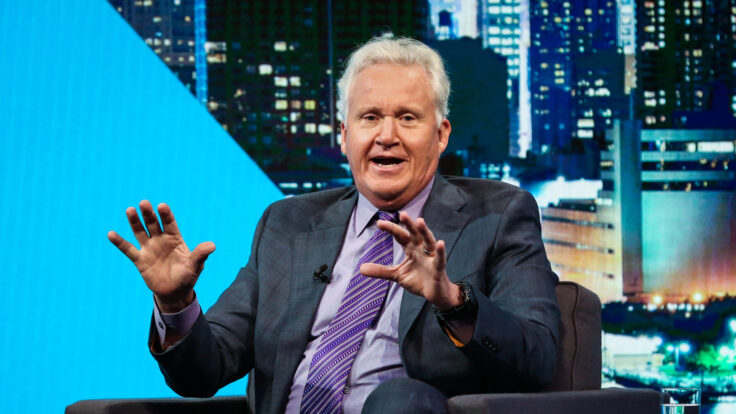
As my most loyal readers know, I often find useful historical context in what went down at GE, once America’s most important industrial, technology, media, and financial company. At GE, Jack Welch’s intention was to leave his successor Jeff Immelt alone. After all, Jack’s predecessor, Reg Jones, had left Jack completely alone. Jones retired in dignity to his modest Greenwich, Connecticut home and rarely gave interviews about GE or anything else during the 22 years between his retirement and his death. He did not write a memoir.
Jack was so focused, in fact, on giving Jeff all the runway he needed, that he forced out of the company the two men—Jim McNerney and Bob Nardelli—that Jeff had bested in the succession process, despite their talents. Jack didn’t want any potential resentment from the losing candidates to in any way affect the way Jeff Immelt did his job. (McNerney went on to be the C.E.O. of Boeing and Nardelli became the C.E.O. of Home Depot.)
But Jack also couldn’t quite follow through on his intention to disengage. Like Iger ended up doing to Chapek, Jack was supposed to turn over the reins of GE to Jeff in April 2001, following the December 2000 announcement that Jeff would succeed him and that McNerney and Nardelli would be leaving. Few remember these days, but that succession timetable changed in October 2000 after Jack and GE decided it had to buy Honeywell so that its rival, United Technologies, didn’t swoop in to buy the company instead. On nearly the spur of the moment, Jack topped United Technologies’ $40 billion offer for Honeywell—he agreed to pay $45 billion in GE stock—and also agreed to postpone his retirement until the Honeywell deal closed. It was GE’s largest deal.
In a sense it was understandable that Jack would stay around longer than he intended. He wanted to make sure the deal closed and that Honeywell was properly integrated into GE. He had been GE’s C.E.O. for 20 years and since GE was paying for Honeywell with its stock, the Honeywell shareholders were right not to want Jack’s retirement to adversely affect its value. “I realized we were making the biggest deal in GE history and we had to make it the most successful deal in GE history,” Jack told the Wall Street Journal back then. “You can't let succession timing end up paralyzing you. It ain't about Jack Welch, and I'm not protesting too loud. I got a whole new life to lead after this.”
But many of Jack’s colleagues at GE thought he wasn’t quite ready to head to the links. (Jack was a scratch golfer.) Jack ended up staying as the GE CEO until September 7, 2001, following his decision to walk away from the Honeywell deal after Mario Monti, then at the European Union, demanded more concessions from GE to get the deal done than Jack wanted to make. He likened what Monti wanted GE to give up from Honeywell to only getting 15 holes of an 18-hole golf course. Jack wouldn’t do it. (That was probably a big mistake. But a tale for a different day.)
After that, Jack managed to more or less stay out of Jeff’s hair until April 2008. True, the revelations about Jack’s post-retirement benefits from GE, which came out as part of his divorce proceedings from his second wife, Jane Beasley, embarrassed Jeff and GE, as did Jack’s very public affair with Suzy Westlaufer, who became Suzy Welch, Jack’s third wife.
But the real dagger in the relationship between Jack and Jeff came after Jeff whiffed on GE’s first quarter 2008 earnings estimates, as a result of the market turmoil that followed the collapse of Bear Stearns on March 15, two weeks before the end of the quarter. Jeff had told investors that GE would make $5 billion in the first quarter of 2008. Instead GE made $4.3 billion, a miss of a whopping 14 percent, or $700 million. GE’s stock fell 13 percent in one day, the largest one-day drop in 20 years.
Jack was apoplectic. Not only was much of his nearly $1 billion wealth tied up in GE stock, but he had also prided himself, probably to a fault, on making the quarterly numbers he told Wall Street’s analysts he would make. That consistency of earnings, combined with GE’s reliable earnings growth, during his tenure was probably what made GE the most respected and most valuable company in the world for a long stretch of the 1990s. At the time, with a head full of steam, Jack went on CNBC, which was then still owned by GE, to sandblast Jeff about the earnings miss. He said that if Jeff missed his earnings guidance again, “I’d be shocked beyond belief, and I’d get a gun out and shoot him if he doesn’t make what he promised now. Just deliver the earnings. Tell them you’re going to grow 12 percent and deliver 12 percent.”
Jack said on national television that Jeff had hurt his own and the company’s credibility. “Here’s the screw-up: You made a promise that you’d deliver this, and you missed three weeks later,” Welch continued. “Jeff has a credibility issue. He’s getting his ass kicked. He apologized.” He continued, “I’m not here defending what happened. This was a bad miss. This is a credibility crash. He’s got to earn it back. He will earn it back. But to take GE apart, [and to ask, as many had] ‘What’s wrong with the company? It’s falling apart, blow up the model, sell NBC, sell off real estate, let’s go out of business because we had 24 hours of a mess?’” That was a bridge too far for Jack.
Whether Chapek and Iger can get over their feud remains to be seen. According to CNBC, Iger invited Chapek to his going-away party at his Brentwood home in January. But, by design, they were sitting far apart and barely acknowledged each other. “The tension was palpable,” one guest told CNBC. Chapek’s miscues with Florida’s “Don’t Say Gay” legislation and the fight he picked with Scarlett Johannson last year over the release of her film Black Widow has exacerbated the tension and their differences. CNBC also reported that current and former Disney employees have been reaching out to Iger to complain.
Who knows what will happen next in the 2022 version of the Disney Wars but, at 71, Iger remains vigorous and a large Disney shareholder—his 500,000 or so Disney shares are worth around $71 million these days. He remains ambitious. He’s contemplated running for president and as my partner Matt Belloni reported last November he wanted to buy the Phoenix Suns. Since Chapek took over in January, the Disney stock has fallen 10 percent, about double the 5 percent that the Dow Jones Industrial Average has fallen. That shouldn’t be fatal for Chapek, unless it gets worse.
I know the ghost of Bob Iger looms large at Disney, just like the ghost of Jack Welch loomed large at GE. But Chapek needs to forget about Iger and execute his business plan and let that trove of incredible Disney assets run free. In the weeks after John Flannery took over GE from Immelt, after Immelt’s defenestration in the summer of 2017, one GE board member gave Flannery some sound advice, that’s worth sharing with Chapek now: He told Flannery to forget about Immelt and his flawed track record. He said that Flannery should “lead with more heart not just more brain” and reminded him that “People inside and outside the company (including the board) are killing themselves for you.”
As for GE’s shareholders, he continued, “If you lead investors forward, they will follow you…and will do so on whatever scorecard you lay out to create value over a three-year period.” Flannery didn’t get the chance to implement his vision for GE, but maybe Chapek will have better luck.
FOUR STORIES WE'RE TALKING ABOUT 
As markets slip, media companies are beginning to ask, what if everything Netflix thought it knew turns out to be a lie? MATTHEW BELLONI 
Behind the scenes, Twilio C.E.O. Jeff Lawson has been making new strategic moves in the big-money world of Democratic politics... THEODORE SCHLEIFER 
Fifteen years after it broke onto the scene, Politico seems intent on entering its own D.C. sinecure with a new newsroom leader. DYLAN BYERS 
The days of strippers at Salomon Brothers are long gone, but Lewis has another revelation about what has changed on Wall Street... WILLIAM D. COHAN 
You received this message because you signed up to receive emails from Puck.
Was this email forwarded to you?
Sent to {{customer.email}}
Puck is published by Heat Media LLC.
For support, just reply to this e-mail. For brand partnerships, email ads@puck.news |


SHARE