• Washington
  • Wall Street
  • A.I.
  • Hollywood
  • Media
  • Fashion
  • Sports
  • Art
  • Join Puck Newsletters What is puck? Authors Podcasts Gift Puck Careers Events
  • Join Puck

    Directly Supporting Authors

    A new economic model in which writers are also partners in the business.

    Personalized Subscriptions

    Customize your settings to receive the newsletters you want from the authors you follow.

    Stay in the Know

    Connect directly with Puck talent through email and exclusive events.

  • What is puck? Newsletters Authors Podcasts Events Gift Puck Careers
 
Puck logo
 
Dry Powder

Hello and welcome back to Dry Powder. 


Thanks for being a part of Puck, our new media company covering the intersection of Wall Street, Washington, Silicon Valley, and Hollywood. And thanks for reading Dry Powder. If you're enjoying these private emails, consider sharing the subscription link with a friend.


Bill

SPONSORED BY

mayer brown
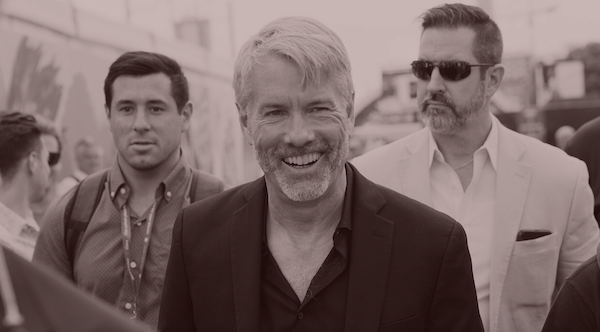
michael saylor

The Jack Welch of Crypto?

Why didn’t Microsoft buy Activision with its near-all-time-high stock? Why did Michael Saylor convert MicroStrategy’s treasury reserves into Bitcoin? Perhaps it’s because, as Ray Dalio says, “cash is trash.”

William Cohan

WILLIAM D. COHAN

In the near-zero interest rate environment that the Federal Reserve has imposed on us for more than a decade, a question vexing many of the most successful corporate executives is what to do with the cash building up on their balance sheets. Big Tech, no surprise, is sitting on the motherlode. Apple has $190 billion of cash. Alphabet, the parent company of Google, has a cash pile of $142 billion. Amazon has $79 billion in cash. Meta, formerly Facebook, has $58 billion. Microsoft, the second most valuable company in the United States, with a market value of $2.2 trillion, has a cash balance of $131 billion. Or it did, until last week, when the company announced that it would be using about $70 billion of it to pay for Activision Blizzard, its shiny, new gaming behemoth. 


It has not been fashionable in recent years for big companies to pay for big acquisitions using their own cash hordes. For starters, most companies don’t have enough cash on hand to expend on buying another company. And those that do have the cash often prefer to preserve that cash for other purposes, such as paying down debt, paying dividends to their shareholders or using it to buy back stock. Or to save it for a rainy day. Such decisions tend to ebb and flow depending on the economic cycles, of course, but after a 13-year bull-market, the biggest acquisitions lately have been done using stock, since the equity value of many companies is at or near all time highs (or was, until the ongoing correction kicked in). Why not use high-priced stock to make an acquisition, the thinking goes, since it may all be just so much funny money anyway? 


The use of stock as an acquisition currency is also usually tax-free until the beneficiary decides to sell it, whereas cash received is taxable. Activision C.E.O. Bobby Kotick, for instance, could receive around $600 million in cash—the value of his Activision stock plus a payment triggered by the change in control—followed by a whopping capital gains bill. Had Microsoft structured the deal in stock, Kotick wouldn’t face the tax man until he decided to sell the shares, giving him ample time to get his estate and liquidation strategy in order.


I’m not too worried about Bobby. The deal won’t close for around a year, which will offer what I presume is an armada of lawyers and tax-structuring  specialists ample time to chart a strategy to prevent too much leakage. More interesting to me is the flipside. If I were Satya Nadella, who has been the superstar C.E.O. of Microsoft for nearly seven years, I would have thought long and hard about paying for Activision with my high-priced (and possibly overvalued) stock. Despite being down around 15 percent from last month’s all-time high, Microsoft stock is still up close to 30 percent in the last year. But Nadella didn’t use Microsoft’s stock for the Activision deal. Nor did he choose to borrow money from a bank or to issue bonds to eager investors, which he certainly could have done easily given that Microsoft is one of the few AAA-rated companies around. It has long-term debt of only about $50 billion and net-debt—cash minus long-term debt—of negative $80 billion. 


Instead, Nadella will use a little more than half of Microsoft’s cash horde to pay for Activision. His strategy likely has to do with the fact that as Ray Dalio, the hedge fund titan, likes to say, “Cash is trash.” 

ADVERTISEMENT

mayer brown

The logic here is pretty simple. Why not use the billions in cash sitting on Microsoft’s balance sheet, where it’s not only losing its buying power due to rising inflation—running about 7 percent at the moment, the most in 40 years—but is also probably earning a paltry return in the vicinity of 2 percent annually, given the company’s disclosed mix of investments comprising commercial paper, CDs, Treasuries (some $93 billion of the cash), municipal bonds, mortgage-backed securities and the corporate debt of other companies. Between the historically low interest rates on the debt securities that Microsoft seems to be investing in and the rising rates of inflation, Dalio is right: cash is trash. Much better, Nadella must have thought, to use that cash to triple-down on gaming, a business Microsoft was already in but now will become one of the dominant players. 


But is there a better, less traditional, use of corporate cash that will potentially yield a higher return than investing it in short-term and long-term securities or doing complex M&A deals?  That’s a question that Michael Saylor, the C.E.O. of MicroStrategy, a small publicly traded enterprise software company, has been contemplating since at least July 2020, when he realized that his company’s $500 million cash balance was rapidly losing its purchasing power because of the combination of low interest rates and high inflation. He decided he couldn’t sit idly by and allow that to happen. Instead, he went whole hog on Bitcoin. Really whole hog—to the point where Saylor has become one of the cryptocurrency’s most zealous advocates, through thick and thin. 


Videos of Saylor extolling the virtues of Bitcoin are ubiquitous on the Internet. He spent more than an hour last November educating Tucker Carlson about the relevance of Bitcoin, especially in a high-inflation, low-interest rate environment. The encounter took place on Carlson’s non-Fox online video channel, Tucker Carlson Today. Carlson was smart enough to just let Saylor talk and talk and talk. A graduate of MIT, with a degree in aeronautics and astronautics, Saylor speaks in full paragraphs. He can make a Bitcoin believer out of the most ardent skeptics. I spent two hours with him on a Zoom call last week. He was mesmerizing. 


The past few weeks haven’t been a good stretch for Bitcoin, however, or for MicroStrategy. The price of Bitcoin is down nearly 20 percent since January 1; MicroStrategy’s stock is down 35 percent since then, including an 18 percent collapse on January 21 alone, after the Securities and Exchange Commission rebuked the company for the way it accounted for its Bitcoin holdings. Still, despite the recent Bitcoin rupture, Saylor’s decision to invest in Bitcoin has worked out pretty well for MicroStrategy—and certainly better than if he had kept that $500 million in cash. 


Back on August 11, 2020, Saylor announced that MicroStrategy was buying 21,454 Bitcoins for $250 million, or $11,653 per Bitcoin. He also announced that the company would use another $250 million in cash to offer to buy back stock from those shareholders who didn’t like his Bitcoin gambit. He used the cash that wasn’t returned to shareholders to buy more Bitcoin. But that wasn’t enough Bitcoin for Saylor. MicroStrategy then started borrowing money to buy Bitcoin. The company did two convertible debt deals and a senior debt offering, using the $2.2 billion, or so, of proceeds to buy more Bitcoin. MicroStrategy’s average purchase price for Bitcoin is around $30,000. It now owns 122,478 Bitcoins, worth about $4.7 billion, some $900 million more than the company’s market value. In November, when Bitcoin hit a peak of $67,682, MicroStrategy’s Bitcoin was worth $8.3 billion. Bitcoin is now trading at about half that price.


When he started the Bitcoin program, MicroStrategy’s stock was $120 per share, $60 of which was in cash. “Our investors told us the cash was trash,” he said on CNBC in 2020. “It was a liability on our balance sheet. And if we had given it all back, we would be trading at $60 a share. Instead, we rotated our shareholder base and transformed ourselves into a company that's able to sell enterprise software and to acquire and hold Bitcoin and we've done it successfully with leverage that has increased the power of the brand by a factor of 100. We just had our best software quarter in history or in the last 10 years last quarter. The core business is up 10 percent. The Bitcoin business is driving shareholder returns. I think the employees are happy and the shareholders are happy.” A year ago, the MicroStrategy stock hit $1,023 per share, up nearly 10 times in six months. Even with the stock now at around $370 a share, it still represents a tripling since Saylor made the decision to go long and hard on Bitcoin.

ADVERTISEMENT
mayer brown

Saylor remains utterly undeterred by the concerns around Bitcoin, despite the recent halving of its price. He’s said repeatedly that he’s never selling MicroStrategy’s Bitcoin. He told me the same thing. No other C.E.O. of a publicly traded company has become such an ardent Bitcoin zealot, and put his money where his brain is. 


But it’s hard to know if he’s right. Last November, with Bitcoin at $67,000, Saylor looked like some kind of visionary genius. With Bitcoin’s price cut in half in two months, it’s no longer quite so obvious. The $900 million of convertible debt that MicroStrategy issued a year ago to buy Bitcoin is now trading around 62 cents on the dollar, yielding twice what the average junk-bond is yielding. 


The volatility alone is not for the faint of heart, although Saylor doesn’t seem the least bit phased by it. At the moment, MicroStrategy’s shareholders are still close to three times better off than they were before Saylor decided to take the Bitcoin plunge in July 2020. And with interest rates still at historic lows, although on the rise, and inflation at a 40-year high, cash remains a deteriorating asset, which helps explain why Microsoft used it to buy Activision. What remains murky, at best, is whether Bitcoin is the answer to these problems. 

FOUR STORIES WE'RE TALKING ABOUT

cocktail

Netflix's Black Friday

With apologies to Wall Street, the streamer's stock price apocalypse is a market problem more than a business problem. 

MATTHEW BELLONI

money bag

Trump's Russia Guru Tells All

A conversation with Fiona Hill about the Russia-Ukraine crisis, Putin's next move, and where the White House goes from here.

JULIA IOFFE

ufo

Can Yuri Milner Cheat Death?

The inside conversation about Silicon Valley’s favorite charity, MacKenzie Scott, and Bezos’ latest effort to perfect his physique.

TEDDY SCHLEIFER

card

Winter Is Coming for Wall Street

Notes on Peloton’s market value collapse, Netflix’s future, M&A arbitrage, and Apollo’s next potential pound of flesh.

WILLIAM D. COHAN

 
swash divider
Facebook Twitter Instagram LinkedIn

You received this message because you signed up to receive emails from Puck.


Was this email forwarded to you?

Sign up for Puck here.


Sent to {{customer.email}}

Unsubscribe


Puck is published by Heat Media LLC.
64 Bank Street
New York, NY 10014


For support, just reply to this e-mail.

For brand partnerships, email ads@puck.news

SEE THE ARCHIVES

SHARE
Try Puck for free

Sign up today to join the inside conversation at the nexus of Wall Street, Washington, A.I., Hollywood, and more.

Already a member? Log In


  • Daily articles and breaking news
  • Personal emails directly from our authors
  • Gift subscriber-only stories to friends & family
  • Unlimited access to archives

  • Exclusive bonus days of select newsletters
  • Exclusive access to Puck merch
  • Early bird access to new editorial and product features
  • Invitations to private conference calls with Puck authors

Exclusive to Inner Circle only


Latest Articles from Wall Street

Lesley Stahl
William D. Cohan • January 26, 2022
Lesley’s Choice
In a candid chat, the longtime 60 Minutes star correspondent explained her fraught decision to stay on after perhaps the most bizarre week in the show’s history. “It’s just been obviously the hardest chapter of my career,” she said. “This was by far the worst experience I’ve been involved in, or even witnessed.”
Jeff Immelt
William D. Cohan • January 26, 2022
The Emancipation of Jeff Immelt
The disgraced-ish former GE executive has been on a journey of personal discovery to reinvent his legacy and perhaps make amends—even when the facts don’t fit his new narrative. But not everyone who worked with him is ready to forgive or forget.
Howard Marks
William D. Cohan • January 26, 2022
The A.I. Bubble Truthers Cry Wolf
As several of the leading A.I. companies prepare to go public and see their valuations soar above the $1 trillion mark, a number of Wall Street contrarians are trying to remind everyone that we’ve seen this movie before.


Larry Ellison, David Ellison
William D. Cohan • January 26, 2022
Inside ParaBros’ $49B Debt Blockbuster
The $111 billion Paramount Skydance–Warner Bros. merger deal is cruising toward the finish line, and it looks like nothing will stop it. Even if the California A.G. is trying.
Scott Goodwin
William D. Cohan • January 26, 2022
Goodwin Hunting
Long before Wall Street rushed for the exits, Diameter Capital co-founder Scott Goodwin warned that A.I. would “ruthlessly eliminate” software companies. Now, amid a market correction, he’s buying the panic.
Marc Busain
William D. Cohan • January 26, 2022
Spilling the Tea
Once a predictable cashflow business, Lipton has become a test case for how private equity leverage is holding up these days amid a less forgiving economic environment. The company’s new management team is confident they can turn things around.


Paul Atkins
William D. Cohan • January 26, 2022
All the Light We Cannot S.E.C.
Trump’s S.E.C. is pushing to eradicate Wall Street’s quarterly reporting requirement—an idiotic proposal that his administration believes will “make I.P.O.s great again.” Let’s count all the ways this could backfire…


Get access to this story

Enter your email for a free preview of Puck’s full offering, including exclusive articles, private emails from authors, and more.

Verify your email and sign in by clicking the link we just sent.

Already a member? Log In


Start 14 Day Free Trial for Unlimited Access Instead →


Latest Articles from Wall Street

Elon Musk
William D. Cohan • January 26, 2022
Is Elon Already a Trillionaire?
If the inevitable and possibly imminent SpaceX I.P.O. debuts anywhere near its rumored valuation, investors will effectively ratify Musk as a sovereign financial ecosystem unto himself.
Wes Edens
William D. Cohan • January 26, 2022
East of Edens
Wes Edens, the billionaire entrepreneur and NBA owner, is attempting to restructure New Fortress Energy in London, where the courts are much friendlier to equity holders—the hot new trend for American companies, and a potential win for Edens, who is otherwise having a pretty bad week.
Ryan Cohen
William D. Cohan • January 26, 2022
GameStop of Thrones
Meme stock king Ryan Cohen is the laughingstock of Wall Street after launching an absurd bid to buy eBay for $56 billion—largely with cash and equity that GameStop doesn’t have. The market isn’t taking the proposal seriously, but the math itself is actually pretty interesting…


Sam Bankman Fried
William D. Cohan • January 26, 2022
S.B.F. Is Out of Options
This week, a thoroughly annoyed Judge Lewis Kaplan rejected, with prejudice, Sam Bankman-Fried’s long-shot bid for a new trial. That leaves his fate in the hands of the Second Circuit—which will almost certainly rule against him—or worse… in the hands of Donald Trump.
Orlando Bravo
William D. Cohan • January 26, 2022
Heavy Medallia
The highly levered software company is becoming a morality tale for this inflection point in the private-credit journey. How will Thoma Bravo, Blackstone, Apollo, KKR, and Antares Capital interpret this moment?
Sam Bankman-Fried
William D. Cohan • January 26, 2022
S.B.F. Alternate Histories & Ellison “Ticking Fee” Fears
Even as he withdrew his latest plea, Sam Bankman-Fried has been pushing another argument in the court of public opinion: that if FTX hadn’t been forced into bankruptcy, his biggest investments would be worth some $114 billion by now. Plus, notes on Zaslav’s golden parachute—and how a state antitrust intervention could sweeten the deal.


Brightline Train
William D. Cohan • January 26, 2022
The Great Train Bankruptcy
A rare, privately owned U.S. rail line between Miami and Orlando is proving popular with riders, but a $6 billion debt pile is pushing Brightline and its hedge fund owners toward a likely restructuring reckoning.
Get access to this story

Enter your email to get access to one article and free previews of our private emails from Puck authors and editors.

OR

Already a Member? Sign in


Latest Articles from Wall Street

Jamie Dimon
William D. Cohan • January 26, 2022
The Wall Street Iran Bounce
The economy is slowing and the Middle East is on fire, but the Big Five banks are printing record profits and stock markets keep hitting new highs. Is this the last song before the music stops, or were the bears wrong all along?
Bill Ackman
William D. Cohan • January 26, 2022
Ackman Family Values
Amid his double-I.P.O. roadshow and latest attempt to buy Universal Music Group, Bill Ackman has gone public with a bizarre personal drama at Table, his family office—with the lofty goal of teaching other billionaires that it’s better to fight their legal battles on X than settle in the shadows.
Leon Black
William D. Cohan • January 26, 2022
Leon Black From the Ashes, Part III
The erstwhile Apollo executive has more to say about his entanglements with Epstein, Ron Wyden, and his latest foe, The New York Times.


David Ellison
William D. Cohan • January 26, 2022
The Curious Case of Warner’s Eleventh-Hour Bidder
Just as Paramount was finalizing its offer to steal WBD from Netflix, a mysterious Singaporean company suddenly offered to top both bids with $32.50 per share. Was the whole thing a fraud?
Donald Trump
William D. Cohan • January 26, 2022
Wall Street’s Iran “Bear Trap”
Markets are pricing in a wide range of Iran war scenarios, from a quick bounceback to a prolonged global recession. Even professional contrarians warn that investors may be sucked into a bear trap if Trump abruptly changes course. But as the Mooch observes, hubris is one hell of a drug.
Sam Bankman-Fried
William D. Cohan • January 26, 2022
The Walls Are Closing in on Sam Bankman-Fried
The FTX founder’s appeals for a new trial have fallen on deaf ears, and his mother’s intervention appears to have backfired. Now, with the Justice Department going nuclear and Republicans lining up to ensure Trump doesn’t issue a pardon, S.B.F. may be running out of chances to escape his fate.


Marc Rowan
William D. Cohan • January 26, 2022
What Happens if a $40 Trillion Bubble Bursts?
There’s been a simmering anxiety since the fall that trouble is brewing in the private-credit market, and high-profile redemption requests have only added to the panic. There may be cockroaches in the system, but Wall Street superstars Marc Rowan and Jon Gray insist it’s all just a bunch of bad actors on the periphery.


  • Terms
  • Privacy
  • Contact
  • FAQ
  • Careers
© 2026 Heat Media All rights reserved.
Create an account

Already a member? Log In

CREATE AN ACCOUNT with Google
OR YOUR EMAIL

OR

Use Email & Password Instead

USE EMAIL & PASSWORD
Password strength:

OR

Use Another Sign-Up Method

Become a member

All of the insider knowledge from our top tier authors, in your inbox.

Create an account

Already a member? Log In

Verify your email!

You should receive a link to log in at .

I DID NOT RECEIVE A LINK

Didn't get an email? Check your spam folder and confirm the spelling of your email, and try again. If you continue to have trouble, reach out to fritz@puck.news.

CREATE AN ACCOUNT with Google
CREATE AN ACCOUNT with Apple
OR USE EMAIL & PASSWORD
Password strength:

OR
Log In

Not a member yet? Sign up today

Log in with Google
Log in with Google
Log in with Apple
Log in with Apple
OR USE EMAIL & PASSWORD
Don't have a password or need to reset it?

OR
Verify Account

Verify your email!

You should receive a link to log in at .

I DID NOT RECEIVE A LINK

Didn't get an email? Check your spam folder and confirm the spelling of your email, and try again. If you continue to have trouble, reach out to fritz@puck.news.

YOUR EMAIL

Use a different sign in option instead

Member Exclusive

Get access to this story

Create a free account to preview Puck’s full offering, including exclusive articles, private emails from authors, and more.

Already a member? Sign in

Free article unlocked!

You are logged into a free account as unknown@example.com

ENJOY 1 FREE ARTICLE EACH MONTH

Subscribe today to join the inside conversation at the nexus of Wall Street, Washington, A.I., Hollywood, and more.

START 14-DAY FREE TRIAL

  • Daily articles and breaking news
  • Personal emails directly from our authors
  • Gift subscriber-only stories to friends & family
  • Unlimited access to archives
  • Bookmark articles to create a Reading List
  • Quarterly calls with industry experts from the power corners we cover