Welcome back to Dry Powder. I’m Bill Cohan.
We’ve reached a new stage in
the war for Warner Bros. Discovery. The bidding phase—which both Netflix and Paramount Skydance think they won, by the way—has given way to an era defined by regulatory and bureaucratic procedure. And while it now seems (pretty) clear that Paramount Skydance is not budging beyond its $30-a-share bid, the Ellisons are hoping to win this battle based on Netflix’s regulatory review foot faults in both the E.U. and Washington.
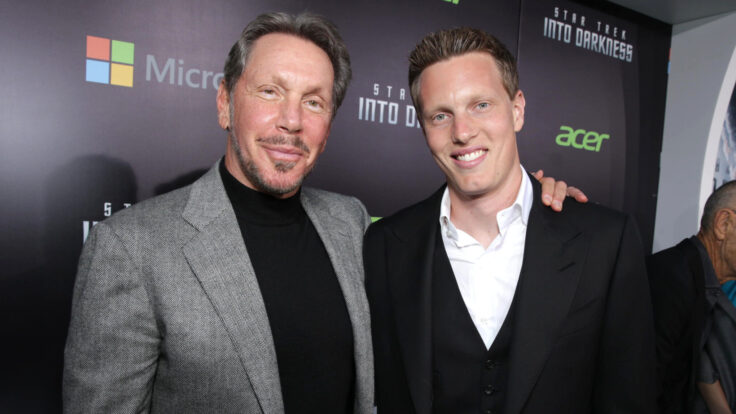
This week, the father-son duo
got their first bit of potentially good news in quite some time. Apparently, hating on Netflix’s bid for WBD’s Studios and Streaming unit is that rare bird in Washington: a popular bipartisan issue. Ted Sarandos’s rocky day on Capitol Hill, and what that means for Netflix’s bid, below the fold.
But first… |
- What
does Lachlan really want?: I recently caught up with my former Vanity Fair colleague Gabe Sherman to discuss his new book, Bonfire of the Murdochs: How the Epic Fight to Control the Last Great Media Dynasty Broke a Family—and the World, which is his second tome on the Murdoch clan. Gabe was pulled back into the family drama over the recent settlement of its succession lawsuit in Nevada state court. James, Elisabeth, and
Prudence Murdoch agreed to give up their fight to take control of both Fox Corp and News Corp in exchange for $1.1 billion each, while agreeing to allow their brother Lachlan to become the heir apparent. “Rupert pushed James aside,” Gabe told me. “He never gave Liz a chance, because he’s a misogynist. And so, the rivalry among the siblings is over. We can see the full arc of that story.” Gabe also viewed the book as an opportunity to reflect on what Rupert has
wrought. “This family has enabled the total destruction of truth and decency in American society,” he said. “I kind of compare them to the Sackler family. You know, the Sacklers poisoned America with opioids, and the Murdochs poisoned America with right-wing propaganda.”
I’ve always been curious about why the three siblings sold out. After all, they had previously received $2 billion each from the sale of Fox’s entertainment assets to Disney. Gabe told me he learned that
James Murdoch’s “moral reckoning had a price tag.” The three siblings were also worried that they could have lost the appeal in Nevada amid the Trump II political environment, which would have allowed Rupert and Lachlan to alter the trust unilaterally and leave the other three with nothing. “We’ll never know what happened,” Gabe said. “But that is their explanation for why they settled.”
Gabe never really bought the liberal fantasy that the three siblings would join
together and change the operation and political leanings of the family heirloom. James’s opposition to his father and his brother only kicked in, Gabe reconfirmed, after he had been booted from his executive perch at the company. “I never felt like James was this crusading, principled opposition,” Gabe said. “I think he definitely disagrees with his father, but he played the game until he lost. There are no heroes and there are no villains in the story. They’re all just sort of in the cesspool
together.”
But as Gabe sees it, Lachlan ended up with “a poisoned chalice”—an empire without a major streaming business that relies on increasingly expensive live sports, particularly the NFL, which is preparing to return to market so it can extract substantially higher rights fees from its media partners. He said he wouldn’t be surprised if Lachlan eventually decided to sell the two companies—after his father dies—to either a conservative-minded billionaire or to a conservative media
company, like Sinclair Broadcasting. “I just don’t think Lachlan has the hunger to be a builder, the way Rupert clearly was,” Gabe said. “He likes to go rock climbing. He’s got his three kids. He and his wife, Sarah, are sort of royalty among Australian business and celebrities. And he loves it there. I don’t blame him. If you look at the landscape of the media business of where the industry is going, and the relative size of these small companies, and then you add on top of
that the fact that Lachlan wants to stay in Australia, it just doesn’t seem likely that he would be wanting to run these things for the long term.”
|
Now, back to the deal of the year… |
|
|
Generally speaking, Republicans and Democrats in the Senate appear to hate Netflix’s deal
for WBD almost as much as they hate each other. Could Ted Sarandos’s recent hearing in the upper chamber mark the beginning of the Ellisons’ comeback victory? |
|
|
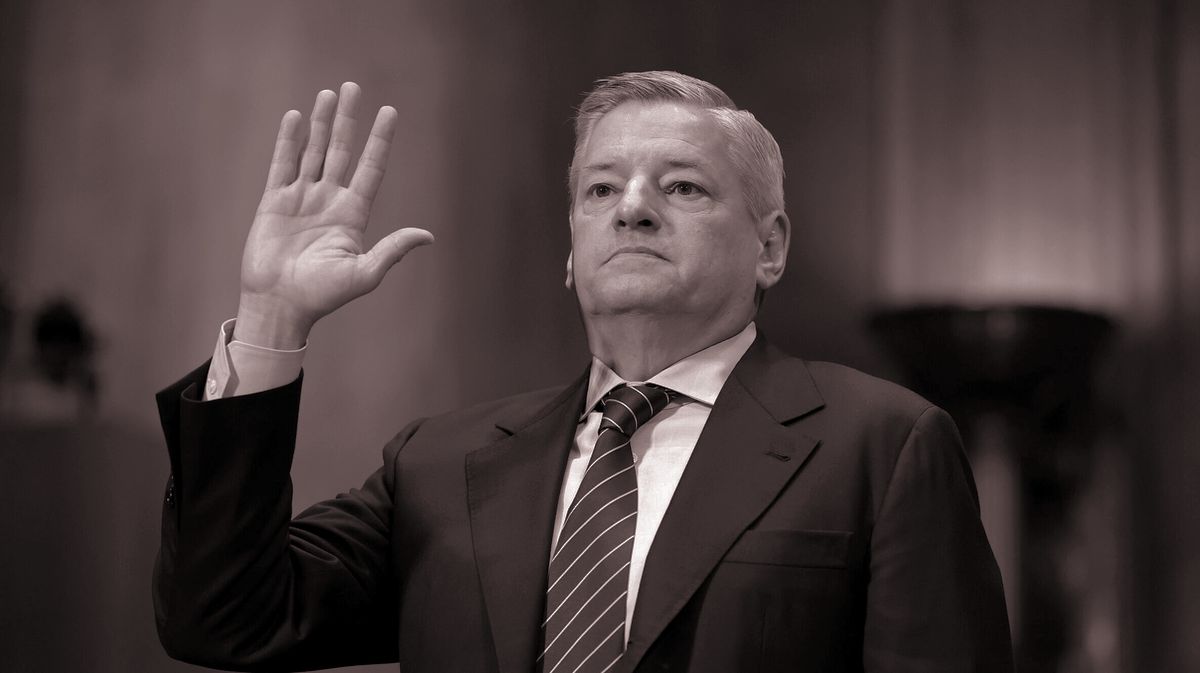
Ted Sarandos and David Zaslav are lucky that the Senate Judiciary Committee
doesn’t have the authority to block significant mergers—if it did, Tuesday’s two-hour hearing “examining the competitive impact” of their deal surely would have spelled doom for the proposed $83 billion merger (cash and assumed debt) of Netflix and Warner Bros. Discovery’s Studios and Streaming business unit. It’s been years since I’ve seen so much bipartisan unity: Just about everyone seems to have a bone to pick with this deal.
Sen. Mike Lee, the Utah Republican and
chairman of the Antitrust, Competition Policy, and Consumer Rights subcommittee before which Sarandos appeared, started the hearing by homing in on potential horizontal antitrust concerns, noting that the merger would not only “give Netflix control over Warner Bros.’ existing catalog of entertainment content, but also [its] intellectual property for future productions.” Both companies, he reminded the committee, compete to produce TV shows and films, raising the specter that a merger
would shrink the market for Hollywood talent. Referencing the Justice Department’s success in blocking Penguin Random House’s proposed acquisition of Simon & Schuster in 2023, Lee noted that “monopsony power, … the potential power to suppress wages or limit professional opportunities, is a cognizable antitrust harm, separate and apart from any monopoly focused concerns.”
But Lee was just getting warmed up. “Netflix is the largest global streaming platform, wielding an enormous influence
due to its size,” he continued, warning of the dangers of “vertical foreclosure”—for a merged firm would have “both the incentive and the ability to put rivals at a disadvantage” and influence “how Americans access movies and series for many decades to come.” That does not sound like someone who would support regulatory approval of the deal.
Perhaps unsurprisingly, the hearing devolved from there. As it turned out, Lee was pretty much the only senator on the antitrust
subcommittee focused on the antitrust questions raised by the proposed deal, though Sen. Cory Booker, the ranking Democrat on the subcommittee, did warn that the sale of WBD to “any competitor” could have “serious consequences for consumers and for the television and film industry.” The other members just seemed to want to pontificate—some very articulately, I might add—on some hot-button issue related to the merger, from Trump’s apparent meddling to
accusations that Netflix is a “woke” cultural Marxism factory pumping out pro-LGBTQ content for kids.
Booker said that he’d invited Paramount Skydance C.E.O. David Ellison to participate in the hearing, but Ellison apparently declined, claiming that his presence wouldn’t be germane since PSKY’s offer had been rejected. Booker thanked Ellison, though, for meeting with him and other senators to answer questions. He just regretted that Ellison did not answer those questions
publicly—especially, he added, “given the serious concerns that I have regarding President Trump's involvement in the deal and the allegations of political favoritism.” In particular, Booker cited “allegations that Paramount has promised the president to make sweeping changes to CNN.” |
“The
Wokest Content in the History of the World”
|
For pure folly, though, nothing could beat the line of questioning pursued by Sen. Josh
Hawley. The Missouri Republican started off with some perfectly reasonable queries about the Teamsters and got Sarandos to pledge to continue using union labor, as well as commit to a minimum 45-day theatrical window for Warner Bros. films. Then he moved on to what he really seemed to care about: “Why is it that so much of Netflix content for children promotes a transgender ideology?” Needless to say, that question threw Sarandos for a loop. He replied that Netflix has no political
agenda of any kind. But Hawley wasn’t done. “Why is your children’s programming so full of this highly sexualized, highly controversial—highly controversial—agenda?” he asked. “I don’t understand it. It seems strange to me.”
Netflix, Sarandos replied, has millions of hours of children’s programming, featuring a “wide variety of stories and programs to meet a wide variety of people’s tastes.” He added, “We have state-of-the-art tools for you to manage those choices for your
children and to block any title that you might be offended by for any reason. We are parents at Netflix as well. We share all your concerns about raising kids and also the ability to raise them as you see fit in your household.”
But Hawley would not be swayed. “You want the United States government to allow you to become one of the largest, if not the largest, streaming monopolists in the world,” Hawley said. “I think we ought to be concerned about what content you’re
promoting.”
The fear that Netflix might be brainwashing kids into tolerating gay people or appreciating diversity also seemed to be on the mind of Hawley’s fellow Missouri Republican, Sen. Eric Schmitt, who referred to the company’s output as “the wokest content in the history of the world.” He went on: “Your company has made overtly political statements, has moved an agenda of D.E.I., of [former U.N. ambassador and national security advisor] Susan Rice
on your board, the founder of Barack Obama’s D.E.I. agenda. Ninety-nine percent of your employees contribute to Democrats to the tune of hundreds of millions of dollars. Your content is oversexualized for kids. You’re engaged in this very woke programming, overwhelmingly.” The scary part, at least for me anyway, was that these two senators were serious.
But my favorite moment came when Ted Cruz, the Republican senator from Texas, got ahold of the
microphone toward the end of the hearing. Democratic Sen. Amy Klobuchar, who is now a candidate for governor of Minnesota, had just offered a shameless plug for making movies in her state—noting that all of Fargo, The Mighty Ducks, and Grumpy Old Men had been filmed on her home turf. Cruz began by expressing his amazement that Klobuchar had “managed to reference that terrific movie Grumpy Old Men.” Klobuchar quickly responded that she thought
it was an appropriate reference to “our workplace.” Cruz agreed that it “does, in fact, describe our place of work.” Laughs all around.
Cruz, who has been carefully laying the seeds of a 2028 run for president, then turned to concerns that a combined Netflix-WBD would have monopoly power. He pointed to a man sitting behind Sarandos who was dressed up as Mr. Monopoly, the mascot for the Monopoly boardgame. It was probably not a coincidence. After Cruz got Sarandos to concede that
monopolies are not a good thing, he asked, “Should the American people be concerned about a monopoly in entertainment and streaming?” |
The Legit
D.O.J. Question
|
Sarandos defended the proposed deal by claiming that Netflix controlled only 9 percent of the streaming
market—assuming the likes of YouTube and TikTok are included—a share that would rise to 10 percent if it were to acquire HBO Max. “But that’s defining the market the way you want,” Cruz shot back, “and obviously, in antitrust assessment, the market definition is critical.”
Cruz, a former debater at both Princeton and Harvard Law, then referenced Billie Eilish’s somewhat controversial comment made at the Grammys. “One simple question,” Cruz said. “Are we right now on
stolen land?” After both Sarandos and WBD chief revenue officer Bruce Campbell replied they had no idea if the Capitol was on stolen land, Cruz went to town. “That speaks volumes that neither of you are willing to say, ‘Hell no, we’re not on stolen land!’” Cruz said. “And I will say, at the Grammys, when you see an entertainer say, ‘Nobody is illegal while we’re on stolen land,’ and then you see entertainers leap to their feet clapping so excitedly at the notion that America is
fundamentally illegitimate, it starts to convey that the entertainment world is deeply corrupt. And I will point out that the same singer who says ‘No one is illegal on stolen land’ promptly went back to her $14 million mansion, and somehow that stolen land she wasn’t concerned about—just the United States of America.” Heavy cake.
“Look,” Cruz concluded, reaching a crescendo, “Netflix has long been a left-wing company. Your founder Reed Hastings is one of the
biggest Democrat donors in the country, including giving millions recently to the massive gerrymander in California, making it one of the most gerrymandered states in the union, because your founder desperately wants a Democrat House of Representatives. Susan Rice from the Obama White House is on your board of directors. You guys gave $50 million to the Obamas, as far as I can tell, to produce no discernible content whatsoever. How would you tell a Texan sitting at home to feel comfortable? CNN
is already a dumpster fire. There’s nothing resembling objectivity. There’s nothing resembling journalism anymore. How should they feel even remotely confident that if this merger happens, the combined entity would not simply be a propaganda outlet pushing one particular political view with much greater market power than you have now?” (Note to the senator from Texas: If Netflix prevails, CNN would be spun out as part of a separate public company, which Netflix would have nothing to do with, but
whatevs.)
Nobody definitively knows whether the Justice Department—or the E.U.—will approve the proposed merger between Netflix and WBD. We also don’t know if the PSKY crowd has one more trick up its sleeve and might even raise its bid before the March WBD shareholder vote to approve the Netflix deal. But if these political talking points reflect how the Trump Justice Department is looking at the potential combination, it could be a long putt from here to closing for one of the biggest
and most important mergers in history. And that, of course, is the wager that the Ellisons and their partners at RedBird Capital are making. (Usual disclosure: As a result of a recent transaction, Zaz is a de minimis investor in Puck. RedBird is a minority shareholder.) We’ll know soon enough, or eventually, if that was a smart bet. |
|
|
Finally, a media podcast about what’s actually happening in the media—not the oversanitized, legal-and-standards-approved
version you read online. Join Dylan Byers, Puck’s veteran media reporter, and Julia Alexander, a longtime media analyst, as they sit down with TV personalities, moguls, pundits, and industry executives for raw, honest, sometimes salacious conversations about the business of media and its biggest egos. New episodes publish every Tuesday and Friday. |
|
|
An essential, insider-friendly Hollywood tip sheet from Matthew Belloni, who spent 14 years in the trenches at The
Hollywood Reporter and five before that practicing entertainment law. What I’m Hearing also features veteran Hollywood journalist Kim Masters, as well as a special companion email from Eriq Gardner, focused on entertainment law, and weekly box office analysis from Scott Mendelson. |
|
|
Need help? Review our
FAQ page or contact us for assistance. For brand partnerships, email ads@puck.news.
You received this email because you signed up to receive emails from Puck, or as part of your Puck account associated with {{customer.email}}. To stop receiving this newsletter and/or manage all your email preferences, click here. |
Puck is published by Heat Media LLC. 107 Greenwich St., New York, NY 10006 |
|
|
|