Happy Sunday and welcome back to Dry Powder.
Thanks as always for subscribing, and for supporting the work we're doing here at Puck as we build this company in real time.
For today's column, I chatted up my old friend Michael Lewis, the bestselling author of Liar's Poker and The Big Short, among others iconic books on Wall Street, about what has changed since his wild days at Solomon Brothers, the industry's evolving risk calculus, his thoughts on crypto, and more.
Enjoy, Bill

Sure, the days of strippers on the Salomon Brothers traders’ desks are long gone, but the iconic author has another revelation about what has changed most on Wall Street. “One of the incredible feats Wall Street has performed is preserving the businesses that aren’t really necessary anymore,” he says. I’ve been friends with Michael Lewis, the journalistic juggernaut, for many years—from our time together in the heyday of Vanity Fair, dating as far back to his first marriage to Kate Bohner, my old Lazard colleague (who moonlighted in my recent, absurdist adventure with Carlos Watson). I admire Michael as a writer, as do so many others, for his ability to perceive things that other people don’t. While I was writing about the 2008 financial crisis from the perspective of a bank that failed (Bear Stearns, in House of Cards), and another that survived (Goldman Sachs, in Money and Power), Michael was writing about the financial crisis from the perspective of the handful of people who saw trouble brewing in the mortgage market in the years before the financial crisis and made a killing. I presume you’ve read The Big Short.
It’s been nearly 33 years since the publication of his first book, the seminal Liar’s Poker, about his brief and eventful stint at Salomon Brothers in the late 1980s. He’s also completed a five-part podcast, Other People’s Money, where he chats up, among others, various characters who were at Salomon Brothers with him back in the day. In other words, it seemed to me like a great time to reconnect with Michael and get his take on what’s up on Wall Street and how it’s changed since he wrote Liar’s Poker in 1989, where he thinks the money action is now, and what his mood is these days as the pandemic seems to be fading, only to be replaced by the growing threat of World War III.
When Michael and I spoke, he was in his car, driving north up the California coast to Santa Barbara, from the “little place” he has in Laguna Beach. He had been in San Diego working on his podcast and was on his way to give a talk at Westmont College, in Santa Barbara. He had become interested in re-reading Liar’s Poker for the first time in 30 years, he said, and in re-issuing it as an audio book, after hearing from his daughter Quinn, who is a junior at Harvard, that her friends were being told during their interviews for Wall Street jobs that they should read her father’s book, even though it was written in what was obviously a very different era. “I thought how strange that was,” he said, “because on the surface, it doesn't seem all that relevant. I can't believe that reading about strippers on the desks at Salomon Brothers in the 1980s, and traders all throwing pizza at each other, had any resonance for someone who's walking into a hedge fund or into a big bank today.”
In re-reading the book, Lewis said, he was able to observe himself learning to become a writer. Somewhat surprisingly, he told me, he didn’t particularly like his writing in Liar’s Poker. “It took me a while to figure out how to do it,” he said, “I was bailed out by the quality of the material, my illicitly-got material. The fact that I had just, by accident, landed in about the best place to write a book about Wall Street, and had all this stuff just handed to me on a platter, bailed me out. But the level of skill was really low.”
He was also struck by how different Wall Street is today than it was then. “The first is how much more fun it was in the sense that people, their behavior was unselfconscious and the range of behavior, the range of personality types that were permitted on the Salomon trading floor is just so much vaster than what you find in finance today,” he explained. “There was this feeling in the air then that the sums of money were booming. It felt like there was a gusher on Wall Street and everybody was going to get it while they could. There was an elation in the air.” As it turned out, of course, that was all going to change.
“The B Team”
Nowadays, Michael observed, the scene inside the big Wall Street banks is “all premeditated,” and when you walk onto the block-long trading floors, “it’s completely silent” because the traders are all fixated on their terminal screens. Perhaps most important, the calculus for engaging in risky and flamboyant behavior—both personal and professional—has changed. “The last thing anybody would do is something personally outrageous because they’ve got too much at stake,” he said. “The people there had probably conceived of the ambition of working on Wall Street when they were about 12 years old, as opposed to having stumbled into it. It feels cooler, more efficient, less interesting to write about, less interesting to live.” He theorized that maybe the Wall Street bosses are urging newbies to read his book because they want to try to persuade them that Wall Street is still fun, even though it isn’t. (Ironically, much like the Godfather, the book intended to lambast a way of life has, over the years, been embraced by the culture it shivved.)
Back in the day, he said, if he were dropped onto Wall Street, he’d know exactly where to find the best story: “In the middle of these big investment banks. It would have been Drexel or even Goldman or Salomon. That was the center of the universe. They don’t feel that way now. They feel like the B team…I think it's just not anything like it was. The range of behavior is too constrained. The consequences of what's being done just feels like much less, like the stakes feel lower.” He said it’s probably a “good sign for the culture” that bankers have become “boring again.” Now, the action (the “A team,” as he put it) is in private equity, venture capital, hedge funds, and crypto. “The fringe has become more and more the interesting place,” he said. “These Wall Street institutions are just like these big dog corporations. That’s the obvious thing that has changed.”
Michael agreed with me, though, that this was probably by design. After the 2008 financial crisis, Wall Street’s new regulators at the Federal Reserve were determined to try to prevent Wall Street from again causing a major financial crisis and so they forced the big banks to hold much more capital than they would prefer, to pare the riskiest assets from their balance sheets, to make fewer, if any, proprietary bets and to cut back on some of their market-making.
Much of the risk that used to be housed inside Wall Street banks has been moved into hedge funds and the so-called “shadow banks,” such as Ares Capital Corporation, Antares Capital, Golub Capital, and Owl Rock Capital, that have been buying and selling the risk that Wall Street has been prevented from holding by its regulators. There are also big credit funds that have sprung up inside private-equity firms and hedge funds. Somehow, the alchemy of new regulations, seriously low interest rates, and the pandemic combined to make 2021 Wall Street’s most profitable year ever: JPMorgan Chase made $48 billion in profit; Goldman made $21 billion. (Needless to say, 2022 is looking like it will be very different.)
Michael has been amazed by Wall Street’s resilience. “If you'd have told me, back when I was on the Salomon trading floor, that this thing called the Internet was going to come along, and you would be able to do all these things electronically that you used to have to do basically over the phone, I would have told you, a lot of Wall Street's going to just vanish,” he said. “There's not going to be the need for the intermediation that these places exist to do. One of the incredible feats that Wall Street has performed is preserving the businesses that aren’t really necessary anymore. We used to live in a world of, a long time ago, expensive intermediation. We now live in a world of a lot of totally unnecessary intermediation.”
He wondered, for example, why he must still go through a Wall Street broker to buy a stock. Why can’t he just have an account linked directly to one of the stock exchanges and buy and sell what he wants that way? (This is also the battle cry of the so-called “DeFi” movement.) “It's this ancient system,” he said. “God knows how long they can survive. But I would never have guessed it would have survived the technology jolt that it received.”
“If You Fail, You Fail”
Michael used to believe the 2008 Wall Street bailouts were the right policy move, that the damage from letting the existing financial system fail would have been much worse than preserving it. He no longer believes that. “I now think that there was a need for society to see that if you fail, you fail, even if you're a really rich person,” he told me. “And that they're playing by the same set of rules that I’m playing by. I think if you rewind the tape, you would have done it differently. You would have let some of these firms go down. Or nationalize them. Or whatever.”
He thinks the Feds’ decision to preserve a system that had failed has had “profound” effects in American culture. “You can track the politics of the country back to that moment,” he said. “Where all of a sudden, ‘Oh my god, this isn't actually everybody living by the same set of rules.’ You get socialism for the people at the top and everybody else gets to live like kings. There's a cynicism about the system being rigged that comes out of it. You get Bitcoin.”
Post-crisis Wall Street has become sanitized in other ways too, he noted. In his Other People’s Money podcast, he had a conversation with Anne Clarke Wolff, who used to work with him at Salomon Brothers and who has just started an all-female, all-minority investment bank, Independence Point Advisors— nicknamed “Salomon Sisters”—in which Lazard has taken a minority interest. He thought they would be talking about how things on Wall Street have gotten better for women over the years, not worse. “Instead, she said it was actually better then than it is now,” Michael said.
He continued: “I thought that was really interesting. She said that ‘Yeah, people slapped your ass and all that stuff. But you could actually have real relationships with the men who ran the place. They mentored you and if you were good, you moved up because you had these relationships.’ She said the current environment is so sterile, it's so careful. ‘I can't go to dinner with my male superior because he's afraid to.’ The mentoring is gone. Instead, the relationships between the men who still basically run the place and the women who want to move up have become very cautious, to the detriment of the women. I was shocked.”
Naturally, I wanted to know what else Michael was up to these days. For the last three months, he told me, he’s been working on a new season of Against the Rules, the podcast he first created three years ago. The premise is to explore a role in American life that has been volatile. The first season was about referees, and the second was about coaches. This year, he’s exploring our so-called experts. “The question that's being posed is how can one society generate so much expertise and then fail to use it?” he said. “How come we're so good at generating knowledge and so inept at using it?”
Then there’s the television show he just sold to Apple TV, based upon the first piece he wrote for Vanity Fair, about the pipeline that once existed between Cuba and Major League Baseball. It was beautifully edited by Doug Stumpf, our former editor at Vanity Fair, and Graydon Carter’s longtime deputy. He’ll be writing the screenplay for the show during the next few months. “God knows whether they make it or not,” he said, “but they seem very hot to trot right now.” He adds, “I’m a failed screenwriter. I got paid a whole bunch to do things that have never found their way onto the air yet.”
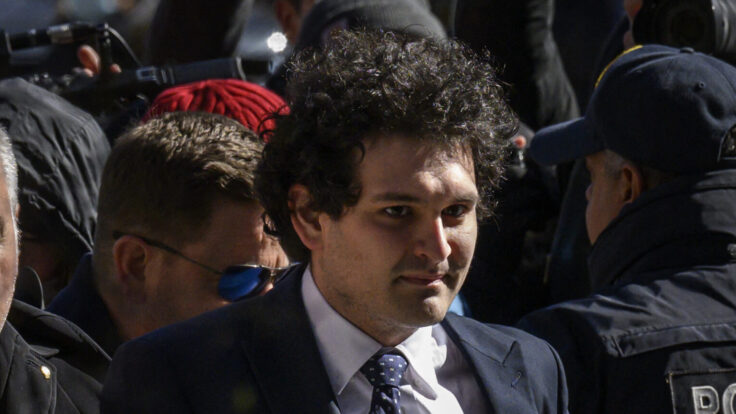
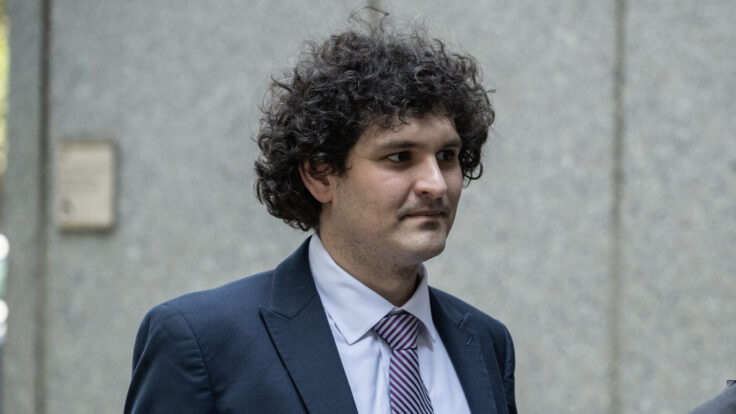
He’s also thinking about a new book, perhaps about some of the people on the fringes of finance who are making fortunes that the bankers on Wall Street can only dream about. One name that kept popping up in our conversation was Sam Bankman-Fried, the founder of the crypto exchange FTX, who was recently and expertly profiled by my partner Teddy Schleifer. (I also interviewed him for the crypto documentary film I’ve been working on for months.) S.B.F., as he’s known, just turned 30 years old and is worth around $30 billion. Until his birthday, on March 6, he was the world’s richest person under 30 and has become increasingly active in Democratic politics. Michael’s been spending time with S.B.F. and is attending Anthony Scaramucci’s upcoming SALT/crypto conference in the Bahamas, in April. (I’m betting crypto and S.B.F. will feature prominently in his next book.)
Michael said he likes working in different media at the same time. “It keeps me limber and strong,” he said. “It's like cross-training. It's like you're exercising different muscles when you're writing for the ear or for the eye. It forces you to think about how things sound. It feeds back into the book writing in really useful ways.” He also doesn’t want to be forced into the habit of finishing one book and then starting another one. “It really helps me to have a year in between,” he continued. The podcasts and the screenwriting give him other things to do, while also meeting a lot of new people and learning from them, until he lands on a new book topic. “There's this risk of generating the books because that's what you're supposed to do,” he said.
But, he said, he laments not having a place to write long-form pieces that aren’t going to be books, as he used to be able to do at Vanity Fair, the New Republic and the New York Times Magazine. “I miss it,” he said. “I miss the conversations with the editor. I miss the space in the shop window where I’m expected to produce something. I miss it because there's no obvious place right now … What's really happened is the podcast has taken the place of my magazine writing. There's great joy in that. There are things I like better about it. But there are things I miss, too.”
FOUR STORIES WE'RE TALKING ABOUT 
A24, the ultra-arty indie film studio, is trading on its hipster ethos for a huge injection of private equity cash. And in this market, why not? MATTHEW BELLONI 
Within Putin’s propaganda machine, polls show two-thirds support for Russia’s “special military operation.” Can they be trusted? JULIA IOFFE 
The new king of cable media is preparing to restructure his org chart. Meanwhile, at Chris Licht’s CNN, a new game of thrones begins. DYLAN BYERS 
On Wall Street, the horror of Russia’s invasion of Ukraine has become a uniquely dark investing opportunity. WILLIAM D. COHAN 
You received this message because you signed up to receive emails from Puck.
Was this email forwarded to you?
Sent to {{customer.email}}
Puck is published by Heat Media LLC.
For support, just reply to this e-mail. For brand partnerships, email ads@puck.news |


SHARE