{{ 'now' | timezone: 'America/New_York' | date: '%b %d, %Y' }} |
|
|
Welcome back to Dry Powder. I’m Bill Cohan, back with the
latest news on the media deal of ’25, which quickly became the deal of ’26… and may yet become the deal of ’27. That’s right, the love triangle of our boy David Zaslav, Ted Sarandos, and David Ellison and Gerry Cardinale. Throughout this saga, a number of my friends and former colleagues on Wall Street have joked that I should get a deal
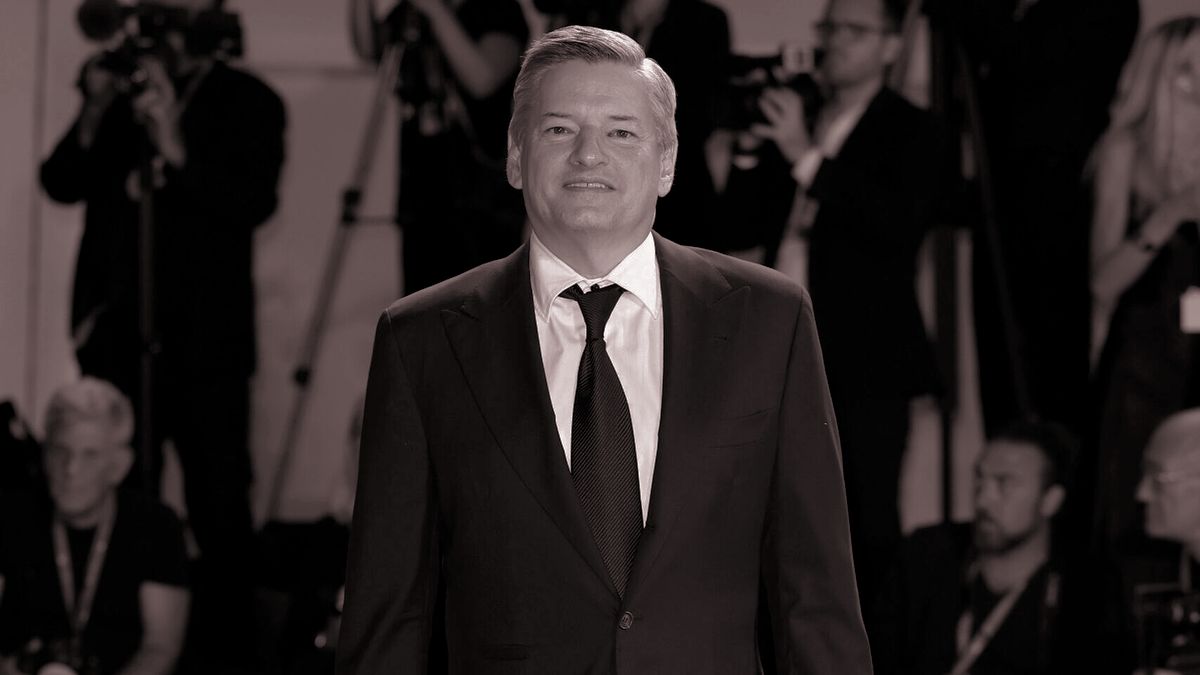
fee for my occasional wisdom. But tonight, I’m taking things a bit further than normal: Given the nature of Paramount’s latest $31-per-share, best-and-final bid, I have some very specific non-investment advice for Netflix co-C.E.O. Ted Sarandos and his board. Mentioned in this issue: David Zaslav, Ted Sarandos, David
Ellison, Gerry Cardinale, Bill Ackman, Warren Buffett, Larry Ellison, Kenny Moelis, Donald Trump, Lindsey Graham, Susan Rice, Reed Hastings, Amol Rajan, and more…
But first…
|
- The
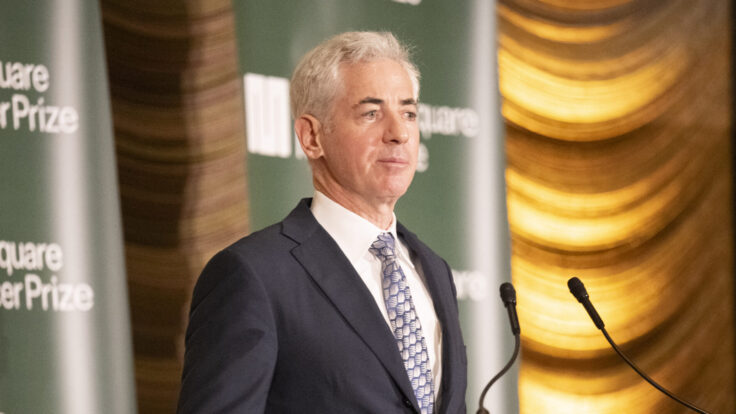
tao of Bill: Bill Ackman, the hedge fund manager and social media aficionado with a net worth of around $10 billion, has long fancied himself his generation’s Warren Buffett, who is sitting on a $150 billion fortune. So, yes, Bill has a long road ahead—and it recently got even longer.
After multiple attempts to sell his real estate company, Howard Hughes Corporation—once through Centerview Partners and then again through Jefferies—last May, Ackman
invested a fresh $900 million in the business at $100 a share. In the process, he increased his stake to 47 percent, from 38 percent, and effectively secured control of a company that he hopes to transform into his own Berkshire Hathaway. (I’ve previously written about Bill’s Buffettphilia here and
here.) As part of that deal, Bill and his partners established a new holding company within Howard Hughes, while leaving its principal real estate business and management team intact.
The plan was for Bill and his smarty-pants partners to use the holding company to acquire controlling stakes in small businesses, aping
Warren’s strategy over the past half-century. As best as I can tell, however, Howard Hughes has agreed to acquire only one company so far: Vantage Group Holdings Ltd., a private specialty insurer and reinsurer, for $2.1 billion, with the deal expected to close in the second quarter. Buying an insurer, of course, follows the well-thumbed Buffett playbook.
Bill certainly paid dearly for the privilege of gaining control of Howard Hughes: His $100-a-share deal represented a 48 percent premium
to the share price at the time. Since then, Ackman has watched his investment decline by 27 percent, representing a loss of some $250 million of the $900 million he invested.
If that weren’t enough of a headache, Bill, his hedge fund Pershing Square, and several colleagues are now defendants in a new shareholder class action in Delaware Chancery Court. The plaintiffs are a group of disgruntled shareholders who claim that Ackman got Howard Hughes on the cheap by intimidating the board’s
special committee into approving the transaction. I’m not sure this is a winning argument, given that Bill is significantly underwater on his latest investment in the company and worked unsuccessfully to sell it before deciding to increase his stake. But time will tell.
The plaintiffs—Charter Township of Shelby Fire & Police Retirement System, MVS Marine LLC, and Kurtis Solberg—argue that the board breached its fiduciary duty by allowing Ackman to gain control of Howard Hughes. They
further claim that some directors had a conflict of interest due to their ties to Ackman’s hedge fund, and that he gained control of the company without paying the minority shareholders a control premium. (Bill bought his 9 million new shares from the company rather than existing shareholders.)
According to the complaint, Morgan Stanley, which advised the special committee, valued Howard Hughes’s net asset value at more than $117 a share—well above the $100 a share that Ackman paid. The
plaintiffs claim Morgan Stanley provided its valuation views and its fairness opinion only after the deal was signed. “Standing up to Bill Ackman is not for the faint of heart,” the plaintiffs argued. “Ackman is a prominent investor and short-seller. When Ackman doesn’t get his way, he often responds with threats. When those fail, he responds with public demonization campaigns—through the press and his 1.9 million-follower Twitter account—aimed at destroying the reputation of his
recalcitrant target(s).”
When the lawsuit was filed, on February 13, Pershing Square argued it was without merit, and has yet to respond in court. That pretty much remains Bill’s view. He wouldn’t comment on the record, but I get the sense he’s peeved that Labaton Keller Sucharow brought a lawsuit that will no doubt result in a costly, drawn-out legal process, amounting to little more than a nuisance in the end. And in case you’re wondering, Bill hasn’t posted anything about the lawsuit
on X. I’ll let you know how this one goes.
|
Now, on to the latest developments in the WBD sale… |
|
|
Even if Ted Sarandos can charm D.C. into blessing his Netflix–Warner Bros. deal, the
savviest M&A move at his disposal is to let the Ellisons win the trophy, overextend their balance sheet, then sit back and wait for the sequel. |
|
|
I have a simple piece of unsolicited advice for Ted Sarandos regarding his merger with
Warner Bros. Discovery: Walk away now and let the desperate boneheads at Paramount Skydance get the Pyrrhic victory on this one. In fact, there are many good reasons that Ted should ignore his highly respected M&A advisor Kenny Moelis, who I’m sure is telling him to raise his $27.75-per-share, all-cash bid for WBD’s Streaming & Studios business to something that—along with the value of the Global Networks equity stub—matches or exceeds PSKY’s latest $31-per-share,
all-cash bid for all of the company. But Moelis may get paid either way, whereas the Netflix team will need to justify this deal to multiple governments, Sarandos’s shareholders, and Wall Street analysts for months to come. Ted should let PSKY have it—otherwise he’ll regret overpaying for a business that has singed everyone who’s owned it in the past 50 years.
I imagine that Ted’s ego may be caught up in the deal heat at this point, as evidenced by his impressive media campaign over the
past week to convince both the industry and the markets that Netflix is devoted to winning WBD. But the best deals are often the ones you don’t do, and there are now too many good reasons to drop the pen and walk away. Just because PSKY is badly overpaying for WBD—kudos to David Zaslav for running a brilliant M&A process—doesn’t mean that he has to top its bid. (Usual disclosure: Through a recent transaction, Zaz is a de minimis investor in Puck; RedBird
Capital, a partner in Paramount Skydance, is a minority shareholder.)
First, if Netflix declines to match or exceed the PSKY bid, the WBD board would likely switch its allegiance to PSKY, triggering a $2.8 billion breakup fee to the streamer. (In one of the recent rounds of negotiations, Zaz got the Ellisons to agree to underwrite that fee.) Yes, that’s funny money for a company with a $350 billion market cap that already spends $20 billion a year on content. But
Netflix’s stock is down more than 30 percent since this mishegas began, and a nearly $3 billion cherry could go toward more shows, theaters, or capex—like the studio the company is building in New Jersey.
Let’s not forget, these are deep waters for Netflix to be swimming in. The biggest M&A transaction in the company’s nearly 30-year history was its $700 million deal for the Roald Dahl Story Company in 2021, which gave Netflix access to content including Charlie and the
Chocolate Factory and James and the Giant Peach. But that deal is a pipsqueak compared to what Netflix is proposing for WBD, which would likely exceed $90 billion—inclusive of more than $60 billion of debt—if Netflix matches or exceeds the new PSKY bid. (This is not investment advice.)
My faithful readers don’t need reminding that $60 billion is a lot of debt. When Zaz took on $55 billion of debt in his acquisition of WarnerMedia from AT&T, it almost sank the whole
WBD enterprise. The mere fact that it didn’t is a testament to Zaz’s financial engineering dexterity, though it won him no friends in Hollywood along the way. At the moment, Sarandos is Mr. Hollywood. But the contortions Netflix would need to undergo to service and to pay down that $60 billion won’t be pretty, and Ted’s moment in the Brentwood sun would fade faster than a Sunset Boulevard billboard. |
Why Sarandos & Co. would want to gamble with Netflix’s pristine balance sheet has remained an open question
for me during this process. The company’s net debt is now around $5.5 billion, and its net debt-to-EBITDA ratio is roughly 0.5x, an enviable investment-grade credit rating. Buying WBD’s Streaming & Studios business would lard billions more debt onto the company and increase its leverage ratio to in excess of 4x, putting it close to the BBB cliff and potential junk territory. Going from $5 billion of debt to more than $60 billion isn’t a walk in the park. Ask Zaz.
There’s been plenty of
chatter lately that the Netflix–WBD deal will never get regulatory approval during Trump II, while others insist Sarandos will be able to charm the pants off the president and his crony regulators. Maybe Washington will buy Netflix’s argument that the new entity would represent a vertical, not a horizontal merger, and that its real competitors are YouTube and TikTok rather than just Disney, Peacock, and Paramount+. And perhaps Sarandos has insight into the regulatory process
that the rest of us don’t. (For what it’s worth, he didn’t get a lot of love during the overwrought, though meaningless, Senate hearing a few weeks ago, and who knows what to make of his rival David Ellison sitting cheek-by-jowl with Sen. Lindsey Graham at the State of the Union.) But aside from whatever deal Sarandos can cut with Trump, getting this approved sure seems like a long putt.
If regulators block it, Netflix will owe WBD a cool $5.8 billion.
Sarandos may see that as money well spent to tie up the deal in courts for some 18 months, as I discussed on Sunday, allowing Zaz to complete the spinoff of Global Networks. That, in turn, would make WBD less attractive to the Ellisons, who are desperate to get Global Networks’ cashflow so they can pay down what will be their own highly leveraged behemoth if
they get all of WBD.
But stepping back to read the tea leaves, it’s clear the Justice Department is investigating whether the Netflix–WBD combination will create a monopolist—as is bound to happen when you combine the number one and four streamers to create a giant with 450 million subscribers. Less clear is whether Justice is also investigating Netflix as a monopolist regardless of the WBD outcome. Either way, one has to wonder what Trump meant when he wrote on Truth Social the
other day that Netflix needed to fire Susan Rice “IMMEDIATELY” from the board of directors or else “pay the consequences.” |
In short, between the Senate sentiment, the letters that Justice has sent to Netflix, and Trump’s unhinged
late-night ramblings, it sure doesn’t sound like the regulators are lining up in Netflix’s favor. Instead of paying $3,000-an-hour lawyers and then handing WBD $5.8 billion after losing these legal battles, why not keep the Netflix juggernaut going without WBD? When I first met Sarandos a dozen or so years ago in his Hollywood bungalow, he told me about House of Cards, the first TV show Netflix was going to produce. He struck me as smart and politically savvy. Today, he strikes me as a
man who doesn’t need WBD.
Maybe Sarandos and Reed Hastings don’t care that their combined roughly 22 million shares have lost nearly $800 million in value, but I suspect their collective shareholders care deeply that some $110 billion has been flushed since December. I also suspect they would love it if Netflix used this fork in the road to walk away, collect the $2.8 billion breakup fee, and cut a content distribution deal with WBD and PSKY. Netflix’s share price
would soar—perhaps higher than when the company embarked on the hunt for Zaz’s white whale.
Ted said as much in his Monday interview with the BBC’s Amol Rajan. When Rajan asked whether Netflix was prepared to raise its bid, he replied, “I don’t want to do hypotheticals. So, this is part of the process. We very much like the deal where we’re at right now. We’re very disciplined buyers, and we always have been. I think this is a spectacular opportunity at a price.” Exactly
right. This is the moment to show that discipline.
In fact, if the past is any guide, pushing PSKY to overpay for WBD and create one of the largest L.B.O.s in history could mean that Sarandos will get another bite at the WBD apple down the road. By my count, there have been some nine changes in ownership of WBD and its predecessors since Warner Bros. was founded as an independent studio in 1923. Unfortunately for Netflix and its shareholders, the PSKY revised bid of $31 per share
is pretty lame, some 10 percent below the $34 a share I thought it would need to win. (I do give PSKY points for its “ticking fee,” now moved up to the end of September, which adds 50 cents per share for every quarter that the deal doesn’t close; its $7 billion regulatory breakup fee; and the agreement by Larry Ellison to put more equity into the deal if there is a solvency issue at or near closing.)
So if Netflix wants to match it, or beat it, it won’t take much. WBD has
all but said its board will deem the $31-per-share bid “superior”—although that’s not a certainty yet. If it does, that will give Ted four days to abandon ship while he still can. |
|
|
Puck sports correspondent John Ourand and a rotating cast of industry insiders take you inside the executive suites and owners
boxes where the decisions that shape the entire sports business are made. You’ll hear interviews with players, network execs, and everyone in between. The Varsity is an extension of John’s private email for Puck by the same name. New episodes publish every Wednesday and Sunday. |
|
|
Puck’s daily political newsletter from Washington on what’s really happening in this town, from the White House to the Pentagon
to Capitol Hill, K Street, and the campaign trail. |
|
|
Need help? Review our
FAQ page or contact us for assistance. For brand partnerships, email ads@puck.news.
You received this email because you signed up to receive emails from Puck, or as part of your Puck account associated with {{customer.email}}. To stop receiving this newsletter and/or manage all your email preferences, click here. |
Puck is published by Heat Media LLC. 107 Greenwich St., New York, NY 10006 |
|
|
|