{{ 'now' | timezone: 'America/New_York' | date: '%b %d, %Y' }} |
|
|
|
Welcome back to Dry Powder. I’m Bill Cohan.
Ever since
Donald Trump initiated his misbegotten adventure in Iran, I’ve been hankering to speak with Dan Yergin, the vice chair of S&P Global and Pulitzer Prize–winning author who knows more about oil markets than anyone else on Earth. Dan and I are neighbors on Nantucket and have made an annual ritual of discussing the energy markets each summer. Unfortunately, global events hastened our need for a visit: A few days ago, we sat down to chat about how the war has roiled
the oil market, and what this all means for markets more generally in the U.S. and Asia. As you can imagine, it also got my mind reeling about what this might mean for our long-overdue recession.
Also mentioned in this issue: Bill Ackman, Warren Buffett, Jeff Zucker, the Ellisons, Bari Weiss, Gerry Cardinale, Jeff Shell,
David Zaslav, Franz Ferdinand, and many more…
But first… |
-
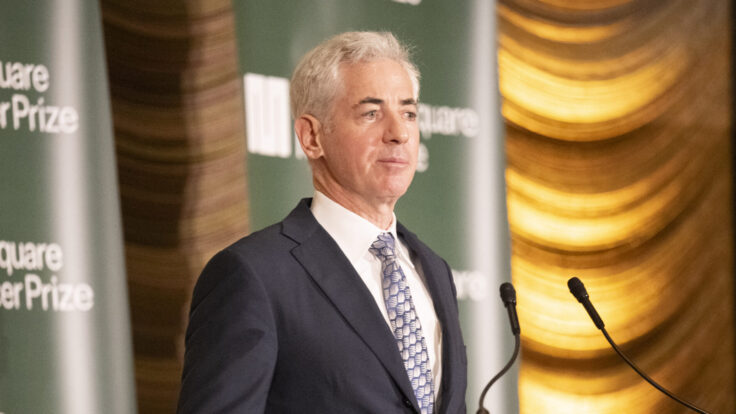
Ackman during wartime: Bill Ackman, the outspoken billionaire hedge fund manager eternally questing to become the Gen X Warren Buffett, filed not one but two I.P.O. prospectuses on Tuesday—one for his hedge fund management company, Pershing Square Inc., and another for a new closed-end fund, Pershing Square USA. The maneuver appeared to be a clever attempt to obtain a higher valuation
from the public markets for his management company while also raising new permanent capital. The filings were plenty confusing, so I asked Bill to chat about his strategy on the record. Alas, he demurred, since he’s in the registration period with the S.E.C. But I will nonetheless try to explain his latest machinations.
Bill appears to be attempting to attract investors to the closed-end fund by offering them free shares in his hedge fund management company, which will also trade
publicly for the first time. I’m not sure why he decided he needed this sweetener to entice investors, but he has a track record of shareholder-friendly tactics. So if an investor buys 100 shares of the closed-end fund in its I.P.O., for instance, Bill will give them 20 shares of the hedge fund management company for free. “We are giving you ‘bonus’ shares in PSI to thank you for your investment in PSUS, our first U.S.-listed investment fund, and because doing so makes good business sense,” he
wrote in his letter to prospective investors. He also explained that gifting shares in his management company, which was valued at $10 billion two years ago, will help get the closed-end fund’s I.P.O. done. The empire building is underway!
If the closed-end fund completes its I.P.O., Bill’s hedge fund management company will manage and receive fees from three separate entities: Howard Hughes Corporation (I’ve
written before about Bill’s grandiose plans for Howard Hughes); Pershing Square Holdings Ltd., his Guernsey-based closed-end fund; and the new closed-end fund. But, nota bene, dear investor: “Each of these entities is a permanent capital vehicle that does not provide the opportunity for redemptions by investors, enabling us to invest for the long
term without regard to short-term investor capital flows, while providing investors with daily liquidity due to their stock exchange listings,” Bill wrote.
Bill is hoping the closed-end fund will be able to raise “at least” $5 billion of new money (and hopefully $10 billion), inclusive of “gross commitments” of $2.8 billion he has already received from a private placement, which will be closed concurrently with the fund’s I.P.O. and is contingent upon it being completed successfully. Bill
eschewed the Big Three underwriters (Goldman, Morgan Stanley, and JPMorgan Chase) for this assignment, choosing instead Citigroup, Bank of America, Wells Fargo, UBS, and Jefferies. Goldman and JPMorgan Chase want to protect their hostile-defense advisory business, I gather, and working for Bill, an activist investor, might risk upsetting clients. (He also remains peeved at Morgan Stanley for representing the special committee in his $900 million investment in Howard Hughes Corporation last
year.)
As ever, Bill is bursting with ambition. He wants his hedge fund management company to become “one of the most valuable companies in the world,” he wrote, by generating the best long-term investment returns “of any investor ever.” He expects to do that, in part, by continuing to attract and retain the best investment professionals, and by investing in “what we consider to be some of the greatest businesses and long-term compounders of shareholder value”—which, of course, is his
stab at the Buffett mantle. At the moment, Bill’s biggest investments are in Uber, Alphabet, Amazon, Brookfield Asset Management, Meta, and Howard Hughes (which he just used to acquire insurer Vantage Group, another Buffett tactic).
Bill has no intention of being thwarted by market volatility related to the war in Iran, he wrote in his letter. Such conditions often result in underwriters telling companies to hold off on equity offerings until the fighting ends and markets recover. But
Bill thinks the market volatility is good for both his closed-end fund and his management company, because he can invest at a discount. “Pershing Square has been a long-term beneficiary of the opportunity to buy superb companies at bargain prices driven by macro events that did not have a material impact on their long-term intrinsic values,” Bill wrote. Will investors go for it? We should know in early April, after the Easter and Passover holidays. - Hey
Gerry, let’s get Jeff to run CNN–CBS News: For years, I’ve been fruitlessly peddling the idea that Jeff Zucker should run CBS, but Paramount Skydance’s $111 billion acquisition of Warner Bros. Discovery—and Jeff’s role at PSKY investor RedBird Capital—offers an even more quixotic hope: He could eventually run a rolled-up CBS News and CNN. Jeff offers the Ellisons the perfect avenue by which to kick Bari Weiss upstairs and let a pro back
into the stable to run a combined news operation. After all, Zucker led CNN during its glory days and is still revered by much of its staff. He could easily get both newsrooms back on a much-needed even keel.
Jeff has done some deals at RedBird IMI, his joint venture with RedBird Capital and the Abu Dhabi–based investment vehicle, including the recent combination of All3Media (owned by RedBird IMI) and Banijay Entertainment to create one of the world’s largest TV production companies. He
also just unwound his ill-fated Telegraph and Spectator deals in the U.K., which look like they might work out for him after all. But at the end of the day, Jeff is not a private equity investor—he’s a media operator, born to run large and complex organizations. When my partner Matt Belloni asked RedBird principal Gerry Cardinale on
The Town last week about the potential return of Zucker to run a combined CBS and CNN, he replied, “Look, Zucker is formidable, and he definitely has it in him. We’ve got to see what we’re going to do there.” When Matt pressed Gerry about whether that would mean Bari’s exit, he batted that idea down. “I’m
not saying that at all,” he said. “It’s premature.”
Anyway, this will obviously all come down to money and power. Zucker already has plenty of the former, and he may not be willing to enter a henhouse with so many egos—Bari, sure, but also the Ellisons, Jeff Shell (who never wanted him near this deal and may not be long for it himself), Gerry,
and, who knows, maybe even David Zaslav for a time. But Jeff is no stranger to complicated political dynamics—even if the real complexifier here would be the screaming phone call that the Ellisons would receive from the White House. Anyway, bring him back, I say! (Usual disclosure: Through a transaction, RedBird is a minority shareholder in Puck; Zaz is a de minimis investor.)
|
Now, on to the roiling markets… |
|
|
|
A very candid chat with oil market expert Dan Yergin on the potential unintended
consequences of Trump’s war in Iran. |
|
|
|
As faithful readers know, Dan Yergin—the Pulitzer Prize–winning author, guru of the oil
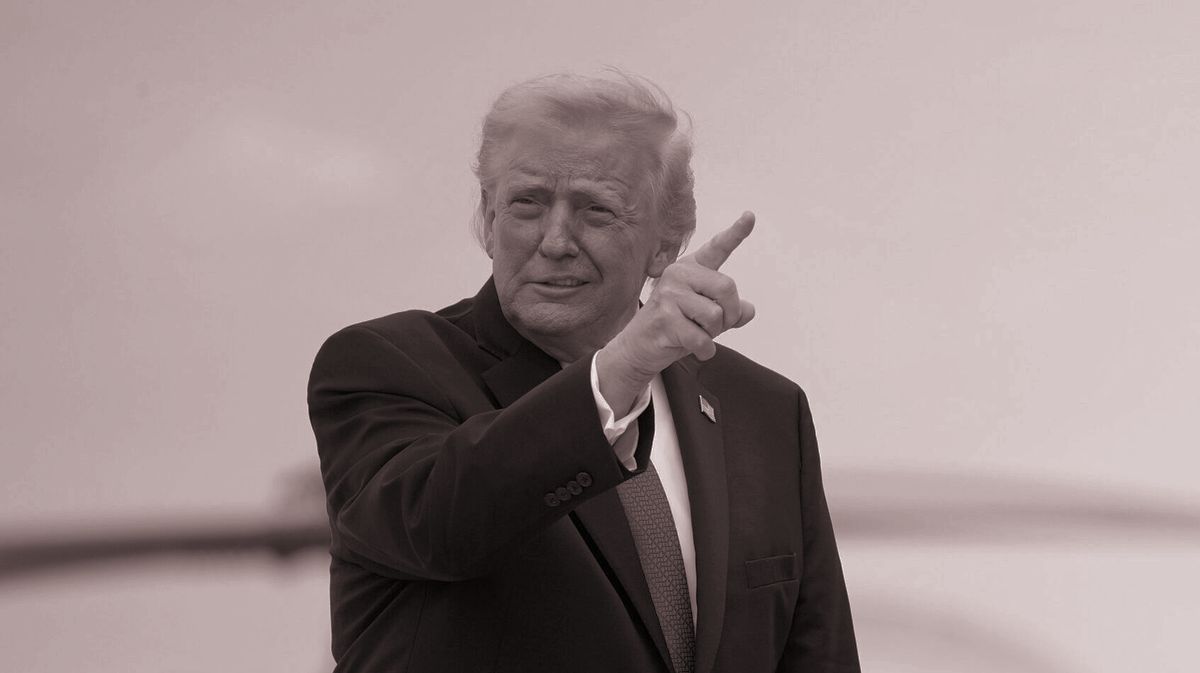
markets, and vice chairman of S&P Global—comes round my place in Nantucket each summer for a sit-down to discuss the global energy outlook. Today, however, I am fortunate to have Dan here a few months early, for obvious reasons: The Mad King has launched his war of choice against Iran, and it’s roiling the oil markets; the military action in the region has all but closed the Strait of Hormuz.
On Monday, Trump said the war was “very complete” and that oil companies should
“show some guts” and send loaded ships through the strait. The insurance companies that underwrite these massive tankers often feel quite differently—after Trump spoke, however, the price of a barrel of oil dropped to around $90, following an intraday spike to nearly $120. On Tuesday the price fell further, back to around $80 a barrel, and then rose again. (Predictably enough, an options trader emailed me on Monday night about the prescience of investors who, right before Trump spoke, had bet
that the price of a barrel of oil would fall, and made millions.) Regardless, the price of a barrel of oil is still up 50 percent since the beginning of the year—the direct result of Trump’s military buildup in the region starting in January.
In my conversation with Dan, he pointed out that Monday’s spike represented a 100 percent increase over the $60-a-barrel range where oil had been trading at the end of 2025. It’s been great for Trump’s oil buddies, but not so for American consumers,
who are seeing dramatic price increases at the gas pump. That could be why, with the midterms on the horizon, Trump is now framing the Iran conflict as a “short-term excursion”—in other words, to borrow the parlance of his detractors, this may just be another TACO moment.
Dan told me that the biggest economic impact of the president’s “excursion,” aside from in Iran itself, has been felt in Asia. After all, he noted, 80 percent of the oil that originates in the Gulf, and 90 percent of its
liquefied natural gas, goes to Asia. “We’re already seeing cargoes of L.N.G. that were going to go to Europe being diverted to Asia,” he said. Meanwhile, in Europe this week, the member countries of the International Energy Agency approved the release of some 400 million barrels from its strategic reserves to offset supply disruptions. The U.S., for its part, is actually a net exporter of oil.
But the global impacts all depend on the timetable. “If this is resolved in the next several
weeks, prices will go down,” Dan said. “Supplies would start flowing again. And you’ll see a huge sigh of relief in global markets.” However, he added, “If this goes on for another three weeks, then the repercussions become much more serious. It’s in the interests of the U.S. and oil consumers around the world to get this over with and resolved, and to get the strait opened up.” |
Unlike politics, it’s hard to manipulate the laws of supply and demand. Millions of commodities traders vote
with their dollars, nearly 24 hours a day. And when there’s a dislocation in the markets, such as the one we’re experiencing now, price acts as both a regulator and a forward-looking indicator. “People start bidding up the price of barrels and B.T.U.s of natural gas,” Dan said. “That’s what’s happening now.”
As the war rages on through its second week, the economy is starting to feel the second-order effects of Trump’s attack—specifically, the prospect of oil companies running out of
storage in the region and shutting down production facilities, since the oil currently on ships can’t be delivered. “Once that’s shut off, it will take longer to bring production back,” Dan said. On the bright side, he noted how much worse this would’ve been a decade or so ago, before the shale revolution made the U.S. a net exporter of oil and somewhat self-sufficient.
But there will still be repercussions for American consumers. “We actually export oil that we can’t easily refine and
import oil that fits our refineries better,” he said. So, of course, we’re affected by price fluctuations not only at the pump, but also on store shelves, where oil and oil-derived ingredients end up in countless products. “At the end of the day, it’s one global market,” Dan reminded me. “Prices in one part of the world inevitably affect prices in the other part of the world.”
The war’s long-term effects will come down to two factors, he explained: how long it lasts, and how much damage
is done to energy infrastructure along the way. “Trump began by saying ‘four weeks’ several times, which presumably is what the military planners told him,” Dan said. “But the message is unclear, and there’s no sign that Iran is going to cease resisting.”
I asked Dan how he’s handicapping the likelihood of Iran acquiescing to Trump’s demand for unconditional surrender. “This is existential for the Iranian government,” he said. “It’s who they are. It’s the ideology of the Iranian
Revolution, and martyrdom is part of their ideology. If you think about what’s happening now, it’s really [part of] the second revolution that occurred. The first was the overthrow of the shah; the second was the seizing of power by the Islamists a year later, and since then, they’ve defined their whole regime, their raison d’être, by a hatred for and opposition to the U.S. Their slogan has been ‘Death to America.’ So you can say this war has really been brewing for 50
years.”
After our chat, I took another look at Dan’s recent Financial Times opinion piece outlining the possible consequences of Trump’s war. He wrote: “One legacy of all this has been the nightmare scenario of the oil that flows through the Gulf being interdicted by an extended and destructive war,” he wrote. “The fear? That this will result in skyrocketing energy prices that send the world economy plummeting into a deep recession.”
Well, as my faithful readers know,
we’re long overdue for a correction in the markets. The last major financial crisis was in 2008, and these things tend to happen once every 20 years or so. It shouldn’t come as a surprise that we may be getting close to an exceptional event that once again resets Wall Street’s risk appetites, which have obviously surged to unsustainable levels. For a time, we wondered whether the catalyst would come from the emerging problems in the private-credit market, or perhaps a backlash to the frothy A.I.
hyperscaling economy. But the truth is that the Franz Ferdinand moment is often a surprise—the incident one least suspects. Could the catalyst come instead from Trump’s potentially misbegotten military adventure in Iran?
That’s the thing about an impending financial crisis. No one rings a bell at the top of the market, and no one who’s being honest knows what will kick off a tailspin. But there’s no mistaking when one has arrived. |
|
|
|
Puck founding partner Matt Belloni takes you inside the business of Hollywood, using exclusive reporting and insight to explain
the backstories on everything from Marvel movies to the streaming wars. |
|
|
|
Puck’s daily political newsletter from Washington on what’s really happening in this town, from the White House to the Pentagon
to Capitol Hill, K Street, and the campaign trail. |
|
|
|
Need help? Review our
FAQ page or contact us for assistance. For brand partnerships, email ads@puck.news.
You received this email because you signed up to receive emails from Puck, or as part of your Puck account associated with {{customer.email}}. To stop receiving this newsletter and/or manage all your email preferences, click here. |
Puck is published by Heat Media LLC. 107 Greenwich St., New York, NY 10006 |
|
|
|
|