Hello and welcome back to Dry Powder.
Thanks for being a part of Puck, our new media company covering the intersection of Wall Street, Washington, Silicon Valley, and Hollywood. And thanks for reading Dry Powder. If you're enjoying these private emails, consider sharing the subscription link with a friend—or reaching out to fritz@puck.news for a holiday package deal.
Bill
“The Ax” was once an influential figure on Wall Street, before Eliot Spitzer put the kibosh on the research industrial complex. Years later, Steve Tusa is the rare analyst elucidating the stakes for America’s most storied conglomerate. As in many professions, Wall Street loves its specialized jargon. Synthetic CDOs? Backwardation and contango? Leveraged recap anyone? The more confusing and esoteric the lingo the easier it is to keep outsiders at a distance and make it seem like the industry’s highly specialized expertise is worth the billions of dollars it generates in annual fees. Don’t get me wrong, much of what these masters of the universe do is worth paying for, just probably not as much as they want you to believe, or that in any way justifies the obscene profits that the Big Banks are raking in these days. (In case you missed it, JPMorgan Chase, our biggest bank, is making profits at a clip of around $40 billion a year.)
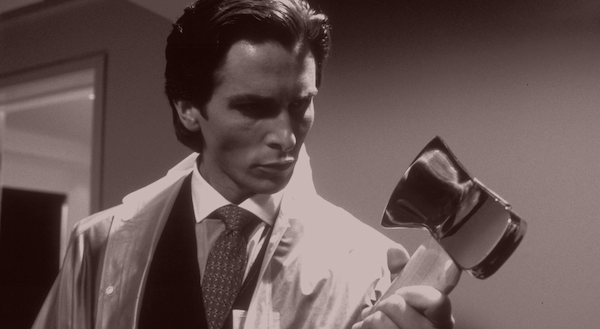
In any event, one of my favorite bits of Wall Street argot is when investment bankers refer to the most powerful and influential research analyst in a particular industry as “the Ax.” I don’t know the precise derivation of this honorific, but it’s likely a spin on how the same term is used to refer to the most powerful market maker in a particular stock or security.
Once upon a time, in the years before Eliot Spitzer lowered the boom on the growing collusion between research analysts and investment bankers in order to win lucrative underwriting assignments, the Ax could be a legendary figure. The Ax on Amazon’s stock, for instance, was Henry Blodget, then at Merrill Lynch. Whenever Blodget wrote or spoke about Amazon, the stock moved higher. He was forever putting higher and higher price targets on Amazon’s stock, which would drive the stock up and up and garner him more and more media attention. (Blodget proved to be prescient about Amazon but nevertheless got barred from the securities industry for life after a tussle with Spitzer. It turned out to be the best thing that ever happened to him: He started Business Insider, sold it to Axel Springer and made a fortune.) Mary Meeker, a longtime tech analyst at Morgan Stanley turned venture capitalist, was long the Ax in a variety of tech stocks.
Steve Tusa, a research analyst at JPMorgan Securities—the investment banking arm of JPMorgan Chase—is the Ax in GE, and has been for years. Well before most other research analysts, Tusa spotted and elucidated the problems at GE in an articulate and authoritative way. As a result, he’s taken his share of grief from the company, but the investors, both institutional and retail, who followed his advice have made a lot of money—or at least avoided losing money. That’s made him a powerful force among institutional investors and thus on Wall Street.
When Steve Tusa talks, people listen. A graduate of Dickinson University with a degree in political science, Tusa joined J.P. Morgan & Co. in 1998—two years before its life-changing merger with Chase—and he started covering GE as a junior analyst in 2001. At that point, Jack Welch was just retiring from GE, after a 20-year reign, and turning the company over to his successor, Jeff Immelt. Jack was a tough act to follow. He took what was a not unimportant $12 billion market value company and turned it into the world’s most valuable, respected, feared and envied conglomerate with a market value of some $600 billion. You may have forgotten but GE was once as important as Apple, Microsoft and Google rolled into one. In retrospect, of course, the turn of the century proved to be the high water mark for GE, followed by a series of descending steps ever since.
Tusa has run both hot and cold on GE. He recommended the stock from 2010 to 2013, but turned decidedly bearish after the company had a serious earnings miss in the first quarter of 2013. Since then, Tusa has been consistently negative, frequently pointing to emerging problems in GE’s oil and gas business, in its power business and at GE Capital, as reasons for skepticism. “The pitch that GE is a ‘safety stock’ when times get tough, highlighted by a best-in-class performance last downturn, was a cornerstone to our call that is now increasingly hard to defend,” he wrote in 2013 when he downgraded the stock.
The fact that Tusa is able to share his negative views of the company and still keep his job is a testament to the settlement that Spitzer imposed on Wall Street, in 2002, and to how seriously the top executives at JPMorgan Chase have adhered to the separation between banking and research. John Pierpont Morgan, after all, was one of the first financial backers of General Electric, in 1892, and JPMorgan Chase has historically done a lot of investment banking business with GE. The late Jimmy Lee, a longtime JPMorgan Chase vice chairman, was the architect of the GE Capital unwind, starting in 2015, and he advised GE on the sale of NBCUniversal to Comcast. It’s a little awkward, shall we say, if the Axman is constantly negative about a big company with a lot of investment banking goodies to award. But, by and large, the big Wall Street banks have been generally respectful of the walls that Spitzer forced them to construct between banking and research, even if they had the unintended consequence of forcing many research analysts to strike out on their own. Tusa has been the rare analyst on Wall Street who is still important and widely respected, hence the Ax. It also didn’t hurt Tusa that he has been right about GE’s prospects time and time again.
On November 29, during the Thanksgiving lull, the Axman struck again. In a research report, Tusa reiterated his “neutral” rating on GE and his price target of $55 for the stock at the end of 2022. The “neutral” rating is Wall Street code for a decided lack of enthusiasm for a stock but is obviously not the same as “underweight,” which is code for “sell.” Tusa, in other words, was not urging investors to sell GE stock, at least not in writing. But it was hard not to miss that bearish message, considering the GE stock was trading around $98 a share when his report came out, and he believed the stock would be $55 a share in a year. Tusa’s unstated prediction: If you hold GE’s stock for the next twelve months, you’ll lose 44 percent of your money. When the Axman puts it that way, the best course of action, it would seem, is not only to sell any GE stock you might own but also to short it and reap the rewards as the stock falls. (Since Tusa’s report came out, GE’s stock is down slightly.)
Tusa’s report was also noteworthy because of its timing. Three weeks earlier, C.E.O. Larry Culp had announced that he would be splitting GE into three pieces, starting in 2023 and 2024, effectively ending its nearly 130-year reign as the nation’s most influential and important conglomerate. Tusa was unimpressed. “Bottom line, prior attempts at portfolio ‘value creation’ have fallen victim to weak underlying details versus the historically positive narrative under the GE umbrella,” he wrote the next day. In the November 29 report, he delved into his logic more deeply.
It’s devastating. First, as I reported on November 17, the idea to split GE up into three parts originated with John Flannery, Culp’s predecessor, not with Culp, even though he’s getting the credit for the idea in the fawning business press. Dubbed “Eisenhower,” Flannery wrote the unwind document in late 2017 and shared it with the GE board in early 2018. Flannery was ousted in October 2018, before the plan could be implemented. So, as Tusa pointed out, with emphasis, Culp’s proposed trisection “is far from original, essentially the same as former C.E.O. Flannery had in store.” Worse, according to Tusa, was the fact that under “Eisenhower,” GE would have kept its BioPharma business as part of GE Healthcare (the division Flannery ran before becoming C.E.O. in July 2017). Instead, one of the first strategic steps Culp took after taking over the corner office in Boston was to sell the BioPharma business to Danaher, Culp’s old company, for $21.4 billion in cash. In Tusa’s estimation, Culp’s decision cost GE some $45 billion in shareholder value that instead went to Danaher shareholders.
Tusa further criticized Culp’s decision to sell BioPharma as “a mistake that is [approximately] 3.5x the value destroyed from the Alstom deal,” which occurred under Immelt, and which many people believed was the worst of the many deals GE made over the decades. “One could argue,” Tusa continued, “that by letting [Flannery] pursue essentially the same strategy being executed today, except without the sale of [BioPharma and an earlier sale of GE Capital Aviation Services, Culp] would have captured [for GE shareholders] substantial value now lost.”
Tusa estimated that after Danaher took over the BioPharma business from GE, Danaher’s market value increased by $65 billion, or 60 percent of the overall $108 billion increase in Danaher’s market value since the sale closed. (Danaher’s market value is now $224 billion; GE’s is less than half of that, at $107 billion.) Left unsaid by Tusa was that the $45 billion that Culp let walk out the door to Danaher is some 45 percent of GE’s current market value. Yikes!
Tusa also picked up on one of my pet peeves about Culp: his apparent greediness and the fact that in 2020, thanks to the GE board of directors, as I have previously written, Culp was able to help himself to some $120 million in restricted GE stock by resetting the strike price on his initial, 2018, stock award when the stock hit a recent low in August 2020. Now that the markets have more than recovered, Culp stands to make a small fortune (assuming he sticks around the company long enough to collect the shares that have vested). Tusa is not happy about it, and appears to see it as all of a piece, and not a good one for GE shareholders.
“We recall one of the original ‘money for nothing’ events in October 2018 when C.E.O. Flannery exited, replaced by C.E.O. Culp whose pay package was aimed at a $30 stock price,” Tusa wrote. “The stock went up [more than] 20% over the next week, merely on the idea that the new C.E.O. saw a pathway to $30. Two years later, that target was cut by 50% with little mea culpa from those that highlighted the ‘signal’ from 2018, though shareholders noticed, with a historic/unprecedented ‘no’ vote on pay. The former management took heat for many mistakes but never to the point of getting into pay package debates. This is as historic and a defining moment in our minds as the actual breakup, which is, factually, an unoriginal thought that could have arguably created $45 [billion-plus] more value had the company pursued the strategy of the former CEO.”
My book about all this, Power Failure, hits stores next year. But Tusa’s report is a reminder, in the interim, of the emptiness of financial engineering that marked the last few decades of GE’s existence as our favorite conglomerate. That and the important fact that the GE board of directors abdicated its responsibility in the face of charismatic leaders like Welch, Immelt and Culp instead of really digging in and doing their jobs as fiduciaries for GE’s stakeholders. Too many of those board members have remained silent as GE flushed 82 percent of its market value in 20 years.
The Axman, meanwhile, is doing his thing, cutting away the spin and window dressing from a management team anxious to make things at GE seem better than they are. Tusa is doing his job, and well. Investors would be wise to listen to him.
FOUR STORIES WE'RE TALKING ABOUT 
As with most public breakups, there’s more to this story of the McKay-Ferrell split than bruised egos. MATT BELLONI 
It’s a wild paradox: Harris is the second-most powerful office holder in American history, but suddenly facing nothing but downside PETER HAMBY 
Since leading Youngkin to victory, Roe has effectively rewritten the Trump-adjacent, post-Trump campaign playbook for 2022. TINA NGUYEN 
A tale of the embattled Ozy founder, a turkey club sandwich, and a misadventure in crisis management. WILLIAM D. COHAN 
You received this message because you signed up to receive emails from Puck.
Was this email forwarded to you?
Sent to {{customer.email}}
Puck is published by Heat Media LLC.
For support, just reply to this e-mail. For brand partnerships, email ads@puck.news |


SHARE