 |
|
Welcome back to Dry Powder.
|
|
And thanks as always for following our work here at Puck.
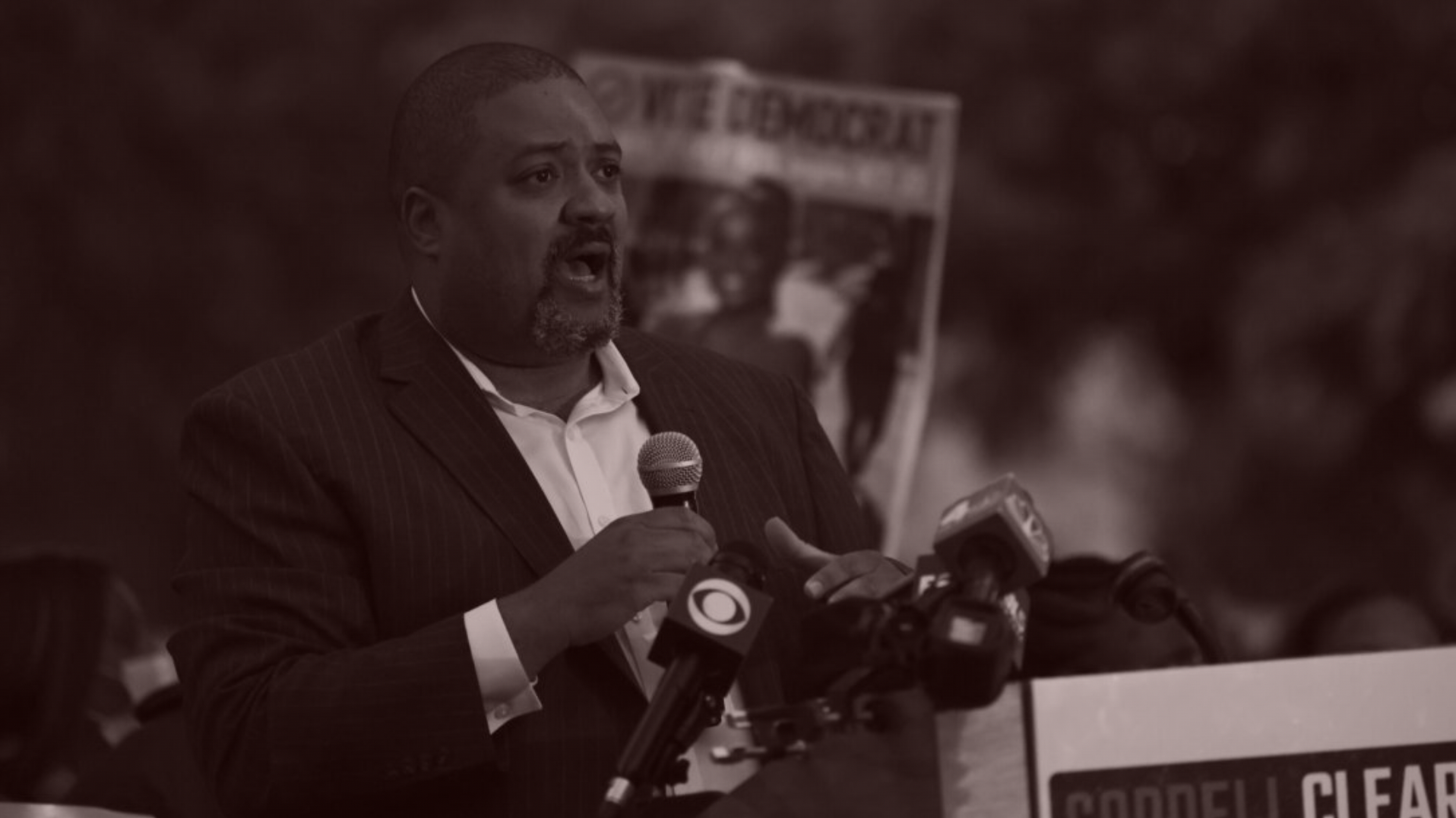
In today’s email: What I’m hearing around Wall Street and the New York legal bar about Manhattan District Attorney Alvin Bragg’s confounding decision to effectively drop the grand jury investigation into Donald Trump.
My source close to the D.A.’s office believes the lead prosecutor on the case could have been able “to prove what he said he could prove.” Was it politics, or more prosaic concerns, that got in the way?
Enjoy,
Bill
|
| ADVERTISEMENT |
 |
|
|
|
|
Back in February, Wall Street and the legal bar experienced a collective shock wave of disbelief when Mark Pomerantz and Carey Dunne suddenly resigned, and, it seemed, in a huff. You may recall that former Manhattan D.A. Cy Vance hired Pomerantz, a revered prosecutor, last May as a “special assistant district attorney” to work with Dunne, Vance’s general counsel, to oversee the Manhattan D.A.’s criminal investigation into Donald Trump’s business practices. Vance, Pomerantz and Dunne were studying whether Trump had feloniously misled banks (in order to obtain loans) and taxing authorities (in order to evade taxes). The plot thickened, shortly thereafter, when The New York Times published Pomerantz’s resignation letter to Alvin Bragg, Vance’s successor as district attorney. It was a stunner, especially given the normally staid world of the white-shoe bar.
The resignations and the steamy resignation letter were prompted by Bragg’s surprising decision, six weeks after taking office, to pretty much drop the grand jury investigation into Trump and, with it, the possibility that his office would even try to prosecute the former president. Since then, Wall Street has been trying to figure out if Bragg really lost all confidence in his office’s ability to prosecute Trump successfully. Did he not want a political headache? Was this some weird belt-tightening exercise? Or did he simply think a case was a waste of time? Regardless, it seemed that Bragg was willing to abandon the case to such an extent that the two prosecutors—who had been studying the complicated evidence, including sifting through a million pages of Trump’s business and tax records for about a year—were resigning in protest.
Now nearly 72 years old, Pomerantz, a Paul Weiss attorney, seemed mighty pissed about Bragg’s decision to suspend the grand jury investigation into Trump’s financial statements. In his letter of resignation, Pomerantz wrote that he believed Trump “is guilty of numerous felony violations” related to the “preparation” and “use of” the Trump Organization’s financial statements to obtain loans and avoid taxes.”
Pomerantz wasn’t done. In his letter to Bragg, he continued: “His financial statements were false, and he has a long history of fabricating information relating to his personal finances and lying about his assets to banks, the national media, counterparties, and many others, including the American people.”
After studying the mountain of Trump’s tax returns and other internal Trump Organization documents, as well as taking any number of depositions, Pomerantz wrote to Bragg that “we have evidence sufficient to establish Mr. Trump’s guilt beyond a reasonable doubt, and we believe that the prosecution would prevail if charges were brought and the matter were tried to an impartial jury.” He went on to conclude, “The team that has been investigating Mr. Trump harbors no doubt about whether he committed crimes—he did.”
Like probably every other journalist, I wanted to talk to Pomerantz to learn more about what he was thinking, and why he thought Bragg had pulled the plug on the case. I had been told by someone close to Bragg—after he was elected last November, but before he took office in January—that he was prepared to prosecute Trump. What changed? And why? (Bragg declined to comment.)
Pomerantz initially agreed to speak with me, but a day or so later, he changed his mind. “Upon further reflection,” he wrote, “I have decided to keep my own counsel about the Trump investigation and my resignation.”
|
| ADVERTISEMENT |
 |
Facebook has invested $16 billion to keep you safe on our platform.
Facebook invested $16B in safety and security over 6 years. The impact?
- Quadrupled safety and security teams
- Developed industry-leading AI that detects harmful content and reacts as it evolves
- Addressed millions of harmful posts and removed 1.7B fake accounts in the last few months
Learn what's next. |
|
|
For those less familiar with the inner workings of our often byzantine criminal justice system, here’s a brief primer of the investigation. Shortly after the Supreme Court ruled, in March 2021, that Trump’s then accounting firm, Mazars USA, had to turn over his tax records, Vance asked a judge to convene a grand jury in Manhattan. Within four months, the grand jury had indicted the Trump Organization and Alan Weisselberg, its chief financial officer. That case is proceeding and presumably a prosecutor in Bragg’s office will lead the charge at trial in the next few months. After the first grand jury concluded, Vance asked a judge to convene a second grand jury, last November, to investigate whether Trump had used misleading financial statements to obtain financing for his real-estate projects and to try to pay less in taxes than he was responsible for.
During the next two months or so, the second grand jury—composed of 23 Manhattanites—met regularly with prosecutors from Vance’s office to review the evidence, usually in digital form. Had Vance or his successor asked the grand jury whether or not to indict Trump, a majority—12 out of the 23 members—would have been sufficient to hand up an indictment. But, it didn’t happen, and it looks like it will not happen. Bragg has claimed that anything is still possible, but that seems unlikely. He has been reluctant, probably for political reasons, to say the Trump prosecution is completely over but he’s stopped the grand jury investigation and, for all practical purposes, the prosecution is presumably dead. That’s why Pomerantz and Dunne resigned in protest. How could such a once-promising criminal case dissolve like rain in the Sahara?
|
| SPONSORED BY FACEBOOK |
 |
|
|
In an effort to answer that question, without Pomerantz’s help, last week I spoke with someone familiar with the inner workings of the Manhattan D.A.’s office during the Vance era. This person was also familiar with the grand jury investigation and the so-called “theory of the case” that both Pomerantz and Dunne were building against Trump. Had the case moved forward, this person told me that Pomerantz and Dunne would have asked the grand jury that Vance empaneled in November for an indictment against Trump this month.
This person didn’t know precisely what charges Vance et al. would have brought, and which ones the grand jury would have been weighing. But my source suggested that the grand jury could have indicted Trump for “lying in his factual representations” about the Trump Organization’s “statements of financial condition” that were presented over the years to both lenders and to the taxing authorities, both in New York State and to the I.R.S. (Trump, who has called Vance’s investigation a “witch hunt,” did not respond to my request for comment. In a statement to the Times, upon publication of Pomerantz’s resignation letter, the Trump Organization called Pomerantz “a never-Trumper” and said, “never before have we seen this level of corruption in our legal system.”)
There is a saying in legal circles that a grand jury would indict a ham sandwich—an expression that attempts to convey that it usually doesn’t take much for prosecutors to get 12 ordinary people, out of 23, to hand up an indictment. My own experience on a Manhattan grand jury, nearly 20 years ago, proved that to me in spades; there was not one case my grand jury considered that did not result in an indictment. My source was optimistic that Pomerantz, who would have led the prosecution of Trump after the grand jury indictment, could have been able “to prove what he said he could prove” and could have won Trump’s conviction. Again, we’ll never know.
This person also said that while Vance was very much involved in the case—reviewing evidence, sitting in on witness interviews, and attending grand jury sessions—he was not nearly as intimate with the details of the case as was Pomerantz. But, this person continued, Vance had tremendous faith in Pomerantz and was willing to back him in seeking a grand jury indictment and then in prosecuting the case before a Manhattan jury. “This is a 35-year veteran,” this person said of Pomerantz. “One of the best lawyers, probably in America. And he's come to these conclusions after working on these matters exclusively for more than a year. And that, you know, that's not fucking nothing. That's a lot.”
My source posited a variety of theories for Bragg’s volte face on the Trump prosecution, including the fact that it would be a difficult prosecution and that the evidence would likely prove confusing, especially for a jury of regular New Yorkers. “The big challenge in this case is to try it in a way that would be interesting to a jury, besides the fact that Trump is an interesting defendant,” they said. This person also said that perhaps Bragg felt that the prosecution of Trump would be too time-consuming, replete with a seeming endless array of delaying tactics—as Vance experienced firsthand when he had to petition the Supreme Court to force Trump to turn over his documents—and that the Trump prosecution would eat up the District Attorney’s limited resources, while also distracting Bragg from his principal agenda of criminal justice reform.
This person also spoke about the inherent “conservatism” of some of the attorneys in the D.A.’s office who were very reluctant to bring a difficult case or one without a clear path to victory. This “Deep State,” as my source put it, was vociferously against the Trump prosecution, which was why, presumably, Vance brought in outsiders Pomerantz and Dunne in the first place. But, this person cautioned, “it's not uncommon that there will be differences of opinion among line assistants and the D.A. on the strength of the evidence in a case. … There's nothing remarkable about having different levels of enthusiasm about the merits of cases.”
My source thought Bragg “was not convinced” there was a case “that could be proved.” But, this person continued, Pomerantz’s understanding of the evidence and the legal analysis “was very probing and detailed.” It may very well have been sufficient to convince a jury that Trump had committed felonies. We’ll never know, it seems.
In the end, as with nearly every decision that a prosecutor makes, it’s a judgment call. Is the evidence convincing? Will the witnesses be helpful? Will the prosecutors be able to make a credible showing before the jury? Is it worth prosecuting a case even if the outcome is not certain, especially one where the stakes are so high, involving a former President of the United States who may well seek the office again in two years? “This was not going to be an easy case,” my source concluded. “It was a case that was going to take a long time. The case was going to be very confrontational and controversial.”
Vance, this person said, was up for that challenge. Bragg, it seems, was not.
|
|
|
|
| FOUR STORIES WE'RE TALKING ABOUT |
 |
| The Media Lawsuit from Hell |
| Notes from the legal underbelly of the #MeToo movement, and other pressing issues on my docket. |
| ERIQ GARDNER |
|
 |
| The Right Stuff: Oz’s Agony |
| No modern G.O.P. primary has matched the surreal vitriol of the looming McCormick-Oz grudge match. |
| TINA NGUYEN |
|
 |
| Notes from the Steyerverse |
| Billionaire Tom Steyer is stepping back from politics. Inside his Bloombergian afterlife—and who might take his place. |
| THEODORE SCHLEIFER |
|
 |
|
|
|

|
|
|
You received this message because you signed up to receive emails from Puck.
Was this email forwarded to you?
Sign up for Puck here
Sent to
{{customer.email}}
Unsubscribe
Interested in exploring our newsletter offerings?
Manage your preferences
.
Puck is published by Heat Media LLC.
64 Bank Street
New York, NY 10014
For support, just reply to this e-mail.
For brand partnerships, email ads@puck.news |
|
|