Hello and welcome back to Dry Powder.
Thanks as always for being a part of Puck, our new media company covering the intersection of Wall Street, Washington, Silicon Valley, and Hollywood. And thanks for reading Dry Powder.
Today I'm sharing more war stories from my interviews with Jimmy Cayne, the trash-talking, card-hustling, shit-kicking C.E.O. of Bear Stearns, who reigned over the firm, one way or another, from 1986, the year it went public, until just before its ignominious fall.
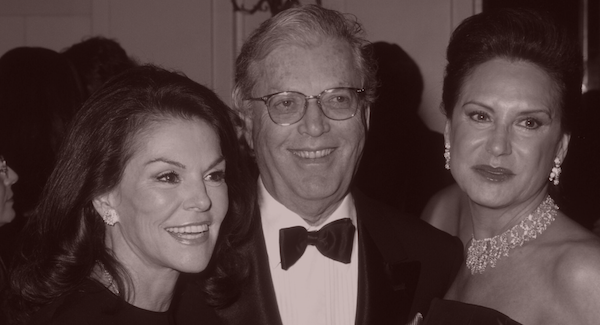
The epic story of how a crafty bond salesman took over Bear Stearns—and risked an apocalypse to fight for it. When Bear Stearns ended up in the arms of JPMorgan Chase, on March 15, 2008, after a weekend of furious negotiations, the bank had come within a few hours of filing for bankruptcy. That was the stark choice facing the Bear board of directors: Either file for Chapter 11 or accept Jamie Dimon’s offer of $2 a share for the company. The board wisely chose Dimon’s offer, even though the stock had been as high as $172-a-share 14 months before.
The piddling offer for the whole company, worth barely more than the new Bear Stearns headquarters at 383 Madison Avenue, across the street from the JPMorgan Chase headquarters at 270 Park Avenue, was the safest solution for the Bear board. It required JPMorgan Chase to assume most of Bear’s liabilities—a not insignificant sum, it turned out—and allowed Bear’s creditors to get a bonanza, since its debt had been trading at around 30 cents on the dollar—reflecting the prospect of Bear’s bankruptcy—and now would get paid off at 100 cents on the dollar, based on JPMorgan Chase’s supposedly solid gold credit. For reasons that remain mysterious, but that have been blamed on the lawyers’ drafting errors, in the week after the March 15 agreement, JPMorgan Chase ended up increasing its offer for Bear Stearns to $10 a share and, just like that, Bear was gone.
As soon as JPMorgan Chase announced it was buying Bear, I started working on House of Cards, my book about the extraordinary collapse of Bear Stearns. I wanted to know what the hell happened and why.
Within days, with the invaluable help of Fares Noujaim, then a Bear Stearns vice-chairman, I found myself in the office of Jimmy Cayne, the penultimate C.E.O. of Bear Stearns, who had been reigning over the firm one way or another since 1986, the year it went public. Cayne had been the firm’s C.E.O. for nearly 15 years, until he abruptly resigned in January 2008, pretty much against his will. Cayne, who died from complications of a stroke last week at age 87, was very anxious to share with me both his own incredible story and the equally incredible story of the demise of Bear Stearns. He was always generous with his recollections. He always made time for our conversations, as long as they didn’t interfere with his daily bridge games, which began, like clockwork, at two o’clock in the afternoon, over the Internet.
After a few meetings in his Bear Stearns office—the one that nearly always had the shades drawn, reeked of cigar smoke and housed a large Chinese motorcycle—we had most of our 25 or so conversations at 510 Park Avenue. Day after day, I’d show up at his apartment a little before 9 a.m., say a quick hello to Patricia, Jimmy’s second wife, and get down to work in his small but luxurious man cave that also reeked of cigar smoke. I’d place the tape recorder on the table next to the platter of bagels, cream cheese and lox that Cayne ordered up every time. We’d hang out there together for hours and hours—with occasional bio breaks—until it was time for Jimmy to play bridge and for me to go.
With Jimmy’s invaluable help, which of course opened doors to many other Bear executives and board members, the book was reported and written in nine months, published in 12 months, and spent weeks on the New York Times bestseller list, often stuck in the number two position behind the latest Malcolm Gladwell juggernaut.
Last week, I recalled for you a few of the stories Jimmy shared with me: growing up in Evanston, Illinois; dropping out of Purdue because he refused to take a French class that he had looped; becoming a primo salesman of copier machines, mechanical calculators and scrap metal; and the importance of his bridge playing to his first marriage, his divorce, his second marriage, his getting hired by Ace Greenberg at Bear Stearns, and how it played a role in his feud with Warren Spector, Bear’s number two executive.
When Ace hired Jimmy, age 35, at Bear Stearns, in 1969, Jimmy’s forte, aside from his bridge playing, was selling municipal bonds. But, alas, Ace had hired Jimmy to be a retail stockbroker, one of only 16 brokers the firm had at the office at 1 Wall Street, not as a bond salesman. Generally speaking, people who are interested in “little green animals” as Jimmy referred to stock buyers—stock symbols turn green when the price goes up—are not that interested in buying municipal bonds. They want a stock portfolio, not a bond portfolio. It took Jimmy a few months to realize that the customers he knew from Lebenthal & Co, where he had gotten his start, were unlikely to follow him to Bear.
Once again, his bridge prowess came to his rescue. He had been playing bridge regularly with Larry Tisch, the big New York investor who would eventually own CBS, and had been to Tisch’s Fifth Avenue apartment. Wouldn’t it be great if he could get Tisch as a client?, Jimmy thought. The problem was that he had promised George Rapee, the bridge champion who brought Jimmy into the rarefied bridge-playing circles, that he wouldn’t solicit any of Rapee’s fancy Wall Street bridge players for business. But when it came to Tisch, Jimmy asked Rapee for an exception. “He’s like one of the biggest guys on the Street,” Jimmy told Rapee. “I might get a reception. I may not. But I’d like to try. But I can’t do it without you releasing me.” Rapee relented.
Jimmy called Tisch. “It’s like his son called him,” Jimmy told me during one of our chats. “‘Jimmy!’ I said, ‘You remember, I was the bridge toy.’ He said, ‘How you doing? Nice hearing from you. What can I do for you?’ I said, ‘I just became a broker at Bear Stearns.’ He said, ‘Great. Send me the papers. You’ll handle all my accounts.’ And he hangs up.” Jimmy couldn’t believe his good luck. He called Ace and told him what had just happened. “You’re not going to believe this. The best first call of all time. He’s the biggest guy on the Street. Larry Tisch. He wants to do business with me.”
Ace was completely silent. Jimmy recalled: “I said, ‘This is a strange reaction.’ He said, ‘Well, that’s Cy’s account.’ I said, ‘Cy? Who’s Cy?’ He said, ‘Cy’s the senior partner of the firm.’ I said, ‘Wait a second. Let me get this straight. The senior partner of the firm has got an account line to Larry Tisch. A salesman working at the firm has just been told by the guy to handle all his accounts and now you’re telling me there’s an issue because Cy Lewis handles the account?’ He says, ‘Jimmy, that’s the way it is. You’ll hear from him. Don’t be upset. Because he’s a rough, tough guy and he may be a little gruff on the phone.” Ace told Jimmy he had to tell Cy Lewis what had happened with Tisch and that Lewis was certain to call him and let loose.
A row of biblical proportions ensued when Cy Lewis called Jimmy. As Jimmy recalled to me: “I basically heard words I never heard before, and I grew up in Chicago and I heard a lot of words. This guy reamed me. ‘How dare you call my account?’ and then he hangs up.” Jimmy reported the conversation—such as it was—back to Ace, who told him he had to call Tisch back. “I call him back,” Jimmy said. “He said, ‘What can I do?’ I said, ‘Well, it seems that the senior partner of the firm thinks you’re—’ Tisch interrupted, ‘Jimmy, I’ll take care of that.’ Click.”
At 1 Wall Street, Bear Stearns had two floors, the sixteenth and the seventeenth. “Sixteen is the little people and seventeen is the mucky-mucks,” Jimmy said. Ace called Jimmy and essentially told him never to set foot on the seventeenth floor. “Because Larry Tisch called Cy Lewis and ripped him a new one, saying, ‘If that kid doesn’t handle my account, I’m leaving Bear Stearns.’” In the end, much to Lewis’s ire, Tisch chose Jimmy Cayne. “He became just the biggest champion you could ever have,” Cayne explained. “And that wasn’t just a one-time occasion. That was an all-time occasion.”
Jimmy was very ambitious. He wanted to run Bear Stearns, even from the earliest days. And he’d managed to reach a detente with Cy Lewis, despite the rocky opening with him and Tisch. But he always had a difficult relationship with Ace. They didn’t like each other very much, or trust each other very much, but each knew he needed the other to succeed.
Jimmy used to pick up Ace at his Fifth Avenue apartment every day in his car and drive him down the slow-moving F.D.R. Drive to the new Bear Stearns office at 55 Water Street. “It’s like the Mafia where the driver becomes the number two, except I insisted he sit in the front,” he said. “He couldn’t sit in the back.” But Ace rarely spoke to his younger partner during these rides. “If you understand the makeup of the man, he can’t carry a conversation,” Jimmy said.
At one point, after Jimmy had outmaneuvered a colleague to become head of the firm’s brokerage business, he used one of his many downtown car rides to insist that Ace put him on the Bear Stearns management committee. “I’m driving to work with Greenberg,” Jimmy recalled. “I said to him, ‘You know, you have an executive committee that I should be on.’ He didn’t say anything. I said, ‘The very fact that you are in a position to do something about that and haven’t done it is some issue I’ve got with you.’ He said, ‘Well, why with me? Your buddy is Lewis. Lewis is the boss. He’ll take care of it. Talk to him. Talk to your buddy Lewis.’ Again, look at the history of the two of us. Because synergistically there’s no question about the fact [that] the two of us created something that worked. It clearly worked. He brought something to the party from the standpoint of the Street looking at who’s running Bear Stearns. Never was there any question about who was running Bear Stearns. It was Alan Greenberg.”
Jimmy called Lewis, who agreed to receive Jimmy at his Park Avenue apartment. “He’s got his slippers on,” Jimmy recalled, “and he’s got the butler with his scotch, and I tell him, ‘Now look, Cy. It’s been a while, and I’ve been at the firm for close to, you know, seven, eight years. And I’ve certainly delivered.’ He’s had a few drinks but says, ‘I’ll take care of it.’ ”
A month passed, and Jimmy had not heard back from Lewis. “And remember I’m picking Greenberg up every day,” he said. “And I bide my time. And I say to him after thirty days, ‘Well, whatever happened?’ He says, ‘Why ask me?’ He says, ‘You went to Lewis.’ I said, ‘Well, Lewis said he’d take care of it.’ He said, ‘Well, I guess he didn’t.’ So I go back to Lewis. And I said, ‘Cy . . .’ And he turned to me and he said, ‘I’ll definitely take care of it.’”
But Lewis died in April 1978, before he could make good on his promise to Jimmy. Jimmy blamed Ace for not making it happen and for being reluctant to discuss the matter with Lewis. Jimmy referred to Ace as the Grim Reaper. Jimmy would not let the matter of his promotion die. He waited a respectable amount of time following Lewis’ death and brought the matter up again with Ace, who had succeeded Lewis as the senior partner of the firm. He was determined not to let the Grim Reaper decide when and if he became the senior partner of Bear Stearns. “I get back in the car and I said to Greenberg, ‘You can’t hide anymore under Lewis. It’s your call. I expect to be on the executive committee.’ He said, ‘Well, there’s a problem with that.’”
Jimmy had figured out that several of his fellow senior partners, among them Marvin Davidson and John Rosenwald, didn’t want him to be on the executive committee. Jimmy told Ace: “Yeah, and I know who they are, and I know if they’re not here, we’re better off. I know they do dick. I know that they’re worthless. If they’re on the executive committee and you’re telling me they have the ability to stop me, I’m at the wrong firm.”
“Well, what does that mean?” Ace asked.
“It means I’m at the wrong firm,” Jimmy replied.
He prided himself on the veiled threat. He preferred to let the implication that he might leave the firm hang in the air like the smoke swirling from one of his ubiquitous imported cigars. He also had thought a few moves ahead. Through a bridge connection and client, Jimmy arranged to interview for a job at Goldman Sachs with the new Goldman senior partner and future legend, John Weinberg. After the interview, Jimmy called the client, who told him that Weinberg thought “it was the best interview he ever had” but “you’re too hot to handle.”
Jimmy told Ace that he’d had the interview with Weinberg, though he didn’t let on about the too-hot-to-handle piece. “He knows that if I leave, the sales force leaves and a lot of bad things happen,” Jimmy said. “So now I go and say to Greenberg, ‘It’s D-Day.’” Ace told Jimmy what he already suspected: that Davidson and Rosenwald were blocking his promotion and that Jimmy had to win them over to get what he wanted.
Jimmy went to see Rosenwald and Davidson and had a blunt conversation. “Obviously, I’ve been requesting to become part of the executive committee because I deserve it,” he said to them. “They said, ‘Well, change is good, and we’re going to make an addition to the executive committee. We’re going to announce inside of a week that Jerry Goldstein’”—who ran the retail branch network—“‘is being added to the executive committee.’ I said, ‘And that’s it?’ They said, ‘Yes.’ I said, ‘Okay, so just so you understand how I feel. I don’t really know how I’m going to react when I see that in writing. Have a good day.’ And I got up to leave.” About twenty minutes later Ace called Jimmy. “I don’t know what you said to these guys,” Ace told him. “But you’re in.”
He had succeeded in becoming a member of the firm’s powerful executive committee just nine years after arriving at Bear Stearns with nothing more than some bridge contacts and a salesman’s charm. Cayne credited the success of his gambit to the subtlety of his strategy with Davidson and Rosenwald. “Because when I said, ‘I didn’t know how I was going to react,’ I didn’t threaten to quit,” he said. “I said, ‘I don’t know how I’m going to handle that,’ but there was no more conversation. I just left because they were telling me no.”
After Jimmy relinquished his job as C.E.O. to Alan Schwartz, in January 2008, he remained chairman of the Bear Stearns board of directors. He also continued attending his beloved bridge tournaments at various locations around the country. He was at one such tournament, in Detroit, when the Bear board was convening over the weekend of March 13 and March 14 to consider the two offers for the company, one from JPMorgan Chase, the other from Chris Flowers, a former partner at Goldman Sachs who had his own private-equity firm that was focused on buying banks and other financial companies.
The board had reluctantly begun to prefer the JPMorgan Chase offer for the obvious reasons that Bear’s liabilities would be absorbed by the bigger bank and its creditors would be made whole. It also had the backing of the Federal Reserve and the U.S. Treasury. Flowers’ offer, not so much. As of Saturday night, March 13, Jamie Dimon had informed Bear that his offer was in the range of $8-a-share to $12-a-share, which everyone took to mean $10-a-share.
Jimmy arrived back in New York City, by private jet, from Detroit, where he had been at a bridge tournament. He started doing the math on JPMorgan Chase’s $10-a-share offer, and what it would mean for him personally, since he never sold a share of Bear’s stock and as a result, when it reached its peak in January 2007, he was the only C.E.O. on Wall Street worth more than $1 billion as a result of owning his own firm’s stock. “I’m saying to myself [I’ve got] six million shares, I just got my ass kicked,” he told me. “But I was almost dispassionate, because to me, $8 and $12 were the same. It was not $170, and it wasn’t $100. And it wasn’t $40. The only people [who] are going to suffer are my heirs, not me.”
Still, he didn’t like the sound of Dimon’s offer. He became the leading proponent on the Bear board of what he called “the nuclear option.” The idea was to reject the lowball offers and threaten bankruptcy, thereby playing chicken with the global financial system. According to Cayne’s logic, nobody—not the federal government, not JPMorgan Chase, not other banks and investment banks—would want to experience the consequences of such mutually assured destruction, and might therefore sweeten the deal. It was just a germ of an idea, but one that was largely in keeping with the firm’s image as a bunch of rough-and-tumble iconoclasts. Jimmy was the loudest advocate for playing this hand. “I knew that there was a very strong probability that if Bear Stearns went down, there might be systemic failure,” he told me. “I knew I had a nuclear card. But you can’t play it. . . . If anybody on earth would have played it, it would have been me.”
The next morning, Sunday, Vincent Tese’s driver took him to Cayne’s apartment, at 510 Park Avenue, and together the two men headed up to the Jackson Hole restaurant, at 91st and Madison. Tese, the lead independent director on the Bear board, wanted to talk sense to Jimmy about the wisdom of continuing to think about the nuclear card. It was best, Tese told him, to accept reality and push to get the deal on the table done. They had a hearty breakfast and a frank chat. “I picked Jimmy up, and we went and had a couple of eggs,” Tese recalled. “I told Jimmy at the time that . . . bankruptcy’s not an option. ‘Yeah, but,’ he kept on saying, ‘they won’t let us go bankrupt. We can get more money out of them.’ And I said, ‘We’ve been doing that for two days. They know we don’t have a hand.’”
Tese said Jimmy understood what he was saying. “I told him, ‘This is in your interest, just like it’s in everybody else’s interest.’” And he reminded Jimmy that if the deal fell apart because Jimmy convinced the board to press the nuclear button, it was Jimmy Cayne they’d go after. The former C.E.O. took that message to heart.
By that time, though, Dimon had revised his offer downward to $2-a-share, from $10-a-share. He knew he was the only game in town and took full advantage. Jimmy, realizing les jeux sont faits, reluctantly voted to sell Bear Stearns to JPMorgan Chase for $2-a-share. By the time he sold his six million Bear shares a week or so later, Dimon had been forced to raise his offer for the company back to $10-a-share. Jimmy sold his shares for around $61 million, a far cry from the $1 billion they had been worth 15 months earlier.
Still, he told me, he had all the money he needed. He told me his net worth was more than $400 million, thanks to the many years of multi-million dollar paydays he received from Bear and from some clever investments. He owned a beach house in Elberon, New Jersey (where we met for one interview in a man cave similar to the one he had in New York City). He eventually sold the apartment at 510 Park Avenue for $15 million, after suing the cooperative for blocking a few of the potential buyers from moving into the building. He and Patricia bought two condos at the newly renovated Plaza Hotel for $27.4 million.
One of the crucial decisions that the Fed made shortly after announcing that JPMorgan Chase would be buying Bear Stearns, in March 2008, was that it was—for the first time since the 1930s—allowing investment banks to borrow from the Fed’s discount window, a privilege previously reserved for the big commercial banks that were regulated by the Federal Reserve, not investment banks, which were regulated by the Securities and Exchange Commission. Beginning on March 17, the Fed window was opened to Wall Street firms for an initial six-month period. The Fed also lowered the interest rate charged at the discount window to 3.25 percent, from 3.50 percent.
“These steps will provide financial institutions with greater assurance of access to funds,” Ben Bernanke, the Fed chairman, said in a press release about the new initiatives. Tim Geithner, the head of the New York Fed during the Bear sale and eventually Obama’s Treasury Secretary, said: “This is designed to help get liquidity to where it can help play an appropriate role in helping address the range of challenges.” Treasury Secretary Hank Paulson added, “I appreciate the additional actions taken this evening by the Federal Reserve to enhance the stability, liquidity and orderliness of our markets.”
Wall Street executives immediately appreciated the import of the Fed’s decision. “This is a five-vodka event,” one said. “Liquidity is no longer an issue.” But, by and large, the Bear Stearns executives were furious. They had been lobbying the Fed for months to take this very action. Just fifteen minutes after the firm had been dispatched, for a pittance, into the waiting arms of JPMorgan Chase, the Fed had moved. Only the most diplomatic among them, such as Alan Schwartz, who was Bear’s C.E.O. when it went kaput, were able to convey a professional understanding of how their competitors would benefit at Bear Stearns’s expense, and claim to be okay with it. “One part of me was thrilled they were opening the window,” one Bear executive told me. “I didn’t want Lehman to be next. The other part was . . . it feels a little raw to say, ‘It’s really complicated, it’s really complicated, oh, okay, done, stroke of the pen.’ But you’re so strung out by then you don’t know how you feel.”
Others were simply appalled and were willing to say so. Fred Salerno, a longtime Bear Stearns board member and the C.F.O. of Verizon, heard about it from a friend who called him in the airport after the Bear board had signed the deal to sell the company. “What upset me the most was . . . they opened the window a half hour after they told us we had to sign,” Salerno told me, with some anger. “No excuse for that. . . . I’ll never forget about that. I found out about that in the airport. I almost went ballistic. How could they hang out all those people?”
During one of our interviews, I asked Jimmy about Geithner’s decision regarding opening the discount window to Wall Street after Bear had been sold for $2-a-share, and not earlier when Bear could possibly have benefitted from it. Jimmy became spitting angry. “The audacity of that prick in front of the American people announcing he was deciding whether or not a firm of this stature and this whatever was good enough to get a loan,” he said. “Like he was the determining factor, and it’s like a flea on his back, floating down underneath the Golden Gate Bridge, getting a hard-on, saying, ‘Raise the bridge.’ This guy thinks he’s got a big dick. He’s got nothing, except maybe a boyfriend. I’m not a good enemy. I’m a very bad enemy. But certain things really—that bothered me plenty. It’s just that for some clerk to make a decision based on what, your own personal feeling about whether or not they’re a good credit? Who the fuck asked you? You’re not an elected officer. You’re a clerk. Believe me, you’re a clerk. I want to open up on this fucker, that’s all I can tell you.”
After my book came out, in April 2009, I never heard from Jimmy about it. In fact, I never spoke to him again.
FOUR STORIES WE'RE TALKING ABOUT 
Part II of my year-end list of the 22 boldest, totally bankable, 100 percent probable predictions from true industry insiders. MATTHEW BELLONI 
Notes on the president’s 2024 thinking, the Kamala curse, and the limitations of the Youngkin-McCormick MAGA playbook. PETER HAMBY 
Ben Smith and Justin Smith had been quietly discussing their new media ambitions, on and off, for years. Here's what they had to say. DYLAN BYERS 
The Gates-Kristof complex, tech power on the Prairie, and other notes on the long shadow of Silicon Valley. TEDDY SCHLEIFER 
You received this message because you signed up to receive emails from Puck.
Was this email forwarded to you?
Sent to {{customer.email}}
Puck is published by Heat Media LLC.
For support, just reply to this e-mail. For brand partnerships, email ads@puck.news |


SHARE