 |
|
Happy Sunday, welcome back to Dry Powder.
|
|
Thanks as always for supporting my work here at Puck, our new media company focused on the intersection of Wall Street, Washington, Silicon Valley, and Hollywood.
In today’s column, my thoughts on whether Wall Street is undervaluing David Zaslav’s Warner Bros. Discovery, where last week’s 1MDB fallout fits into the history of Goldman scandals, why Warren Buffett’s on a spending spree, and what Ken Griffin and the Ricketts want with Chelsea FC.
Enjoy,
Bill
|
|
|
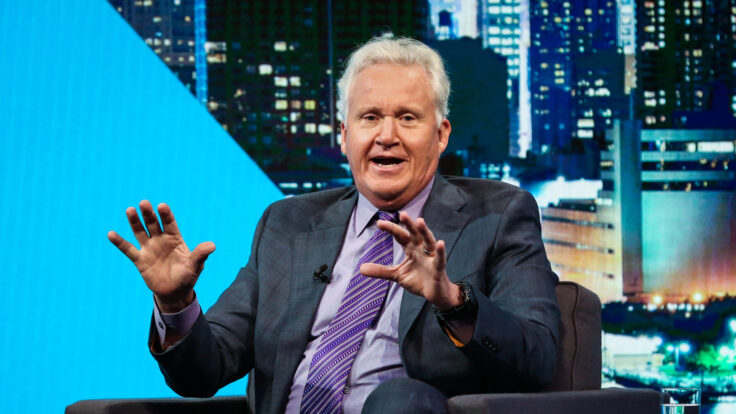
It’s something of a mystery to me, on the eve of Warner Bros. Discovery’s first day of trading as a newly combined company, that its parent stock has performed so poorly. I don’t make predictions about individual stocks of course—Dry Powder is not investment advice—but it seems as if the market has underappreciated the value that will be unlocked by housing all of the WarnerMedia and Discovery assets together under the direction of a single visionary executive, David Zaslav, especially during a moment when said market favors consolidation. The combination will create a streaming giant to potentially rival Netflix and Disney. Nevertheless, Discovery’s stock is down nearly 42 percent in the last year, reflecting the multiple contractions that have squeezed the streaming market, in general, but also investors’ negative view of WBD, in particular. And the price also reflects an unusual wrinkle in these sorts of deals.
Part of the problem for Zaz and his shareholders is the way the deal was structured to get it done. First of all there is a large “overhang” on the WBD stock, meaning that, at the moment anyway, some 71 percent of it is owned by former AT&T shareholders, who received the stock in Warner Bros. Discovery as part of the consideration for the deal. Given their experience owning TimeWarner for the past four or so years, and after seeing how owning it depressed the AT&T stock, chances are they are looking to dump their new shares. That means there are likely more sellers of the stock than buyers, applying downward pressure.
That will change, but it will take time. In fact, one of Zaz’s top priorities, along with the expected $3 billion in cost-cutting synergies and wholesale management changes, will be to successfully reshuffle much of his entire shareholder base to get the stock in the hands of people who want it and out of the hands of the people who don’t.
The other big problem for Zaz, is the $55 billion in debt that Warner Bros. Discovery will carry and have to pay off. He has guided Wall Street to expect $14 billion in EBITDA for Warner Bros. Discovery in 2022. That means the company’s debt-to-EBITDA ratio is 4x, which is not nothing, but its debt is still rated investment grade, although at the edge. In other words, Zaz is no doubt feeling a little like St. Sebastian at the moment. My gut tells me he will pull this off, as he has done before at both GE and Discovery. Maybe investors are starting to see the wisdom of the deal. On Friday, Discovery’s stock closed up 6 percent.
|
| A History of Goldman Scandals |
|
Roger Ng, a former Goldman Sachs executive, was found guilty this week of bribery and other corruption charges for his role in the bank’s infamous and unfortunate attempt to arrange a series of bond deals for 1Malaysia Development Bhd., commonly referred to as 1MDB. According to prosecutors, Ng and his co-conspirators helped 1MDB to raise billions of dollars, only to route most of it back to themselves. Ng, who is currently free on a $20 million bond, faces up to 30 years in prison, though one presumes he’ll end up with a far more lenient sentence. He is the only Goldman banker to go to trial over the incident (his lawyers have called him “the fall guy”), although according to Dennis Kelleher, the CEO of Better Markets, a Wall Street watchdog group, more than 30 Goldman executives and administrators were involved in various aspects of the scandal. Another Goldman banker, Tim Leissner, who was the government’s star witness against Ng, pleaded guilty and is awaiting sentencing while out of jail on a $20 million bond. Jho Low, the Malaysian financier-socialite who allegedly orchestrated the scheme, remains on the lam.
The 1MBD scandal was one of the sorriest chapters in Goldman’s 153-year history. Indeed, had Goldman’s leadership given the situation a moment’s thought (instead of focusing on the fee opportunity), it would have asked the right question about why Goldman was being offered a fee of nearly 10 percent, or $600 million, on three private placements totalling around $6.5 billion. That figure was so far outside the norm that it should have raised red flags left and right. The fact that it didn’t and it led to this scandal is a serious black mark against the firm.
Goldman has paid, both in reputational damage but also cold hard cash. The firm handed over some $2.8 billion in October 2020 to settle with the U.S. Justice Department to avoid further prosecution. Earlier that year, Goldman had agreed to pay another $2.5 billion to the Malaysian government. And yet, this is hardly the worst scandal that Goldman has experienced in its history. The fines and penalties never posed an existential threat to the firm, which made more than $20 billion in profit in 2021.
Some of Goldman’s previous debacles, though, did almost put the firm out of business. The Goldman Sachs Trading Corporation scandal after the stock market crash of 1929 cost Goldman its $10 million investment in the company and another $3 million of associated liabilities. That was real money back then and a meaningful chunk of Goldman’s capital. The threat was existential and the last lawsuit related to the incident was not settled until 1968, just in time for Goldman to find itself in another heated mess related to its job of selling the commercial paper of the the Penn Central Railroad in the months prior to its spectacular bankruptcy, the largest in history to that point. The firm suddenly faced $82.5 million worth of lawsuits but only had capital of around $50 million. Had the firm lost all of those lawsuits at face value, its capital would have been wiped out and the firm would have been kaput.
But Goldman is nothing if not crafty and its partners were able to settle the various lawsuits at a deep discount, allowing the firm to survive. Another existential crisis came amid the “great bond massacre” in 1994 after the firm lost several billion dollars trading. Many people at Goldman thought the firm might go bankrupt, and 40 or so partners voted with their feet, leaving at the end of that year. There had never been such an unprecedented exodus of the firm’s partnership ranks during its history. Let’s face it, Goldman is incredibly nimble. It gets into trouble; it finds ways to get out of trouble.
The 1MBD scandal is embarrassing and caused reputational damage. But Goldman is Goldman. It is a survivor. In January 2021, Goldman docked David Solomon, its C.E.O., $10 million because of the 1MBD scandal, leaving him with $17.5 million. The firm emphasized that Solomon knew nothing about the scandal and was not involved in it.
All seems to be forgotten. In anticipation of what turned out to be a record year for Goldman’s earnings, the bank decided to pay Solomon a one-time special stock bonus of $30 million, payable in 2026, and a $20 million one-time special stock bonus to Jon Waldron, Goldman’s No. 2. Glass Lewis, a Wall Street shareholder advisory firm, urged shareholders to vote against the special pay for Solomon and Waldron at Goldman’s April 28 shareholder meeting but, you know, that seems like a longshot at best.
|
|
|
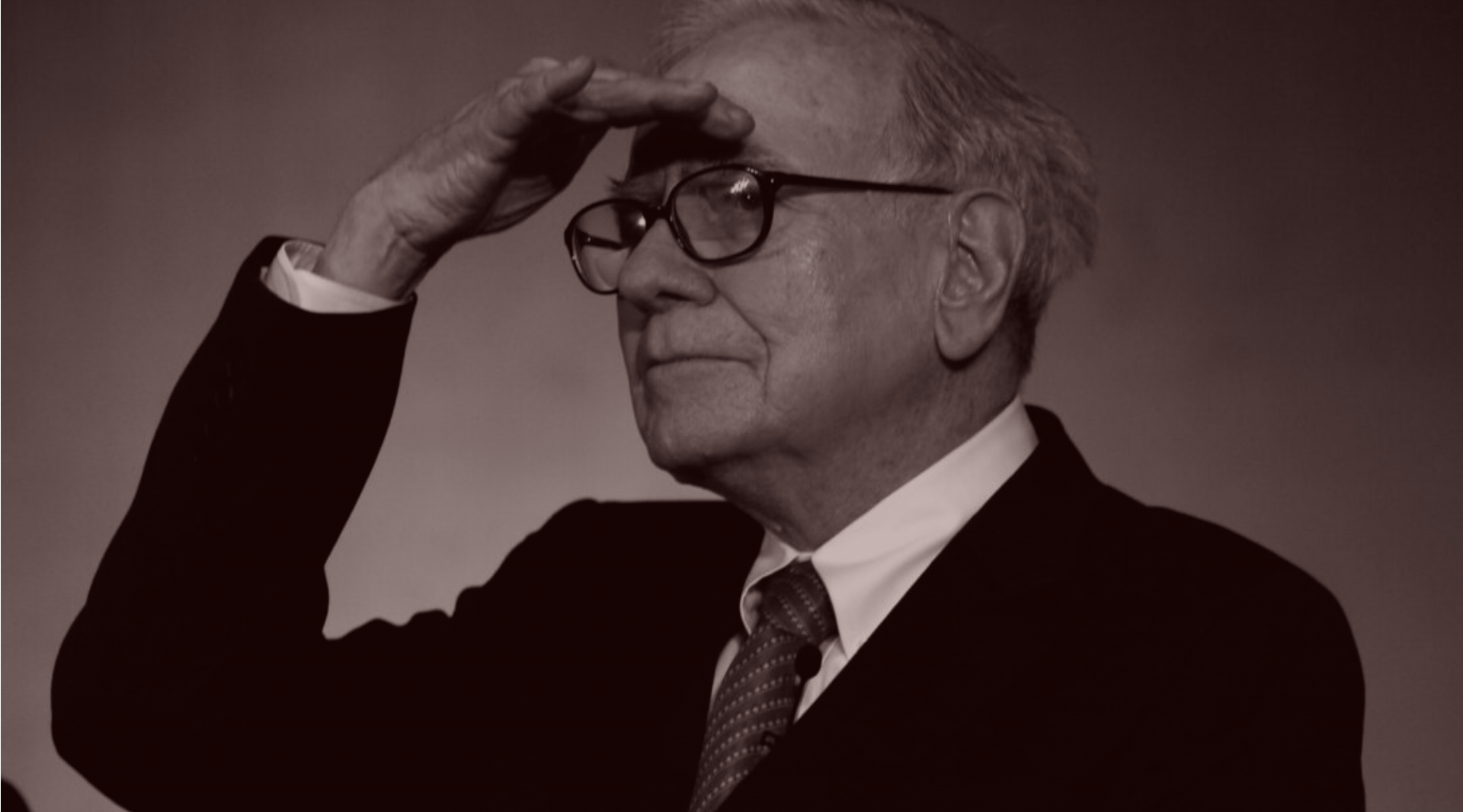
While we wait for Warren Buffett to reveal why he apparently snubbed Goldman Sachs in Berkshire Hathaway’s recent acquisition of Alleghany, I’ve been reflecting on what appears to be a new aggressiveness from Buffett after years of sitting on the sidelines.
Buffett has always been a contrarian thinker and investor. You know, the man who said, “Only when the tide goes do you see who’s swimming naked.” So it’s no surprise to me anyway that Warren has kept his powder dry during most of the Fed-induced asset bubble of the last decade or so, and has started putting his roughly $144 billion cash pile to work now that the Fed has declared its intention to raise interest rates in order to fight inflation. With both the debt and equity markets starting a long deserved correction, and some of the air starting to come out of the balloons, it makes total sense to me that Buffett would embark on a buying spree, now that prices have begun to return to something resembling Earth. To quote another Buffett aphorism, “Be fearful when others are greedy. Be greedy when others are fearful.”
Why Buffett has bought Alleghany—and, as disclosed on Wednesday, a $4 billion stake in HP—I couldn’t tell you precisely. One thing I know for sure, Warren has always liked insurance companies and has bought a number of them over the years, including Geico and GenRe. From my experience at GE Capital, where I worked on a leveraged buyout of an insurance company that worked out stupendously for the three guys from New Canaan who bought it, I suspect that Buffett has been of the view that he can always find better ways to manage the cash that insurance companies generate (premiums paid in) while finding ways to tame the liabilities (claims paid out). If done right, these companies become cash machines. If done wrong, as GE found out, owning insurance companies can be a big mistake. As for why he has taken an 11.4 percent stake in HP, the computer and printer company, I couldn’t tell you. But, like nearly everything that Buffett touches, the mere announcement of his involvement has pushed the share price higher. HP’s stock was up 15 percent last week.
There’s little debate at the moment that at 91 years old, Buffett remains the greatest investor we have seen in our collective lifetimes. I bought my shares of Berkshire Hathaway in 1991, when I was an associate at Lazard and the only way to check the price of a stock was by going over to the sole Quotron machine on each floor of One Rockefeller Plaza. At the time, one share of Berkshire Hathaway was trading for $12,000 each. I am pretty sure it was then the highest priced stock in the S&P 500, consistent with Buffett’s view that he would not split the stock to try to make it more affordable. (He subsequently issued a “B” class of Berkshire stock that trades for much less and is more affordable for retail investors.) These days Berkshire’s stock trades for nearly $530,000 per share, just down from its late March all-time high of $544,000 per share. Berkshire’s market cap, meanwhile, is $780 billion, and Buffett himself is worth around $128 billion, chiefly from his ownership of Berkshire Hathaway stock. He’s the world’s fifth-richest person, according to Bloomberg.
I share two things in common with Buffett. We both are graduates of the Columbia University Graduate School of Business and we both own stock in Berkshire Hathaway. The ownership discrepancy, needless to say, is quite massive. But I’ll take the appreciation after 31 years of an asset that goes from $12,000 to $530,000 any day of the week, and twice on Sundays. By my lights that’s an annualized return of 13.1 percent a year, for 31 years. Pretty amazing.
|
| The Soccer Deal of the Decade |
|
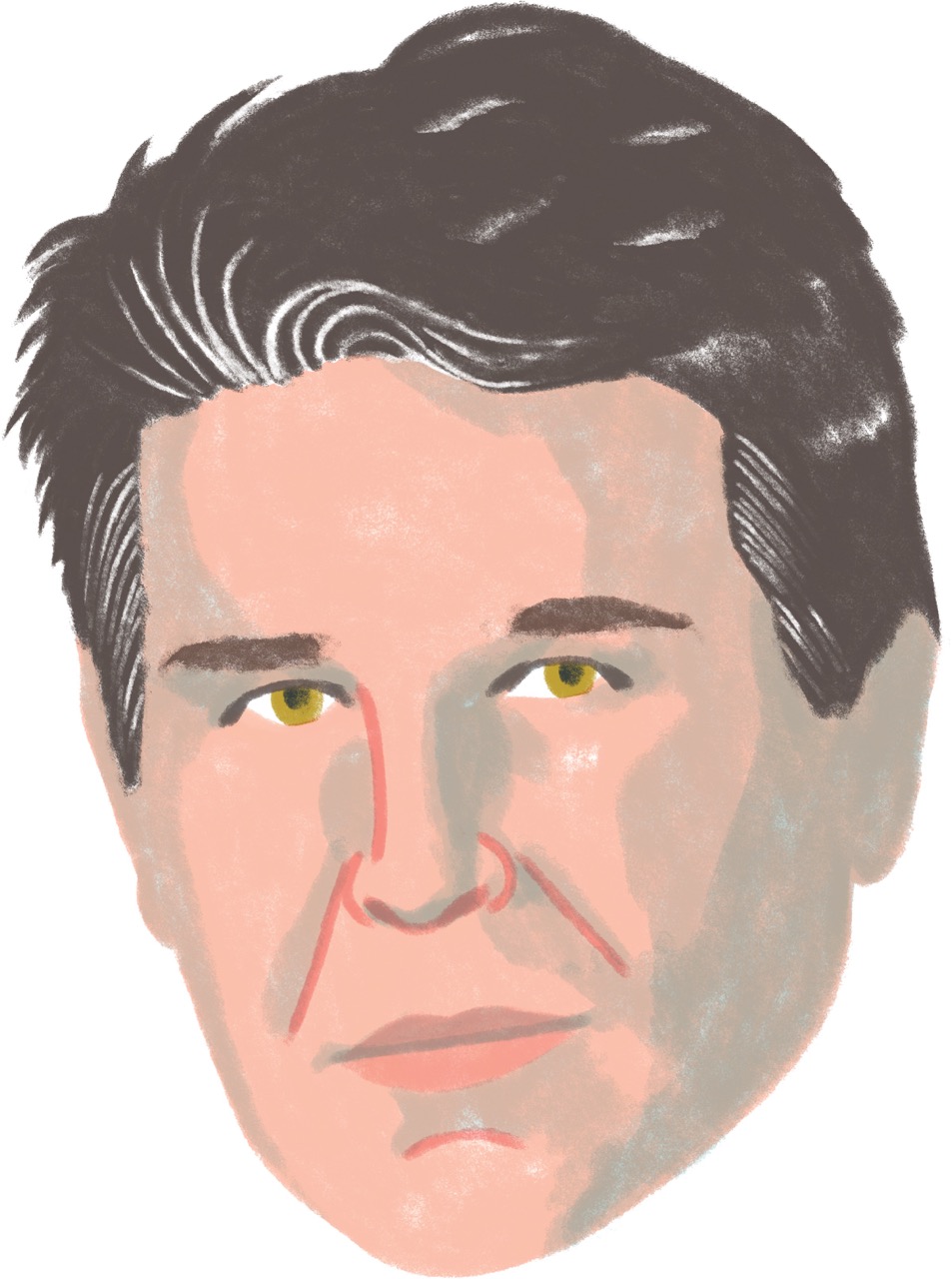
Citadel founder Ken Griffin flew to London last week to bolster his bid, alongside the billionaire Ricketts family, to take over Chelsea FC from the sanctioned Russian oligarch Roman Abramovich. There are no details on the potential sale price—Griffin, who would be the majority shareholder if his consortium is successful, is competing with bids from the likes of Bain Capital chair Stephen Pagliuca, among others, including Apollo co-founder and 76ers majority owner Josh Harris. In some ways, it’s one of the most exciting auctions in the recent history of finance.
The appeal beyond bragging rights is that the value of these sports franchises keeps going up and up, year after year, through both economic booms and busts. In this regard, they are even better than oceanfront property—also a limited asset, but one that now faces the serious risk of sea-level rise and erosion. (Trust me, I spend part of the year on Nantucket.)
Imagine oceanfront property without climate change, and the future of hungry streaming services bidding up already-excessive sports rights deals. That’s what owning a professional major league sports team is like. Even when you screw things up badly, the value of the asset continues to go up.
In 1981, for instance, Donald Sterling bought the San Diego Clippers, a NBA franchise, for $12.5 million. Sterling was a terrible owner, who neglected the team and deprived it of the resources to adequately compete. (The only smart thing he did was move the team to L.A.) The Clippers were often a laughingstock in the league, save for a few moments when their bad record afforded them a top draft pick, like Duke’s Elton Brand, who would inevitably leave in free agency. (Brand now works for Josh Harris as the general manager of the 76ers.)
Then, after an audio file emerged of Sterling using appalling and racist language, he sold the Clippers to Steve Ballmer for $2 billion in 2014, a record, despite what was effectively a forced sale. Including the $50 million or so that Sterling spent on moving the Clippers to L.A., his annualized return for 33 years of ownership was around 16 percent. And that doesn’t include any dividends he may have taken out along the way. I dare say that’s an even better I.R.R. than I got from owning Buffett’s stock.
Anyway, that shows the power of owning a scarce asset under the umbrella of a tax-advantaged oligopoly. It’s no wonder, then, that the new masters of the universe are wanting to buy more and more sports teams. My beloved Red Sox are owned by hedge fund manager John Henry and his pals, who together paid around $700 million for the team in 2002. It was a record price at the time, even though the Red Sox had not won the World Series since 1918.
Henry quickly fixed that problem. The Red Sox have won four World Series in the past two decades, most recently in 2018. In 2010, Henry and his partners bought the Liverpool soccer club for 300 million British pounds. According to Forbes, Henry’s Fenway Sports Group, the holding company that owns the Red Sox, Liverpool and several other sports franchises, is now worth around $10 billion.
In some ways, Henry’s dealmaking suggests the thesis at play here. Ballmer, a basketball nut, paid $2 billion in part, one presumes, because basketball is quickly becoming an international sport, with a growing foothold in Europe and Asia. But soccer is already a truly international sport, whose rights can be acquired for lucrative sums across territories. Whoever ends up lucky enough to buy Chelsea could one day be negotiating with Zaslav about U.S. rights for the Premier League.
|
|
|
|
| FOUR STORIES WE'RE TALKING ABOUT |
 |
| O'Donnell's CBS Deal |
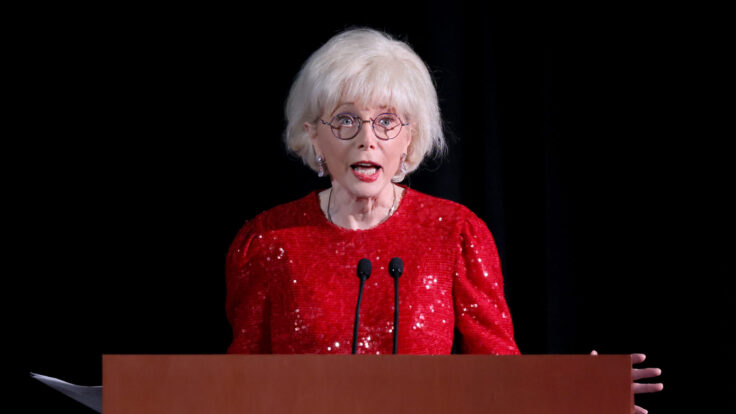
| After plenty of rumors to the contrary, Norah O’Donnell is staying home, and set up to finally become the Peter Jennings of CBS. |
| DYLAN BYERS |
|
 |
| Sex, Lies, & QAnon |
| Notes on the G.O.P.’s pedo fixations, a political orgy trial balloon, Elon Musk’s Twitter curiosities, and Trump’s 2020 fantasies. |
| TINA NGUYEN |
|
 |
| Ukraine's “Never Again” |
| Putin’s atrocities are a reminder that western peace-keeping institutions of the post-war era are defined by rhetoric, not substance. |
| JULIA IOFFEE |
|
 |
| Smith's Next Move |
| Matt Belloni talks with Peter about The Academy’s Friday meeting about Will Smith’s punishment. Plus, Jon Kelly on Zazworld. |
| PETER HAMBY |
|
|
|

|
|
|
You received this message because you signed up to receive emails from Puck.
Was this email forwarded to you?
Sign up for Puck here
Sent to
{{customer.email}}
Unsubscribe
Interested in exploring our newsletter offerings?
Manage your preferences
.
Puck is published by Heat Media LLC.
64 Bank Street
New York, NY 10014
For support, just reply to this e-mail.
For brand partnerships, email ads@puck.news |
|
|