Hello and welcome back to Dry Powder.
Happy Wednesday, and thanks for reading Puck. If you're enjoying these private emails, consider sharing the subscription link with a friend.
In today's email: A look back at the origins of Jeff Zucker's remarkable rise at NBCU, how he became a casualty of the Comcast acquisition, and what his past maneuvering could portend for his next career moves...
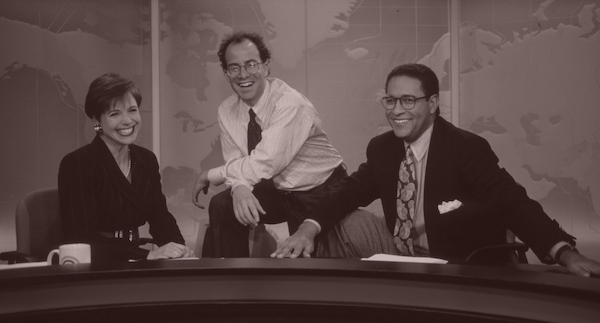
Media and business gossips are already speculating about Jeff Zucker’s next move once the CNN imbroglio dies down. Zucker’s tenure atop NBCU may provide some clues. Amid all the extraordinary sturm und drang surrounding last week’s unceremonious defenestration of Jeff Zucker, it’s useful to remember that he has long been a source of fascination, envy, and schadenfreude. In 1993, nearly seven years after they graduated together from Harvard, my friend Michael Hirschorn, now an Emmy-award winning film producer, wrote a lengthy feature in Esquire, Zuck and Me, about his former classmate, then the 28-year-old executive producer of Today. “Jeff Zucker is the most successful person I know,” Hirschorn wrote. “...He looms as a living infomercial for what pure will to power will score you in the modern world.”
Nearly eight years later, writing in New York, Michael Wolff also weighed in on the topic of Zucker, then 35 and the survivor, by then, of two bouts of cancer. Zucker had just been named to head up the entertainment side of NBC, in Los Angeles, after his highly profitable stint running Today in New York. (Wolff estimated that the program made $500 million a year in profit for NBC.) In his inimitable way, Wolff described Zucker as “the boy genius of post-decline TV,” as “indisputably the most successful man in television,” and possibly “the only successful man in television.” He also insinuated that he was a detail-loving micro-manager whose talent and managerial skills engendered a nearly head-spinning loyalty among his colleagues.
In 2005, another Harvard alum (and another friend), Kurt Andersen, took his turn trying to figure out Zucker. By then, Zucker had been promoted to be the president of NBC and was angling to succeed the legendary Bob Wright as the C.E.O. of NBCUniversal. (GE had added a bunch of Universal assets to NBC in 2004.) Forget a promotion: Andersen wondered how Zucker could survive since NBC had fallen to fourth place from first in the prime-time ratings game, and was losing money hand over fist. He described Zucker as “the very embodiment of highly torqued self-confidence, even arrogance—a self-fulfilling M.O. when the luck was flowing his way, an invitation to Schadenfreude when the luck turns.”
As Wolff had also noted, however, Andersen discovered that the Zucker loyalty thing was real. “All the current and most of the former NBC colleagues to whom I spoke respect and (sometimes a little grudgingly) like him,” he wrote. “Even the NBC Universal executive who told me that ‘no other source of illumination is allowed to shine’ stipulated that ‘he’s a really good boss’ He tends to deal with employees in quick, terse, all-lowercase e-mails, and gives praise regularly.”
Does Zucker, now 56 years old, have another act left in him? There’s no question he commands the loyalty of the troops, as the recent outpouring from the CNN faithful makes abundantly clear. Assuming we know everything about his departure from CNN, the list of suitors could be long. In the past week, as my partner Dylan Byers reported, Zucker has been taking meetings at the Core Club in Manhattan, including one with Ben Smith, the former New York Times media columnist, who is launching a new venture with former Bloomberg Media C.E.O. Justin Smith. Will a private equity firm, or a big Wall Street bank, back him with the millions, or possibly billions, it would take to build a new media company from scratch?
“Famously Brash But Also Supremely Effective”
Zucker’s ascent to the top of NBCU, in retrospect, appears like a fait accompli. But it was a little more complicated at the time. By the end of 2006, NBCU C.E.O Bob Wright, then 63 years-old, was nearing the end of an amazing run at GE, the entertainment conglomerate’s parent company. Wright had worked for Jack Welch in the plastics business, then headed up GE Capital before becoming the C.E.O. of NBC after GE bought RCA, NBC’s parent company, in 1986. But by the mid-aughts, NBCU’s fortunes were sagging, after four quarters of earnings declines. Jeff Immelt, Welch’s successor as the C.E.O. of GE, and by then Wright’s boss, wanted him gone.
A few years earlier, Welch had tried to replace Wright with Andy Lack, but Wright had seen off that threat. This time, however, he could not fend off the boss, especially since, in a last gasp, Wright had allowed the New York Times Magazine to profile him, in a most flattering—and unauthorized—way. The article mentioned that Immelt was planning to replace Wright with Zucker but then added that Wright “hardly looks like someone on the brink of retirement” and then, if that weren’t enough, further averred that it was hard to imagine NBCU without Wright, and that “analysts and media insiders” were “raising fresh questions about Mr. Zucker’s suitability to assume the reins.” The article infuriated and embarrassed Immelt, even though he was quoted in the piece, and it gave him the opening he needed to zap Wright once and for all.
The day after the article appeared, according to Immelt, he told Wright that Zucker would be replacing him atop NBCU in February 2007. Wright tried again to talk Immelt out of appointing Zucker; the move would be “a big mistake,” Wright told Immelt, according to Immelt. Instead, he told the boss, GE should spin out NBCU into its own separate company with Wright as C.E.O. “I’ve already worked up a deal with John Malone,” Wright told Immelt about the powerful cable magnate, who currently sits on the board of directors of Discovery and will soon sit on the board of Warner Bros. Discovery.
But Immelt said he didn’t want to sell NBCU because it would make GE even more reliant on GE Capital for its earnings, and Immelt feared what that might do to further damage GE’s floundering stock price. “Wright was desperate to keep his powerful position,” Immelt wrote in his 2021 book, Hot Seat. “But I was done with him.” For his part, in his own memoir, Wright described his transition out of NBCU as a “surrealistic blur.”
Zucker had run into trouble as the head of NBC, but he had Immelt’s overwhelming support. In fact, Immelt loved Zucker. “He was famously brash but also supremely effective,” Immelt recalled in his book. He admired how Zucker managed to get elected class president in high school for three straight years using the slogan, “The little man with big ideas.” He credited Zucker with making Friends the cornerstone of “Must See TV” on Thursday nights and with bringing Donald Trump and The Apprentice to life. “We needed a hit,” Immelt wrote in Hot Seat. Then there was Sunday Night Football, The Voice, and a Harry Potter theme park at Universal—all Zucker.
One former NBCU executive told me he didn’t understand what all the fuss was about with Zucker until he started working for him. “He's a super charismatic guy,” he said. “He gets to know you very personally. He's like a cheerleader. He always tells you how wonderful you are.” Zucker understood talent—the egos, the insecurity, and he knew how to guide them. “Oh my god, I've heard you're a superstar,” Zucker would tell him. “You're going to be one of my top people. I need you by my side.” Zucker would regularly seek his advice about a show, or a deal, or a producer. “He sucks you into his orbit,” this person continued. “By making you feel like you're on his team, you're important and you matter. He has energy and a lot of drive.”
The Snowstorm
Zucker’s run atop NBCU, however, was short-lived. In some ways, he was a victim of circumstances beyond his control. As the magnitude of the 2008 financial crisis was rippling through GE and GE Capital, Immelt decided he had to “burn some furniture” to keep the company afloat. He concluded that NBCU was the asset that would be easiest for GE to sell—and he knew that Comcast coveted NBCU. Years earlier, Comcast had wanted to buy Universal from Vivendi, but GE emerged as the victor instead. Brian Roberts, the Comcast C.E.O., had pestered Immelt afterward (over dinner, on the golf course) to sell it to him.
By March 2009, that time had finally arrived. GE’s stock was melting down. It had lost its coveted AAA credit rating, desperately needed more capital, and had already tapped the public equity markets and Warren Buffett. NBCU had to go. By June, GE and Comcast were heavily into negotiating a deal whereby Comcast would buy 51 percent of NBCU, offering a combination of cash and assets that gave the deal a headline value of around $30 billion. The deal was announced in December 2009.
Roberts appointed Steve Burke to head up the transition team in New York City in order to begin to get Comcast’s hands around NBCU. For the next 13 months that it took for the deal to close, Burke commuted at least once a week between Philadelphia, where Comcast is headquartered, and 30 Rock, the home of NBCU. He got to see Zucker up close, day after day. Burke discovered two things: first, that he wanted Zucker’s job; and two, that Zucker was very much the micromanager many had said he was.
According to someone who knows both men, Burke was particularly struck by one particular incident during the interregnum period. It was winter, and a major snowstorm was headed for the East Coast. Burke was in his office at around 8:45 a.m. No one else was on the executive floor at 30 Rock except for Zucker, so Burke walked down to Zucker’s office to say hello. Zucker was standing right next to the TV screen on the wall. There were some 12 separate boxes on the screen, feeds from the various NBC-owned affiliate screens around the country, including New York, Philadelphia, and Washington. Zucker was standing right up against the screen.
Burke asked him what he was doing. Zucker said that he normally didn’t let any local stations preempt the network’s Today show, but he had decided that the storm was serious enough to allow a few of them to cut in with weather news. Apparently, only two of the three markets he allowed to preempt Today had done so, and Zucker was pissed. Burke could not believe that the C.E.O. of a media conglomerate was playing local TV air traffic controller.
By then, Burke had decided he was going to run the company and that Zucker was going to have to go. According to this same person, Burke told Roberts, who was fine with Burke’s decision to replace Zucker and to run NBCU, and asked Burke to tell Immelt the news himself. So Burke called Immelt, who was his classmate at Harvard Business School, and then went up to Fairfield to have dinner with him. That night, he told Immelt he wanted to fire Zucker.
Immelt was surprised. He adored Zucker. Immelt said he would break the news to Zucker himself. The plan was for Immelt to tell Zucker in June 2010, about six months or so before the deal was to close. Burke’s idea was to have his team in place and issuing directives a few months prior to the close so that Comcast’s plans could be implemented shortly afterward.
There was only one problem. Immelt never told Zucker, much to Burke’s frustration. (Although Comcast obviously would want its own person in charge of its long-coveted acquisition, making the replacement of Zucker no surprise. It had certainly already become a media guessing game.) Around the middle of August, Burke was sitting in Zucker’s office when the topic arose. “When are you gonna tell me?” Zucker said. “Just put me out of my misery. Are you keeping me or not?” Burke conceded that Immelt was soon going to be telling Zucker that he would be replaced.
Zucker called up Immelt and relayed the conversation. Immelt was pissed, but he was also just upset because he loved the guy. In September 2010, Zucker announced that he would step down at the close of the deal, which occured in January 2011. (A representative for Zucker declined to comment.)
What’s Next
As media soothsayers predict Zucker’s next moves, there are some natural avenues for him to pursue. If all this had happened to Zucker a year ago, he probably could have pivoted quickly and put together a SPAC, raised hundreds of millions of dollars from enthusiastic investors and then searched for a private media company (or companies) to buy. But those days are pretty much over, and as many as 500 SPACs are out there searching for deals. I don’t see Zucker doing that, although he, uniquely, could probably pull it off if he wanted to.
He could still emerge at Warner Bros. Discovery in some senior, non-CNN role, once his pal David Zaslav takes control sometime before mid-year. But I think that’s a long shot. As I wrote on Sunday, Zaslav has more important things to worry about at Warner Bros. Discovery—the stock price and its $45 billion of debt, among them—than whether to give Zucker a sinecure. And why would Zaslav want to take on the unwanted attention of returning Zucker to center stage so soon after his departure from CNN?
So if Comcast and NBCU are out (been there, done that), and Warner Bros. Discovery is out (friendship only gets you so far), that leaves Disney (but there’s no way Bob Chapek would want Jeff Zucker around), or, perhaps, ViacomCBS…
Is there a case to be made for Zucker landing at ViacomCBS? The company is controlled by Shari Redstone and has not been run particularly well by C.E.O. Bob Bakish. Along with the occasional public embarrassments (the failed effort to recruit Brian Williams to replace evening news anchor Norah O’Donnell, for one), and the reported chafing at CBS News under new co-president Neeraj Khemlani, there is also the matter of the stock price. Since Redstone orchestrated the re-merger of Viacom and CBS, in December 2019, the ViacomCBS stock is down 18 percent, while the S&P 500 index has increased 41 percent. If I were Redstone (and I’m definitely not) and if she were to listen to me (which she definitely won’t), I’d be on the phone to Zucker ASAP.
On some level, ViacomCBS needs all the things that Zucker is great at: there are any number of businesses in need of some serious micromanaging, whether it’s a news division, an entertainment division, a Hollywood studio, various streaming services or a host of cable television channels. In its way, it’s a smaller version of both NBCU and CNN, and in desperate need of a reboot. (A spokesperson for ViacomCBS declined to comment.)

You received this message because you signed up to receive emails from Puck.
Was this email forwarded to you?
Sent to {{customer.email}}
Puck is published by Heat Media LLC.
For support, just reply to this e-mail. For brand partnerships, email ads@puck.news |


SHARE