{{ 'now' | timezone: 'America/New_York' | date: '%b %d, %Y' }} |
|
|
Welcome back to Dry Powder. I’m Bill Cohan, once again coming to you from my pile
by the sea in Nantucket. I’ve emptied my notebook today for a special issue—a gander into Trump’s provocative portfolio, an update on the Saks bond crisis, and a readout from Jackson Hole. Plus: Ian Krietzberg on Wall Street’s productivity paradox and Dylan Byers on a splashy hire at RedBird.
Nota bene: I’ll be off next week (at a fascinating conference in Wyoming that I may do some reporting from), so the issue of Dry Powder
hitting your inbox next Wednesday will feature a bundle of delights on the finance and TMT sectors from my brilliant colleagues. We’ll be dark on Sunday to commemorate the Labor Day holiday. Meanwhile, feel free to keep the tips, news, insights, and even petty gossip (you know who you are…) coming my way.
Now away we go… |
- More
fresh hell at Saks: The woes continue at Saks Global despite its successful bond exchange offer—engineered by the liability management exercise expert David Nemecek at Kirkland & Ellis (the subject of a big Financial Times profile), along with Jamie Baird at PJT Partners—which closed on August 18. According to my partner Sarah Shapiro, of Line Sheet fame, Saks
laid off another 90 employees this week. I’m told there was a “huge meeting” of Saks’s store managers this past week at the Thompson Hotel in Dallas, where the layoffs and strategic priorities were discussed, followed by dinner for the “upper tier” at the Zodiac restaurant, inside the nearby Neiman Marcus. According to a memo from Saks’s chief
commercial officer, Emily Essner, the cuts were “an expected part of the integration process” of Saks and Neiman Marcus. (Nicole Schoenberg, the senior vice president for communications at Saks Global, declined to elaborate.)
Anyway, one presumes there are more layoffs to come as part of the $600 million in annual cost savings that Saks Global C.E.O. Marc Metrick promised bond investors last December, at the time of the Saks-Neiman
closing and the issuance of the $2.2 billion bond. That bond has since been restructured into three new tranches with descending degrees of security and priority, all maturing in 2029. There are the 11 percent senior secured asset-based notes, the 11 percent senior secured second-out notes, and the 11 percent senior secured third-out notes. They are already trading at pretty big discounts, with the new money bonds trading in the mid 80s, while one of the other new tranches trades at 37 cents on
the dollar. Sheesh.
There are still some of the original bonds floating around, because there are always a small percentage of holders who don’t agree to exchange them, or who just ignored the exchange offer, or who didn’t want to participate for whatever reason. These bonds have now been stripped of what few covenants they ever had, and moved to the bottom of the debt stack—which could result in a wipeout if Saks Global files for bankruptcy. S&P Global downgraded these remaining bonds to
“D,” for default, from CC. (The ratings agency considers the exchange offer to be like a default, since the original bonds were gutted, even though Saks made the June interest payment.)
The best hope for these bondholders is that Saks Global continues to make the 11 percent interest payments as they become due, against all odds, and then pays what’s left of the principal when that becomes due in 2029. The market is skeptical. As of Friday, the original Saks Global bonds were trading at 22
cents on the dollar (a new low) and yielding 69 percent.
There are still a few boosters out there. In Fortune, Joel Bines, a longtime industry consultant who has worked for Metrick, wrote an opinion piece decrying the cynics and declaring the combination of Saks and Neiman Marcus to be “one of the most consequential deals of our time,” and “luxury’s last best hope.” Respectfully Joel, what are you smoking?
|
|
|

| Ian Krietzberg
|
|
- The productivity
paradox: Three years into the generative A.I. boom and the gold rush to hyperscale data centers and chip production, just how much value these companies are actually creating for enterprise clients—and for the economy writ large—remains an open question. In March, S&P Global Market Intelligence found that 42 percent of surveyed companies had abandoned their A.I.
initiatives, up from 17 percent the year before. Two months later, McKinsey reported that while almost eight in 10 companies reported using gen A.I., just as many saw no impact to their bottom line.
Of course, it could be that we’re still too early in the adoption cycle for productivity gains to manifest, as was
the case during the personal computing revolution (though Microsoft turned a profit the same year it was founded, 1975, and Apple
turned a profit two years after its founding in 1976). But the warning signs continue to pile up. The latest comes from MIT’s Media Lab, whose State of AI in Business 2025 reports that “just five percent of integrated A.I. pilots
are extracting millions in value, while the vast majority remain stuck with no measurable P&L impact.” The Media Lab, which surveyed hundreds of enterprise leaders, found that while 80 percent of businesses have explored tools like ChatGPT, only 40 percent have deployed them—and those deployments are mainly boosting individual productivity, not creating monetary value. Oof.
|
|
|

| Dylan Byers
|
|
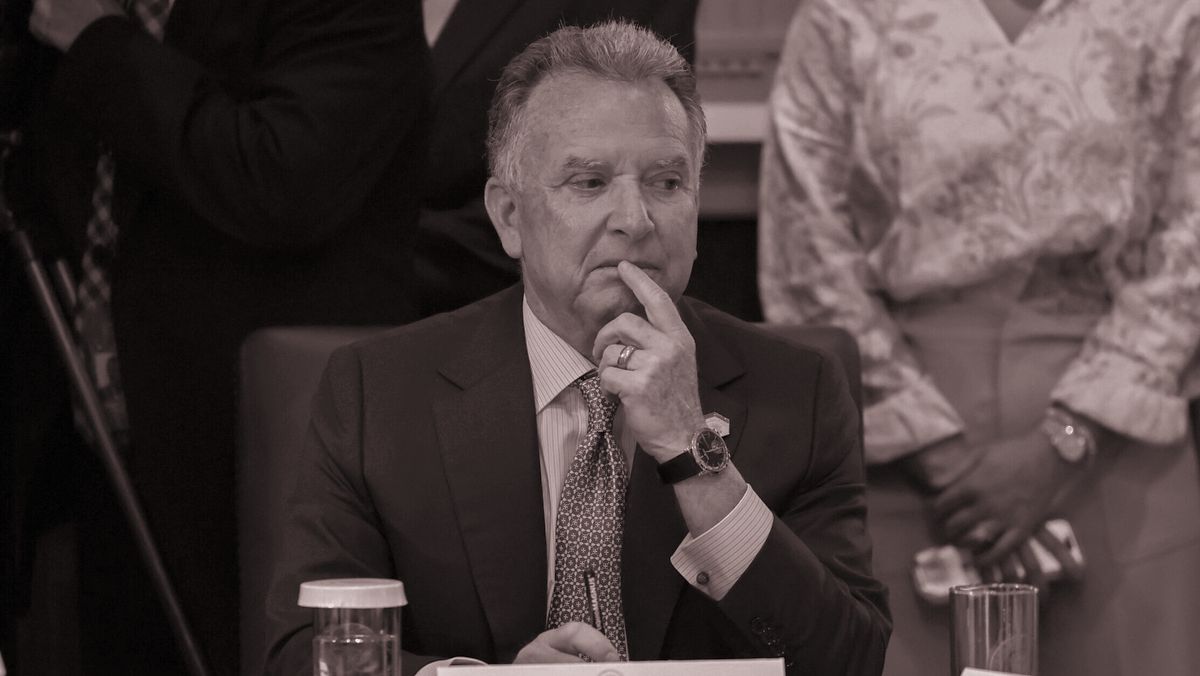
- Chris Wallace to the
C-suite?: The Times has revealed that veteran Fox and CNN newsman Chris Wallace has quietly joined Gerry Cardinale’s RedBird as a senior advisor for news and investments. “At this moment in the evolution of the news business, I think a place in the C-suite is more interesting, and even more important, than
being in front of a camera,” Wallace told the Times, noting his fascination with private equity terms like “MOIC.” Wallace, who isn’t actually in the “C-suite” despite acing his new vocabulary test, says his input on CBS News is “T.B.D.,” and that he’s as likely to advise on Gerry’s other media assets like The Telegraph and Front Office Sports. Respectfully, Wallace has no expertise whatsoever in that arena, and the only rationale for bringing him in-house is to have
him advise on CBS. Indeed, this feels like a vanity play for both sides. But good for Chris! It sounds like a cushy gig.
|
|
|
Now on to the main event… |
|
|
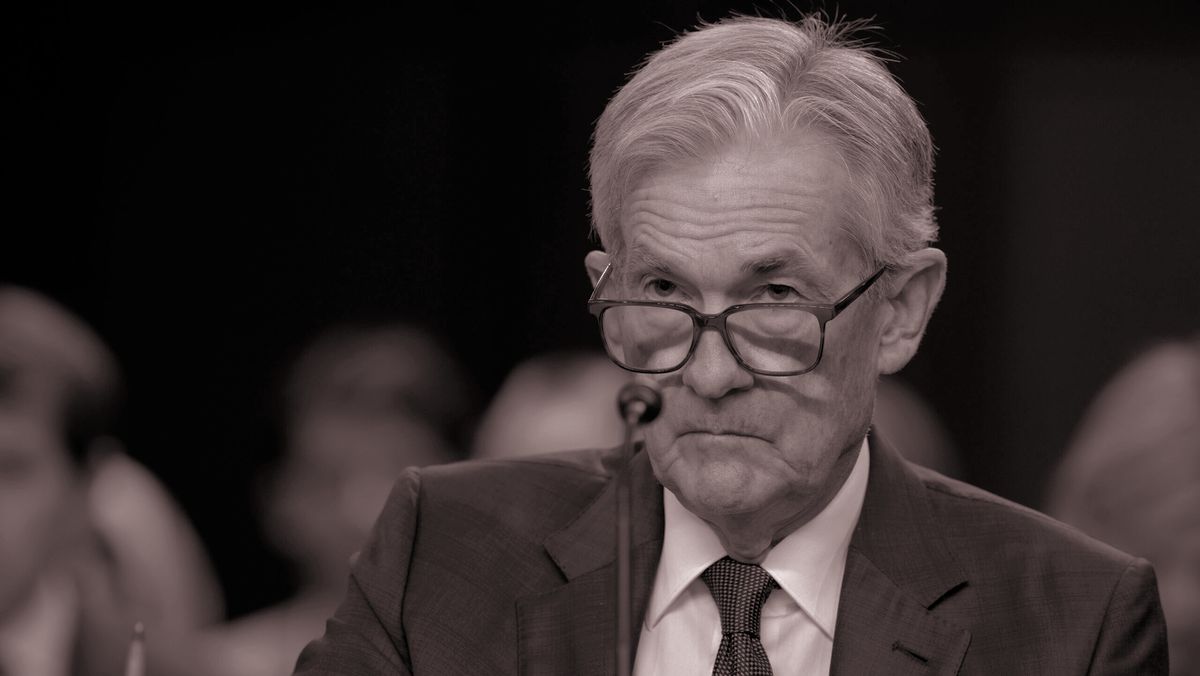
As hiring slows and inflation picks up, all of Wall Street’s hopes appear fixed on Jerome
Powell, the sphinx-like Fed chairman, whose cryptic pronouncements could determine the fate of this bull market—and, increasingly, the president’s bond portfolio, too. |
|
|
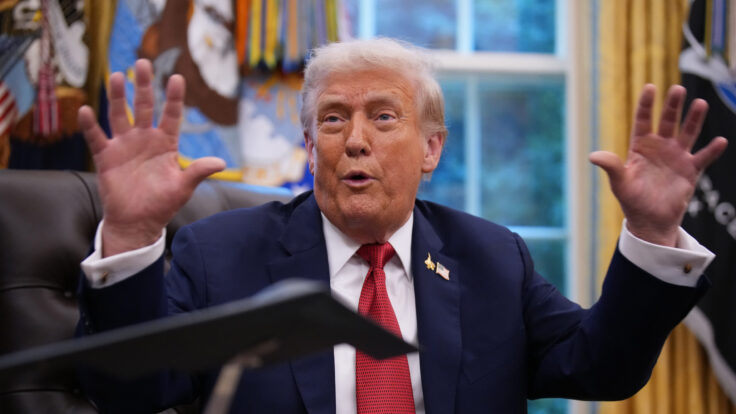
In the popular narrative, Donald Trump’s economic scheming as president relies on seemingly
janky financial plays like his social media company, his memecoin, his Bible, and a recent cell-phone gambit. Most recently, the Trump family’s crypto company, World Liberty Financial, took a large stake in Alt5 Sigma, which will in turn use the proceeds to buy World Liberty’s crypto token. In reality, though, like many Americans, Trump is also investing in the securities of the country’s biggest companies—all while lording over them, of course.
As I was reading the latest financial
disclosure statement that Trump filed with the Office of Government Ethics, however, I noticed that he has been buying all sorts of corporate and municipal bonds since his inauguration—including some 690 individual bond purchases, totaling nearly $104 million. (Of the 234-page disclosure document, 145 pages were devoted to his purchases of stocks and bonds.) Putting aside the fact that Trump has long bucked the convention of turning over his assets and his
investment portfolio to a blind trust while in office, I suppose he is free to buy the securities of any company he likes. |
|
|
A MESSAGE FROM OUR SPONSOR |
DESIRE MORE Peerless
refinement. Uncompromising capability. Range Rover is the natural choice for those who lead by example. EXPLORE |
|
|
It’s a breathtakingly diverse list: bonds issued by JPMorgan Chase, Bank of America, and Goldman Sachs—three
Wall Street firms that he has started to criticize in recent weeks—as well as two, Citigroup and Morgan Stanley, that he has yet to start jawboning. He also owns the securities (both stock and bonds) of Nvidia, Microsoft, Alphabet, Apple, and Amazon. You might think that such a portfolio poses a major conflict of interest, since Trump seems to not have the slightest qualm about injecting himself into the quotidian deliberations regarding these companies, as I
outlined earlier this month. In June, Japan’s Nippon Steel was forced to give the White House a “golden share” in order to complete its takeover of U.S. Steel.
These interventions appear to be accelerating. In the last two weeks alone, he’s imposed a seemingly unconstitutional export tax on Nvidia and AMD, and compelled Intel to sell a 10 percent stake to the
U.S. government after threatening its chief executive. Trump, it seems, wants to become the C.E.O. of Everything. No conflict, no interest, I suppose… (Though, of course, that’s not how the system is supposed to work.)
But there may be something subtler going on, too. As we’ve all noticed, Trump has been barking endlessly for Jay Powell, the Federal Reserve chair, to lower short-term interest rates (the subject of my
column last week). What you might not have fully appreciated, however, is that Trump himself will benefit from the lower interest rates, when and if they come—and they certainly will come after next May, if not before, when Trump replaces Powell as Fed chair with someone more, shall we say, pliable. Lower interest rates, of course, will mean
higher bond prices, since bond prices trade in inverse proportion to interest rates. So, if you have a fresh $104 million bond portfolio bought when interest rates were higher, then you are definitely in a position to benefit when interest rates are lowered. And if you are in a position to get those interest rates lowered, then all the better, right?
You’d think basic respect for the office might mitigate against such an obvious conflict of interest. It would be a major scandal if Powell
still owned a portfolio of bonds as Fed chairman. (He did own some municipal bonds in a family trust, but divested them in 2022, after the Fed adopted stricter ethics rules prohibiting such holdings.) But Trump just does whatever the heck he wants, day after day, convention and laws and the Constitution be damned.
This is just the latest sign of our extraordinary new political regime, to say nothing of the 10 percent stake in Intel that the president swiped for the federal government,
apparently by converting $8.9 billion in federal grants to Intel’s non-voting stock. Trump said the government got the shares “for free,” which is obviously not true, but it’s also beside the point at this stage of the game, a mere seven months into what will obviously be a very long four years—or maybe even eight. |
Meanwhile, Powell seems to be inching closer to Trump’s position that rates should indeed come down, although
we’re likely years away from the 1 percent that the president has been calling for. Investors wanted Powell to hint, in his Jackson Hole speech on Friday, that a 25-basis-point cut would be announced at the September meeting of the 12-voting-member Federal Open Market Committee, which sets short-term interest rate policy. And that’s pretty much what he gave them. “Over the course of this year, the U.S. economy has shown resilience in a context of sweeping changes in economic policy,”
Powell said Friday morning. “In terms of the Fed’s dual-mandate goals, the labor market remains near maximum employment, and inflation, though still somewhat elevated, has come down a great deal from its post-pandemic highs.” Equity markets soared in response, with the Dow hitting an all-time high. |
|
|
A MESSAGE FROM OUR SPONSOR |
DESIRE MORE Peerless
refinement. Uncompromising capability. Range Rover is the natural choice for those who lead by example. EXPLORE |
|
|
But Powell also acknowledged that “the balance of risks appears to be shifting.” Since last year’s visit to
Jackson Hole, the economy has “faced new challenges,” Powell said, including higher tariffs and a tighter immigration policy—both of which have raised the specter of more inflation. Powell also cited changes to tax, spending, and regulatory policies by the new administration that could have “important implications” for economic growth and productivity.
Despite the abrupt revisions to the labor market statistics in the past few months, Powell said, “it does not appear that the slowdown in
job growth has opened up a large margin of slack in the labor market—an outcome we want to avoid,” and “while the labor market appears to be in balance, it is a curious kind of balance that results from a marked slowing in both the supply of and demand for workers. This unusual situation suggests that downside risks to employment are rising.” That “rising” risk, apparently, combined with his mention of slowing G.D.P. growth, was enough to signal the need for a potential rate cut to stimulate the
economy, even as Powell expressed caution about tariffs pushing consumer prices higher.
He then sought to “put the pieces together” and signal what the implications would be for monetary policy. In the short term, Powell said, the risk of inflation tilts to the upside, while risk to employment tilts to the downside—“a challenging situation.” He then seemed to suggest that the Fed’s “policy stance” may “warrant adjusting.” Regardless, he concluded, “monetary policy is not on a preset
course. FOMC members will make these decisions based solely on their assessment of the data and its implications for the economic outlook and the balance of risks. We will never deviate from that approach.”
That seemed to be enough to satisfy Wall Street that a cut would be coming in September, and sent markets racing. One of my faithful correspondents on the floor of an options exchange, who has been trading that market for decades, flagged to me one particularly lucky investor, or group
of investors, who seemed to anticipate what Powell intended to say before his 10 a.m. ET soliloquy on Friday morning. “Call options exploded prior to [the Powell] speech,” he wrote me.
There seemed to be a particularly keen interest in the call options for SPY, the S&P 500 Index ETF, which expired on Friday. In other words, people were gobbling up the short-dated SPY call options, betting they would trade up immediately after Powell’s speech. That’s a risky bet, for sure. But it paid off
for these gamblers, whoever they are. The SPY started at a low of 637.25 before 10 a.m. but jumped just after 10 a.m. to a high of around 646. Before Powell started talking, the 644 calls were cheap—27 cents each. During the speech, the price of the calls increased nearly 10x, to $2.54. “Thank goodness no one knew what he would say, especially in his first minute of speaking,” my trader source wrote, with some considerable cynicism. |
|
|
Ace media reporter Dylan Byers brings readers into the C-suite as he chronicles the biggest stories in the industry: the future
of cable news in the streaming era, the transformation of legacy publishers, the tech giants remaking the market, and all the egos involved. |
|
|
Join Emmy Award-winning journalist Peter Hamby, along with the team of expert journalists at Puck, as they let you in on the
conversations insiders are having across the four corners of power in America: Wall Street, Washington, Silicon Valley, and Hollywood. Presented in partnership with Audacy, new episodes publish daily, Monday through Friday. |
|
|
Need help? Review our FAQ page or contact us for assistance. For brand partnerships, email ads@puck.news. You received this email because you signed up to receive emails from Puck, or as part of your Puck account associated with {{customer.email}}. To stop receiving this newsletter and/or manage all your email preferences, click here. |
Puck is published by Heat Media LLC. 107 Greenwich St, New York, NY 10006 |
|
|
|