• Washington
  • Wall Street
  • A.I.
  • Hollywood
  • Media
  • Fashion
  • Sports
  • Art
  • Join Puck Newsletters What is puck? Authors Podcasts Gift Puck Careers Events
  • Join Puck

    Directly Supporting Authors

    A new economic model in which writers are also partners in the business.

    Personalized Subscriptions

    Customize your settings to receive the newsletters you want from the authors you follow.

    Stay in the Know

    Connect directly with Puck talent through email and exclusive events.

  • What is puck? Newsletters Authors Podcasts Events Gift Puck Careers
Dry Powder

Hello, and welcome back to Dry Powder.


For today's column, I spoke to Bill Ackman, among others financial eminences, about how hedge funds and big banks, such as Goldman Sachs and JPMorgan Chase, are grappling with—or, perhaps, profiting from—the financial fallout of Russia's horrific and unprovoked war on Ukraine.


Plus, for more on how the Russian invasion is reshaping the global economy, do yourself a favor and read my partner Eriq Gardner's new reporting on the looming legal battle over all the multinationals pulling out of Russia—and the global insurance companies that cover them. As Eriq notes, the availability of insurance informs the willingness of financial institutions to lend on the front end for new projects. But you can't adequately price risk on a going-forward basis without an honest reckoning with the immediate past.

SPONSORED BY FACEBOOK

facebook
sam zell

“When the Lines of Fear and Greed Cross”

On Wall Street, the horror of Russia’s invasion of Ukraine has become a uniquely dark investing opportunity.

William Cohan

WILLIAM D. COHAN

One of my favorite Wall Street expressions surmises that the real action in the financial markets happens when “the lines of fear and greed cross.” That’s certainly where we are at the moment: The combination of the Russian invasion of Ukraine, the corresponding efforts by a number of Western nations to choke off the Russian economy, and the prospect of the Federal Reserve raising interest rates to slow down inflation in the United States has sent the stock and bond markets reeling so far this year. The S&P 500 index is down 13 percent year-to-date; the Nasdaq is down nearly 20 percent. The yield on the average junk bond is now 5.7 percent, according to the Federal Reserve Bank of St. Louis, up a whopping 31 percent from the start of the year. That means anyone who bought a junk bond at the beginning of the year is likely sitting on a substantial mark-to-market loss. 


Even the supposed safe haven of Bitcoin is unreliable, down 12 percent so far in 2021. As I’ve been predicting for a while, we’ve clearly moved beyond the state of irrational exuberance in the financial markets to one of shock. We’ve transitioned from “risk on”—another one of my favorite Wall Street terms of art—to “risk off.” 


Even the most sophisticated investors are freaking out, or are scared shitless. Take, for instance, Bill Ackman, the billionaire hedge fund manager, and his Sunday night Tweet thread essay. Ackman, who turned $27 million into some $3.6 billion during three weeks in early 2020 by betting correctly that the markets would crash (and then swiftly recover) with the onset of the Covid pandemic, is comfortable making bold, sweeping, public pronouncements in an effort to motivate policymakers to take action. His concern now is not the pandemic, but rather the Russian invasion of Ukraine. Like his previous comments about the pandemic that culminated in a 28-minute diatribe on CNBC, he isn’t holding back. Although this time, he tells me, he’s not making a special financial wager on the outcome. He has no bets for, or against, Russian securities, owns no credit default swaps, and has no shorts. He does own some interest rate and currency hedges (although not on the ruble). He’s just continuing to hold onto his multi-billion dollar equity portfolio of companies that includes Chipotle, Netflix, Canadian Pacific and the Universal Music Group, among others. “I’m long America,” he told me on Monday evening.


But Ackman is very worried. “In January 2020,” he tweeted on March 5th to his 424,000 followers, “I had nightmares about the potential for a pandemic, but everyone seemed to think I was crazy. I am having similar nightmares now. WWIII has likely started already, but we have been slow to recognize it. Putin has invaded Ukraine and it is not going well for Russia.” In his elongated thread, Ackman urged NATO to do more, including halting oil imports from Russia—something President Joe Biden announced Tuesday the United States would do—and supplying Ukraine with “our best weaponry” and our best intelligence. He advocated arming the Ukrainians, creating a no-fly-zone, and urging the Chinese to intervene to get Putin to relent.


Even when he’s worried, and sharing his existential concerns, Ackman has a way of seeming calm and matter-of-fact. He was driving himself around Newport Beach, California while we were talking, occasionally stopping the conversation to make sure he made the correct turn on the right road. He said Putin was the kind of person who would keep pushing his agenda, without regard to anyone’s opinion, until he was challenged forcefully. “I’m just raising the question,” he continued. “When is it time for us to confront him?” 


While Ackman may not have made a financial bet this time around and his portfolio is suffering along with many others—he’s down 11 percent through February and probably more now—other hedge fund investors are reportedly doing what some hedge fund investors are prone to doing: Trying to make money from the misery of others, crossing the lines of fear and greed and plunging in. On Wall Street, of course, where capital must be put to work to make more capital, there is only making money or losing money, despite all the lip service being paid these days to E.S.G. As one longtime Wall Street pro told me, buying credit default swaps on Russian debt or betting against the Russian ruble are shrewd investments made by clever hedge fund managers. “Their job is to make money for their investors, or to protect their investors,” he said. 


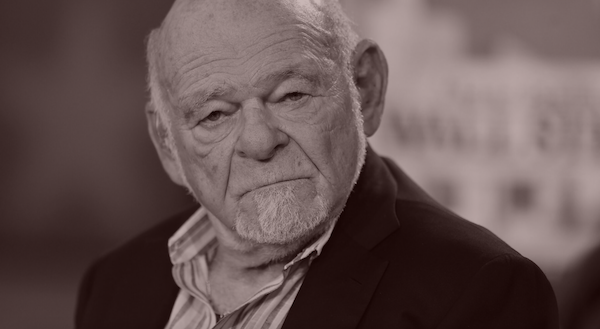
Nobody on Wall Street thought poorly of George Soros for making a killing in 1992—some $1 billion, real money at the time—betting against the British pound and bringing the Bank of England to its knees. Nor did they begrudge Jonathan Pollack and Jay Newman, at Elliott Management, for cashing in on Elliott’s 15-year struggle to get the country of Argentina to pay off its sovereign debt as it was obligated to do. In the end, Elliott received $2.4 billion, a return of nearly 400 percent on its investment. (Newman, by the way, just published his first novel, Undermoney, after leaving Elliott.) I’ll never forget—because I worked on the deal—the fortune that the billionaire Chicago financier Sam Zell, once known as the Grave Dancer of Wall Street, made by buying and selling out of bankruptcy what remained of the Revco Drug Store chain after Salomon Brothers overleveraged it in an early 1980s L.B.O. Zell saw value where others couldn’t. 


Many of the largest financial institutions are already ferreting out investment ideas amid this humanitarian tragedy. According to Bloomberg, Goldman Sachs and JPMorgan Chase have been helping hedge fund clients buy the discounted debt of big Russian companies, such as Gazprom, its oil conglomerate; Evraz, the steel manufacturing and mining company; Russian Railways, the Russian vertically integrated railway company; as well as Russian sovereign debt, which was downgraded last week to CCC-, three notches above default, by S&P Global Ratings. In a statement to me, Goldman clarified that what it is doing in Russia on behalf of its clients is “permitted under current sanctions guidance” and that the firm was working with clients “to reduce their risk in Russian securities and achieve an orderly wind down of their exposure.” Goldman said it is not engaging in proprietary trading in the securities of Russian companies or in Russian sovereign debt nor is it advising clients to increase their exposure to these securities. Similarly, a JPMorgan Chase spokesman explained to me that its trading has been de minimis, on behalf of the bank’s customers, and only in the debt securities of non-sanctioned Russian companies. 


But let’s be clear, the trading of securities requires both a buyer and a seller. So does the issuance of new securities. Even at times like these, where the moral imperative to stay away from Russian securities seems clear, there are still people whose job it is to try to make money by buying things that other people are selling when they are panicking, or when they have to sell. On Wall Street anyway, there is no moral imperative when it comes to making money for clients or for a financial institution. If someone bought credit default swaps on Russian corporate debt and now has made a fortune as that debt nears default and the credit default swaps have become infinitely more valuable, that is considered a homerun on Wall Street, not an example of benefitting from the misery of others. Similarly, if a hedge fund bets correctly that the ruble will collapse—as it has—there is no moral calculus. Only a celebration of investing prowess. Greed and fear.

ADVERTISEMENT

facebook

We’re making investments in safety and security—and seeing results


Facebook has invested $13 billion over the last 5 years to help keep you safe. Over the last several months, we’ve taken action on:

  • 62 million pieces of explicit adult content
  • 51.7 million pieces of violent and graphic content

See how we're working to help you connect safely.

We’ve been here before, of course, and it will be interesting to see how history judges the non-Ackmans: the Soroses and Zells of our current moment. Recall that it took a few years, but we managed to find a way to glorify, to some degree, the people who made a killing during the 2008 financial crisis by betting the mortgage market would collapse, rather than believing it would keep rising higher and higher. A few of these wildly successful investors were celebrated in Michael Lewis’ 2010 bestseller, The Big Short, and in Adam McKay’s movie based on Michael’s book. It’s easy enough to see that these hedge fund investors made money only because other people lost money and endured a great deal of suffering in the process. 


This is a side of human nature we don’t really like knowing about. We can’t quite decide whether we admire people who make money in tragic situations, like war or financial crises, or whether we want to be reviled by them. 


Perhaps it is a little bit of both. In the aftermath of the 2008 financial crisis, we seemed to end up being wowed by the likes of John Paulson, the hedge fund manager who made something like $20 billion for himself and his investors by betting that the market for mortgage-related securities would collapse. I remember going to see him speak at the University Club, on Fifth Avenue, early in 2009, after the world learned of his investing prowess. There wasn’t an empty seat in the house, a huge dining hall that encompasses an entire city block. So many people wanted to hear Paulson speak, in fact, that another room had to be opened up. Heck, we named Joe Kennedy the first chairman of the Securities and Exchange Commission after he secured his bootlegging fortune when the stock market crashed in October 1929. We may not like to admit it, but we love rewarding people who see things that others don’t and who then make a fortune in the process. Time will tell if we find a way to glorify the people who made a fortune betting against Russia even while the Ukrainian people suffered.

ADVERTISEMENT

facebook

FOUR STORIES WE'RE TALKING ABOUT

cocktail

The War Comes to Hollywood

Russia’s horrific invasion of Ukraine is reshaping the global economy. For Hollywood, that means one thing: a torrent of future litigation.

ERIQ GARDNER

money bag

The Death of Putin

The anniversary of Stalin’s death last week was a cruel reminder inside Russia that history frequently repeats itself.

JULIA IOFFE

money bag

Laurene's Secret Meeting

The latest inside reporting on Thiel’s political maneuvering—and Obama’s private visit with Laurene’s Emerson Collective.

THEODORE SCHLEIFER

card

Taylor Lorenz & the Future of Media

A recent Twitter feud evidenced a new shift in digital media, from institutions to individuals and back toward the center.

BRIAN MORRISSEY

 
swash divider
Facebook Twitter Instagram LinkedIn

You received this message because you signed up to receive emails from Puck.


Was this email forwarded to you?

Sign up for Puck here.


Sent to {{customer.email}}

Unsubscribe


Puck is published by Heat Media LLC.
64 Bank Street
New York, NY 10014


For support, just reply to this e-mail.

For brand partnerships, email ads@puck.news

SEE THE ARCHIVES

SHARE
Try Puck for free

Sign up today to join the inside conversation at the nexus of Wall Street, Washington, A.I., Hollywood, and more.

Already a member? Log In


  • Daily articles and breaking news
  • Personal emails directly from our authors
  • Gift subscriber-only stories to friends & family
  • Unlimited access to archives

  • Exclusive bonus days of select newsletters
  • Exclusive access to Puck merch
  • Early bird access to new editorial and product features
  • Invitations to private conference calls with Puck authors

Exclusive to Inner Circle only


Latest Articles from Wall Street

Lesley Stahl
William D. Cohan • March 9, 2022
Lesley’s Choice
In a candid chat, the longtime 60 Minutes star correspondent explained her fraught decision to stay on after perhaps the most bizarre week in the show’s history. “It’s just been obviously the hardest chapter of my career,” she said. “This was by far the worst experience I’ve been involved in, or even witnessed.”
Jeff Immelt
William D. Cohan • March 9, 2022
The Emancipation of Jeff Immelt
The disgraced-ish former GE executive has been on a journey of personal discovery to reinvent his legacy and perhaps make amends—even when the facts don’t fit his new narrative. But not everyone who worked with him is ready to forgive or forget.
Howard Marks
William D. Cohan • March 9, 2022
The A.I. Bubble Truthers Cry Wolf
As several of the leading A.I. companies prepare to go public and see their valuations soar above the $1 trillion mark, a number of Wall Street contrarians are trying to remind everyone that we’ve seen this movie before.


Larry Ellison, David Ellison
William D. Cohan • March 9, 2022
Inside ParaBros’ $49B Debt Blockbuster
The $111 billion Paramount Skydance–Warner Bros. merger deal is cruising toward the finish line, and it looks like nothing will stop it. Even if the California A.G. is trying.
Scott Goodwin
William D. Cohan • March 9, 2022
Goodwin Hunting
Long before Wall Street rushed for the exits, Diameter Capital co-founder Scott Goodwin warned that A.I. would “ruthlessly eliminate” software companies. Now, amid a market correction, he’s buying the panic.
Marc Busain
William D. Cohan • March 9, 2022
Spilling the Tea
Once a predictable cashflow business, Lipton has become a test case for how private equity leverage is holding up these days amid a less forgiving economic environment. The company’s new management team is confident they can turn things around.


Paul Atkins
William D. Cohan • March 9, 2022
All the Light We Cannot S.E.C.
Trump’s S.E.C. is pushing to eradicate Wall Street’s quarterly reporting requirement—an idiotic proposal that his administration believes will “make I.P.O.s great again.” Let’s count all the ways this could backfire…


Get access to this story

Enter your email for a free preview of Puck’s full offering, including exclusive articles, private emails from authors, and more.

Verify your email and sign in by clicking the link we just sent.

Already a member? Log In


Start 14 Day Free Trial for Unlimited Access Instead →


Latest Articles from Wall Street

Elon Musk
William D. Cohan • March 9, 2022
Is Elon Already a Trillionaire?
If the inevitable and possibly imminent SpaceX I.P.O. debuts anywhere near its rumored valuation, investors will effectively ratify Musk as a sovereign financial ecosystem unto himself.
Wes Edens
William D. Cohan • March 9, 2022
East of Edens
Wes Edens, the billionaire entrepreneur and NBA owner, is attempting to restructure New Fortress Energy in London, where the courts are much friendlier to equity holders—the hot new trend for American companies, and a potential win for Edens, who is otherwise having a pretty bad week.
Ryan Cohen
William D. Cohan • March 9, 2022
GameStop of Thrones
Meme stock king Ryan Cohen is the laughingstock of Wall Street after launching an absurd bid to buy eBay for $56 billion—largely with cash and equity that GameStop doesn’t have. The market isn’t taking the proposal seriously, but the math itself is actually pretty interesting…


Sam Bankman Fried
William D. Cohan • March 9, 2022
S.B.F. Is Out of Options
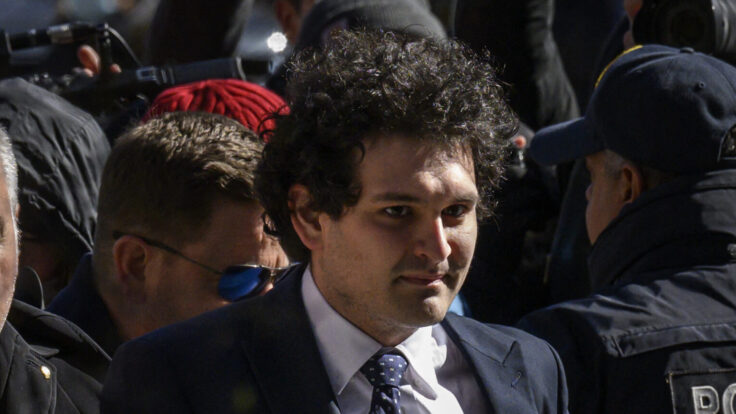
This week, a thoroughly annoyed Judge Lewis Kaplan rejected, with prejudice, Sam Bankman-Fried’s long-shot bid for a new trial. That leaves his fate in the hands of the Second Circuit—which will almost certainly rule against him—or worse… in the hands of Donald Trump.
Orlando Bravo
William D. Cohan • March 9, 2022
Heavy Medallia
The highly levered software company is becoming a morality tale for this inflection point in the private-credit journey. How will Thoma Bravo, Blackstone, Apollo, KKR, and Antares Capital interpret this moment?
Sam Bankman-Fried
William D. Cohan • March 9, 2022
S.B.F. Alternate Histories & Ellison “Ticking Fee” Fears
Even as he withdrew his latest plea, Sam Bankman-Fried has been pushing another argument in the court of public opinion: that if FTX hadn’t been forced into bankruptcy, his biggest investments would be worth some $114 billion by now. Plus, notes on Zaslav’s golden parachute—and how a state antitrust intervention could sweeten the deal.


Brightline Train
William D. Cohan • March 9, 2022
The Great Train Bankruptcy
A rare, privately owned U.S. rail line between Miami and Orlando is proving popular with riders, but a $6 billion debt pile is pushing Brightline and its hedge fund owners toward a likely restructuring reckoning.
Get access to this story

Enter your email to get access to one article and free previews of our private emails from Puck authors and editors.

OR

Already a Member? Sign in


Latest Articles from Wall Street

Jamie Dimon
William D. Cohan • March 9, 2022
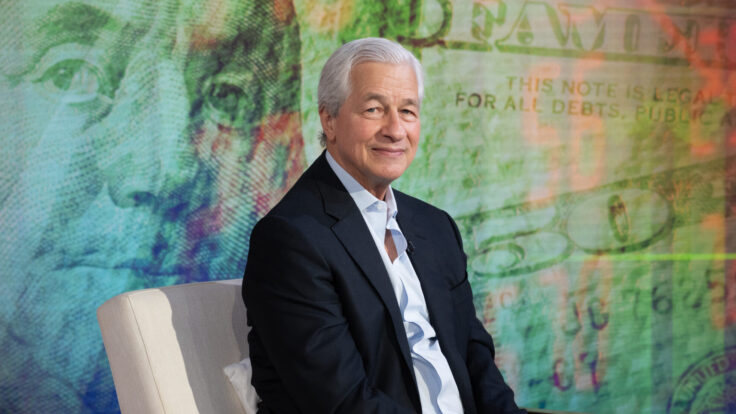
The Wall Street Iran Bounce
The economy is slowing and the Middle East is on fire, but the Big Five banks are printing record profits and stock markets keep hitting new highs. Is this the last song before the music stops, or were the bears wrong all along?
Bill Ackman
William D. Cohan • March 9, 2022
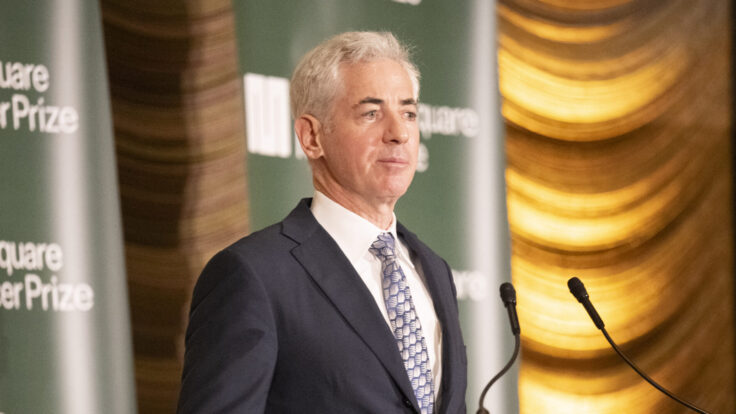
Ackman Family Values
Amid his double-I.P.O. roadshow and latest attempt to buy Universal Music Group, Bill Ackman has gone public with a bizarre personal drama at Table, his family office—with the lofty goal of teaching other billionaires that it’s better to fight their legal battles on X than settle in the shadows.
Leon Black
William D. Cohan • March 9, 2022
Leon Black From the Ashes, Part III
The erstwhile Apollo executive has more to say about his entanglements with Epstein, Ron Wyden, and his latest foe, The New York Times.


David Ellison
William D. Cohan • March 9, 2022
The Curious Case of Warner’s Eleventh-Hour Bidder
Just as Paramount was finalizing its offer to steal WBD from Netflix, a mysterious Singaporean company suddenly offered to top both bids with $32.50 per share. Was the whole thing a fraud?
Donald Trump
William D. Cohan • March 9, 2022
Wall Street’s Iran “Bear Trap”
Markets are pricing in a wide range of Iran war scenarios, from a quick bounceback to a prolonged global recession. Even professional contrarians warn that investors may be sucked into a bear trap if Trump abruptly changes course. But as the Mooch observes, hubris is one hell of a drug.
Sam Bankman-Fried
William D. Cohan • March 9, 2022
The Walls Are Closing in on Sam Bankman-Fried
The FTX founder’s appeals for a new trial have fallen on deaf ears, and his mother’s intervention appears to have backfired. Now, with the Justice Department going nuclear and Republicans lining up to ensure Trump doesn’t issue a pardon, S.B.F. may be running out of chances to escape his fate.


Marc Rowan
William D. Cohan • March 9, 2022
What Happens if a $40 Trillion Bubble Bursts?
There’s been a simmering anxiety since the fall that trouble is brewing in the private-credit market, and high-profile redemption requests have only added to the panic. There may be cockroaches in the system, but Wall Street superstars Marc Rowan and Jon Gray insist it’s all just a bunch of bad actors on the periphery.


  • Terms
  • Privacy
  • Contact
  • FAQ
  • Careers
© 2026 Heat Media All rights reserved.
Create an account

Already a member? Log In

CREATE AN ACCOUNT with Google
OR YOUR EMAIL

OR

Use Email & Password Instead

USE EMAIL & PASSWORD
Password strength:

OR

Use Another Sign-Up Method

Become a member

All of the insider knowledge from our top tier authors, in your inbox.

Create an account

Already a member? Log In

Verify your email!

You should receive a link to log in at .

I DID NOT RECEIVE A LINK

Didn't get an email? Check your spam folder and confirm the spelling of your email, and try again. If you continue to have trouble, reach out to fritz@puck.news.

CREATE AN ACCOUNT with Google
CREATE AN ACCOUNT with Apple
OR USE EMAIL & PASSWORD
Password strength:

OR
Log In

Not a member yet? Sign up today

Log in with Google
Log in with Google
Log in with Apple
Log in with Apple
OR USE EMAIL & PASSWORD
Don't have a password or need to reset it?

OR
Verify Account

Verify your email!

You should receive a link to log in at .

I DID NOT RECEIVE A LINK

Didn't get an email? Check your spam folder and confirm the spelling of your email, and try again. If you continue to have trouble, reach out to fritz@puck.news.

YOUR EMAIL

Use a different sign in option instead

Member Exclusive

Get access to this story

Create a free account to preview Puck’s full offering, including exclusive articles, private emails from authors, and more.

Already a member? Sign in

Free article unlocked!

You are logged into a free account as unknown@example.com

ENJOY 1 FREE ARTICLE EACH MONTH

Subscribe today to join the inside conversation at the nexus of Wall Street, Washington, A.I., Hollywood, and more.

START 14-DAY FREE TRIAL

  • Daily articles and breaking news
  • Personal emails directly from our authors
  • Gift subscriber-only stories to friends & family
  • Unlimited access to archives
  • Bookmark articles to create a Reading List
  • Quarterly calls with industry experts from the power corners we cover