{{ 'now' | timezone: 'America/New_York' | date: '%b %d, %Y' }} |
|
|
Welcome back to Dry Powder. I’m Bill Cohan.
As you well know,
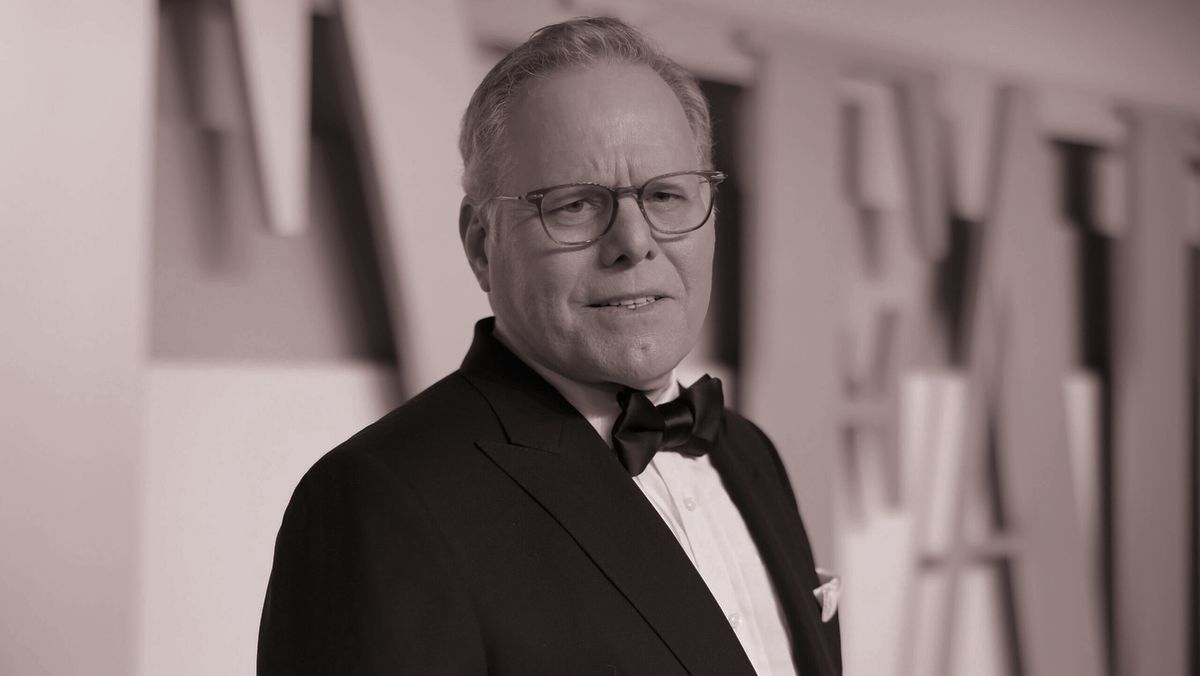
the final bids for David Zaslav’s Warner Bros. Discovery were due earlier this week, setting up what could become the largest M&A deal of the year. As I’ve documented in the past, Zaz doesn’t have to pursue a deal right now if the offers fall short of expectations. Indeed, he shrewdly managed to rally the esteemed Wall Street equity research
community around the value of a split earlier this fall.
And yet, wealthy as he may be, Zaz has economic incentives to get this deal done now. His potential partners have their own motivations, too—some of which are more complex than they appear. More on all that in today’s issue.
But first… |
-
Goldman Sachs is back in the SPAC game…: In 2021, when the tedium of Covid forced us all into rogue interests, Goldman was among the top underwriters of SPACs. Since then, of course, the whole SPAC fad has been largely discredited, and Goldman announced a year later that it was “reducing” its involvement “in response to the changed regulatory environment.” The last SPAC Goldman agreed to underwrite, as far as I can tell, was for Gores Holding IX, in January 2022. Gores Holding IX was
later liquidated, and the money Goldman helped raise was returned to investors.
The well-known SPAC revival of 2025 has been percolating among the mid-market underwriters—led by such firms as Santander Bank, Cantor Fitzgerald, and Cohen & Co rather than the blue-chip Wall Street behemoths. But now Goldman has agreed to dip its toe back into the SPAC waters, becoming the sole underwriter for a $300 million SPAC, Infinite Eagle Acquisition. This is the 10th such deal architected by the
dynamic duo of Jeff Sagansky, a former longtime CBS and Sony executive, and Harry Sloan, the former C.E.O. of MGM. One of their previous SPACs, Screaming Eagle Acquisition, was later merged with Lionsgate Studios and is down 32 percent from its I.P.O. price as a result of the merger. Their other SPACs combined with Ginkgo Bioworks (whose stock is down 98 percent); Skillz (down 97 percent); and what became DraftKings (up 196 percent).
According to the
I.P.O. prospectus, Sagansky and Sloan have no preconceived notion of what industry or company they intend to target and combine with Infinite Eagle and its $300 million, then subsequently unleash upon the public markets. “We have neither engaged in any operations nor generated any revenues to date,” they wrote. “Our only activities since inception have been organizational activities and those necessary to prepare for this offering. Following this offering, we will not generate any operating
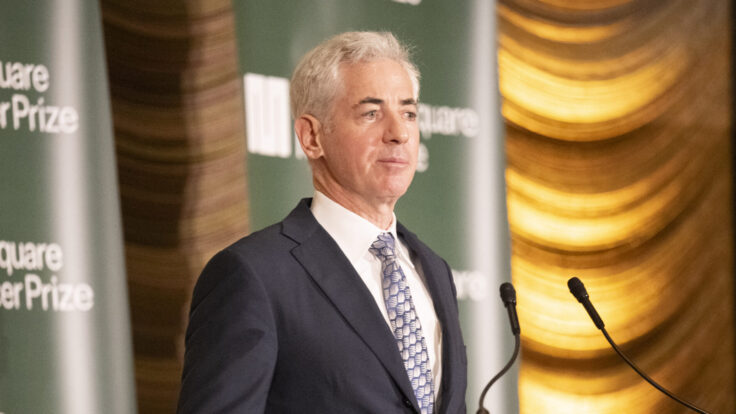
revenues until after completion of our initial business combination.” What a world. - The Ackman I.P.O. mystery: It’s hard to keep up with Bill Ackman, although I try pretty hard, myself. At the same time that he’s offering dating advice—the whole “May I meet you?” discourse—he’s
also making an argument about how and why the federal government should privatize Fannie Mae and Freddie Mac, in which Ackman has had a long and illiquid investment. And he’s recommending to his 1.8 million followers on X that they should buy Lloyd Blankfein’s forthcoming memoir, Streetwise: Getting to and Through Goldman Sachs, which won’t be published until next March. (Bill’s already read it, natch.)
But one thing Bill is not going public with, at least not
yet anyway, is his plan to do an I.P.O. of the management company of his hedge fund, Pershing Square Capital Management, in early 2026. According to the Financial Times, Bill has told some of his investors in the $21 billion hedge fund, as well as potential Wall Street advisors, about his plans. Indeed, something seems afoot.
Last June, Bill sold 10 percent of Pershing Square Capital Management for $1.05 billion to a small group of diverse investors, including Iconiq Investment
Management, Arch Capital Group, BTG Pactual, and Menora Mivtachim, an Israeli insurer. At the time, the buzz around Wall Street was that the transaction was a prelude to a public offering. Bill, of course, has long viewed himself as the second coming of Warren Buffett—although Buffett does not tweet, review books on X, or offer dating advice. An I.P.O. of Pershing Square Capital Management could be yet another attempt to pay homage to the Oracle’s management of Berkshire
Hathaway.
Earlier this year, Bill further tried to mimic Berkshire Hathaway by making a fresh $900 million investment in Howard Hughes Holdings, paying $100 a share—a 48 percent premium to the closing price—and bringing his ownership stake in the company to 47 percent. The idea was that Bill and his investing team would take control of Howard Hughes’ investment portfolio and begin to make acquisitions, à la Berkshire, while the existing management team would continue to operate
the underlying real estate company. The Howard Hughes stock trades around $85 a share these days, giving Bill a loss of about $135 million on that $900 million investment.
|
And now on to the main event… |
|
|
News, notes, and palace intrigues from all sides of what might become the largest
M&A deal of the year: the three-way tussle for David Zaslav’s Warner Bros. Discovery. |
|
|
Completing his proposed split-up of Warner Bros. Discovery remains an option for our
friend David Zaslav, but I think he is nonetheless pretty much resigned to sell the company, with the inevitable blessing of his board and shareholders. Indeed, the notion of Zaz taking the Streaming and Studios business and his C.F.O., Gunnar Wiedenfels, leading the Global Networks business increasingly seems like a paper tiger—a potential outcome that the bankers at Allen & Company, Evercore, and JPMorgan Chase can compare to the other bids as
an intellectual exercise in their fairness opinions, if nothing else. (Disclosure: Through our recent acquisition of Air Mail, Zaz has become a de minimis shareholder in Puck.)
There are a few strategic and financial reasons why the full-blown split option is starting to seem unlikely, even if it remains on the table. First, since Paramount Skydance’s interest in acquiring all of Warners was leaked to The Wall Street Journal, on September 11, WBD’s
long-floundering stock is up 85 percent. That’s 85 percent in two months, as compared to a decline of 50 percent between April 11, 2022—WBD’s first day trading as a merged public company—and the day before the PSKY leak. If, for some reason, Zaz decides to abandon the sale process and stick with the split, there is a not-insignificant chance that the WBD stock would return to its previous level. And nobody wants that: Not Zaz, not his board, and not WBD shareholders, some of whom would
likely file a shareholder lawsuit against the company to vent their anger.
Meanwhile, when he announced the split in June, the WBD board granted Zaz roughly 24 million options with a strike price of $10.16 per share. With the stock at $23.17, the intrinsic value of these options at the moment is $311 million; the Black-Scholes value is $326 million, assuming the sale of the company closes in a year. Obviously Zaz doesn’t need the money, but he’s not going to walk away from a fresh $311
million or more, especially since those options vest and are exercisable upon a change of control.
Finally, by announcing the split in June and a sale in November, not only did Zaz put WBD in play, in Wall Street argot, but he’s also put the company in “Revlon mode,” as I have written previously. That means, essentially, that the board has
little choice but to sell the company for the highest possible reasonable price that can be obtained for shareholders. This is long-established M&A law, thanks to the landmark 1986 Delaware Supreme Court case, Revlon, Inc. v. MacAndrews & Forbes Holdings, Inc., when Ronald Perelman acquired the cosmetics giant in a hostile takeover for $2.7 billion, including debt, with the assistance of the Delaware court ruling. As a practical and legal matter, Zaz will have little
choice but to sell the company to the highest bidder, and will be unable to hide behind a fuzzier, no-premium, strategic merger concept. So who will prevail as the highest bidder? It all depends on the interpretation of the fairness opinions offered by the three investment banks advising the WBD board. |
Fairness opinions, of course, are bits of investment banker jujitsu, combining analyses of
discounted cashflow, comparable M&A deals, and the public-market valuations of similar companies. They’re both fact-based and subjective, as much art as science, and allow the principals plenty of wiggle room unless there is a blow-away bid, akin to Elon’s irrational $44 billion deal for Twitter.
On Friday evening, my partner Dylan Byers reported
that PSKY’s fourth bid for WBD was around $23.50, like its previous offer, although the updated cash-stock mix is unclear. (The third offer was 80 percent cash, 20 percent PSKY stock.) That values the WBD equity at nearly $60 billion (I’m assuming Zaz might be able to inch the Ellisons up a little toward that round number) and an enterprise value of nearly $90 billion, assuming $30 billion of net debt. At $90 billion, this would probably be the biggest announced deal of 2025,
topping the Union Pacific–Norfolk Southern deal by a few billion dollars. But it’s still less than the roughly $109 billion that AT&T paid for Time Warner alone, without Discovery Communications, in 2018.
Can either Comcast or Netflix offer WBD shareholders more than $90 billion in value? That will be the question that the bankers and the board will have to answer. Assuming that neither company wants Global Networks—a safe assumption—and that it will be jettisoned on its own, under
Gunnar’s leadership, the question at the board level becomes whether their offers for Streaming and Studios, plus the value of Global Networks, could exceed $90 billion.
Let’s do some more analysis: In her September 30 research report on WBD, BofA’s Jessica Reif Ehrlich pegged Global Networks’ adjusted EBITDA for 2026 at around $5 billion and its enterprise value at $25 billion, based on a 5x multiple of EBITDA. That sounds low, I know, but the business is declining
pretty rapidly. Jessica had the business generating $5.5 billion in adjusted EBITDA in 2025, down from $7.4 billion in 2024—so, you know, not good. Peter Supino at Wolfe Research puts a 4x EBITDA multiple on Global Networks. So if Global Networks is worth between $20 billion and $25 billion, then it seems Comcast or Netflix would need to offer at least $65 billion for the Streaming and Studios business to vanquish the Ellisons’ $90 billion bid.
Can either do so? As best
as I can figure from Jessica’s analysis, she is projecting adjusted EBITDA for Streaming and Studios at $3.8 billion in 2025, $2.5 billion of which is being contributed by the movie studios, and that’s before an allocation to those businesses of some $1.1 billion in corporate overhead. So let’s call it $3 billion in 2025 adjusted EBITDA for those businesses. Jessica put a generous 20x multiple on Streaming and Studios—Peter concurred—giving it an enterprise value of $60 billion, and likely more,
given that it will probably generate in excess of $3 billion in adjusted EBITDA in 2026. So $65 billion for Streaming & Studios is not implausible, especially if Comcast and Netflix were to really get into it. |
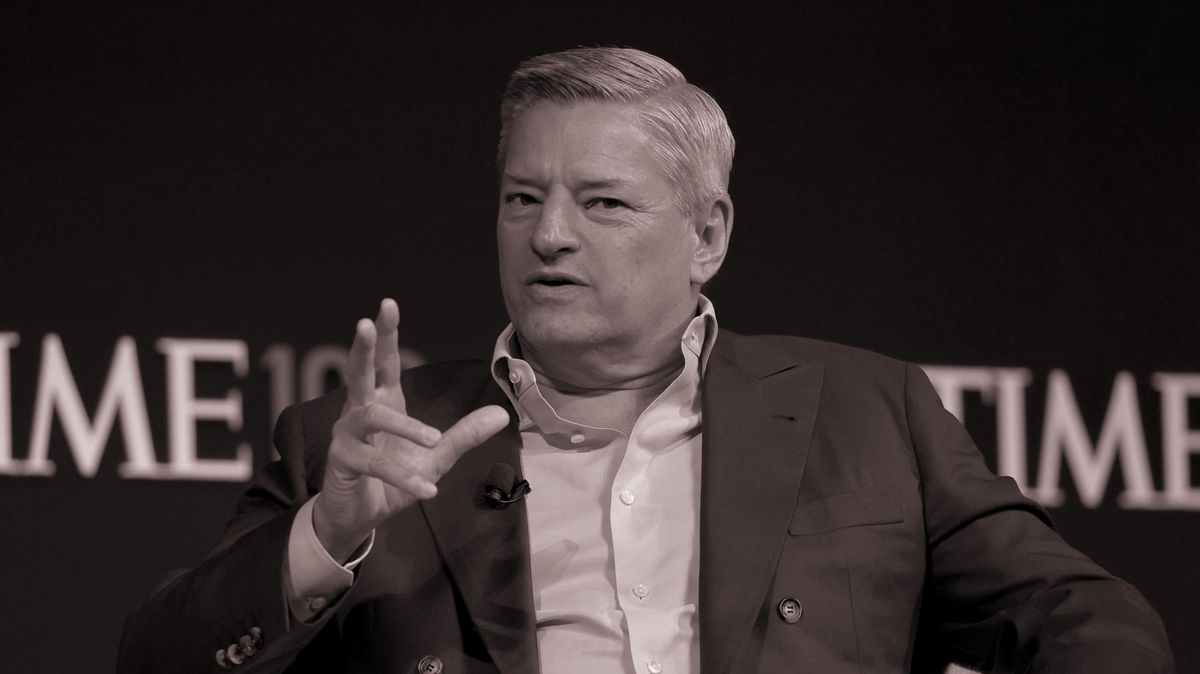
Netflix obviously has more financial firepower, with a market cap of $445 billion and roughly $5 billion in net debt. Supino thinks Netflix can pay between $60 billion and $80 billion for Streaming and Studios and still have it be accretive to the company’s 2028 earnings. Comcast, on the other hand, has a $100 billion market cap and about $90 billion of net debt, as of September 30. So if there’s a prolonged head-to-head battle for Streaming and Studios between Netflix and Comcast, it’s hard to argue with Peter that the valuation of Streaming and Studios could reach $80 billion,
with Netflix emerging victorious.
But I’m not yet convinced that Netflix co-C.E.O.s Ted Sarandos and Greg Peters want these assets at all costs, especially since politicians in Washington are already making noises about regulatory concerns with a HBO Max combination—and that’s before Trump gets involved. (Reed Hastings is a longtime Democratic donor, and Sarandos’s wife was a U.S. ambassador in the Obama
administration.) Also, the most Netflix has previously paid for another company was the $700 million it spent, in 2021, for the Roald Dahl Story Company. Still, Supino thinks Netflix management should want Streaming and Studios badly since original content is key to customer engagement on the service. “The importance of new content for Netflix’s engagement underpins why Warner Bros.’ production infrastructure and I.P. should appeal to Netflix,” he wrote in his report.
Comcast, however, is
definitely not afraid of the big deal—a characteristic evidenced by Brian Roberts’s acquisitions of AT&T Broadband (a deal I worked on back in the day) and Sky, plus its failed run at the Fox Hollywood assets and a hostile attempt to buy Disney, among others. But my sources are wondering if Comcast has the firepower for a $60 billion-plus deal for Streaming and Studios, let alone a bidding war with Netflix and the politics of it all—even despite the ballroom donation and MS
NOW exile. If you’re the WBD board and you have a competitive bid promising a smoother regulatory ride, I think you have to take it, right?
Let’s face it: Even though it makes no sense intellectually, the regulatory burden for both Comcast and Netflix is going to be greater than for the Ellisons. Roberts’s Damascene conversion to Trump will probably be too little, too late, even if he can mount a financially competitive bid—a big if, to be honest. And Netflix owning both its own streaming
business and HBO Max may be a bridge too far for antitrust regulators, as much business sense as it would make. If the bids are close, in the end, I think PSKY takes it. |
|
|
Join Puck’s chief political columnist, John Heilemann, as he roams the corridors of power and influence in America on
this twice-weekly interview show, taking you beyond the headlines with the people who shape our culture: icons and up-and-comers, incumbents and insurgents, moguls and machers in the overlapping worlds of politics, entertainment, tech, business, sports, media, and beyond. The conversations are rich and revealing, unrehearsed and unexpected… and reliably impolitic. A Puck-Audacy joint, new episodes drop every Wednesday and Friday. |
|
|
Puck’s daily political newsletter from Washington on what’s really happening in this town, from the White House to
the Pentagon to Capitol Hill, K Street, and the campaign trail. |
|
|
Need help? Review our FAQ page or contact us for assistance. For brand partnerships, email ads@puck.news. You received this email because you
signed up to receive emails from Puck, or as part of your Puck account associated with {{customer.email}}. To stop receiving this newsletter and/or manage all your email preferences, click here. |
Puck is published by Heat Media LLC. 107 Greenwich St., New York, NY 10006 |
|
|
|