• Washington
  • Wall Street
  • A.I.
  • Hollywood
  • Media
  • Fashion
  • Sports
  • Art
  • Join Puck Newsletters What is puck? Authors Podcasts Gift Puck Careers Events
  • Join Puck

    Directly Supporting Authors

    A new economic model in which writers are also partners in the business.

    Personalized Subscriptions

    Customize your settings to receive the newsletters you want from the authors you follow.

    Stay in the Know

    Connect directly with Puck talent through email and exclusive events.

  • What is puck? Newsletters Authors Podcasts Events Gift Puck Careers
 
Puck logo
 
Dry Powder

Hello and welcome back to Dry Powder. 


Thanks for being a part of Puck, our new media company covering the intersection of Wall Street, Washington, Silicon Valley, and Hollywood. And thanks for reading Dry Powder. If you're enjoying these private emails, consider sharing the subscription link with a friend.


Bill

Aryeh Bourkoff and David Zaslav

The Best Wall Street Deals of 2021

Notes on the next fiscal crisis, Gorman’s return-to-office pivot, meme SPAC mania, and a ‘Succession’ shout-out.

William Cohan

WILLIAM D. COHAN

Each week, I receive feedback from readers and sources about Wall Street’s biggest characters and concerns. I’ll be engaging with some of those questions here—in addition to a few observations of my own.

Bill, it now seems certain that Biden's BBB agenda won’t pass till next year. How is Wall Street evaluating the Biden agenda, and Biden, himself?


This is probably an unpopular take, but Wall Street likes gridlock and that’s basically what we have in Washington yet again. We had gridlock for the last six years of the Obama presidency and for most of the Trump presidency, and now again for the last six months of the first year of the Biden presidency. Gridlock means that for any momentous legislation to pass there has to be somewhere between 50 and 60 votes in the Senate and that is very hard to come by these days. So we really have to sweat the big pieces of legislation before they pass and before they can become law. That’s one way to stop the spiraling national debt and budget deficits from further unbounded expansion, since Congress lacks the spine to do so. 


As for why Joe Manchin persists in opposing his president’s key legislative initiative—the Build Back Better program—I wouldn’t dare hazard a guess, but I’d bet it has more to do with his own re-election concerns in very-red West Virginia than it does with trying to do the right thing for the country. And that is yet another sad indicator of how far into the abyss our political process has fallen.


As far as Biden himself, I hear a lot of complaints on Wall Street about him these days. An increasing number of Wall Streeters are starting to question his competence, his health (despite his recent clean bill) and his judgment, with most of that scrutiny related to the Afghanistan fiasco. (Personally, I think the criticisms are unfair.) But by and large, a growing disappointment with Biden does not mean, in the slightest, that Wall Street is hoping for a return of The Donald. Sorry old pal, you are still persona non grata on Wall Street. What Wall Street really wants is some new voices and new leadership that bring to the country a whole new way of thinking and acting. Who knows where these people are, or where they are hiding, but in a country with a population of 330 million, there ought to be a visionary woman out there somewhere ready to lead this amazing, but deeply troubled, country forward.

The big banks are again pivoting on remote work amid another covid wave. James Gorman said he was "wrong" about asking employees back to the office; JPMorgan told employees they can work from home for the next two weeks; ditto Citigroup and Jeffries. You’re an advocate of getting back to the office, yourself—do you predict Wall Street’s hustle culture will survive the pandemic, or will old-school guys like Gorman ultimately settle for a more itinerant workforce?


Well, this pivot isn’t about retreating from the idea of the importance of learning and mentoring on Wall Street. Rather it’s a well-meaning reaction to the resurgence of the Covid virus as we head into the holidays. In and around New York City it feels like March 2020 all over again, where people are canceling get-togethers, events and parties with wild abandon and companies have rescinded their return-to-work mandates. 


It’s probably for the best at this particular moment, driven by the fact that people want to be with their families for the holidays and don’t want to jeopardize that by asking people to return to work: hence the retreat and asking people to refrain from end-of-year parties. I suspect January will be a rough patch for Covid after the fallout from the holidays. Assuming that surge retreats relatively quickly, I would fully expect that Wall Street C.E.O.s will insist that employees return to the office as soon as possible. 


Covid, or no Covid, like many businesses—Hollywood, consulting and law, among them—Wall Street is an apprenticeship business and its long-term viability depends on one generation passing along its collective wisdom to another generation. That kind of learning cannot happen on a Zoom call or by working from home. One year or two years, OK. Especially since the Fed’s intervention in March and April 2020 guaranteed that Wall Street profits would gush for the past two years. But the Wall Street profits of 2020 and 2021 are likely to start to dwindle in 2022, as the Fed pivots away from Quantitative Easing. That will ratchet up the pressure on Wall Street employees to return to the office sooner rather than later.

Bill, thanks for the riveting Inner Circle conversation last Thursday about SPACs. Can you speak a bit more about the role that venture capital has had in allowing companies to stay private for longer, and the impact of that paradigm shift for early investors versus everyone else? It’s apples and oranges to compare the likes of Amazon and Google to today’s market, when those companies would otherwise have stayed private much longer, preventing retail investors from participating in the enormous upside. 


Well, it’s not only venture-capital money that has allowed companies to stay private longer—even venture-capital doesn’t have enough capital for that—but rather it is capital coming from bigger institutional investors, such as private-equity firms, university endowments and money management firms such as Fidelity and T. Rowe Price, that has helped to make that happen. 


But, it’s important to pause here for a moment. You cite Google and Amazon as examples of companies that might have stayed private longer if they could have, and had they, individual investors would have been denied access to the fabulous run-up in their stocks. That may be true. But for every Google and Amazon that went public, giving retail investors a chance to participate, there are a thousand Pets.com., Katerras, Hey Tigers and JAAKs that have disappeared from the landscape without a peep. It’s too easy to point to the biggest winners, nearly of all time, and say, “Boy, it’s a good thing private capital didn’t keep these companies private longer because look how much ordinary people have benefitted from owning them,” but that ignores all the investments in all the companies that go belly up and no one ever talks about them. 


That’s the way it goes with investments: People only talk about the ones that paid off; no one ever talks about their losers. And there are a lot more losers than winners, by a factor of ten, if not 100. So maybe the correct answer is to celebrate the fact that—pre-SPAC revitalization, starting in March 2020—more companies were staying private longer so that when, and if, they eventually got public, their efficacy would have been proven for many years rather than just a few, or even less than one. That’s one of the myriad problems with SPACs, by and large: In their haste to find a merger partner, they are teaming up with companies that can pretend to be exciting and innovative and disruptive and that boast of (sometimes decidedly unproven) hockey-stick earnings projections, only to then discover that it was all just a bunch of crap. Who gets burned then?

Dealbook is out with a “Deals of the Year” column, hailing David Zaslav and Keith Creel, among others, as well as “dealbreakers” like Lina Khan and Gary Gensler. Amid an unprecedented level of M&A activity, give us your own appraisal on the top deals, or top dealmakers, of 2021.


There is an irony at play here. While 2021 has been the year with the largest dollar-amount of M&A deals on record—$5 trillion and counting—the media has by and large lost interest in documenting and writing about M&A deals, making it harder and harder to answer your question. Once upon a time, a few days after the announcement of a big deal, the Wall Street Journal would do everyone the favor of going behind the scenes of the deal dynamics and make rock stars out of the people (sadly, often male) who made the deals happen. That’s how people like Bruce Wasserstein, Joe Perella, Jack Levy, Felix Rohatyn, Jimmy Lee, Ruth Porat, Christina Mohr and Paul Taubman became financial fantasy football stars. Most M&A these days is borderline invisible, despite the tremendous volume of deals. I’m a former, longtime M&A guy and I have trouble naming the M&A bankers behind this explosion of deal volume. (Maybe this is for the best.) 


But, being ever dutiful, I will now endeavor to answer your question. While Discovery’s stock is now down 68 percent from its 2021 high—causing me to scratch my head—I get why DealBook has focused on the Discovery-Warner Communications deal as one of the most important of the year. It’s one of the biggest, no matter how you slice it, and it’s one of the most transformative, given that it’s a clear admission by AT&T that its long fight to get control of TimeWarner, in 2018, turned out to be a financial and operational disaster, perhaps irreversibly hampered by a Trump-inflicted tie-up at Justice. The fact that AT&T would admit that fact so quickly—with the architect behind the deal, John Stankey, in the C.E.O.’s office, no less—is really quite shocking. Most companies wait years before admitting such a grotesque strategic blunder, if they do so at all. Give credit to Stankey for admitting his mistake and trying to move on; give a dart to Stankey for championing the idea in the first place. And David Zaslav, and Discovery, will likely be the beneficiaries of Stankey’s decision. Why the market is not seeing that value is a real head-scratcher (and maybe makes Discovery stock a screaming buy), but regardless it makes people like Zaslav, and the ubiquitous Aryeh Bourkoff, AT&T’s banker on the divestiture, among the dealmakers of the year. Bourkoff was also the banker behind the sale of the forlorn MGM studio to Amazon. As my colleague Dylan Byers pointed out on Friday, he’s also been representing The Athletic in their sales talks, which are now focused exclusively on getting over the line with The New York Times Company. So he’s one banker in the spotlight this year. 


I also remain intrigued by the deal that I wrote about a few months ago—Illumina’s $7 billion for Grail, a company focused on the early detection of cancer. It’s far from the biggest deal of the year, or a particularly transformative one. In fact, Illumina was merely buying Grail, which it once owned, back from the outside shareholders brought in to fuel its growth. What makes this deal interesting is the fact that Illumina’s C.E.O., Francis De Souza, had the guts to close the deal before getting the approval of the regulators in the European Union, who decided to question the deal—and were probably looking to prevent it—even though Grail does zero business in the European Union. Uniquely among chief executives, De Souza had the cajones to close the deal without the regulator’s approval. This rarely happens, if ever. But De Souza decided the E.U. was overstepping its authority—he’s not wrong about that, in my opinion—and that by buying back Grail, he could offer its cancer detection tests to more people sooner. So hats off to De Souza, too, for standing up for his convictions. I just love that.


I also think the M&A bankers who have gone out on their own, put up their own shingles and made their businesses a roaring success deserve some praise, too. There’s probably no move on Wall Street that has a higher degree of difficulty than leaving a behemoth to go out on your own as a M&A banker, with nothing to sell other than your advice. I mean, you get to working long enough at places like Goldman Sachs and Morgan Stanley as a M&A banker and you begin to think it’s not the jersey on your back that’s attracting the deals to you, but rather it’s your own brilliance that’s attracting clients to your door. When that turns out to be the case—after you’ve left the mighty Goldman, or wherever, to go out on your own—well, then, that is something a little bit special. 


I’ve written about it before, but it’s year-end so I want to write it again: Kudos to the bankers with the guts to do just that. In this category go people like Blair Effron, at Centerview Partners; Paul Taubman, at PJT Partners; the aforementioned Bourkoff, at LionTree (who also warranted a shoutout in the Succession finale); Kenny Moelis, at his eponymous firm; the founders of Evercore Partners and Perella Weinberg Partners; as well as people like Simon Robey and Simon Roberston, who left Morgan Stanley and Goldman Sachs, respectively, to go out on their own; and Curtis Lane and Andy Weisenfeld, who have made the healthcare M&A boutique MTS Health Partners a big success. Onward to 2022.


Have a question you’d like answered in the next edition? Email us at fritz@puck.news.

FOUR STORIES WE'RE TALKING ABOUT

cocktail

The Great Hollywood Cash-Out

Stallone is the latest in a long line of actors and performers to trade the revenue stream from his life’s work for one giant check.

MATT BELLONI

money bag

Huma Speaks!

In a wide-ranging interview, Huma Abedin talks candidly about Hillary, Weiner, the Laptop, more Hillary, and Kamala.

PETER HAMBY

money bag

Tech’s Radical Chic Lawman

The recall election of Chesa Boudin is pitting tech’s billionaires against one another—and forcing the city to look itself in the mirror.

TEDDY SCHLEIFER

card

Jim vs. Jonah

Who comes out on top as Vox Media merges with Group Nine, going head-to-head with BuzzFeed's SPAC-assisted roll-up empire?

DYLAN BYERS

 
swash divider
Facebook Twitter Instagram LinkedIn

You received this message because you signed up to receive emails from Puck.


Was this email forwarded to you?

Sign up for Puck here.


Sent to {{customer.email}}

Unsubscribe


Puck is published by Heat Media LLC.
64 Bank Street
New York, NY 10014


For support, just reply to this e-mail.

For brand partnerships, email ads@puck.news

SEE THE ARCHIVES

SHARE
Try Puck for free

Sign up today to join the inside conversation at the nexus of Wall Street, Washington, A.I., Hollywood, and more.

Already a member? Log In


  • Daily articles and breaking news
  • Personal emails directly from our authors
  • Gift subscriber-only stories to friends & family
  • Unlimited access to archives

  • Exclusive bonus days of select newsletters
  • Exclusive access to Puck merch
  • Early bird access to new editorial and product features
  • Invitations to private conference calls with Puck authors

Exclusive to Inner Circle only


Latest Articles from Wall Street

Lesley Stahl
William D. Cohan • December 19, 2021
Lesley’s Choice
In a candid chat, the longtime 60 Minutes star correspondent explained her fraught decision to stay on after perhaps the most bizarre week in the show’s history. “It’s just been obviously the hardest chapter of my career,” she said. “This was by far the worst experience I’ve been involved in, or even witnessed.”
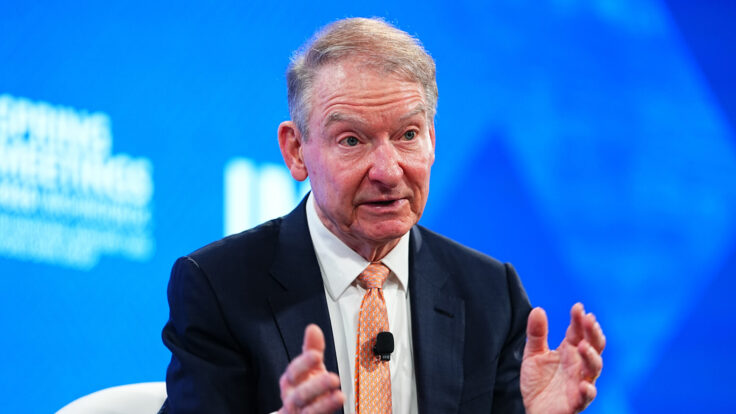
Jeff Immelt
William D. Cohan • December 19, 2021
The Emancipation of Jeff Immelt
The disgraced-ish former GE executive has been on a journey of personal discovery to reinvent his legacy and perhaps make amends—even when the facts don’t fit his new narrative. But not everyone who worked with him is ready to forgive or forget.
Howard Marks
William D. Cohan • December 19, 2021
The A.I. Bubble Truthers Cry Wolf
As several of the leading A.I. companies prepare to go public and see their valuations soar above the $1 trillion mark, a number of Wall Street contrarians are trying to remind everyone that we’ve seen this movie before.


Larry Ellison, David Ellison
William D. Cohan • December 19, 2021
Inside ParaBros’ $49B Debt Blockbuster
The $111 billion Paramount Skydance–Warner Bros. merger deal is cruising toward the finish line, and it looks like nothing will stop it. Even if the California A.G. is trying.
Scott Goodwin
William D. Cohan • December 19, 2021
Goodwin Hunting
Long before Wall Street rushed for the exits, Diameter Capital co-founder Scott Goodwin warned that A.I. would “ruthlessly eliminate” software companies. Now, amid a market correction, he’s buying the panic.
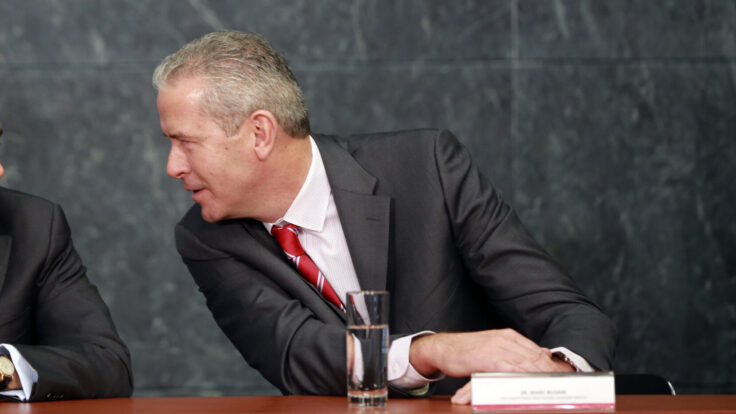
Marc Busain
William D. Cohan • December 19, 2021
Spilling the Tea
Once a predictable cashflow business, Lipton has become a test case for how private equity leverage is holding up these days amid a less forgiving economic environment. The company’s new management team is confident they can turn things around.


Paul Atkins
William D. Cohan • December 19, 2021
All the Light We Cannot S.E.C.
Trump’s S.E.C. is pushing to eradicate Wall Street’s quarterly reporting requirement—an idiotic proposal that his administration believes will “make I.P.O.s great again.” Let’s count all the ways this could backfire…


Get access to this story

Enter your email for a free preview of Puck’s full offering, including exclusive articles, private emails from authors, and more.

Verify your email and sign in by clicking the link we just sent.

Already a member? Log In


Start 14 Day Free Trial for Unlimited Access Instead →


Latest Articles from Wall Street

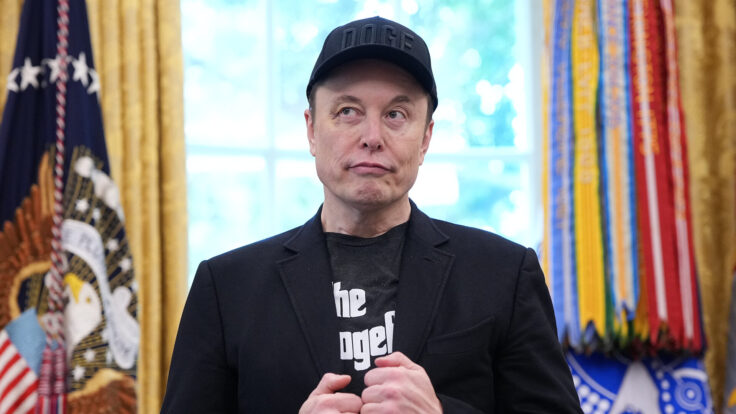
Elon Musk
William D. Cohan • December 19, 2021
Is Elon Already a Trillionaire?
If the inevitable and possibly imminent SpaceX I.P.O. debuts anywhere near its rumored valuation, investors will effectively ratify Musk as a sovereign financial ecosystem unto himself.
Wes Edens
William D. Cohan • December 19, 2021
East of Edens
Wes Edens, the billionaire entrepreneur and NBA owner, is attempting to restructure New Fortress Energy in London, where the courts are much friendlier to equity holders—the hot new trend for American companies, and a potential win for Edens, who is otherwise having a pretty bad week.
Ryan Cohen
William D. Cohan • December 19, 2021
GameStop of Thrones
Meme stock king Ryan Cohen is the laughingstock of Wall Street after launching an absurd bid to buy eBay for $56 billion—largely with cash and equity that GameStop doesn’t have. The market isn’t taking the proposal seriously, but the math itself is actually pretty interesting…


Sam Bankman Fried
William D. Cohan • December 19, 2021
S.B.F. Is Out of Options
This week, a thoroughly annoyed Judge Lewis Kaplan rejected, with prejudice, Sam Bankman-Fried’s long-shot bid for a new trial. That leaves his fate in the hands of the Second Circuit—which will almost certainly rule against him—or worse… in the hands of Donald Trump.
Orlando Bravo
William D. Cohan • December 19, 2021
Heavy Medallia
The highly levered software company is becoming a morality tale for this inflection point in the private-credit journey. How will Thoma Bravo, Blackstone, Apollo, KKR, and Antares Capital interpret this moment?
Sam Bankman-Fried
William D. Cohan • December 19, 2021
S.B.F. Alternate Histories & Ellison “Ticking Fee” Fears
Even as he withdrew his latest plea, Sam Bankman-Fried has been pushing another argument in the court of public opinion: that if FTX hadn’t been forced into bankruptcy, his biggest investments would be worth some $114 billion by now. Plus, notes on Zaslav’s golden parachute—and how a state antitrust intervention could sweeten the deal.


Brightline Train
William D. Cohan • December 19, 2021
The Great Train Bankruptcy
A rare, privately owned U.S. rail line between Miami and Orlando is proving popular with riders, but a $6 billion debt pile is pushing Brightline and its hedge fund owners toward a likely restructuring reckoning.
Get access to this story

Enter your email to get access to one article and free previews of our private emails from Puck authors and editors.

OR

Already a Member? Sign in


Latest Articles from Wall Street

Jamie Dimon
William D. Cohan • December 19, 2021
The Wall Street Iran Bounce
The economy is slowing and the Middle East is on fire, but the Big Five banks are printing record profits and stock markets keep hitting new highs. Is this the last song before the music stops, or were the bears wrong all along?
Bill Ackman
William D. Cohan • December 19, 2021
Ackman Family Values
Amid his double-I.P.O. roadshow and latest attempt to buy Universal Music Group, Bill Ackman has gone public with a bizarre personal drama at Table, his family office—with the lofty goal of teaching other billionaires that it’s better to fight their legal battles on X than settle in the shadows.
Leon Black
William D. Cohan • December 19, 2021
Leon Black From the Ashes, Part III
The erstwhile Apollo executive has more to say about his entanglements with Epstein, Ron Wyden, and his latest foe, The New York Times.


David Ellison
William D. Cohan • December 19, 2021
The Curious Case of Warner’s Eleventh-Hour Bidder
Just as Paramount was finalizing its offer to steal WBD from Netflix, a mysterious Singaporean company suddenly offered to top both bids with $32.50 per share. Was the whole thing a fraud?
Donald Trump
William D. Cohan • December 19, 2021
Wall Street’s Iran “Bear Trap”
Markets are pricing in a wide range of Iran war scenarios, from a quick bounceback to a prolonged global recession. Even professional contrarians warn that investors may be sucked into a bear trap if Trump abruptly changes course. But as the Mooch observes, hubris is one hell of a drug.
Sam Bankman-Fried
William D. Cohan • December 19, 2021
The Walls Are Closing in on Sam Bankman-Fried
The FTX founder’s appeals for a new trial have fallen on deaf ears, and his mother’s intervention appears to have backfired. Now, with the Justice Department going nuclear and Republicans lining up to ensure Trump doesn’t issue a pardon, S.B.F. may be running out of chances to escape his fate.


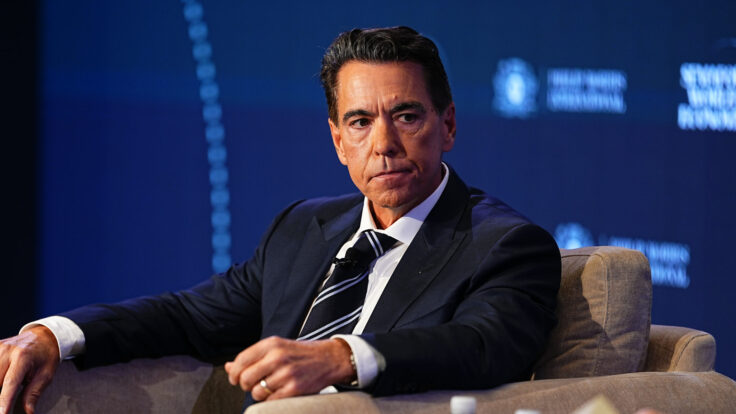
Marc Rowan
William D. Cohan • December 19, 2021
What Happens if a $40 Trillion Bubble Bursts?
There’s been a simmering anxiety since the fall that trouble is brewing in the private-credit market, and high-profile redemption requests have only added to the panic. There may be cockroaches in the system, but Wall Street superstars Marc Rowan and Jon Gray insist it’s all just a bunch of bad actors on the periphery.


  • Terms
  • Privacy
  • Contact
  • FAQ
  • Careers
© 2026 Heat Media All rights reserved.
Create an account

Already a member? Log In

CREATE AN ACCOUNT with Google
OR YOUR EMAIL

OR

Use Email & Password Instead

USE EMAIL & PASSWORD
Password strength:

OR

Use Another Sign-Up Method

Become a member

All of the insider knowledge from our top tier authors, in your inbox.

Create an account

Already a member? Log In

Verify your email!

You should receive a link to log in at .

I DID NOT RECEIVE A LINK

Didn't get an email? Check your spam folder and confirm the spelling of your email, and try again. If you continue to have trouble, reach out to fritz@puck.news.

CREATE AN ACCOUNT with Google
CREATE AN ACCOUNT with Apple
OR USE EMAIL & PASSWORD
Password strength:

OR
Log In

Not a member yet? Sign up today

Log in with Google
Log in with Google
Log in with Apple
Log in with Apple
OR USE EMAIL & PASSWORD
Don't have a password or need to reset it?

OR
Verify Account

Verify your email!

You should receive a link to log in at .

I DID NOT RECEIVE A LINK

Didn't get an email? Check your spam folder and confirm the spelling of your email, and try again. If you continue to have trouble, reach out to fritz@puck.news.

YOUR EMAIL

Use a different sign in option instead

Member Exclusive

Get access to this story

Create a free account to preview Puck’s full offering, including exclusive articles, private emails from authors, and more.

Already a member? Sign in

Free article unlocked!

You are logged into a free account as unknown@example.com

ENJOY 1 FREE ARTICLE EACH MONTH

Subscribe today to join the inside conversation at the nexus of Wall Street, Washington, A.I., Hollywood, and more.

START 14-DAY FREE TRIAL

  • Daily articles and breaking news
  • Personal emails directly from our authors
  • Gift subscriber-only stories to friends & family
  • Unlimited access to archives
  • Bookmark articles to create a Reading List
  • Quarterly calls with industry experts from the power corners we cover