
Join Puck to listen to this article
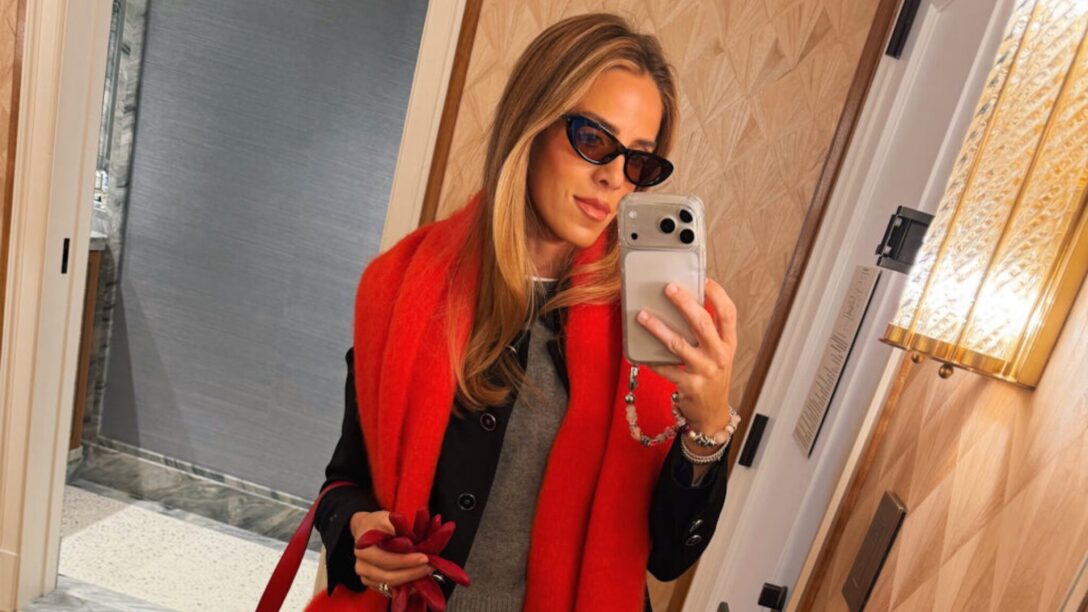
On a recent Sunday evening, Julia Berolzheimer, a Charleston-based fashion and lifestyle influencer with more than a million followers on Instagram, called out the platform for behavior she called, using the poster vernacular, “shady AF.” Berolzheimer said she’d discovered that Instagram was slapping “Shop the Look” links on her content without her knowledge—and that those links led her followers to products she hadn’t selected or vetted. The post prompted other creators, as well as industry figures like ShopMy president and co-founder Tiffany Lopinsky, to voice their discontent. “The growth of shopping features across platforms reflects something we’ve believed for over a decade—consumers want to shop through creators they trust,” LTK founder Amber Venz Box told me. “But trust only works when recommendations are real.”
Over the next several days, more creators piled on, often tagging Adam Mosseri, the head of Instagram. A Meta spokesperson told me that the company is running a limited test to collect feedback and explore improving the Instagram experience. The “Shop the Look” feature pulls products from “business catalogues,” and uses advanced A.I. visual recognition to identify products similar to those the creators are posting. Meta does not make any commissions on the test products.
The language itself, “Shop the Look,” is borrowed from influencer culture—perhaps leading followers to assume the links take them to items the creator personally recommends. And Instagram is not alone in deploying this tactic. Pinterest has a similar feature that overlays shoppable product links on creators’ images. “Creators tried to stop it,” one influencer told me, “but they eventually acquiesced because Pinterest started allowing us to use our own affiliate links in posts, which hadn’t been previously allowed.”
Berolzheimer told me she was never notified that her content was being repurposed: The “Shop the Look” link didn’t show up in the backend data she tracks to run her business, and she learned about the change only when another influencer asked how she’d managed to do it—a workaround that typically requires a third-party service like ManyChat. “The shocking part is that it isn’t visible to the person whose content it’s on,” said Berolzheimer. “Followers all thought that was what the influencer was sharing—that it was me. That was the upsetting part.” Lopinsky concurred: “It reduces what people share on Instagram to only what something looks like,” she said. “And it’s about so much more than that.”
The frustration extends beyond creators. After Berolzheimer wrote about the issue on Substack, some brands forwarded her article to their Meta ad sales reps. Another influencer, who also has her own brand, said that at a meeting at Meta’s headquarters last month, the team had mentioned they were beta testing a feature like this. (Allowing for the possibility that there might be a post-beta future in which Meta grants brands and influencers access to these kinds of tools, in the moment this was—at the very least—an annoying development.)
“Their last affiliate attempt was a pretty big miss,” this influencer said, expressing surprise that the company had already launched another iteration without broader creator testing. Meta’s response was succinct: “This is a limited test intended to help shoppers browse products that match their interests when they’re viewing posts or reels,” the company emailed. “We are constantly taking in feedback from creators and will continue to do so before rolling this out more broadly.”
This raises some questions: Did creators unknowingly agree to this? Does it even matter? And could we be witnessing a transitory moment—one in which it’s becoming clear that bored housewives in Utah were proofs of concept for Meta to build out a larger business, much like how the company leveraged media companies to grow the News Feed before changing its algorithm and abandoning them?
Anyway, all the leverage is in Meta’s court. When users sign up for Instagram, they grant the platform a broad, royalty-free, worldwide license to the content they post. The terms explicitly allow Instagram to place advertising and promotions “on, about, or in connection with” user content. As one brand representative put it, “The terms and conditions are already signed away. There’s no recourse.” She warned that the feature’s potential reach could “blow up the entire ecosystem”—not just for influencers, but for photographers and others whose creative work flows through the same pipeline.
Meta Questions
While Meta’s terms of service cover certain uses of images and comments, they do not necessarily shield the company from all forms of liability. Alexandra Jane Roberts, a law professor at Northeastern University who specializes in I.P. and advertising law, identified some legal frameworks worth examining, such as the right of publicity—a state-law doctrine recognized in most U.S. jurisdictions—that prohibits the commercial use of someone’s name, image, or likeness without their consent. She pointed out that influencer marketing already meets the legal criteria for commercial use: Influencers get paid and receive affiliate commissions, and any representations they make are considered advertising claims.
Another issue could be false endorsement, a federal ruling that prohibits creating the false impression that a celebrity or public figure—in this case, the influencer—endorses a product. And there are rulings from the Federal Trade Commission specifying that endorsers of a product must have actually used the product; linking products that a creator has never worn or recommended under the creator’s name could draw F.T.C. scrutiny.
As for Instagram’s characterization of the feature as a “limited test,” Roberts was skeptical that it would provide legal protection. But do any of these influencers really want to take on a $1.7 trillion company? Will they even leave the platform over this? Probably not. Affiliate commissions and instant access to a built-in audience function as golden handcuffs. Some, including Berolzheimer, have diversified—maintaining independent websites, building Substack audiences, and cultivating direct relationships with followers. That ownership matters precisely because it cannot be repurposed by a platform. More likely, Meta will refine the beta in response to the backlash, or quietly pivot to another experiment.