{{ 'now' | timezone: 'America/New_York' | date: '%b %d, %Y' }} |
|
|
Hello and welcome back to The Best & The Brightest. I’m Leigh Ann Caldwell,
currently in South Carolina for a bit of beach and some time with my parents.
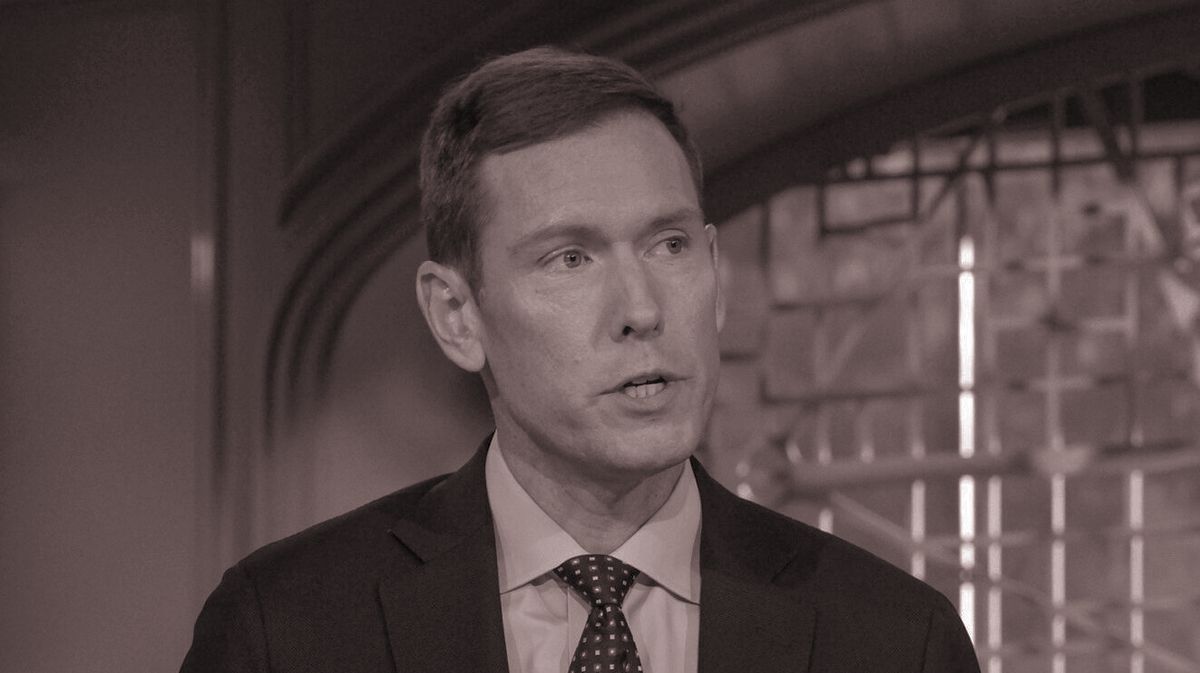
Today, I’m bringing you my recent conversation with a very familiar presence in Washington: Brendan Buck, the former top aide to Speakers John Boehner and Paul Ryan. Buck was also a Ways and Means Committee staffer, and has seen just about everything in his days on the Hill… although he’s never seen anything quite like this. We talked about
what it’s like to do strategic comms in the Trump era, the new role of K Street, and how the appropriations process was “broken.”
But first… |
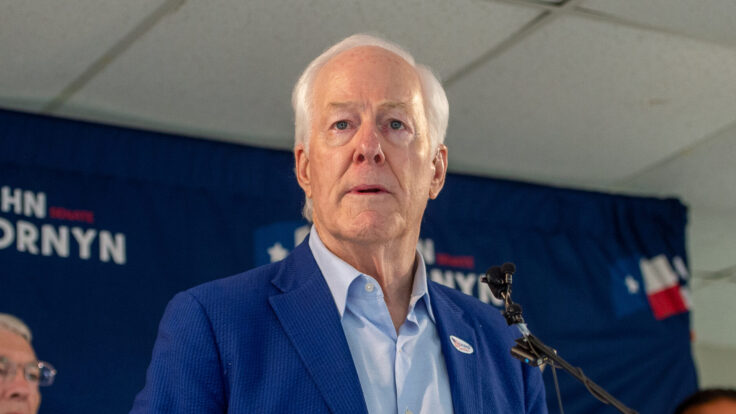
John Cornyn’s Moment
of Truth
|
Spending in the Texas Republican Senate primary has been lopsided, to put it mildly: Sen. John
Cornyn’s campaign, and groups supporting him, have spent as much as $8 million on television and digital ads so far—including at least $2 million in the past three weeks—while his more right-wing opponent, Ken Paxton (and affiliated groups), has spent hardly any money so far. With seven months to go before the primary, Cornyn’s campaign is heavily staffed—campaign manager, communications director, multiple strategists, etcetera—while Paxton is paying
just one strategist.
That’s all perfectly sensible on Paxton’s part, his strategist told me. The Texas attorney general is leading in the polls, in some cases by double digits, so there’s no point in “wasting” money on television in the expensive Texas media market—at least at this stage of the race. One G.O.P. operative told me that Paxton, who thinks his best chance of winning the primary is against Cornyn, actually prefers that the senator rise in the polls. A strong two-man
battle would discourage other MAGA challengers, like Rep. Wesley Hunt, who could split the vote and push the race into a runoff. (A pro-Hunt super PAC has spent at least $2.3 million in ads raising Hunt’s profile in the state.)
Paxton strategist Nick Maddux denied that Paxton’s plan is to do no harm to Cornyn, saying, “You need better sources.” When I put this question to Gregg Keller, a strategist working for the pro-Paxton Lone Star
Liberty PAC, he also deflected. “Ken will have the resources necessary to remind Texas Republicans that John Cornyn is a D.C. lifer,” he said, calling the incumbent senator “a tool of the Republican establishment who opposes our Southern border wall and mass deportation of illegal aliens.”
In any event, the Cornyn campaign is at a critical juncture. The White House has told Cornyn that he needs to increase his viability in the race in the coming months to have any chance of getting Trump’s stamp of approval, which Republicans consider necessary for Cornyn to win the primary. So far, the bulk of pro-Cornyn ad buys have been placed by super PACs supporting the senator, including one affiliated with the Republican leadership–backed Senate Leadership Fund. But “that day is coming” when the campaign itself will launch a
larger-scale ad blitz, a Cornyn spokesperson told me. After all, if Cornyn fails to narrow the gap with Paxton, there could be pressure for him to drop out, despite indications that the more moderate Cornyn might be the stronger candidate against a Democrat in the general election.
Alas, while Cornyn has the support of the Senate Republican establishment, he has struggled among the party’s base, in part because of his advocacy for bipartisan gun safety legislation, but also, more simply,
because he’s not considered a fighter. Cornyn is hardly a squish, and he may yet get Trump’s endorsement, but there’s no question that the 73-year-old senator is more mild-mannered than his firebrand opponent, who was impeached in 2023 by the Texas House of Representatives on bribery and obstruction of justice charges. (The State Senate later acquitted him.) Despite his legal troubles, or perhaps because of them, Paxton is immensely popular with a certain portion of the Texas
base.
Paxton may have hurt his chances of a Trump endorsement by hiring Jeff Roe’s Axiom Strategies, a consulting firm long despised by Trump and his political team, as I reported back in April. And yet he’s nevertheless making efforts to stay in the president’s good graces. While a Paxton aide insisted to me that Paxton isn’t
asking for Trump’s endorsement, there are few other ways to interpret his trip last week to the president’s Turnberry golf resort, in Scotland, where the two men had a chat.
Meanwhile, the Texas redistricting fight has become a flashpoint in the Senate race, with both candidates taking a hard line against Democrats who fled the state to deny the Republican legislature a quorum to approve the new, Republican-skewed congressional maps. Cornyn, perhaps attempting to buck his
mild-mannered reputation, has called on the F.B.I. to find and arrest the lawmakers, while Paxton has filed lawsuits seeking their removal from office. (Paxton has also filed suit against Beto O’Rourke, who was raising money to cover the civil fines imposed on the rogue Democrats.) In a press release, Paxton’s office said it wouldn’t stand for “politically motivated grandstanding” from Democrats. Naturally, a pro-Paxton super PAC cut a digital ad highlighting his “historic”
actions—the only spending in the race so far by Team Paxton.
Now for the main event… |
|
|
A lively conversation with Brendan Buck, the former top G.O.P. aide turned strategist, about
the new risk calculus on Capitol Hill and whether Congress is edging closer to abdicating its powers to the White House. |
|
|
Just a little over six months into his second presidency, Donald Trump has browbeaten
Congress, cultural institutions, universities, the justice system, the healthcare industry, and more into reflecting his MAGA worldview. At the principal level, this has been accomplished through the usual heavy-handed tactics: executive orders, tariff threats, federal investigations, etcetera. But Washington in the Trump 2.0 era has also been transformed in more subtle ways, with loyal lieutenants like Stephen Miller, Russ Vought, and James
Blair leaning on Capitol Hill, hard, to abrogate legislative powers to the White House.
Earlier this week, I called up Brendan Buck to get a sense of how both Congress and K Street are adapting. Buck, of course, is a veteran of both worlds, having served as a top aide to Republican speakers John Boehner and Paul Ryan before transitioning to the higher calling of political strategy as a partner at Seven Letter, a comms
shop by Farragut Square.
In a candid and insightful conversation, Buck dished about why it’s so hard for Congress to legislate these days, and how both Congress and the corporate influence industry have adapted under a president who cares little about either. Our conversation has been lightly edited for clarity. |
Leigh Ann Caldwell: Let’s start broadly. What’s your overall takeaway of
this Congress?
Brendan Buck: They’ve taken up a moderately ambitious agenda, and despite a lot of humps and bumps, were able to accomplish it. So that’s not nothing. At the same time, they’re just doing less and less, a trend that’s been taking place for several congresses now. The core basics of governing have become lower priorities, to the point where there are a lot of things we would normally regularly do—appropriations,
authorizations—that don’t happen as much. That puts an incredible amount of pressure on the few vehicles that do become law.
Appropriations will ramp up soon, ahead of the September 30 funding deadline. What challenges, or pitfalls, do you anticipate?
Members of Congress have long been cautious when it comes to any kind of compromise—that goes back several years. Anything that sniffs of compromise is seen as betrayal. But we’ve
plowed through that time and time again when you have to—whether it’s funding the government, or debt limit increases. It seems at this point, though, that there’s little interest in doing anything risky. Not risky as in, This is hard, but risky meaning, I’m going to vote with the other party on something. And that is how you ended up with a long-term funding resolution, a C.R., in March. That’s how the momentum is building for another long-term C.R. [in
September].
Doing a big funding package for the entire government necessarily is unpleasant, but sometimes you have to do that for good governance, and to reset spending priorities and hold the administration accountable on certain program changes. But if that means you have to work with Chuck Schumer and Hakeem Jeffries to get a big fat bill, maybe that’s not worth it. And that seems to be the philosophy guiding a lot of decision-making. Let’s do
everything we possibly can in a partisan way, and anything that’s left over that requires bipartisan compromise, that’s a big lift. I’m not sure we want to do that. Kick that can a little further down the road, and it leads to an erosion of your core responsibilities.
The fact that the appropriations process is not just broken, but nonoperative, is a really bad way to run a government—especially when you have a really activist president. Theoretically, they would want to be setting
new priorities within our funding levels. But the fact that the politics are such that that feels almost like treason, tells you how political the whole thing has gotten.
Is that a sign that the administration doesn’t care much about the appropriations process and plans to do what they can through the executive branch?
That’s the great irony to all of this. You have a president right now with extreme power over his party in
Congress, but at the same time, seemingly very little interest in what Congress does. Even with the Big Beautiful Bill, you were not seeing an engaged president throughout the process. He’s been completely ambivalent on some of the big, fundamental questions.
I think the same thing extends to Congress. They clearly don’t see a priority in writing new spending bills that adopt their policy. That’s either a recognition that it’s just not going to happen, or it’s disinterest. In a Congress
where things only seem to get done because of the president’s muscle, it doesn’t leave you with great prospects for completion.
Is it disinterest, or is the president trying to gather power into the executive branch, and away from the legislative branch?
I don’t think those two things are in conflict. I think he is so focused on the day-to-day of being president, and using whatever levers exist in a way that goes around Congress,
that he doesn’t have the patience, or tolerance, for the long and messy legislative process. |
What is it like to do strategic communications in the age of Trump? It seems like a lot of corporate
communications these days is not about tailoring a message for the public, but for an audience of one.
That’s certainly an element of it. In some ways, it hasn’t been that dramatic of a change. It’s still making sure that you’ve got sound arguments, and a coherent narrative, and you’re not ignoring Congress, and you understand the people in that place and what they need. But there is, of course, this big element of, How does this fit into the
Trump agenda? You’re seeing a lot of companies and organizations trying to frame their priorities as part and parcel of what is good for the president, and packaging that up nicely, where it feels consistent with where they’re going in a way that also, of course, is consistent with the entity’s priorities.
Is communications toward Congress on the back burner? At one time, lobbying and corporate influence were focused on Congress and impacting
legislation.
There is now no strategy that doesn’t have a White House element to it, and that has definitely been the change. At one point, it was overwhelmingly focused on Congress. But there was always a question of, What is your White House strategy? How are you presenting your policies in a way that is seen as advancing the administration’s agenda, or at least it was not in conflict with it? And what are the messages that work there?
Who are the people you need to talk to there?
Trump requires loyalty, not only of Congress but of corporations, too.
I don’t know if it’s loyalty, it’s just consistency. Is what you’re doing aligned with what the president is trying to do? Is your healthcare policy part of MAHA? Is your tech policy “America First”? How can you frame what you’re doing in a way that is consistent with what the president is
doing?
There’s a lot of that going around these days. You recently wrote in The New York Times that “Congress is no longer in the business of thoughtful legislating. Its role has been reduced to putting political points on the board for the president.”
It feels to me, from the outside, that most members of Congress are far more motivated in staying on the right side of Trump than they are
in leaving their own policy mark on Congress. As long as you have that seal of approval from the president, it doesn’t really matter what your accomplishments are. And when that’s sufficient, it doesn’t leave a lot of motivation to sit in a committee hearing room for hours, poring over testimony and reports or figuring out how to improve a government program under your jurisdiction. |
|
|
Join Emmy Award-winning journalist Peter Hamby, along with the team of expert journalists at Puck, as they let you in on the
conversations insiders are having across the four corners of power in America: Wall Street, Washington, Silicon Valley, and Hollywood. Presented in partnership with Audacy, new episodes publish daily, Monday through Friday. |
|
|
Unique and privileged insight into the private conversations taking place inside boardrooms and corner offices up and down Wall
Street, relayed by best-selling author, journalist, and former M&A senior banker William D. Cohan. |
|
|
Need help? Review our FAQ page or contact us for assistance. For brand partnerships, email ads@puck.news. You received this email because you signed up to receive emails from Puck, or as part of your Puck account associated with {{customer.email}}. To stop receiving this newsletter and/or manage all your email preferences,
click here. |
Puck is published by Heat Media LLC. 107 Greenwich St, New York, NY 10006 |
|
|
|