Hello, and welcome back to The Best & The Brightest. I’m Leigh Ann Caldwell,
hoping you all are enjoying the holiday weekend.
What a hard-fought NCAA women’s championship b-ball game between South Carolina and U.C.L.A. As many of you know, I swam at N.C. State and I’ve been thrilled to see the increased investment that has found its way into women’s collegiate athletics. But this shouldn’t come with the sort of B.S. antics that have long plagued our counterparts. UConn’s Geno Auriemma may be a legendary coach, but he behaved
like a child after Friday evening’s semifinal loss to South Carolina.
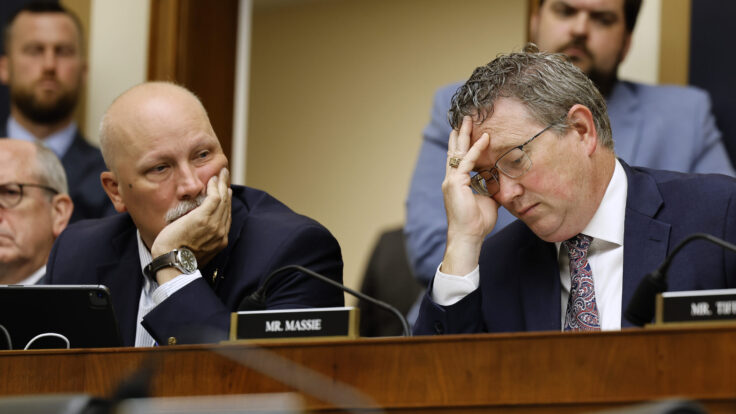
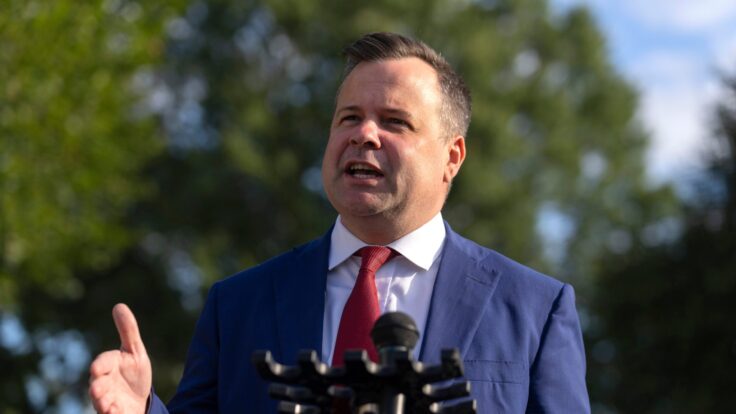
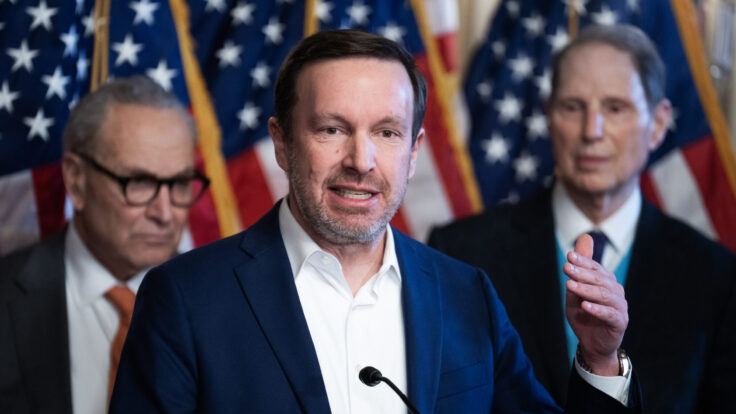
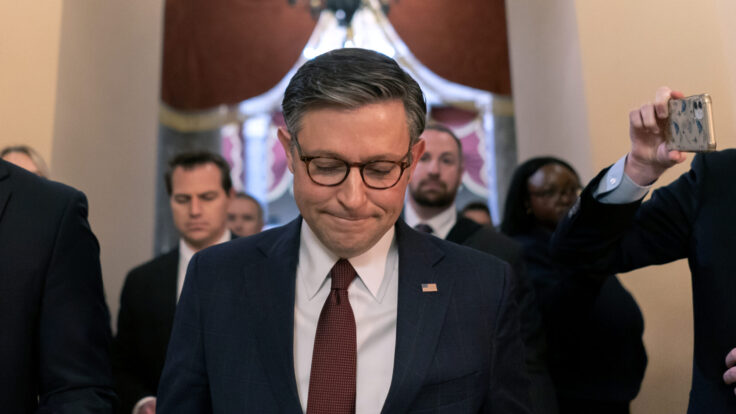
Anyway, Congress is still in recess for another week, but the internal fight over how to fund the Department of Homeland Security is going strong. Democrats initially lost much of their leverage when the Senate passed a bill that didn’t include any reforms to ICE or Customs and Border Patrol. Now they’re watching in amazement as House Republicans—who rejected the Senate deal—bicker and blame each other. Mike
Johnson will likely need Democratic votes to pass the Senate bill, which he originally called a “joke”—if he’s willing to put it on the floor. As I noted earlier this week, Johnson is watching the walls close in on him.
In today’s special Easter issue, I have a real chocolate egg for you: exclusive reporting on how the crypto industry, which is poised to spend hundreds of millions of dollars in the 2026 elections, is reconsidering its strategy of aligning primarily with
Republicans. (Looks like the midterm writing is on the wall…) Plus, how Trump is trying to pivot the government budget from America First to America Overseas.
Also mentioned in this issue: Jodey Arrington, Sherrod Brown, John Husted, Bernie Moreno, Kirsten Gillibrand, Patrick
Eisenhauer, Geoff Vetter, and… stablecoin reform! |
|
|
|
Claude, the AI for problem solvers AI helps most with the hardest work, not the simplest. Anthropic analyzed 2 million conversations and found Claude's biggest impact
is on complex, college-level tasks. The Economic Index tracks adoption across every state and occupation. See how your state uses AI. |
|
|
|
- Republicans’
D.H.S. funding trap: After all the flip-flopping and mixed messages, House Republicans will end up going with the two-step strategy—funding D.H.S. without money, or any reforms, for ICE and Customs and Border Patrol, then separately funding those agencies via a reconciliation bill. But it is also creating a midterm messaging problem for Republicans.
Reconciliation bills, after all, have to be paid for. And as one senior Senate Republican aide told me a few weeks ago,
Congress already “scraped the bottom of the barrel” to offset all the new spending in the One Big Beautiful Bill—primarily via deep cuts to Medicaid and rural health programs that are already turning up in Democratic attack ads. Republicans who want to use the reconciliation process again to fund ICE for three years would need to find as much as another quarter-billion in federal cuts.
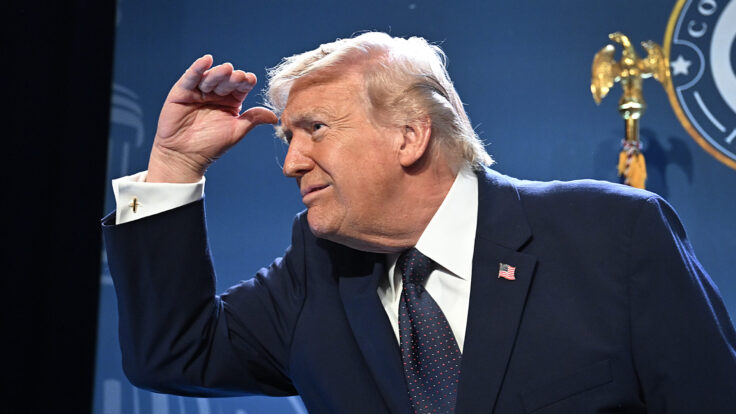
Meanwhile, the administration is still expected to ask for more than $200 billion to pay for the war in
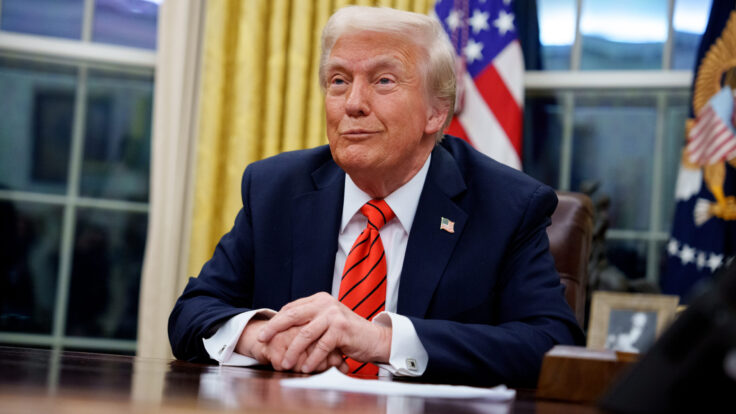
Iran. Trump just proposed an eye-popping $1.5 trillion defense budget—a 50 percent-plus increase that would be accompanied by a 10 percent cut to domestic spending on health and education. “Don’t send any money for daycare, because the United States can’t take care of daycare,” Trump said at a private luncheon last week—a comment that quickly went viral. “We’re fighting wars.” The Democratic campaign ads write themselves.
Republicans are now scrounging around for money in other
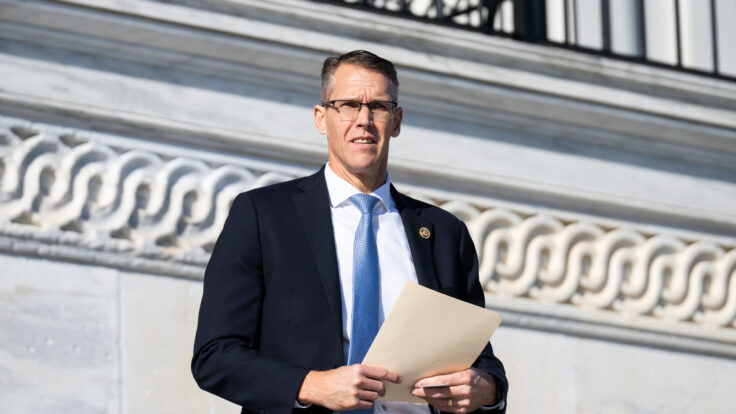
safety net programs, too. Budget Committee chair Jodey Arrington said on Fox Business last week that the war in Iran could be paid for by rooting out fraud in the federal government, and that there are “70-plus means-tested welfare programs” where House Republicans will look to find cuts. This agenda might further disappoint voters who thought Trump would keep American taxpayer dollars in America.
|
|
|
|
Democrats have been quietly making amends with the industry after getting pummeled by
pro-crypto super PACs in 2024. Meanwhile, crypto lobbyists are starting to hedge their bets as they contemplate a post-midterms landscape in which their G.O.P. allies are no longer in charge. |
|
|
|
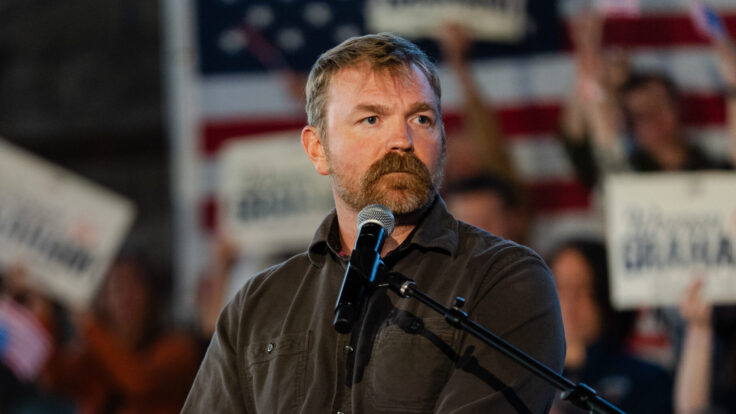
Nearly two years ago, Ohio Democrat Sherrod Brown’s reelection effort was thwarted in part
by Fairshake, the pro-crypto super PAC that shoveled $40 million into supporting his opponent: upstart luxury car salesman Bernie Moreno. It was a formidable introduction to the power wielded by the crypto industry—which spent last cycle buttressing Republicans, vilifying Dems, and nuzzling the bosom of Donald Trump, the self-proclaimed “crypto president.” Last summer, while the president and his family generated more than $1 billion from token sales and various
memecoin schemes, Congress passed landmark legislation to legalize and regulate stablecoins. Now, heading into the midterms, crypto super PACs have amassed a war chest of more than $200 million (so far) to deploy this cycle. A Democratic consultant recently told me that outside spending from emerging super PACs remains a “constant worry.” |
|
|
|
Claude, the AI for problem solvers AI helps most with the hardest work, not the simplest. Anthropic analyzed 2 million conversations and found Claude's biggest impact
is on complex, college-level tasks. The Economic Index tracks adoption across every state and occupation. See how your state uses AI. |
|
|
|
But the political environment has shifted considerably since 2024. The value of cryptocurrencies has
plummeted over the past several months, and Democratic candidates have the wind at their back. Illinois Lieutenant Governor Juliana Stratton just won the Democratic primary for Senate despite $10 million in crypto spending against her. And as it becomes more likely that Democrats will retake the House, if not the Senate, some members of the crypto lobby have begun to rethink their Republican-heavy strategy. “They’ve taken a lot of steps on who they’ll allow to give them
political advice,” one Democratic strategist told me, adding that the industry is suddenly much more willing to talk to Democrats. “They realized you can’t pass legislation in a close Congress and target only one party.” (Geoff Vetter, a Fairshake spokesperson, said the group doesn’t comment on political strategy or decision-making, but that Fairshake “supports pro-crypto candidates and opposes anti-crypto politicians.”)
The Democratic Party also seems to
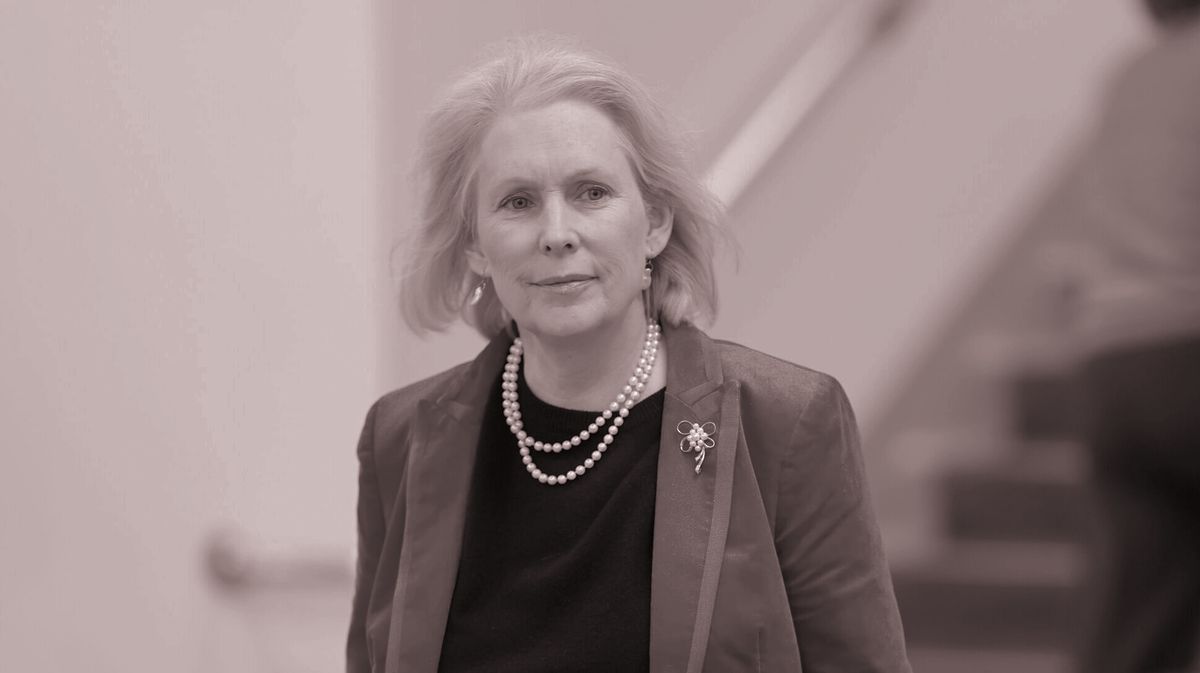
have absorbed the lessons of Brown’s defeat and softened its hostility to the industry. GENIUS, the stablecoin bill that was signed into law last year, won the support of more than 100 House Democrats and one-third of Senate Democrats, a significant crypto attitude shift for the party. I’m told that Sen. Kirsten Gillibrand, the pro-crypto chair of the Senate Democrats’ campaign arm, has been meeting with industry insiders to convince them it’s bad politics to
target Democrats. “We don’t want them to spend, and would do anything we can to signal that to them,” a person familiar with Gillibrand’s thinking told me.
At the same time, Democrats have been reminding the industry that the heady days of Trump’s unified control over Washington won’t last—and that if they agree to get on board with bipartisan crypto legislation, they want ethics constraints on the president’s crypto holdings in exchange. |
Brown, for his part, has been notably more muted in his statements about the crypto industry as he gears up
for another general election. “Brown recognizes that cryptocurrency is a part of America’s economy,” his campaign manager, Patrick Eisenhauer, told me in a statement. “He’ll keep an open mind toward all issues as they come before the Senate, and work to ensure that as more people use cryptocurrency, it expands opportunity and lifts up Ohioans.” |
|
|
|
This is a much milder posture than the resolutely anti-crypto stance Brown adopted before his 2024
defeat. As chair of the Senate Banking Committee, Brown leaned into the skepticism on the left, holding hearings examining crypto’s role in terrorism financing, and he gave speeches accusing crypto of facilitating fraud, scams, and “outright theft.” His staff was also largely anti-crypto. But as one senior Democratic aide noted, his time at Banking has since become a cautionary tale in Democratic circles about how policy purity (and the staunch, ideological opinions of staff) can cloud practical
and political realities. And indeed, many Democratic positions were out of touch with how people experience less-traditional finance.
Still, Democrats have a few demands that they seem intent on making central to any potential accommodation with the crypto industry—including ensuring that Trump himself isn’t manipulating policy to line his own pockets. A potentially transformative crypto market structure bill is currently stalled in the Senate, in part because Republicans are unwilling to
meet Democratic demands for ethics constraints while Trump is enriching himself in the White House. (It’s also stalled because of disagreement between the crypto industry and traditional banks on crypto holders’ awards benefits, or yield.) Meanwhile, Gillibrand and other Democrats are sending signal flares to the industry that Democrats “have a path [to the majority], and are making the case why we have such a strong map, of which Ohio is one” piece, the person familiar with Gillibrand’s pitch
told me. In other words: Be careful whose side you choose.
Amid the standoff, some are speculating that the industry is holding its fire until they know whether their allies in Congress can get the so-called Clarity Act to move forward. If they can, that would almost certainly take some pressure off the industry to throw so much money around in the midterms—a boon for Democrats who are bracing for an especially expensive cycle. “If it doesn’t pass by July that’s when they will get busy,”
the crypto lobbyist told me. “They either need it to pass in the lame duck, or they should start setting up their friends for next year.” |
|
|
|
Join Emmy Award-winning journalist Peter Hamby, along with the team of expert journalists at Puck, as they let you in on the
conversations insiders are having across the four corners of power in America: Wall Street, Washington, Silicon Valley, and Hollywood. Presented in partnership with Audacy, new episodes publish daily, Monday through Friday. |
|
|
|
Unique and privileged insight into the private conversations taking place inside boardrooms and corner offices up and down Wall
Street, relayed by best-selling author, journalist, and former M&A senior banker William D. Cohan. |
|
|
|
Need help? Review our
FAQ page or contact us for assistance. For brand partnerships, email ads@puck.news.
You received this email because you signed up to receive emails from Puck, or as part of your Puck account associated with {{customer.email}}. To stop receiving this newsletter and/or manage all your email preferences, click here.
|
Puck is published by Heat Media LLC. 107 Greenwich St., New York, NY 10006 |
|
|
|
|