Hello and welcome back to The Best & The Brightest. I’m Leigh Ann Caldwell, still trying to avoid getting into public feuds with my friends. I was, however, on NBC’s Meet the Press this morning, discussing the Trump- Elon rift and whether the world’s wealthiest man is still planning to spend bigly in the midterm elections. (In short: It’s too soon to tell.)
Programming note: I’ll be sitting down with Sen. Brian Schatz on Thursday for Puck’s next Power Breakfast. Schatz, as you know, is already a central player in the Senate Democratic caucus, and he could very well be the party’s whip after the next election. If you’d like to attend, send me an email, and I’ll try to get you on the list.
Reminder: With summer approaching, there’s no better time to subscribe to Puck. You not only get to read my entire email, but also my The Best & The Brightest colleagues Julia Ioffe, Peter Hamby, John Heilemann, and Abby Livingston, plus all of my partners who cover other corridors of power, including Matt Belloni on entertainment, Lauren Sherman on the business of fashion, Dylan Byers on the media, and Bill Cohan on Wall Street. (My newest colleague, Ian Krietzberg, is launching a twice-weekly newsletter on the A.I. industry, The Hidden Layer, starting next month.)
In tonight’s issue, I’m taking a look at the administration’s information blackout. I’ve spoken to a lot of people on the Hill who say that the information flow from the other side of Pennsylvania Avenue has been, well, bad. But lawmakers aren’t the only ones in the dark in this new world order.
But first…
|
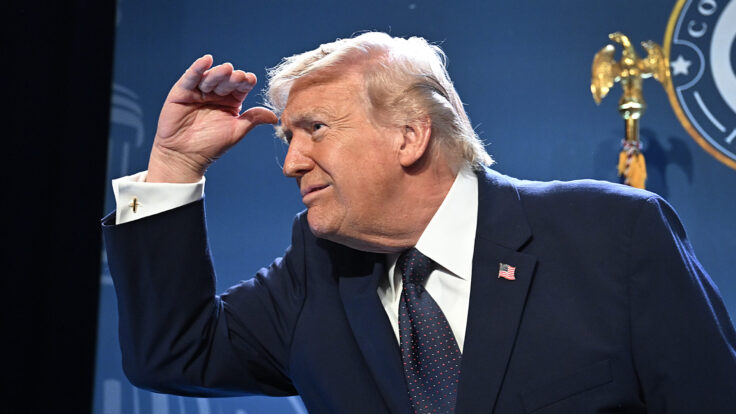
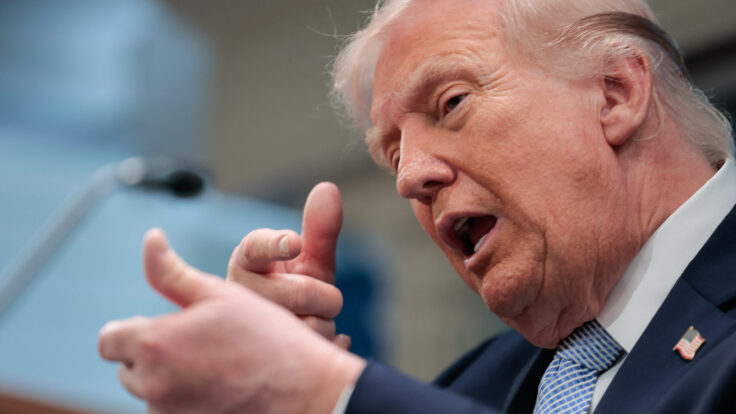
- Republicans disengage from Musk: President Trump, perhaps realizing that his social-media feud with Elon Musk is unproductive and unbecoming, hopped on the phone with top reporters and correspondents at each of the major news outlets this week to get in one final word and insist that he’s just not bothered. All of the interviews were versions of the same thing. “Not even thinking about Elon,” Trump told CNN’s Dana Bash, before adding, “He’s got a problem. The poor guy’s got a problem.” ABC’s Jonathan Karl wrote that Trump sounded “remarkably unconcerned” over the tiff. You get the point: Trump is trying to make it seem like he’s the bigger person in the breakup and wants everyone to know he’s totally over it… for now.
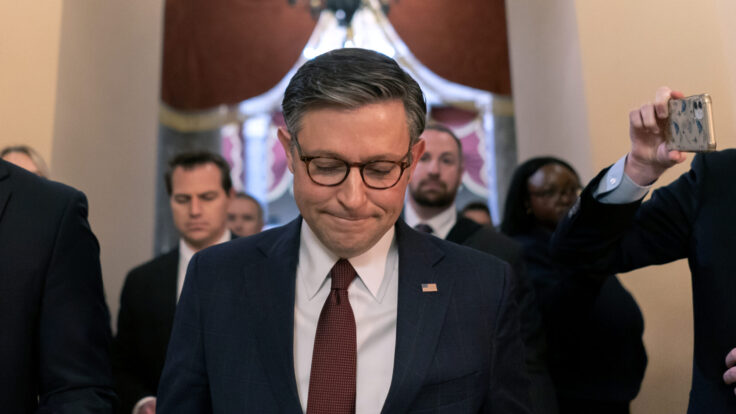
Notably, Republicans have been taking advantage of the spat to disengage from Musk, who was found in multiple polls to be less popular than Trump and potentially politically toxic for them—as demonstrated by his ineffectual intervention in the Wisconsin Supreme Court race. Musk’s exile from Trumpworld diminishes the liability he poses. In fact, some Republicans are even using Musk’s crusade against their Big Beautiful Bill to make the affirmative case for the legislation. Speaker Mike Johnson, for instance, said on ABC’s This Week that he didn’t write the bill to “please the richest man in the world” but to help “hardworking Americans”—exactly the message that Republicans have been struggling to land while Democrats blast the bill, largely correctly, as benefiting the rich.
- A Jersey midterm bellwether: New Jersey voters will head to the polls Tuesday in a crowded and closely watched gubernatorial primary to replace Gov. Phil Murphy, which will be seen as an early litmus test of what flavor of Democrat the base really wants. Will it be progressive Newark Mayor Ras Baraka, who is urging aggressive messaging and tactics to push back against Trump, and was arrested outside of a federal immigration detention facility? Or will it be centrist Rep. Josh Gottheimer, who is known to work across the aisle with Republicans? Or perhaps moderate Rep. Mikie Sherrill (who is leading in polling)? One Democratic strategist I spoke to said a Sherrill win could signal a return to the successful playbook Democrats ran in the 2018 midterms—namely, promoting and electing moderate female military veterans.
On the Republican side, Trump has endorsed Jack Ciattarelli, who barely lost to Gov. Murphy in 2021. New Jersey elects governors of both parties, but has a tendency to choose chief executives from the opposite party as the president—and every county shifted to the right in the 2024 election.
|
|
|
|
The “most transparent administration in history” has choked off the information flow down Pennsylvania Avenue, doling out intel as a reward to allies while staying mostly mum about what’s happening at USAID, or even who’s running the C.D.C.
|
|
|
The Trump administration, which the White House press secretary has repeatedly referred to as the most transparent in American history, appears to be cutting off information and data from lawmakers. Ahead of a recent international trip, or CODEL, House lawmakers were stonewalled by State Department officials when they inquired how they should discuss foreign aid cuts with overseas officials. The response wasn’t just a “no comment”—State officials said they’d been instructed to tell the lawmakers nothing about international aid.
Some members of the bipartisan group, which included congressional leadership, were stunned. Yet the incident was just the latest glaring example of how the new administration has withheld basic information from the other government branches and from the public. Advisors to multiple statistical agencies have been removed from their posts, and websites have been taken down. The Bureau of Labor Statistics is no longer collecting data from at least three cities to analyze economic trends. Health and Human Services has eliminated the office that determines federal poverty guidelines and stopped research and reports on diseases ranging from H.I.V. to cancer. A farm trade report was delayed when its conclusions conflicted with Trump’s messaging. Meanwhile, the administration has refused to provide courts with information demanded by judges, including in cases of deported migrants.
Of course, this is not the first administration to be stingy about sharing information, especially with Congress, which always has a tense relationship with the White House. The Biden administration repeatedly angered many on the Hill, stonewalling about the deadly withdrawal from Afghanistan and
offering completely pointless briefings about the war in Ukraine.
But the Trump administration’s uncommunicativeness, and its partisan tilt in what it does share, appears to be next level. Past administrations would send information to both parties simultaneously when communicating with committees, and use staff briefings as an opportunity to build support for a policy on both sides of the aisle. But last month, when the State Department sent budget documents to the House Foreign Affairs Committee, only Republicans got them directly—Democrats had to get them forwarded from their G.O.P. colleagues.
|
In an administration obsessed with loyalty, it’s perhaps no surprise that access has become another form of leverage. Some disfavored Republicans have also had far less access to administration officials, I’m told, leaving them nearly as in the dark as Democrats. Members more aligned with Trump have been rewarded with better intel.
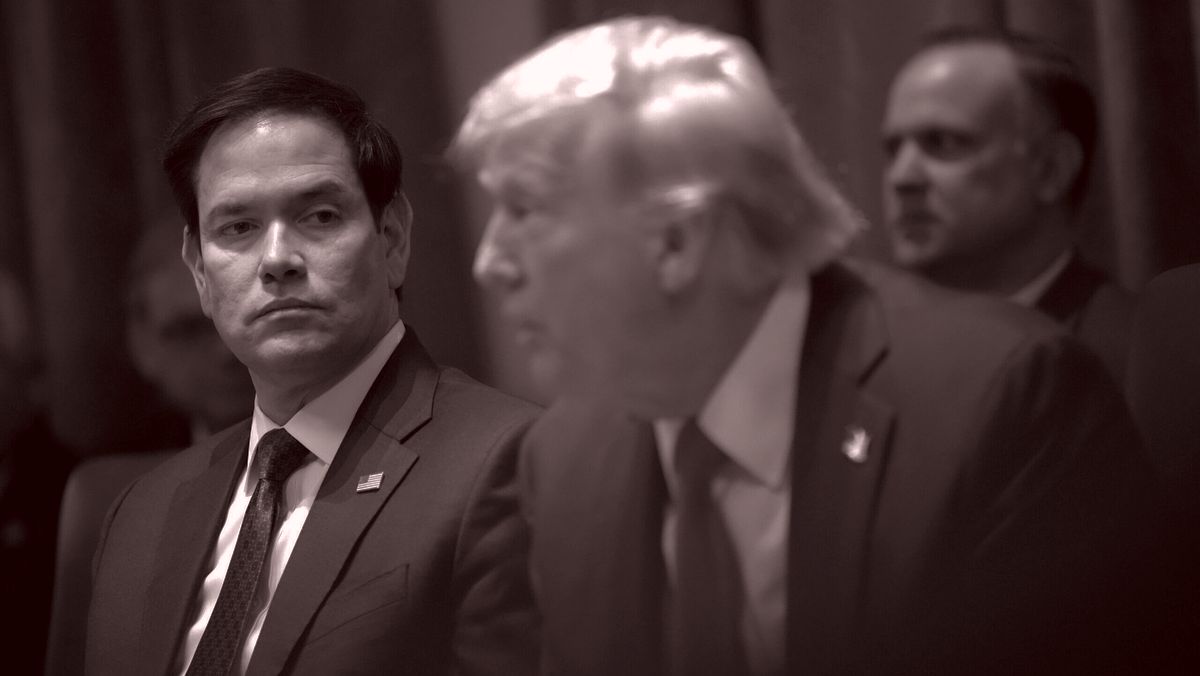
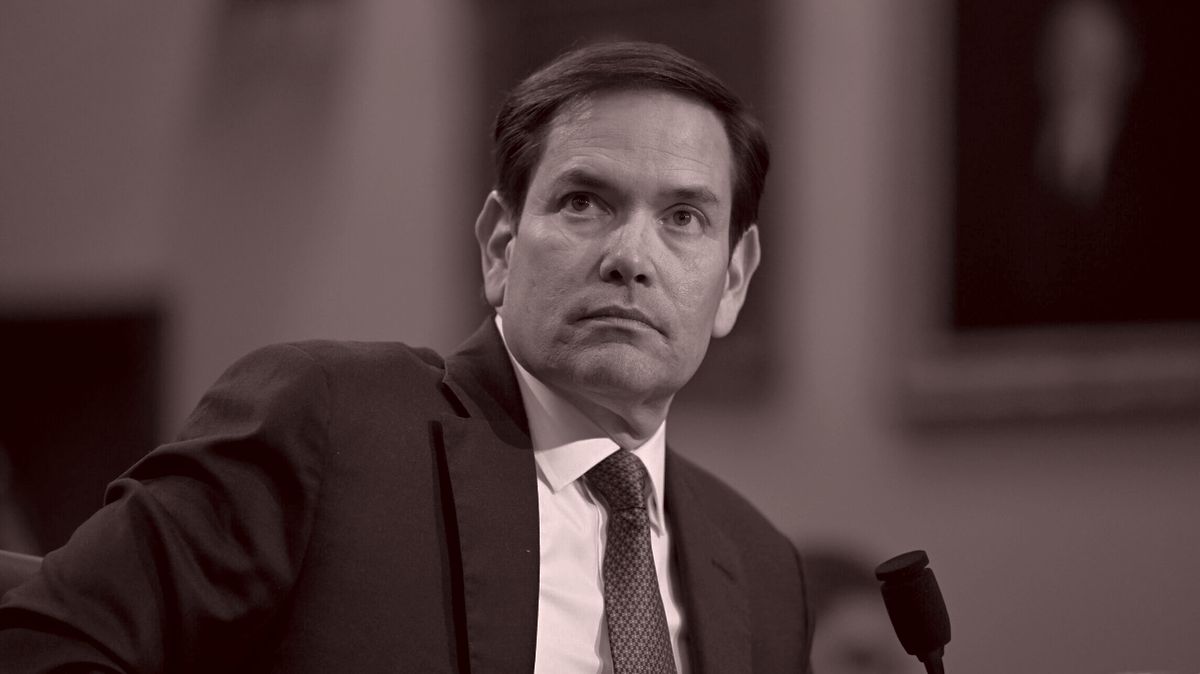
The dynamic is particularly evident at the State Department, which is undergoing a massive reorganization, and at USAID, an independent agency that is now overseen by Secretary of State Marco Rubio. Statute requires that Congress be consulted on any major changes to the aid agency, but Friday was the first time the House Committee on Foreign Affairs was ever briefed on Trump’s decision to terminate nearly every employee—even though Elon Musk bragged about “feeding USAID into the wood chipper” back in February.
Other than that Friday briefing, the State Department has held no closed-door sessions for committee members, nor provided any of the informal staff briefings that were commonplace in previous administrations. And it’s not for lack of requests: Democrats have been demanding information about USAID incessantly, via letters, emails, and even asking their Republican counterparts to nudge on their behalf. Indeed, Friday’s briefing came only after months of requests; multiple Democratic aides told me that one reason they think they finally got a response (other than because it was required by law) was because their Republican counterparts pushed the State Department to do it in a bipartisan fashion. So far, Rubio is the only State Department official to have appeared for a hearing since Trump’s inauguration in January, which one Democratic staffer said is unprecedented.
Senate Democrats are having just as much trouble, sources tell me. Sen. Jeanne Shaheen, the top Democrat on the Senate Foreign Relations Committee, and Sen. Brian Schatz, the top Democrat in charge of appropriations for State, wrote Rubio a letter in February complaining that “regularly occurring briefings” on humanitarian crises and ongoing wars had stopped, and they were getting no information from the department. That hasn’t changed in the months since, according to committee sources.
Rep. Brian Mast, the Republican chairman of the House Foreign Affairs Committee, defended the State Department’s lack of communication, insisting at a hearing that the administration is talking to Congress—just not with Democrats. “The consultation that’s going on is not going on with the people that were cutting the checks to do drag shows in Ecuador or transgender musicals,” said Mast, who hosts regular briefings on “hot spots” around the world, which Democrats say have nothing to do with congressional consultation.
It’s a familiar complaint these days. A Republican committee aide I spoke with defended the decision to cut out Democrats—after all, this person said, it’s not like the D.C.C.C. would brief Republicans on their midterm plans. The implication, in case it wasn’t obvious: Everything is political now.
|
|
It’s not just the State Department that’s gone dark on Congress—it’s most
executive agencies these days, especially the ones remade by DOGE. Multiple agencies have experienced major reductions in staff, including the National Institutes of Health, the Centers for Disease Control and Prevention, and the Department of Education, all of which have reduced transparency and information sharing with Democratic lawmakers.
When C.D.C. programs, funding, and employees were slashed, for instance, the agency initially planned to brief only the Republicans on the House Energy and Commerce Committee. It was only after G.O.P. members pushed to include their Democratic counterparts, a Democratic source told me, that they were given the briefing as well. But on the Senate side, committee Dems were shut out of a similar briefing. They’ve heard nothing in response to questions about the spread of avian flu, over-the-counter drug regulation, and even who is running the agency these days. (There is still no director, and it’s unclear whether Susan Monarez or Matthew Buzzelli are temporarily in charge.)
Congressional aides who have preexisting relationships with agency staffers can always back-channel. But surreptitious one-on-one phone calls are no way to communicate with the legislative body responsible for your budget. “I’ve got the ability to just do direct to [Interior] Secretary [Doug] Burgum, but there are a lot of the things that it shouldn’t have to go up to him,” Sen. Lisa Murkowski, who chairs the Indian Affairs Committee, told me. “I think it’s an imperfect process right now, because part of the challenge is, we just don’t have people that are in those positions” at the department.
Likewise, Senate Veterans Affairs Committee chair Jerry Moran told me that while he has no problem picking up the phone and calling V.A. Secretary Doug Collins, getting information from the department is—and always has been—difficult. He plans to use an upcoming confirmation hearing for a congressional liaison to the department to broadcast his message: “We need your commitment that our committee and members of this committee are going to get timely, accurate, and full information.” Good luck with that.
|
|
|
|
Join Emmy Award-winning journalist Peter Hamby, along with the team of expert journalists at Puck, as they let you in on the conversations insiders are having across the four corners of power in America: Wall Street, Washington, Silicon Valley, and Hollywood. Presented in partnership with Audacy, new episodes publish daily, Monday through Friday.
|
|
|
|
Unique and privileged insight into the private conversations taking place inside boardrooms and corner offices up and down Wall Street, relayed by best-selling author, journalist, and former M&A senior banker William D. Cohan.
|
|
|
Need help? Review our FAQ page or contact us for assistance. For brand partnerships, email ads@puck.news.
You received this email because you signed up to receive emails from Puck, or as part of your Puck account associated with . To stop receiving this newsletter and/or manage all your email preferences,
click here.
|
|
Puck is published by Heat Media LLC. 107 Greenwich St, New York, NY 10006
|
|
|
|