{{ 'now' | timezone: 'America/New_York' | date: '%b %d, %Y' }} |
|
|
Hello and welcome back to The Best & The Brightest. I’m Leigh Ann Caldwell. I
keep hearing from Washington sources that they’re already in holiday mode. Who can blame them?
Next week is our final Puck Power Breakfast of the year, and it’s a good one: Rep. Susan DelBene, chair of the D.C.C.C., and Rep. Richard Hudson, the top dog at the N.R.C.C., will both be joining me to discuss control of the House. The midterm election year will kick off just a few days later, and this will be a vital conversation. (As
always, we’ll publish a full recap in the newsletter afterward.)
Speaking of holidays, now is the perfect time to buy a Puck subscription for yourself or a friend. Isn’t it annoying to keep asking your friends to forward this to you? Aren’t you worried that they will eventually no longer be your friends? Also, you’re wealthy and can afford a status-defining cultural product like this private email! Treat yourself and take the plunge. It might be one of the most important gifts you buy this year.
Today, I’m taking you inside the Republicans’ tortured debate on healthcare, which is really just a continuation of the “repeal and replace” debacle from eight years ago. Republicans still haven’t fully recovered from that fight, which never actually yielded a G.O.P. healthcare plan, but now they’re scrambling to at least make it seem like they have one. And the theatrics could
have real-life political consequences.
Mentioned in this issue: Donald Trump, Andy Kim, David Valadao, Jen Kiggans, Mike Lawler, Brian Fitzpatrick, Josh Hawley, Brendan Buck, John Boehner, Paul Ryan, Mike Johnson, Steve Scalise, Andy Harris, Bill
Cassidy, Mike Crapo, Susan Collins, and many more…
But first… |
- An
R.F.K. Jr. impeachment attempt: Democratic Rep. Haley Stevens, who’s running in a close primary for Michigan’s open Senate seat against more progressive candidates, has introduced articles of impeachment against Health and Human Services Secretary Robert F. Kennedy Jr. “I will not stand by while one man dismantles decades of medical progress. Enough is enough,” Stevens said in a video announcing the move.
It’s all for show, of course: The House has
impeached only two cabinet members in its history, most recently Biden D.H.S. Secretary Alejandro Mayorkas over his handling of the U.S.-Mexico border (the Senate refused to play along). But Stevens presumably hopes the dramatic action will give her a national gravitas edge of sorts over primary opponents Mallory McMorrow and Abdul El-Sayed. Voters, of course, may also pay extra attention to Stevens’ gambit, now that
the R.F.K. Jr.–Olivia Nuzzi–Ryan Lizza imbroglio has broken free of the insular D.C.–New York media orbit. (You can read my partner Dylan Byers’s latest dispatch on this discourse… although I presume you already have.)
|
|
|
Last year, Instagram launched Teen Accounts, which default teens into automatic protections. Now, a stricter “Limited
Content” setting is available for parents who prefer extra controls. Instagram will continue adding new safeguards, giving parents more peace of mind. Learn more. |
|
|
- The
uniter in chief…: Utah Governor Spencer Cox offered a somewhat stunning, if not exactly unsurprising, revelation yesterday during a CNN interview with Dana Bash and Pennsylvania Governor Josh Shapiro at Washington’s National Cathedral. Cox, a Republican, said that President Trump called him in the aftermath of Charlie Kirk’s murder and said he was “not interested in uniting the country.” No
kidding.
Cox, who positioned himself as a national healer in the days after Kirk’s death, has said repeatedly that he has no plans to run for president. Shapiro, who was seated next to him, is another story. But both men have had brushes with the tragedy of political violence. In April, a man angered by what he perceived to be Shapiro’s pro-Israel views broke into the governor’s mansion and set it on fire. Thankfully, no one was hurt. (In October, the perpetrator—who pleaded guilty to
attempted murder, arson, and terrorism, among other crimes—was sentenced to 25 to 50 years in prison.) - An unusually personal introduction: New Jersey freshman senator Andy Kim, who made a name for himself picking up trash and debris from the Capitol
Rotunda in the early morning hours of January 7, 2021, gave his maiden speech on the Senate floor this week—still considered an important milestone in an institution that has been abandoning many of its traditions. The address was uniquely personal: Kim teared up talking about his father, a Korean immigrant recently diagnosed with Alzheimer’s disease who no longer remembers that his son was
recently elected a senator—or that his own job as a geneticist had been to research Alzheimer’s.
Kim said the financial burden of being a caretaker for his father has been “catastrophic” for himself and his young family. “No bigger responsibility exists than the one we have to the people we love, and that extends to the nation we love,” Kim said. “And there’s no larger obligation that we have, as senators and as Americans, to make it easier to look after each other.” It was a rare moment
of vulnerability, and also opportunity as Congress debates how to address healthcare.
|
And speaking of healthcare… |
|
|
Once again, Republicans are trying to repeal Obamacare—and once again, leadership doesn’t
appear to have any clear plan for what should replace it. Democrats, already anticipating an election year with the wind at their backs, couldn’t be more pleased. |
|
|
More than 15 years after the Affordable Care Act was signed into law, it’s more popular than ever: According
to new polling by Gallup, 57 percent of Americans approve of Obama’s signature healthcare bill, including 63 percent of independents. Yet Republicans—who failed to stop Obamacare, repeatedly failed to overturn it, and have never managed to unite behind an alternative plan—are once again agitating to relitigate that
debate.
Democrats, of course, made the defense of expiring healthcare subsidies the central demand in this fall’s government shutdown fight. And while they lost that battle, they may have already won the larger messaging war. Every day, the clock is ticking toward premium spikes of as much as 114 percent for A.C.A. enrollees in the new year—right at the start of a midterm cycle in which Democrats will be salivating to exploit the issue. |
|
|
Instagram Teen Accounts default teens into automatic protections for who can contact them and the content they can
see.
Nearly 95% of parents say Teen Accounts help them safeguard their teens online. And we’ll continue adding new protections, giving parents more peace of mind. Explore our ongoing work to keep teens safe online. |
|
|
If anything, Republicans are more divided over healthcare than ever. Some in the conference voted against
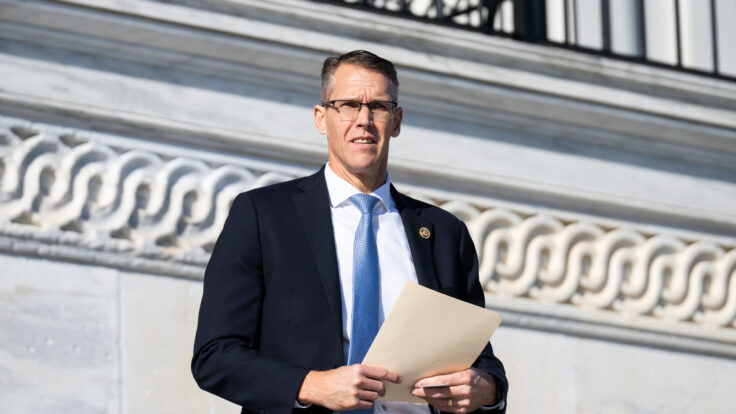
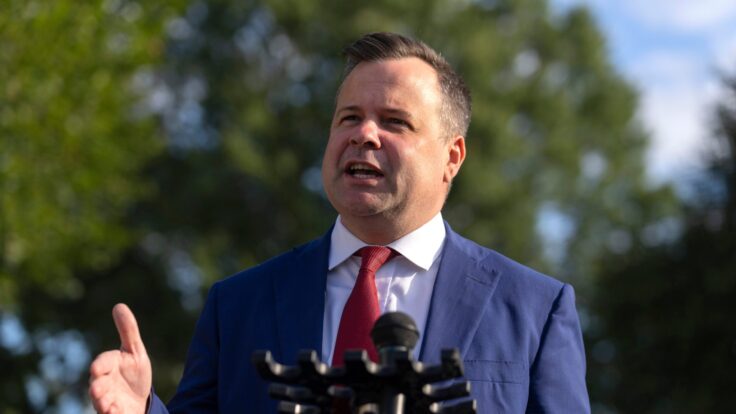
Obamacare in 2010, or participated in the infamous repeal-and-replace effort of 2017, and remain philosophically opposed to the program as a whole. What’s different now from those previous fights, however, is that a significant number of Republicans want to keep Obamacare in place, at least for the time being, and even extend the enhanced premium subsidies implemented amid the pandemic. I asked California Republican Rep. David Valadao, whose seat has become even more competitive
under his state’s redistricting plan, how important it is for Republicans to at the very least hold a vote on healthcare. “For some members, very important,” he told me.
The subsidy debate in particular is pitting centrist members—including vulnerable, swing-district Republicans such as Valadao, Virginia’s Jen Kiggans, New York’s Mike Lawler, and Pennsylvania’s Brian Fitzpatrick—against those adamantly opposed to anything
pertaining to the A.C.A. “A lot of people just feel very strongly about how they voted 10 years ago or 15 years ago,” Josh Hawley said of his colleagues. Brendan Buck, a former top aide to Speakers John Boehner and Paul Ryan, offered a similar view. “There are still a very large number of Republicans for whom they have either principled or political objections to the law,” he told me. “And even though it may risk their majority,
they’re just not going to come off of that.”
That includes Speaker Mike Johnson, who has accused Democrats of just wanting “to subsidize a broken system”—perhaps inadvertently undermining some of his own swing-district members, whose seats will be critical if Republicans are to have any hope of holding on to the majority past January 2027. Other members of House G.O.P. leadership seem inclined to side with A.C.A. critics, too. House Majority Leader Steve
Scalise has said Republicans should address broader healthcare costs, not just those borne by the 22 million-plus Americans who received the enhanced subsidies. “We have been talking about what we can do to lower health premiums for 100 percent of Americans,” Scalise said.
That language echoes what Rep. Andy Harris, the chair of the far-right House Freedom Caucus, told me. “We have to stop talking about the problem of premiums for 7 percent of the American
population,” he said, “and start talking about premiums for 100 percent of the American population.” (Worth noting that roughly two out of every five Americans are insured via Medicare or Medicaid.) |
Johnson, however, has yet to present a clear path forward. In a meeting Tuesday night, he tried and failed to
reach consensus with the leaders of the House Republican factions known as the “five families.” Still, with only six days left in session and facing a self-imposed deadline of holding a healthcare vote by the end of the year, the speaker plunged ahead. This morning, at a closed-door conference meeting, he presented a menu of options without broad member input and offered even less clarity—mostly a list of throwback, tried-and-failed G.O.P. healthcare proposals such as enhanced health savings
accounts, cost-sharing reductions, and pharmacy benefit manager reform. “Everyone is mad,” one person close to House Republicans told me of the party’s healthcare dilemma.
Practically the only thing Johnson didn’t include is what the swing-district Republicans actually want: a plan to address the immediate price hikes, like a subsidy extension to give Congress time to make major changes to the A.C.A. Moderate Republicans are further frustrated by the fact that none of the ideas Johnson
did offer will get signed into law, especially before the end of the year. Even if the party found consensus in the House, they don’t have 60 votes in the Senate, and there is no bipartisan discussion to forge a plan that could cross that threshold.
In the upper chamber, Republicans are begrudgingly lining up behind a plan by Sens. Bill Cassidy and Mike Crapo, the chairs of the committees overseeing healthcare, to replace the enhanced Obamacare
subsidies with payments into health savings accounts, and expand so-called catastrophic health plan options. Over lunch on Tuesday, the participants decided it would be better politically to hold a vote on this destined-to-lose proposal than fail to offer any alternative to the Democrats’ proposed three-year subsidy extension. |
|
|
In both chambers, all the maneuvering amounts to an effort to make it look like Republicans have
ideas. But vulnerable conference members know that voters won’t get any relief from a failed plan. “My idea would be to come together on a bipartisan plan,” said Sen. Susan Collins, who is expected to run for reelection in blue Maine next year. As of right now, though, there isn’t one. |
Still, such a plan is theoretically possible if leadership were to commit to it, and there might be just
enough House and Senate Republicans who would support a temporary extension to the enhanced A.C.A. subsidies to actually get something passed. There are currently three pieces of Republican-led legislation in the House—including a new discharge petition filed by Fitzpatrick tonight that would bypass the speaker—and at least three in the Senate that would do that. But Trump hasn’t gotten behind an extension of the subsidies, and so leadership won’t either.
The president, after all, has
repeatedly demanded that Republicans refrain from working with Democrats, and pass only partisan legislation. But there’s at least some chafing over this dynamic within the conference. “I do not want members of Congress to use the president as a shield here and say, Well, you know, until the president gives me explicit direction, I’m just not going to do anything,” Hawley told me. “I think that’s really dereliction of duty.”
Recall that Republicans have been led to healthcare
frustration by the very same president before. In 2017, House Republicans, under then-Speaker Paul Ryan, worked furiously and extensively to come up with a plan to fulfill Trump’s campaign promises to repeal Obamacare and replace it with something “much less expensive and much better.” But the president never defined a healthcare vision himself, and Ryan’s efforts were ultimately derailed when members of the House Freedom Caucus rejected his proposal, insisting it didn’t go far
enough in repealing A.C.A. provisions such as requiring that insurance companies cover people with preexisting conditions.
Republicans pretty much gave up on reforming healthcare after that. They were caught flat-footed when Democrats forced the issue, shutting down the government over the expiration of the enhanced Obamacare subsidies and demanding that Congress hold a vote. Now, Republicans are scrambling to throw together ideas—a decade and a half into the Obamacare experiment they
opposed. “This is sort of winging it,” Buck said. “This is waking up at the eleventh hour and realizing, Oh, we should probably have a plan.” |
|
|
Join Emmy Award-winning journalist Peter Hamby, along with the team of expert journalists at Puck, as they let you in on the
conversations insiders are having across the four corners of power in America: Wall Street, Washington, Silicon Valley, and Hollywood. Presented in partnership with Audacy, new episodes publish daily, Monday through Friday. |
|
|
Unique and privileged insight into the private conversations taking place inside boardrooms and corner offices up and down Wall
Street, relayed by best-selling author, journalist, and former M&A senior banker William D. Cohan. |
|
|
Need help? Review our
FAQ page or contact us for assistance. For brand partnerships, email ads@puck.news.
You received this email because you signed up to receive emails from Puck, or as part of your Puck account associated with {{customer.email}}. To stop receiving this newsletter and/or manage all your email preferences, click here.
|
Puck is published by Heat Media LLC. 107 Greenwich St., New York, NY 10006 |
|
|
|