{{ 'now' | timezone: 'America/New_York' | date: '%b %d, %Y' }} |
|
|
Hello and welcome back to The Best & The Brightest. I’m Leigh Ann
Caldwell.
We’re just six days away from the launch of my colleague Julia Ioffe’s new book, Motherland, but you can preorder it now—and you should, because it’s already a National Book Awards finalist. If you love Julia’s poignant, funny, and always insightful writing, you won’t regret spending the $30-ish bucks.
In today’s issue, I bring you inside the conversations rippling across Capitol Hill as the shutdown enters week three. Republicans and Democrats are engaged in deep discussions—amongst themselves, of course, with each side speculating about what the other will do based on essentially
no direct dialogue. But the stakes for both parties are clear. The Democrats declined to shut down the government back in March partly because they feared the void would give Trump and Russ Vought an opportunity to circumvent Congress’s funding power beyond even what they had accomplished with DOGE. That prediction was spot on, as I’ll explain below.
But first… |
-
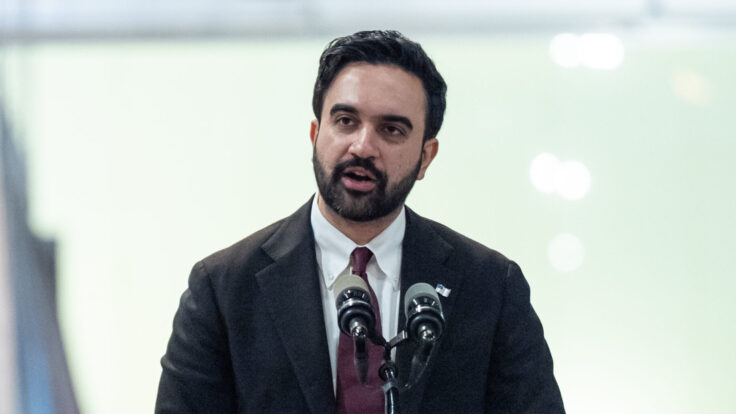
Mamdani does Fox: Zohran Mamdani, the New York City mayoral candidate and sudden political celebrity, appeared on Fox News today and trashed his opponents during a monologue purportedly addressing Trump. Looking directly into the camera, Mamdani said he wouldn’t be asking the president for help staying out of jail, like Mayor Eric Adams, nor for assistance winning his race like Andrew Cuomo. He did tell the president—or at any
rate, anyone who saw the clip—that he was “ready to speak at any time” with anyone in Washington who wants to help him lower the cost of living. “That’s the partnership I want to build,” he added.
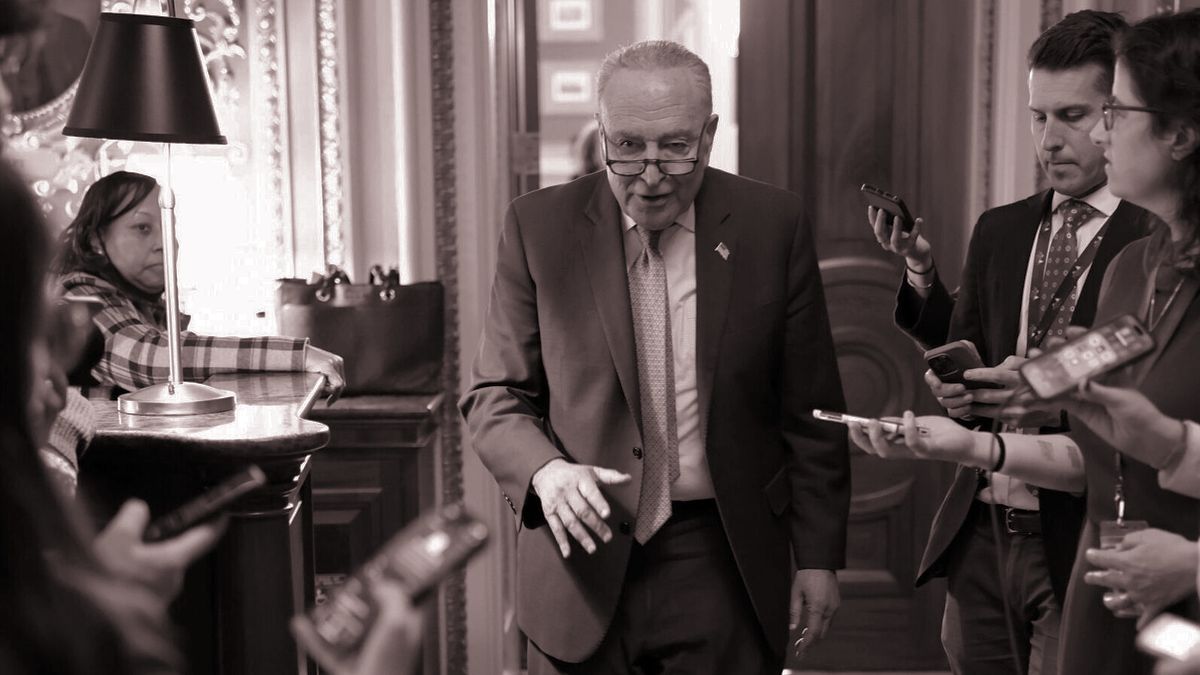
One partnership Mamdani won’t be striking right now is with his fellow New York Democrat, Senate Democratic Leader Chuck Schumer, who refused to endorse him ahead of the November 4 election. “We’ve had several good conversations,” Schumer told reporters today. “We’ve
worked together in the past, and the conversations will continue.”
|
|
|
What Section 453 really means
Section 453 doesn’t block lawsuits or give blanket immunity to
pesticide companies.
Section 453 ensures labels are based on the EPA’s safety assessment under their guidelines and keeps companies accountable when they break these.
Explore more about Section 453 here |
|
|
- Abortion activists get in the 2025 game: Reproductive Freedom for All announced today that they plan to spend $5 million in the November elections—including the gubernatorial races in New Jersey and Virginia, state Supreme Court retention votes in Pennsylvania, and California’s redistricting initiative. Abortion has faded as a political flashpoint since Democrats made it a centerpiece of the 2024 presidential contest. But Mini Timmaraju, the president of the
reproductive rights group, insists it remains an important issue for voters. Democrats “can’t win an election without some focus on abortion,” she told me. “It has to be part of the equation.”
There’s political math behind the group’s choice of targets, too. Virginia is the last state in the South without abortion restrictions while the state Supreme Court in Pennsylvania has played a major role in abortion decisions. As for California, where the redistricting initiative seeks to
neutralize G.O.P. attempts to gerrymander themselves more House seats in Texas and other red states, Timmaraju said that voters there “understand the connections between abortion rights and democracy.” - A generational House bombshell: The Voting Rights Act has been credited with protecting representation for minority populations around the United States since 1965. But the conservative Supreme Court has been chipping away at its key provisions for over a decade, and today they heard a case that could knock down one of its remaining pillars. The state of Louisiana, with support from the Trump administration, is arguing that the state’s congressional map—which was redrawn in 2024 to include a second majority-minority district to satisfy requirements of the V.R.A.—violates the Equal Protection Clause of the 14th Amendment. This is not a court sympathetic to perceived racial preferences. Republicans could gain up to 18 seats through mid-decade redistricting, according to optimistic Republican sources, and if the Supreme Court weakens the VRA, Republicans could pick up even more seats. The Court’s decision, however, could come out too late to impact the 2026 midterms.
|
|
|
Back in March, the Senate Democratic leader feared a shutdown would unshackle
Trump to run roughshod over what remains of Congress’s funding power. His predictions are now coming true—but Dems feel fine. |
|
|
Two weeks into what could be a very long government shutdown, the Senate is stuck in a
miserable cycle: Democrats continue to vote against stopgap funding; President Trump is not engaged; and Speaker Mike Johnson is keeping the House out of session. Anxious staffers are speculating that this federal work stoppage could surpass the longest one in history—the 35-day shutdown of Trump’s first term. And at this point, there’s little reason to believe otherwise. On Wednesday evening, Senate Democrats rejected the
G.O.P.-led funding bill for a ninth time.
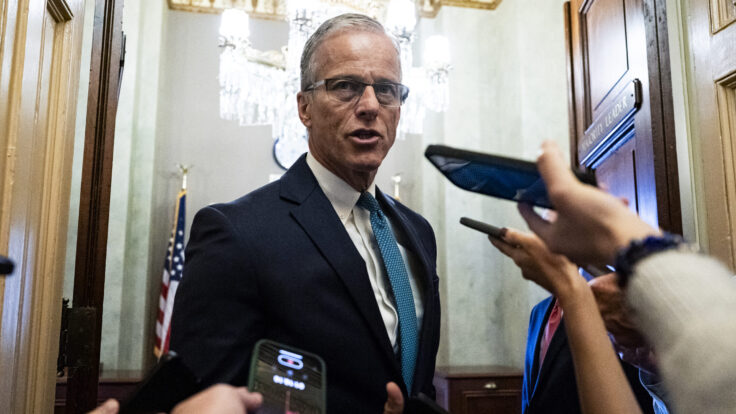
On Thursday, Senate Majority Leader John Thune will try to create a crack in the stalemate by putting the fiscal year 2026 Defense Appropriations Act on the floor. The vote, one Republican aide told me, will show what “level of obstruction” the Democrats are willing to engage in. The party can also use the vote to attack Democrats—especially Sen. Jon Ossoff, who is up for reelection in a purple state—for
failing to stand up for the troops. And yet it seems doubtful at this point that Republicans can win over the seven or eight Democrats they need to reach the 60-vote threshold required for passage. For their part, Democrats were still working out what to do during a private lunch today. Advancing a DoD funding bill doesn’t address healthcare, after all. |
|
|
Why glyphosate is backed by regulators worldwide
For 50 years, glyphosate-based products have been approved by regulators in the U.S., EU, Canada, Japan and more. Bayer stands behind these findings, and Section 453 reinforces these science-based processes, keeping labels reliable and consistent. Learn more about Section 453 here |
|
|
But no matter how tomorrow shakes out, there’s a prevailing belief among Republicans that
Democrats will start relenting after the “No Kings” protests scheduled for this weekend in cities and towns across the country. After all, the thinking goes, Democrats would rather head into those rallies without the base jeering them for caving to the opposition. There are also critical gubernatorial elections in New Jersey and Virginia on the horizon, along with a vote on redistricting in California, that Dems are hoping will generate enthusiastic turnout for their side. But my conversations
with insiders indicate that not only are Republicans far underestimating Dems’ long-term pain tolerance, they’re also misunderstanding the party’s pressure points.
More likely, Democrats are biding their time until at least November 1, when constituents start seeing higher prices for next year’s A.C.A. insurance plans. But the reality is that most predictions for what would move either party have been pretty worthless: Republicans originally thought Democrats would fold after a few days
of voting against stopgap funding. When that didn’t pan out, however, no one pivoted toward more open communication. Instead, members of leadership have largely stopped talking to one another, and even moderate Democrats intent on reaching a deal to reopen the government are having little luck getting through to their Republican counterparts—who insist that they’ll only enter into negotiations after the government is reopened. |
One prediction has come true, however. Back in March, when Senate Democratic Leader
Chuck Schumer made the controversial decision to help Republicans keep the government open, his primary concern was that Trump would exploit a shutdown to eliminate government agencies, fire workers, and let DOGE run rampant. Obviously, he managed to avoid those outcomes in the short term, but the backlash was ferocious—memories of which may have stiffened his spine heading into the present negotiations, even as Democrats faced the prospect that Trump might do
exactly what Schumer warned about.
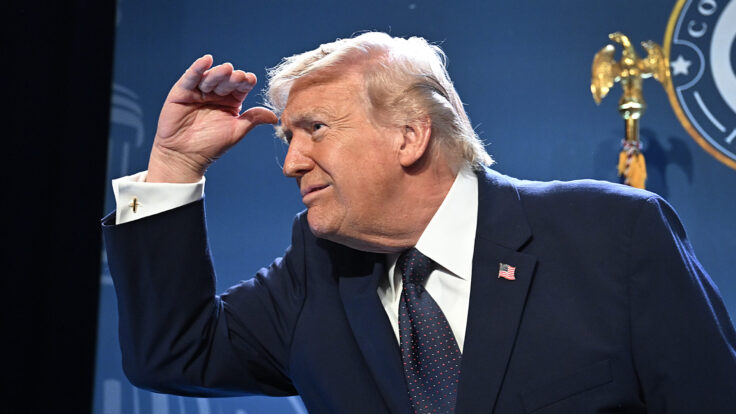
In retrospect, of course, Schumer was prescient. Since this shutdown started October 1, O.M.B. Director Russ Vought has fired more than 4,000 federal workers and accelerated efforts to shutter programs and agencies. He essentially eliminated the Education Department office that supports special education, cut hundreds of jobs inside the Centers for Disease Control, and eviscerated the Cybersecurity and Infrastructure
Security Agency. He has slashed jobs at N.I.H., Housing and Urban Development, and the E.P.A. Earlier today on The Charlie Kirk Show, Vought didn’t offer any explanation for the layoffs, other than calling them “an opportunity to have less bureaucracy.” He added that the layoffs will keep on “rolling” and the number will “get much higher.”
Also today, a federal judge temporarily blocked the layoffs, partly on the grounds that they were politically motivated. But the White House
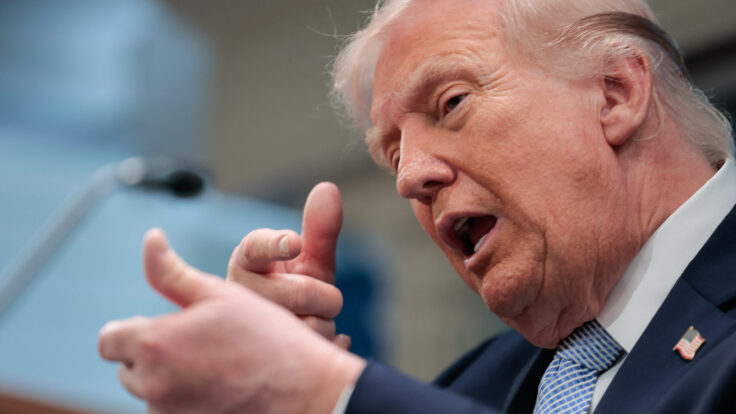
still has levers to inflict pain on Democrats. For instance, the president has halted $28 billion of federal funding for projects, almost all of which are in blue states, according to a tally by The New York Times. At the same time, he has reshuffled nearly $8 billion to pay U.S. servicemembers who were set to miss a paycheck by reallocating unspent funds from the current fiscal year and moving money from another Pentagon account for 2026. (Some Democrats have said this violates the
Antideficiency Act, which prohibits federal agencies from using funds before they are appropriated by Congress.) Trump is also using revenue from tariffs to pay for the Women, Infant and Children food assistance program, bypassing Congress completely. |
|
|
Democrats have responded to the escalation by adding new demands of their own.
Originally, they had asked for the repeal of cuts to healthcare programs, namely Medicaid and Obamacare. But given Trump’s flagrant willingness to circumvent congressional authority, they’re now insisting that safeguards be written into any funding bill to prevent the president from further usurping the power of the purse. On that matter, I’m told that Republicans and Democrats have begun thinking out loud about how to undo some of the damage Trump’s now inflicting, whenever the government is
open again. These are not negotiations or even real conversations, I’m told, but the expression of thoughts that could lead to something that reins in the president. (Like you, I’m skeptical.)
Meanwhile, the Democrats I’ve spoken with don’t seem to regret forcing the healthcare issue in exchange for their votes—even though it’s given Trump an opportunity to test their constitutional powers. After all, the president was doing all this anyway, they say. “That’s been going on since
January 20, the first day of this presidency,” House Democratic Leader Hakeem Jeffries told me. Said Arizona Democratic Sen. Ruben Gallego: “I think it’s just par for the course. I mean, before we shut down, he’s already been firing people.”
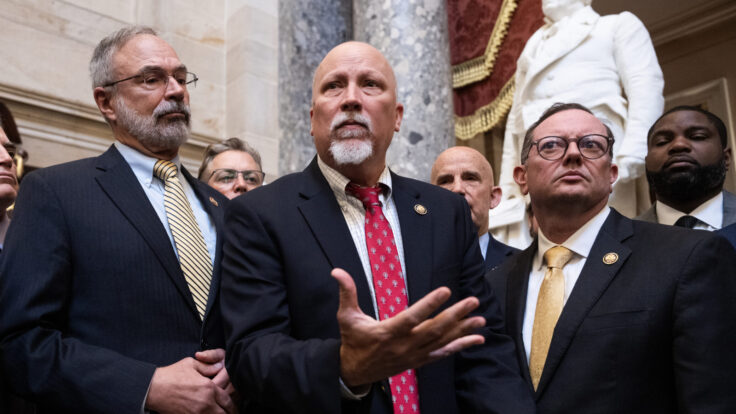
Congressional Republicans, who have mostly acquiesced to surrendering their constitutional powers by, for instance, agreeing to $9 billion in rescissions and allowing a $4.9 billion
pocket rescission to go into effect, appear to be unbothered by the president’s rejiggering of accounts. “There are consequences to a shutdown, and credit to them for finding ways to alleviate some of the consequences, to mitigate the pain,” one Republican leadership aide said. G.O.P. Sen. John Hoeven of North Dakota echoed that sentiment. “Democrats are leaving the administration—and us—no choice,” he told me, adding that Democrats are the ones who are
exacerbating the administration’s end-run around Congress. “It’s ridiculous for Democrats to complain about rescissions or anything else by the administration, and then shut down the government so we can’t do our appropriations.” |
|
|
Join Emmy Award-winning journalist Peter Hamby, along with the team of expert journalists at Puck, as they let you in
on the conversations insiders are having across the four corners of power in America: Wall Street, Washington, Silicon Valley, and Hollywood. Presented in partnership with Audacy, new episodes publish daily, Monday through Friday. |
|
|
Unique and privileged insight into the private conversations taking place inside boardrooms and corner offices up and
down Wall Street, relayed by best-selling author, journalist, and former M&A senior banker William D. Cohan. |
|
|
Need help? Review our FAQ page or contact us for assistance. For brand partnerships, email ads@puck.news. You received this email because you signed up to receive emails from Puck, or as part of your Puck account associated with {{customer.email}}. To stop receiving this newsletter and/or manage all your email preferences,
click here. |
Puck is published by Heat Media LLC. 107 Greenwich St, New York, NY 10006 |
|
|
|





_01K77C0D9VDDGVNNP1DBKASPB4.jpg "Bayer")