Hello and welcome back to The Best & The Brightest. I’m Leigh Ann
Caldwell.
In case you haven’t heard, my colleague Julia Ioffe was just named a finalist for the National Book Award—an incredible but unsurprising achievement. Her book,
Motherland: A Feminist History of Modern Russia, from Revolution to Autocracy, comes out in two weeks. If you haven’t preordered it yet, get on it!
Tonight, as Chicago braces for Trump’s deployment of National Guard troops—over the objections of Illinois
Governor JB Pritzker, whom the president just said should be in prison—it felt like the perfect moment to check in on Stephen Miller, whose stock is higher than ever inside the White House, but not on Capitol Hill. Privately, even Republicans tell me that he’s going too far with his anti-immigration crackdown.
But first…
|
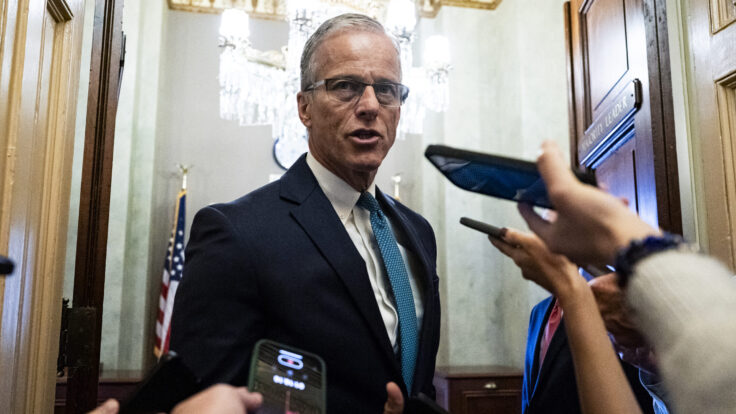
- A shutdown non-update update: The government shutdown continues with no movement from either side, or even negotiations, which Senate Majority Leader John Thune insists will not happen until the government is back open. Rather than negotiate, Republicans have been betting that they can peel off squeamish Democrats like the retiring Sen. Jeanne Shaheen and Sen. Maggie Hassan, both of New Hampshire, and both uncomfortable with shutdowns.
But the centrist Democrats are holding strong despite their distaste, and won’t trade their votes for nothing.
- Lights, camera, Johnson: Meanwhile, House Speaker Mike Johnson has become a ubiquitous presence on TV. It’s funny: The House already passed the seven-week government stopgap funding bill, so now all of the action is with the Senate. But you wouldn’t know it from Johnson’s constant media appearances—he’s positioned himself,
rather than Thune, as the Republican face of the shutdown negotiations.Johnson has held news conferences every working day since the shutdown started; he’s constantly on television, from Newsmax to CNN and even MSNBC. No venue is too small: Tomorrow, he’s doing C-SPAN’s flagship morning program, Washington Journal—a program that no speaker has appeared on since Dennis Hastert in 2001, as The Hill’s Emily Brooks pointed out. (Side note:
I’ll be on C-SPAN’s The Weekly podcast tomorrow, talking about my recent column on the Freedom Caucus.) What gives? One House Republican surmised that Thune just doesn’t care about credit or fame, while Johnson is having the time of his life.
- The left pushes back: A coalition of nearly two dozen civil
and women’s rights groups, including the NAACP, LULAC, and the Feminist Majority Foundation, has written a letter to F.C.C. Chair Brendan Carr, urging him to “affirm unequivocally” that his agency “will no longer serve as the enforcer in President Trump’s unconstitutional shakedowns of media organizations.” Yes, this is an open letter,
without any legal action, to an administration that couldn’t care less about liberal affinity groups. But it’s noteworthy for the very fact that it was sent at a time when the left has been in the grips of fear and resignation—and when administration officials are threatening to launch investigations into Democratic nonprofits and activist groups. Former President Barack Obama acknowledged the chill this summer, telling a room of donors, “Don’t say that you care deeply about
free speech and then you’re quiet. No, you stand up for free speech when it’s hard.”
|
|
|
As Trump’s senior advisor gets louder and bolder—describing protesters
as terrorists and inconvenient court rulings as “insurrection”—some Republicans are beginning to worry that the administration’s hard-line power grabs will backfire… and maybe even hurt the country, too.
|
|
|
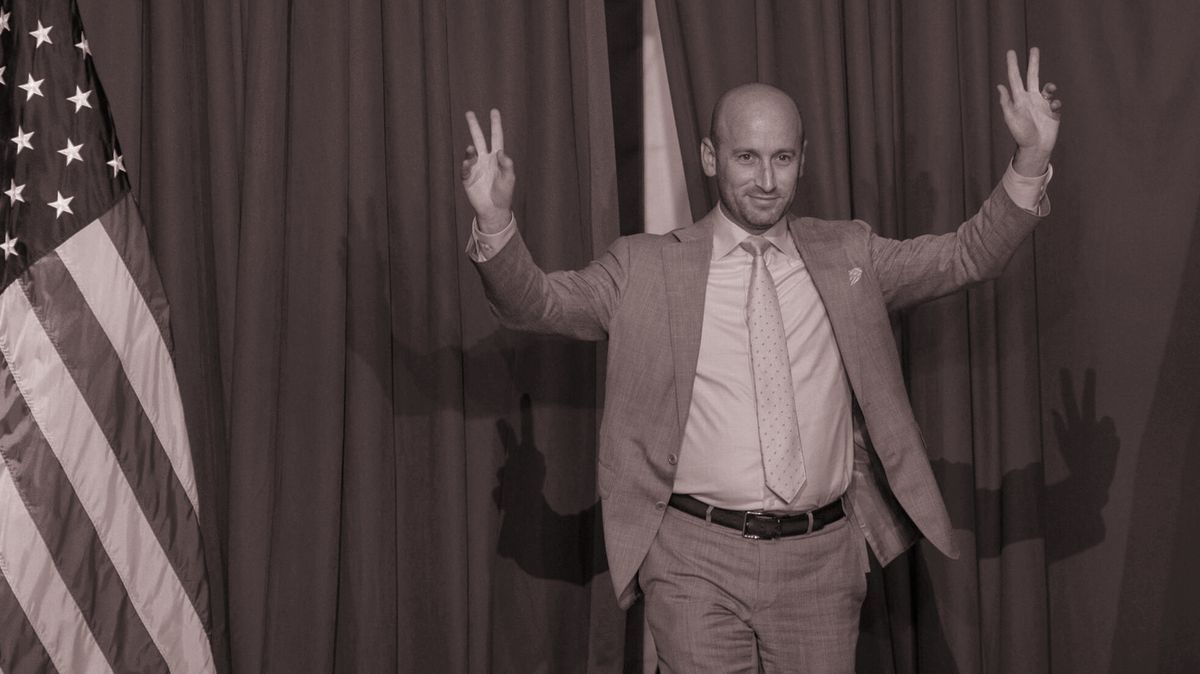
In August, for his 40th birthday, Stephen Miller was thrown a surprise
party fit for the most important staffer in Trump’s government. Cabinet secretaries (Marco Rubio, Scott Bessent, Kristi Noem), fellow West Wing officials (including Susie Wiles and James Blair), and MAGA luminaries like Fox’s Laura Ingraham and the commentator Mark Levin all gathered to fete him at Ned’s, the swank members-only club a block from the White
House.
While Miller’s birthday bash reflected his D.C. caste—one attendee told me that it cemented his stature in the West Wing—one couldn’t help but notice that zero members of Congress, aside from Speaker Mike Johnson, were in attendance, symbolic of his standing on the Hill. While Miller spent nine years on the Hill, including as an aide to then-Senator Jeff Sessions, he didn’t exactly move over to 1600 Pennsylvania with a massive amount of goodwill. Even
in his 20s, he was oddly intense, known for fringey sermons on the dangers of immigration that prompted plenty of eye rolls among his fellow Republican comms directors. Miller did see some early success, however. When the Gang of Eight proposed its immigration reform bill in 2013, Miller was instrumental in making sure it was dead on arrival in the House. His persistence paid off. He found a champion in Trump, who embraced Miller early on in his first campaign, and the party has largely come
around to his position on immigration.
Now, in Trump’s second term, Miller has attained a level of clout that has unsettled even some Republicans on the Hill. As the face of the administration’s most controversial immigration policies—deploying the military to U.S. cities, instituting deportation quotas for ICE, greenlighting indiscriminate arrests of anyone suspected of being undocumented—he has delighted in sparring with the media in defense of Trump. But his public language has become
darker, too. In recent weeks, he has labeled left-wing protesters as terrorists and described unfavorable judicial rulings as “insurrection”—a position Trump is contemplating too, having used the same term to describe a small ongoing protest at a single Portland ICE facility.
In private, several Republicans have told me that they’re worried about Miller’s policies, tactics, and stated legal rationales. “In some cases, I think he has gone too far,” one G.O.P. senator told me. A House
member who described themselves as a “law and order” Republican said that “a large number of Republicans in the House are a little concerned that Stephen has dragged the president so far in one direction.” The lawmaker pointed to ICE raids sweeping up workers with no criminal records and the administration’s attempts to send the National Guard into places like Portland and Chicago. “It hasn’t surprised a lot of us that the courts have ruled against the president,” this person
said.
Miller’s legally questionable policy proposals include “looking at” suspending habeas corpus, the constitutionally guaranteed right to challenge one’s detention, on the grounds of an immigrant “invasion” that repeated court rulings have found not to exist. He’s sought to designate Antifa as a
“domestic terrorist organization” even though no law provides for such a classification. This kind of constant pushing of the law’s limits is okay, Republicans tell me, so long as the administration adheres to court rulings.
But Miller has also gone after judges who have issued adverse rulings. He called a judge’s order to turn around a deportation flight of Venezuelans “unlawful” as the administration ignored it. He also helped slow-roll compliance with the Supreme Court’s order to
“facilitate” the return of Kilmar Abrego Garcia after the Maryland resident’s mistaken deportation to El Salvador. More recently, he accused a Trump-appointed judge of “egregious and thunderous violations of constitutional order” for blocking Trump’s federalization of the Oregon National Guard.
And just this week, in fact, Miller floated the use of the Insurrection Act to get around such orders. He also surfaced the fringe idea that the administration can ignore courts’
immigration rulings because the issue is outside the judiciary’s purview—a legal theory known as “plenary power.” Still, Miller’s defenders, such as Senator Eric Schmitt, say he’s doing a “great” job and has legal justifications for his actions.
|
For Democrats, Miller is a fitting avatar for everything they despise about the Trump
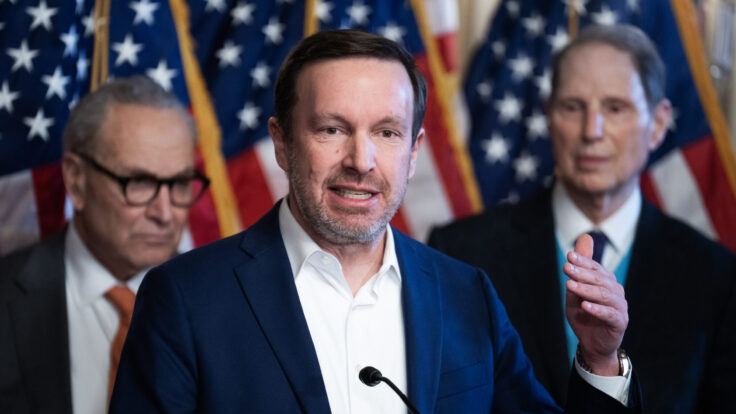
administration—a perpetually angry, Nosferatu-like tyrant who’s high on his own supply. Miller is a “very scary guy,” Senator Chris Van Hollen told me. Yet they are keenly aware that he knows how to wield his power. He was, after all, the brains behind the migrant family separation policy during Trump I, and spent his years in the political wilderness studying how to apply the law to his own ends. During Biden’s presidency, Miller founded the America First Legal
Foundation, a conservative nonprofit focused on constructing the legal architecture to consolidate executive power under the next Republican president.
Since returning to the White House, Miller has moved quickly to turn the group’s right-wing policy proposals—including work alongside the Heritage Foundation on Project 2025—into action. But there is growing hope among Democrats that Miller’s illiberal diatribes may be backfiring with the public. “I don’t know that his politics are the
kind of politics that help [Republicans] win in the midterms,” said Senator Chris Murphy.
Republicans are wondering about that, too. Unlike Trump, Republicans on the Hill have to face voters next year in a midterm that is historically challenging for the party in power, and Miller’s rhetoric “doesn’t help the cause” of keeping the majority, a House G.O.P. aide told me. Indeed, Trump is now underwater on immigration, his signature campaign issue, in nearly every poll. A
New York Times/Siena survey released today found that 52 percent disapprove of Trump’s immigration policies compared to 46 percent who approve—and that’s one of his better polls.
White House advisors are aware of the polling, I’m told by two people close to the administration, and there have been internal debates over how much of Miller’s ultra-far-right agenda the president should adopt. But while the president has reversed course, perhaps temporarily, on some issues—pulling
back on raiding farms, for instance, and deploying ICE agents to the World Cup—he has no plans to abandon his broader crackdown, or its aggressiveness.
One person told me that the politics are untested, and the real indicator of whether Miller and the president have gone too far will be how the midterms play out. The calculation is that if people are pleased with the policies’ results, the controversial means will be forgotten. Meanwhile, the White House remains very much on Miller’s
side. “Stephen Miller is one of President Trump’s most trusted and longest-serving aides for a reason—he delivers,” White House press secretary Karoline Leavitt said. White House spokeswoman Abigail Jackson added that Miller is “working tirelessly” to implement an agenda that the country voted for “overwhelmingly.”
At the moment, though, it’s mostly just Miller’s defenders who will go on the record—his Republican critics are generally unwilling to state
their gripes publicly. An exception is Senator Rand Paul, who has been critical of Trump’s expansive view of presidential power. “Oh, he’s the guy that wants to suspend habeas corpus,” Paul told me, referring to Miller. “I don’t think very much of somebody who would be cavalier about suspending, really, one right that’s listed in the body of the Constitution.”
A few Republicans did tell me it’s up to Congress to rein him in. “I think Miller is trying to do
everything he can to make the Article II [executive] branch the most powerful it can be,” one senator said. “And I do think, in cases, that we need to push back.” But when the Senate voted tonight on a resolution by Democratic Sens. Tim Kaine and Adam Schiff that would have essentially blocked the administration’s bombing of alleged Venezuelan drug smuggling boats in international waters—another controversial and legally untested policy in which Miller has taken
a lead role, according to The Guardian—Paul was one of only two Republicans to back the measure.
|
|
|
Join Emmy Award-winning journalist Peter Hamby, along with the team of expert journalists at Puck, as they let you in
on the conversations insiders are having across the four corners of power in America: Wall Street, Washington, Silicon Valley, and Hollywood. Presented in partnership with Audacy, new episodes publish daily, Monday through Friday.
|
|
|
Unique and privileged insight into the private conversations taking place inside boardrooms and corner offices up and
down Wall Street, relayed by best-selling author, journalist, and former M&A senior banker William D. Cohan.
|
|
|
Need help? Review our FAQ page or contact us for assistance. For brand partnerships, email ads@puck.news.
You received this email because you signed up to receive emails from Puck, or as part of your Puck account associated with {{customer.email}}. To stop receiving this newsletter and/or manage all your email preferences,
click here.
|
Puck is published by Heat Media LLC. 107 Greenwich St, New York, NY 10006
|
|
|
|