Hello, and welcome back to The Best & The Brightest. I’m Leigh Ann
Caldwell.
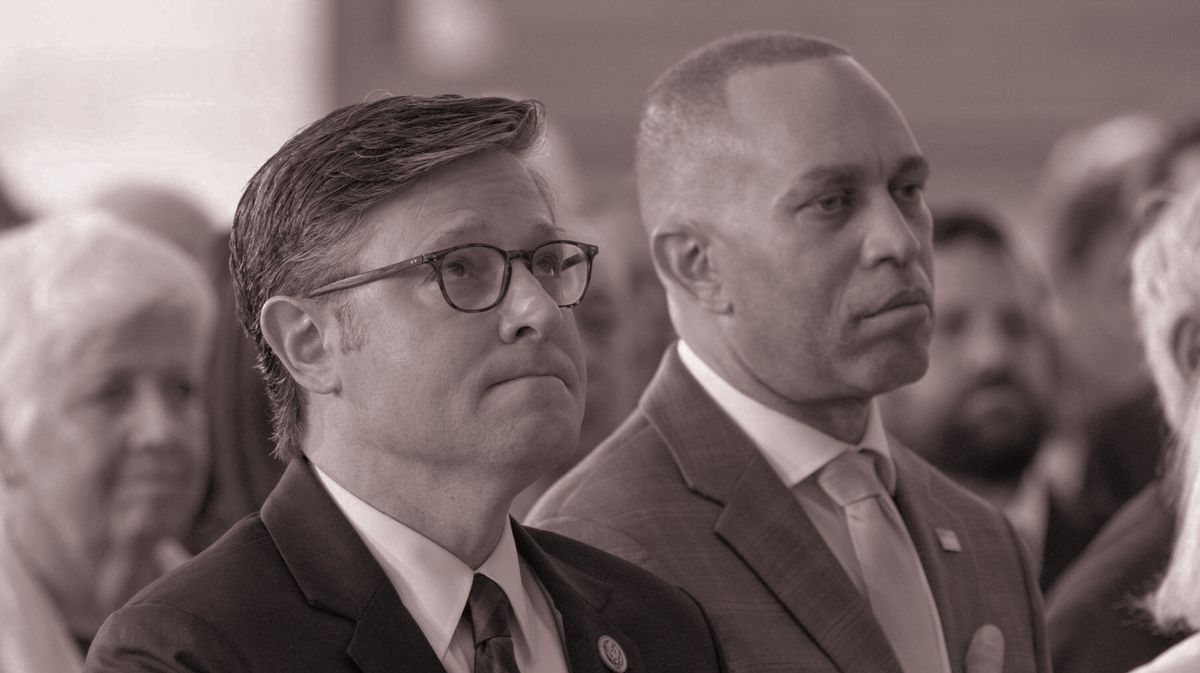
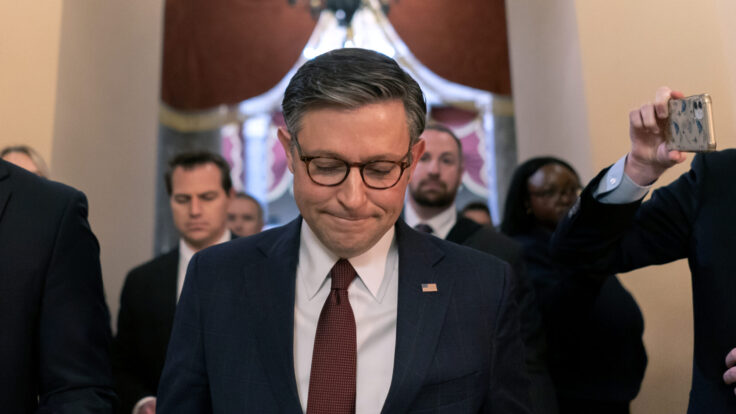
Today, I’m thrilled to officially welcome Marianna Sotomayor, our new superstar colleague, who spoke to both Mike Johnson and Hakeem Jeffries for her Best & Brightest debut. She caught up with the two leaders amid a very packed political news cycle to discuss the redistricting wars, the demolition of the V.R.A., and what comes next. Johnson was a bit introspective, while Jeffries was downright
defiant—a telling posture, perhaps, given the state of things. Plus, I’ve got news and notes on the aftermath of Trump’s Indiana revenge campaign. (It wasn’t as successful as the White House would like you to believe…)
Also mentioned in this issue: James Blair, Ron DeSantis, Gavin Newsom, Jim Banks, Greg Walker, James Buck, Trevor DeVries,
Greg Goode, Jeff Landry, and… the Gladiator meme heard ’round the world. |
|
|
|
A MESSAGE FROM OUR SPONSOR |
When insurers delay approvals or require endless paperwork, patients are left waiting for care they need now. Addressing harmful corporate insurer practices can help ensure timely access to treatment and protect 24/7 care. See how. |
|
|
|
Minutes after the electoral loss of most of the Indiana State Senate Republicans whom
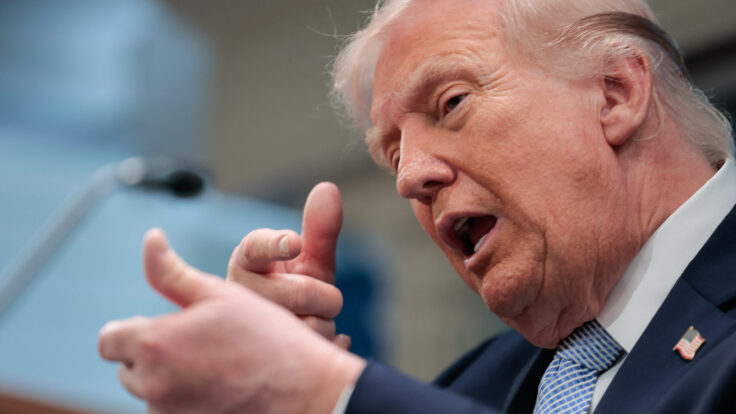
Donald Trump targeted for opposing mid-decade redistricting, White House political director James Blair posted that Gladiator meme in which Russell Crowe yells “Are you not entertained?” after slaughtering a stadium full of nemeses. Yup, we get it, message received. Trump’s operation had not merely defeated
dissenters, it had demonstrated what happens to Republicans who try to defy the White House.
For Blair, the architect of the redistricting assault, the win was singularly important. After all, as he leaves the White House to oversee Trump’s political apparatus, he’s been trying to outrun some pretty significant misses. To wit: Blair angered the salty
Texas delegation, who didn’t want to run in new, slightly less-red seats; Gov. Gavin Newsom beat him in California’s Prop 50 redistricting fight; Democrats beat him again in Virginia’s referendum battle; and in Florida, I’m told, many Republicans are “furious” that they have to run in new seats after Gov. Ron DeSantis pushed forward with a new map of his own. So vanquishing five of the seven state senators he’d targeted was a badly needed
victory.
But the win came at an unprecedented cost. The Club for Growth and Sen. Jim Banks poured more than $13 million into races that ordinarily cost only a fraction of that amount. Of the 25 state Senate races on the ballot last cycle, most races—primary and general election combined—cost less than $200,000.
There were local dynamics at play, too, that helped facilitate the outcome. State Sen. Greg Walker, after serving for two decades,
announced his retirement and then reversed course—a decision that alienated voters, who opted for his primary opponent. Defeated State Sen. James Buck—in office for nearly 20 years—was 79 years old. And then there’s District 1, a swing district where Trump-backed candidate Trevor DeVries enters the general election with no guarantee of winning in November. Meanwhile, State Sen. Greg Goode, sources tell me, mounted the most aggressive campaign of
anyone targeted by Trump and Blair. He raised nearly $700,000—more than any other incumbent—and won by nearly 20 points.
And now, here’s Marianna with more on the redistricting wars… |
|
|
|
Neither party’s leadership is thrilled with the prospect of unending, scorched-earth
redistricting wars. Mike Johnson views the gerrymandering games as a headache, and Hakeem Jeffries wants a national ban on mid-decade redraws. But until that day, “we are not going to unilaterally disarm.” |
|
|
|
In the week since the Supreme Court struck down Louisiana’s congressional map—and sledgehammered another
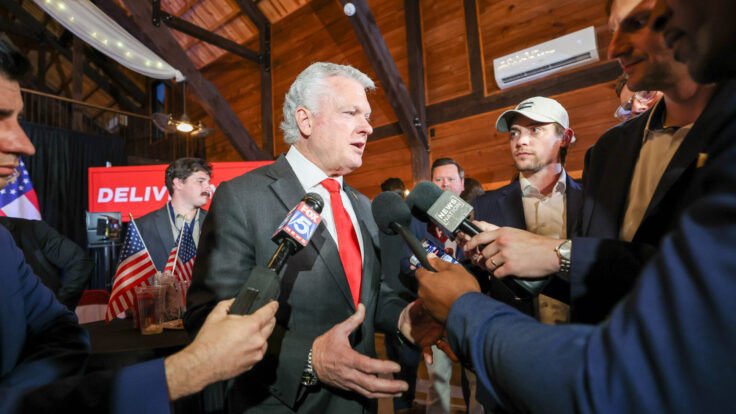
pillar of the Voting Rights Act—red-state legislatures have become amateur cartography departments, eagerly preparing to redraw districts across the South. House Speaker Mike Johnson has insisted that he wants no part of it. “Thankfully, it’s not up to me,” he explained this morning in his office, during a quiet recess on the Hill. “It’s in the hands of the legislature, and I’ve told them this time what I told them last time, and every time I’ve been asked: This is not my job to
do.” |
|
|
|
A MESSAGE FROM OUR SPONSOR |
Prior authorizations and administrative hurdles can slow down critical care, forcing patients to wait while their health
hangs in the balance. Reforming insurer practices can help reduce delays and keep care moving when it matters most. Learn more. |
|
|
|
That hasn’t stopped the momentum in Louisiana, his home state. The speaker told me he’d gleaned from
conversations with Gov. Jeff Landry and state legislators that they could aim to produce a 5-1 or 6-0 map in favor of the G.O.P.—in other words, eliminating one or both of the districts currently held by Democrats (and likely sending one or both of the state’s Black representatives into forced retirement). He acknowledged that all the new mapmaking could further polarize his already barely governable chamber. “It’s not my preference,” he said.
House Minority Leader
Hakeem Jeffries, for his part, would prefer not to be in this pickle. Yet neither party is going to call a truce—not least because both see opportunities to collect new seats beyond the 2026 horizon, and neither can afford to back down first. “We will continue to proceed aggressively until there is one national standard that prohibits mid-decade gerrymandering for everyone,” Jeffries told me over the phone this week. “Until that day comes, we are not going to
unilaterally disarm.”
The consequences are snowballing daily. New York Dems, inspired by their peers in California and Virginia, are looking to create a cobalt blue map of their own. Meanwhile, Indiana voters just ousted five of the seven Republican state senators who resisted a redraw at the urging of President Trump, clearing the way for the state to redistrict in time for 2028. And as much as Johnson portrays himself as hands-off, Jeffries has seized the redistricting
mantle—an effort that began in earnest last year as Democratic concern grew over the Supreme Court’s imminent decision in Louisiana v. Callais. If any G.O.P. state legislatures flip blue in November, as is possible in Washington and Minnesota, then House Democrats could swell their ranks even further in 2028. |
The midterms are all about contrast. Jeffries repeats on loop that his party will tackle affordability,
healthcare, and corruption in order to undo the Trump administration’s two-year assault on the country’s finances. Johnson’s pitch is that Republicans already filled their signature One Big Beautiful Bill with affordability measures that Americans should be feeling by now, and teased the G.O.P. doing more to address the matter in coming weeks. |
|
|
|
Johnson’s argument, of course, sounds a lot like that of the Biden White House in 2022—when officials were
pointing to strong macroeconomic indicators even as voters felt the strain of inflation and handed House Democrats a defeat. Naturally, Johnson rejected the comparison when I brought it up. He said that had it not been for the Iran war—an “ongoing skirmish,” in his words—“the rocket would have already taken off in terms of just tremendous economic growth.” He’s not the only G.O.P. leader who has admitted to me that the U.S. involvement in Iran has muddied the economic picture. But Johnson, ever
the optimist, expects the administration to reopen the Strait of Hormuz in time to ease gas prices before the election.
Democrats, meanwhile, are watching Republicans squirm as polls show Trump’s favorability cratering on a myriad of issues. But many lawmakers I’ve spoken to privately worry that the Democrats, if they do win in November, will fall into the trap of prioritizing investigating the president rather than proving to voters they can legislate cost-of-living solutions. House
Democratic leaders are currently surveying the caucus to iron out those priorities, with Jeffries teasing that a majority would vote on measures that could make housing, childcare, utilities, and groceries more affordable.
Indeed, for all their contrasts, Johnson and Jeffries both need to build a governing coalition. Razor-thin majorities, exacerbated by gerrymandering, have emboldened factions to constantly test their parties’ leadership. Republican members have brought the House to a
standstill half a dozen times and left Johnson and his team burning the midnight oil to break the stalemate. During our chat, he told me that he wants to keep leading his colleagues rather than litigating their divorce. Nevertheless, it may not be his call. As my colleague Leigh Ann Caldwell has written, there’s a great deal of speculation
that Republicans will vote him off the leadership island if they lose the midterms.
Jeffries, for his part, has his own critics outside of Washington, many of whom object to the D.C.C.C.’s decision to back more pragmatic candidates—those with the profiles to flip Trump seats in “highly competitive general elections,” rather than lefty candidates in primary elections that may just want to grandstand. Johnson put it more bluntly: “We need less people running for Congress because they want
to be famous.” I’m sure Jeffries would agree. |
|
|
|
Join Emmy Award-winning journalist Peter Hamby, along with the team of expert journalists at Puck, as they let you in on the
conversations insiders are having across the four corners of power in America: Wall Street, Washington, Silicon Valley, and Hollywood. Presented in partnership with Audacy, new episodes publish daily, Monday through Friday. |
|
|
|
Unique and privileged insight into the private conversations taking place inside boardrooms and corner offices up and down Wall
Street, relayed by best-selling author, journalist, and former M&A senior banker William D. Cohan. |
|
|
|
Need help? Review our
FAQ page or contact us for assistance. For brand partnerships, email ads@puck.news.
You received this email because you signed up to receive emails from Puck, or as part of your Puck account associated with {{customer.email}}. To stop receiving this newsletter and/or manage all your email preferences, click here.
|
Puck is published by Heat Media LLC. 107 Greenwich St., New York, NY 10006 |
|
|
|
|