{{ 'now' | timezone: 'America/New_York' | date: '%b %d, %Y' }} |
|
|
Hello and welcome back to The Best & The Brightest. I’m Leigh
Ann Caldwell. Happy opening day of awards season with the Golden Globes tonight. I’m rooting for Is This Thing On?, and not only because my sister-in-law, Caroline Jaczko, was the executive producer and unit production manager. Highly recommend!
In tonight’s issue, a look at how the stunning capture of Nicolás Maduro has supercharged the debate over what “America First” really means—and how Republican
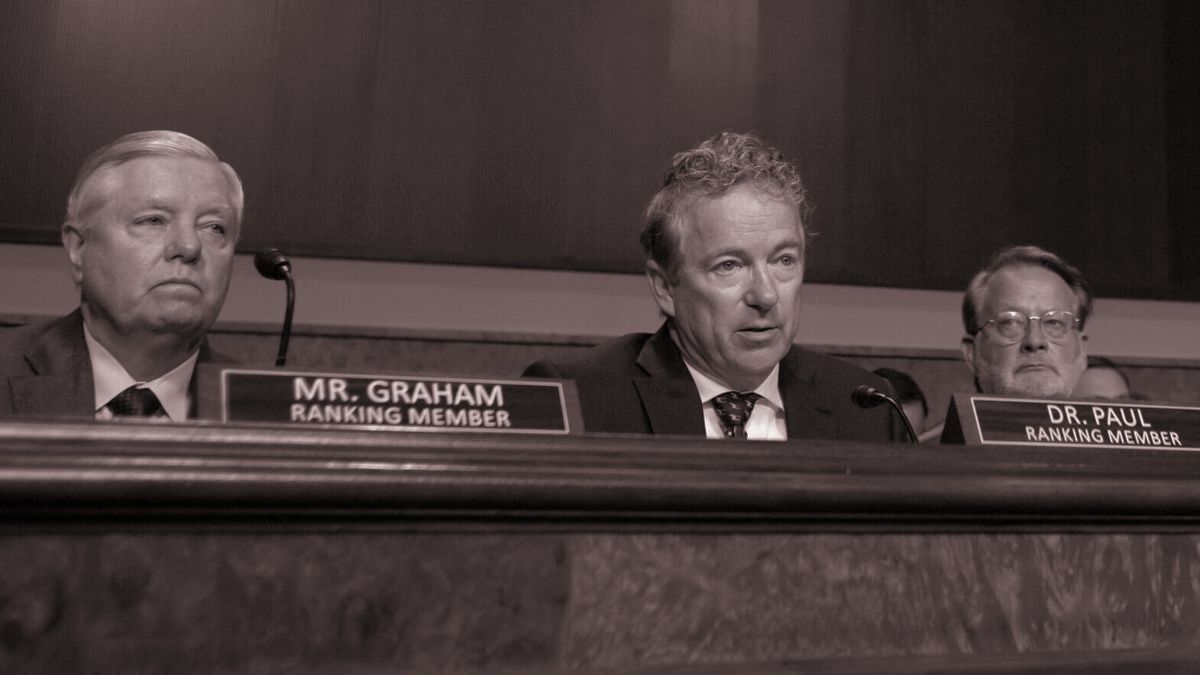
Sens. Rand Paul and Lindsey Graham, longtime political nemeses and ideological opposites, have come to represent the vast evolution of Trump’s foreign policy.
Mentioned in this issue: Todd Young, Susan Collins, John Thune, Al Weaver, Chris Murphy, Kristi Noem, Diana DeGette, Hakeem Jeffries, JB
Pritzker, Rand Paul, Lindsey Graham, Kyrsten Sinema, Dominic Tripi, Jesper Møller Sørensen, Thom Tillis, Mike Flood, and many more…
But first… |
- Trump’s
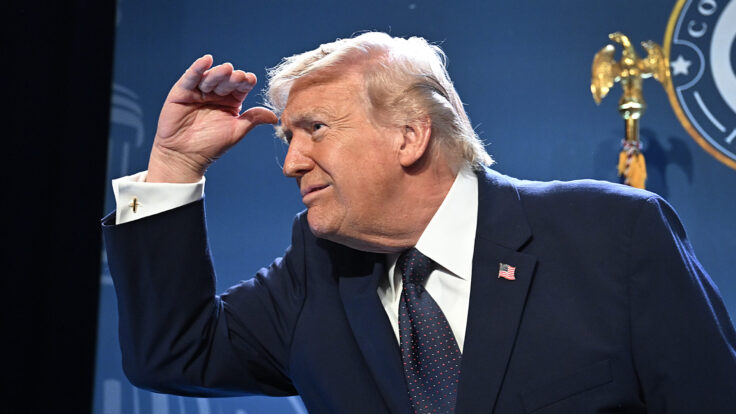
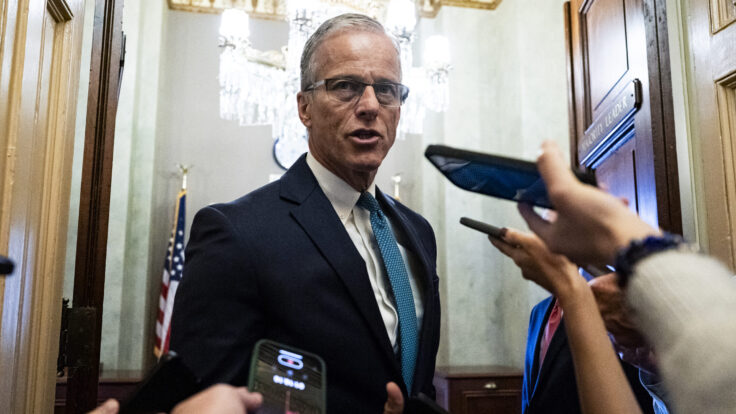
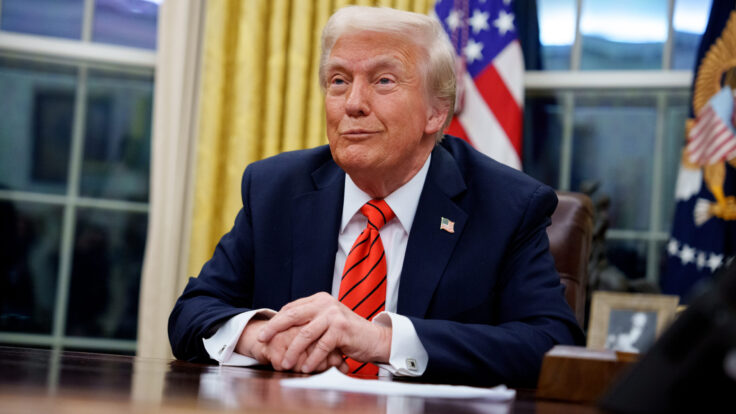
Venezuela freakout: President Donald Trump once again unleashed his id after five Republican senators voted to rein in his ability to launch military attacks against Venezuela. He called Sen. Todd Young shortly after the vote—a conversation that was “direct but cordial,” according to a person familiar with the call. He yelled at Sen. Susan Collins in a separate phone call, The Hill’s Al Weaver reported. (A person
familiar with that call confirmed that it happened.) He also called Senate Majority Leader John Thune for what Politico reported was a “spirited” conversation.
Shortly after those calls, he posted an angry social media rant calling for all five Republican dissenters to never be elected again. The war powers resolution still has more hurdles to clear before it passes the Senate, but this was the first time this term the chamber advanced legislation that would rebuke Trump
and tie his hands. We’ll see if those phone calls lead the senators to vote against final passage—and whether it deters other senators who would otherwise be open to voting for it. - Funding on ICE: The ICE shooting that killed Renee Good in Minneapolis last week has thrown the Department of Homeland Security funding bill into jeopardy. Democrats, furious with ICE’s aggressive tactics, are demanding accountability measures in the bill,
which is delaying its release. It was supposed to be rolled out this evening alongside two other funding bills, for State and Foreign Operations and Financial Services.
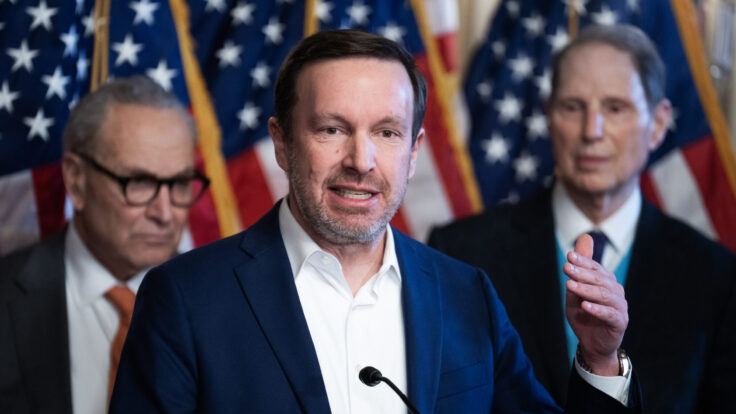
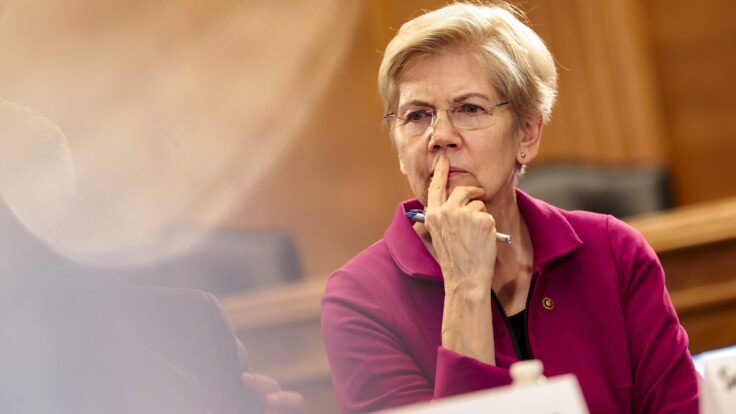
This morning on Meet the Press, Sen. Chris Murphy, the top Democrat on the Homeland Security Appropriations Subcommittee, was asked whether the funding issue could lead to a partial government shutdown when appropriations expire on January 31. “The question for Republicans is, are they willing to
shut down the government simply to endorse the most lawless Department of Homeland Security in the history of the country?” he responded. Murphy added that he wants the department to operate the way they did before the Trump administration: for officers to identify themselves, not wear masks, receive extensive training, and for those with Customs and Border Patrol to operate at the actual border, not the interior of the country.
Of course, ICE and C.B.P. already received three years’
worth of funding for border security and interior enforcement in the One Big Beautiful Bill, and while Democrats weren’t necessarily clamoring to give them more money before the shooting, they definitely aren’t now. - Impeachment chatter: A growing number of Democrats are using the I-word. Illinois Rep. Robin Kelly, who is running for Senate, is introducing articles of impeachment against D.H.S. Secretary Kristi Noem
after the ICE shooting. On MSNOW last week, House Democratic Leader Hakeem Jeffries told Chris Hayes that House Democrats “haven’t ruled anything in or ruled anything out” regarding Noem’s impeachment. And while he would have no role in any impeachment process, Illinois Gov. JB Pritzker said on CNN today that Noem “needs to resign or be impeached.” (Remember, House Republicans impeached Biden D.H.S. Secretary Alejandro
Mayorkas last Congress for “refusal to comply with the law” to secure the border.)
Meanwhile, other Democrats are beginning to speak privately—and some publicly—about how Trump has committed impeachable offenses. “I know that this president has committed 10 times more impeachable offenses in his second term as he did in his first term,” Murphy said on Meet the Press. Rep. Diana DeGette, a Colorado Democrat,
told me that Trump’s vindictiveness toward her state is “probably impeachable.” The president, of course, will not be impeached while Republicans control the House—but it’s now an open question if Democrats take control after the midterms.
|
|
|
The changing definition of “America First” has exploded tensions between two senators at
opposite ends of the conservative foreign policy spectrum: the libertarian Rand Paul and the interventionist Lindsey Graham. If Paul won the ideological battle in the first term, Graham seems to have Trump’s ear in the second. |
|
|
Following the stunning operation to capture Nicolás Maduro, tensions on Capitol Hill have
erupted as Republicans debate what “America First” really means in Trump’s second term. At the opposite poles of the argument are two senators who mostly despised one another to begin with: Rand Paul, the anti-interventionist libertarian, and Lindsey Graham, a champion of American aggression and imperialism who’s never met a war he didn’t like. As it happens, their views also represent the vastness of Trump’s foreign policy evolution in his
second term.
Paul, a loner whose social life is nearly as isolationist as his ideology, didn’t object to the capture of Maduro, itself. He does take issue with Trump’s decision to bypass Congress—again—and his ignorance of most things having to do with the legislative branch. While he has sometimes sparred with Trump, he believed the president basically shared his isolationist leanings. The Venezuela operation called that belief into question. “Whenever I had misgivings
about something else, I would always come back and say, Well, he’s the best we ever had, much better than the Bushes, who were war mad,” Paul told reporters this week. “I thought Donald Trump was different.”
During his first term, of course, Trump did mostly align with Paul’s libertarian view of the world, much to the dismay of most of the House and Senate Republican conference. Trump complained about war-hungry Bush-era advisers and believed so
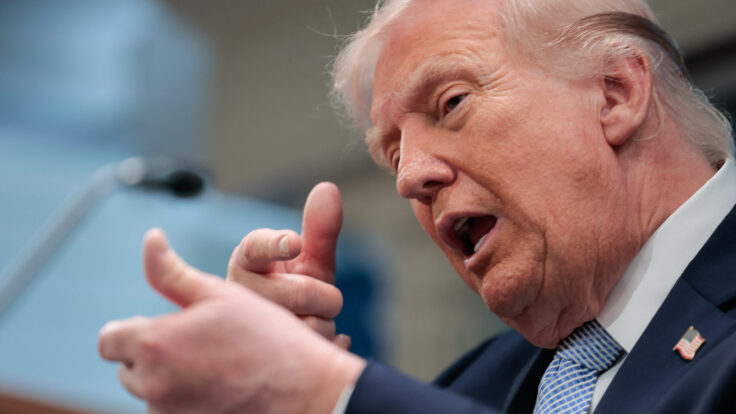
deeply in isolationism that he shunned international treaties and threatened to pull out of NATO. Indeed, his campaign for a second term was largely based on the promise to end wars and keep U.S. resources stateside. But now he is unconcerned with congressional constraints and international norms, and is guided by his belief that he can do as he wants, admitting to a group of New York Times reporters that his only limitation is his “own morality.”
Meanwhile, Trump’s second-term interventionism—bombing nuclear facilities in Iran, where he’s reportedly considering further intervention on behalf of protestors; ordering strikes in Yemen, Syria, and Nigeria; openly lusting after Greenland; musing about military action in Mexico; and threatening leaders in Nicaragua and Colombia, among other countries—has been a dream
come true for Graham, a gregarious and animated green room denizen who tends to insert himself into negotiations only to stir up drama. (Last Congress, then-Sen. Kyrsten Sinema called him a “chaos monster” after he derailed border-security talks during Joe Biden’s final year.) Now, America First suddenly has an entirely
new meaning—a validation of the years that Graham has spent ingratiating himself with the president, whispering in his ear about the value of American aggression. “America First means that when a country is hurting you, they pay a price,” Graham told me. “So to me, America First takes off the table ignoring problems.”
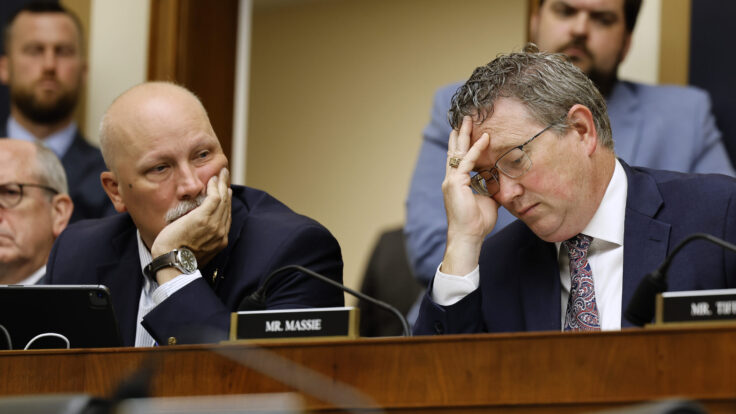
Naturally, Paul blames Graham for Trump’s evolution into an interventionist. “There should be a law that Lindsey Graham can only go to the White House every other week, and
that he’s only allowed to meet with midlevel people and not the president,” Paul said this week. “And no more golf outings.” |
While Graham has certainly enjoyed a more intimate relationship with Trump—including an open invitation to
all his properties—Paul had previously been able to rub the president’s foreign policy views in his face. Which is why, in recent days, Graham has seemed to relish the opportunity to remind his colleague that a sea change has taken place. On Paul’s birthday, last Wednesday, Graham posted on X, “As a birthday present we have seized yet another oil tanker. Next year to celebrate, maybe we can do a golf outing to Venezuela and Cuba!” (Paul
thanked him for the birthday wishes but noted that “replacing one socialist with another in Venezuela doesn’t bode well for golf though.”) Graham is bullish that the Maduro operation is just a sign of things to come—that leaders of “every narco-terrorist state” will meet the same fate, as he told me this week.
Just one day after his social media sparring match with Graham,
though, Paul scored a major victory when the Senate advanced his resolution, with the support of four other Republicans, limiting the president’s ability to use military force in Venezuela. (Trump was furious, dialing up the senators who crossed him, and Graham said he will be “requesting a meeting” with Senate Republicans to discuss efforts “to restrict President Trump’s authority as Commander in Chief.”) It was among the few times this term that Senate Republicans have voted to restrain the
president and might foreshadow how the upcoming debate and final vote on the resolution will go. For his part, Sen. Thom Tillis didn’t close the door to voting for it. “I didn’t want anybody to conflate any vote on war powers with any question that I supported the operation that occurred,” he said.
Paul still has some sway with the president. After a phonecall with the ambassador to Colombia, Paul told Trump that the country’s president, Gustavo
Petro, wanted a diplomatic solution to mollify Trump’s ire. Petro and Trump spoke Wednesday, which at least temporarily eased hostilities. Greenland, however, remains an outstanding point of tension within the party. While the vast majority of Republicans insist that Trump has no plans to use the military to take the country, Senate Majority Leader John Thune told me he hasn’t received any guarantee from the White House that military
force is off the table. “I haven’t quite sought any specific guarantee, but my impression is, just again from the conversations that have been held—and as you know, we’ve had several briefings—I don’t anticipate that on the military front,” he said.
Denmark, of course, isn’t so confident. Danish Ambassador Jesper Møller Sørensen spent most of last week running around the Hill, meeting with Republicans to make sure they didn’t support taking the territory by force. After
his meeting, Nebraska’s Republican Rep. Mike Flood released a statement saying that the Danes “expressed an openness to discuss any measure that would enhance the security of the United States, while respecting the sovereignty of the Kingdom of Denmark.” It’s unclear what Trump will decide to do, but the world—and even members of his own party—have certainly underestimated his audacity before.
Meanwhile, the shifting definitions of America First are
hardly a problem for Trump’s most ardent supporters. A recent YouGov poll, taken largely after Maduro’s arrest, found that Republican support for overthrowing Maduro had risen 22 percent from late December, from 44 percent to 66 percent. If any incident made clear that
it’s the person, not the policy, that Trump’s backers support, it was this one. Dominic Tripi, the onetime Trump acolyte and emerging political commentator, texted me earlier this week: “The cult is ‘culting’ harder… They’ll cheer for anything he does.” |
|
|
Join Emmy Award-winning journalist Peter Hamby, along with the team of expert journalists at Puck, as they let you in on the
conversations insiders are having across the four corners of power in America: Wall Street, Washington, Silicon Valley, and Hollywood. Presented in partnership with Audacy, new episodes publish daily, Monday through Friday. |
|
|
The industry’s go-to source for unflinching reporting on the trillion-dollar business of artificial intelligence - perhaps the
single most important technology of our time. Ian Krietzberg, the powerhouse journalist behind The Deep View, delivers twice-weekly insights into the latest dealmaking and breakthroughs in A.I., and how the intersecting worlds of finance, entertainment, media, and politics are being transformed in its wake. |
|
|
Need help? Review our
FAQ page or contact us for assistance. For brand partnerships, email ads@puck.news.
You received this email because you signed up to receive emails from Puck, or as part of your Puck account associated with {{customer.email}}. To stop receiving this newsletter and/or manage all your email preferences, click here.
|
Puck is published by Heat Media LLC. 107 Greenwich St., New York, NY 10006 |
|
|
|