{{ 'now' | timezone: 'America/New_York' | date: '%b %d, %Y' }} |
|
|
Hello and welcome back to The Best & The Brightest. I’m Leigh Ann Caldwell, back
in my office after appearing on ABC’s This Week earlier today to discuss the No Kings rallies and why Hakeem Jeffries still hasn’t endorsed Zohran Mamdani for mayor of New York. (You can check it all out here.)
I was pleased that Jonathan Karl asked about Zohran. Over the past few days, I’ve been inquiring around
town about why Jeffries and Chuck Schumer, the two highest-ranking Democrats on the Hill, have been so reluctant to support the very high-profile Democratic candidate in their backyard. Both men have a lot riding on how they navigate their party during the shutdown. And while they’ve earned some praise from the party’s base for holding the line on government funding, there are plenty of Democrats who would be happy to primary them, too.
Tonight, a rundown of what
I’m hearing about their decision to stay out of the endorsement game and how it’s impacting their standing on the Hill, with their base, and with voters in New York.
But first… |
- Paxton’s
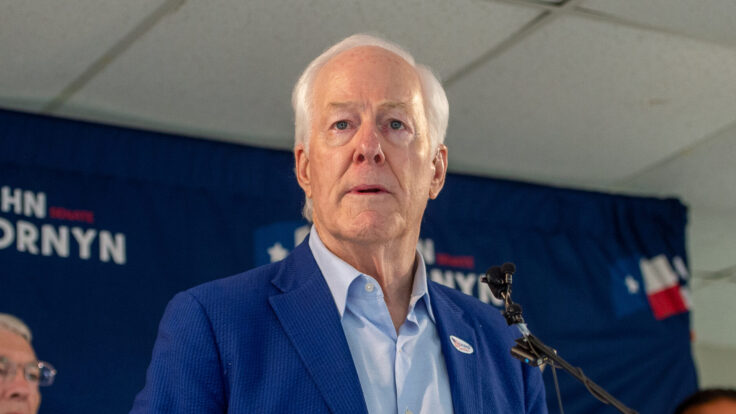
low-dollar strategy: The Republican Texas Senate primary is fascinating not only because of how much money incumbent John Cornyn, Attorney General Ken Paxton, and Rep. Wesley Hunt have raised, but also for how much each candidate has spent. In the third quarter, according to the latest campaign finance reports, Paxton spent just $630,000, while Cornyn and his joint fundraising committees spent about $1.5 million (not
including spending from supporting super PACs). Paxton has about $3.2 million cash on hand compared to Cornyn’s $10.5 million, per his campaign.
But Paxton isn’t too worried about the discrepancy, believing that he’ll only need $10 million to beat Cornyn in the March primary, according to a person familiar with his strategy, which is a staggeringly low sum and a sign of confidence from the Paxton camp. Cornyn has closed in on Paxton in the polls, but it took $20 million in campaign ads,
including support from the National Republican Senatorial Committee and Senate Leadership Fund, to pull it off.
|
|
|
A MESSAGE FROM OUR SPONSOR |
Hospitals are here when you need us most – but hospitals across America are at risk of closure. |
|
|
- Noem
bucks: Democrats are demanding answers about two new private jets, ordered by the Coast Guard at a cost of about $170 million, to be used by Kristi Noem and other top Homeland Security officials. That price tag is more than three times the amount that was originally requested for a single new plane, which Congress
rejected at the time, according to the Times. The top two Democrats on the House Appropriations Committee have asked D.H.S. for more information about the new planes, including why the budget line wasn’t updated and why Congress wasn’t notified when the purchase was made.
Noem has become something of a frequent flier, even among jet-setting Trump administration officials, with video teams recording her appearances alongside ICE officers around the country. She has also caught
flak from Democrats for living rent-free in the Coast Guard Commandant’s residence, an arrangement the administration has described as a security precaution.
Meanwhile, D.H.S. itself has become a major conduit of money. The department received $165 billion in the One Big Beautiful Bill, more than double the $66 billion that was allocated last year. Meanwhile, a significant portion of the proceeds is being spent on political advertising. According to Axios, D.H.S. has spent at least
$51 million so far this year on ads “thanking President Trump for securing the border” and praising his mass deportation agenda for “putting America first”—all featuring direct-to-camera videos of Secretary Noem. The ads are being aired nationally across TV markets, with the biggest buy occurring on Fox News. The ads have also been broadcast on Spanish-language TV,
presumably to encourage immigrants to self-deport. - The shutdown will continue until morale improves: Complicating Democratic and Republican efforts to win the shutdown spin war is another depressing reality. This issue has been invisible in the media relative to the torrent of other headlines being generated by the White House. The shutdown will enter its fourth week on Wednesday, and there hasn’t been much movement. Democrats still want a
negotiation about the Affordable Care Act, not a vote to extend the subsidies that is guaranteed to fail. Republicans still want to open the government before any negotiations begin. And neither Jeffries nor Speaker Mike Johnson appeared ready to give an inch during dueling appearances today on This Week. Republicans previously hoped that Democrats might cave after the No Kings protests on Saturday, but that belief was always confounding, as I
wrote last week.
|
Reminder: Julia Ioffe’s book,
Motherland, comes out on Tuesday. If you haven’t preordered it already, make sure you get a copy. And now, for the main event… |
|
|
Zohran Mamdani, the presumptive future mayor of New York, still hasn’t received the
endorsements of his fellow New Yorkers Chuck Schumer and Hakeem Jeffries. The snub speaks volumes about Democratic insecurities: Is Mamdani the future of the party, or a midterm liability? How about both? |
|
|
Zohran Mamdani’s seemingly inevitable occupation of Gracie Mansion has given a much-needed
jolt to a Democratic Party still recovering from 2024 election–induced P.T.S.D. After all, the 34-year-old democratic socialist was an extreme longshot to win the Democratic primary, especially against former Governor Andrew Cuomo. But Mamdani ran a flawless social media campaign, stuck to a clear and concise affordability agenda—and, in the final stretch, he’s gone out of his way to meet with the city’s billionaires, explain himself to prominent rabbis, court
the N.Y.P.D., and charm Martha MacCallum on Fox News.
Perhaps most notably, he’s done it all without the public endorsement of the top two Democrats in Congress, Chuck Schumer and Hakeem Jeffries, both of whom also live in New York City. Mamdani “should be the kind of candidate that Democrats want in every state in the country,” Senator Bernie Sanders declared during a CNN town hall last week. Senator
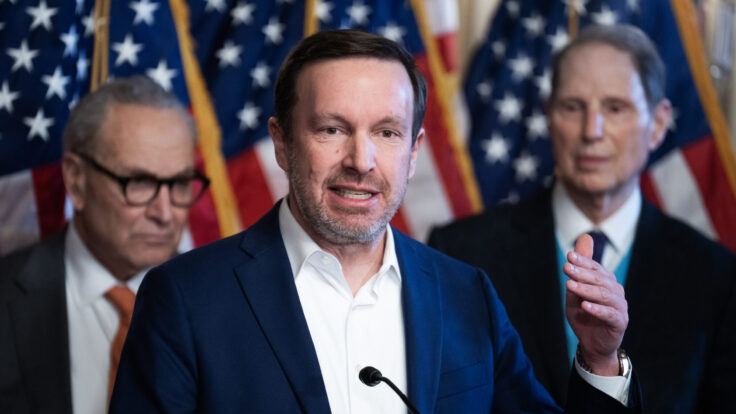
Chris Van Hollen, hardly a firebrand liberal himself, called the Democratic leaders “spineless” for failing to support him. “You’d think being the Democratic nominee would be enough” for Schumer and Jeffries to endorse, one Democratic aide told me. |
|
|
A MESSAGE FROM OUR SPONSOR |
Hospitals need your help to stay. Protect 24/7 care—because when the doors close, it is too late. |
|
|
And yet… at the highest levels, party leaders are still reluctant to embrace a candidate they fear could
subsequently hurt their chances at retaking the House, or even the Senate, which are their top priorities. Republicans have painted Mamdani as an extremist—a “Marxist,” according to Speaker Mike Johnson, a “100 percent communist lunatic,” according to President Trump, and a “jihadist,” per likely New York gubernatorial candidate Elise Stefanik—after Mamdani initially deflected MacCallum’s questions about whether Hamas should “lay down their
weapons and leave the leadership in Gaza.” (He later clarified at the debate, saying “of course” they should lay down their arms.) A Jeffries and Schumer endorsement could allow Republicans to more easily tie him to Democratic candidates running on far more moderate platforms. The Mamdani mania, according to this logic, could be weaponized in swing districts and statewide races far beyond New York, where candidates like North Carolina’s Roy Cooper and Maine’s Janet
Mills have presented themselves as pragmatists and problem solvers. Guilt by association is not always an effective political strategy, but the threat of it does make centrists nervous.
At the same time, the Mamdani snub has moved pretty far down the list of things the base is mad about. Schumer and Jeffries have built up a reservoir of good will with the left over the past month via their handling of the government shutdown. Schumer, in particular, has rebuilt some of the cred
he lost after folding during the last government funding showdown in March. Meanwhile, the two leaders have kept the party mostly united and on message, refocusing the debate on healthcare—a winning issue for them. Success in their day jobs has thus taken pressure off both Schumer and Jeffries to capitulate to the demands of the base to lock arms with Zohran. They’re showing they can fight, and stand for something, in their own domains. |
Campaign money is yet another consideration for Schumer and Jeffries, both of whom are tasked with being
rainmakers for the party. While Mamdani may have a strong lead in the polls, he hasn’t yet won the hearts and minds of the wealthy and connected New Yorkers who bundle and donate millions of dollars to the major fundraising arms of the Democratic Party—the D.N.C., D.C.C.C., and D.S.C.C. In many ways, that’s the key base to which the House and Senate leaders must cater. Many Jewish donors, in particular, remain skeptical of Mamdani despite his attempts to explain old decisions, like
declining to condemn the phrase “globalize the intifada.” “It says a lot about the roots of the party given the fact that they’re not endorsing,” another Democratic aide told me.
Some in Washington speculate that Schumer’s non-endorsement is a sign that he’ll retire when his current term expires in 2029. Threats of a primary challenge erupted during Schumer’s fumbling of the March funding deadline, with the left encouraging Rep. Alexandria Ocasio-Cortez to run
against him. But people close to Schumer say that Mamdani is just not that important in the scheme of the Senate leader’s six-year term and his eventual legacy. When Schumer is asked if he will endorse Mamdani, he gives the same non-answer: “We’ve had several good conversations,” he says, adding that the “conversations will continue.” And if Mamdani becomes mayor but doesn’t fulfill his campaign promises, ending up as the second coming of Bill de Blasio, Schumer’s
non-endorsement could look shrewd in hindsight. As one New York political operative put it, “New Yorkers love the guy they elected until the day he takes office—then they hate his fucking guts.” |
|
|
Jeffries, for his part, said on This Week this morning that he expects to meet with Mamdani in the
coming days (which would be only their third meeting) and that he’ll have “more to say” before early voting starts on Saturday. Since Mamdani’s primary win, Jeffries has been focused on the House, trying to counter Texas’s gerrymandering gambit, and dealing with the shutdown. But, for him, an endorsement might carry even more political risk than for Schumer. Jeffries, after all, has to protect his centrist colleagues, such as Reps. Tom Suozzi and Laura Gillen,
two Long Island Democrats who flipped their seats and are on Republicans’ target list in the midterms. (Neither has backed Mamdani.)
Jeffries could also face threats to his own seat: City councilmember Chi Ossé, a Gen Z Black Lives Matter activist and Mamdani supporter, has considered challenging Jeffries in a primary, a New York Democratic strategist told me. Of course, it’s highly unlikely that Jeffries would lose a primary: He has the campaign
cash to defend his seat, and Democratic leadership has learned that you don’t take anything for granted, whether your challenger is a sitting city councilmember or an unknown bartender.
Jeffries, after all, is still relatively new to the national spotlight. While he’s carved an impressive political path, rising swiftly through the House ranks, he’s still a long way from becoming a Schumer-like institution in New York, especially outside of his Brooklyn district. While Jeffries’s profile
has risen by picking a fight with Trump via a government shutdown, his take on Mamdani is, for better or worse, being watched very closely in New York City. “Jeffries faces a much bigger challenge,” said the New York Democratic operative. “With Schumer, it’s like Grandpa Chuck, whatever.” |
|
|
Join Emmy Award-winning journalist Peter Hamby, along with the team of expert journalists at Puck, as they let you in on the
conversations insiders are having across the four corners of power in America: Wall Street, Washington, Silicon Valley, and Hollywood. Presented in partnership with Audacy, new episodes publish daily, Monday through Friday. |
|
|
Unique and privileged insight into the private conversations taking place inside boardrooms and corner offices up and down Wall
Street, relayed by best-selling author, journalist, and former M&A senior banker William D. Cohan. |
|
|
Need help? Review our FAQ page or contact us for assistance. For brand partnerships, email ads@puck.news. You received this email because you signed up to receive emails from Puck, or as part of your Puck account associated with {{customer.email}}. To stop receiving this newsletter and/or manage all your email preferences,
click here. |
Puck is published by Heat Media LLC. 107 Greenwich St, New York, NY 10006 |
|
|
|