
Join Puck to listen to this article
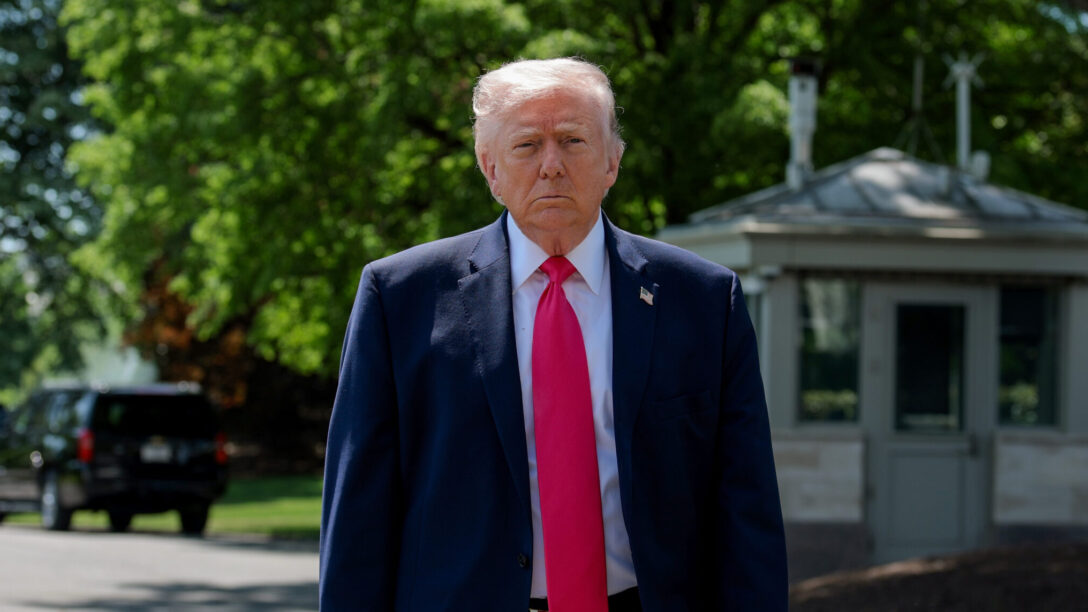
Republicans are furious. They were outmaneuvered, outspent, and outgunned in the redistricting wars, even after lobbing the first grenade in Texas, which now looks like a costly strategic blunder. The Republican defeat in Virginia last night—assuming it survives a court challenge—will lose them four seats, leaving Democrats three seats ahead in the nationwide gerrymandering frenzy. In Washington this morning, the finger-pointing was already underway, though not necessarily at the real culprit: President Donald Trump.
Republicans tied to MAGA Inc., Trump’s super PAC, along with others in his orbit, are refusing to say if he deployed any of his $300 million-plus war chest on Virginia’s ballot initiative, despite Democrats’ overwhelming spending advantage. One House Republican member told me that the president did spend some cash, but his team didn’t want to advertise it, presumably because of his unpopularity and a desire to keep the issue local. (Ask yourself, dear reader, when was the last time our president didn’t want to make an issue about him?)
James Blair, Trump’s political advisor who took a leave from the White House to focus on the midterms, was notably evasive on CNN when pressed about it. “What I can see on the public reports is that the aligned ‘no’ group spent about $40 million,” Blair said. “I don’t think that the numbers have really been accurately reported, but that’s what I can see through the public reporting.” The most recent F.E.C. filing period, which ended March 31, shows that MAGA Inc. has spent just $8.9 million this cycle. (Blair did not respond to repeated requests for comment.)
Republicans continue to worry that Trump, despite mounting fears about losing both chambers and the impeachment consequences that follow, might not spend enough to win in the midterms. “Being outspent like that is borderline malpractice,” one Republican told me. And yet this kind of concern has been building for months. The president has a history of doing little for other candidates.
In Indiana, for instance, Trump vowed to unseat state legislators who blocked his redistricting plan. Millions of Republican dollars are now being spent on that intraparty feud, but a lot of it is coming from the Club for Growth and Senator Jim Banks’s super PACs. There is, so far, no clear sign that MAGA Inc. has stepped in. It’s a familiar pattern: Trump sets the agenda, others pick up the tab. And if he continues to sit on the sidelines, Republicans’ cash advantage could shrink quickly.
Jeffries Finds His Fire
The Virginia referendum was a major victory for House Minority Leader Hakeem Jeffries, potentially putting Democrats on a glide path to reclaim the majority in November, with himself as speaker. His decision to move quickly and aggressively in response to Trump’s redistricting push marked a rare moment of clarity and force for a leader not known for his assertiveness.
In fact, Jeffries’ hesitation and reluctance to make difficult decisions has become the chief complaint among members of his own caucus, leaving them divided and lacking direction. House Democrats, especially inside the Congressional Black Caucus, still harbor hard feelings about his failure to steer his members’ votes on a Republican resolution honoring the late Charlie Kirk.
Yet Jeffries’ disposition has also kept him from making major blunders, and mostly worked in his favor despite the grumbling in his caucus. When he withheld judgment on a potential expulsion vote for Rep. Sheila Cherfilus-McCormick this week, she ended up resigning. When he declined to make a decision back in December about which Obamacare discharge petition to back, a group of Republicans came on board the Democratic one.
Why was redistricting different? When I asked him this today, he told me that the “stakes are incredibly high.” Multiple House Democrats also told me that winning the majority and becoming speaker matters above all else. Another Democrat who was aware of the internal conversations told me that Jeffries felt he had to show voters that his party was willing to fight Trump, and it would have been unacceptable for the president to win the majority because of gerrymanders.
Poll Watch
Moderate white women—a crucial, and often decisive, voting bloc—are breaking sharply against Donald Trump. According to a new Galvanize survey that’s set for release tomorrow, 66 percent disapproved of the president, and opposition to the war in Iran ran even deeper. In April polling, fully 82 percent of these voters said the conflict is hurting them economically, and forcing them to adjust their spending. Nearly 80 percent of those women, who mostly live in rural, exurban and suburban areas, believe public officials are using their positions to enrich themselves. “What our data shows is a sense that the game is rigged—that the people in charge are not just failing to make their lives better, but may actually be profiting while they struggle,” Jackie Payne, the founder and executive director of Galvanize Action told me. “That’s a trust problem, and one that any candidate or elected official would be smart to address.”