
Join Puck to listen to this article
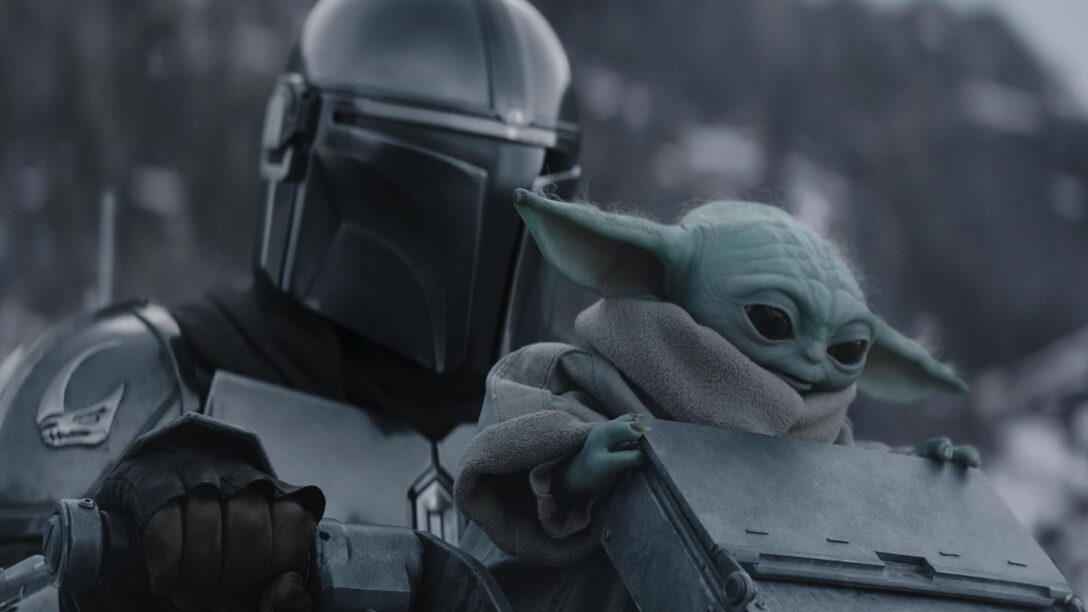
More than six and a half years since The Rise of Skywalker frustrated Star Wars superfans throughout the galaxy, new Lucasfilm chiefs Dave Filoni and Lynwen Brennan are hoping to revive the brand as a theatrical franchise with The Mandalorian and Grogu. It’s a strategic pivot—and a gamble—for Disney on multiple levels. Although the film has some star power thanks to Pedro Pascal and Sigourney Weaver, there’s no escaping the fact that it’s a feature based on a TV series—an extension of Jon Favreau’s critically acclaimed The Mandalorian on Disney+—and not the other way around. It’s also the first Star Wars spinoff movie without any obvious tie-in to the original trilogy.
Perhaps unsurprisingly, Grogu is tracking for the lowest opening weekend cume for a Star Wars feature in the Disney era—much lower than 2018’s Solo: A Star Wars Story, the franchise’s commercial nadir. Current projections suggest around $80 million in domestic gross over the four-day Memorial Day weekend, although some analysts, including Shawn Robbins’s Box Office Theory, see a path closer to$100 million.
Those projections have revived a familiar anxiety. Solo received a mixed reception—solid but unspectacular reviews—paired with heavy domestic frontloading. A 2.9x multiple off its $35 million Friday led to a $103 million opening weekend. And a disastrous overseas start ($65 million from Wednesday to Sunday) didn’t help. In the end, Solo finished with $216 million in North America and $394 million worldwide. That was a clear disappointment, especially against its $275 million budget, which ballooned after then-Lucasfilm president Kathleen Kennedy replaced directors Chris Miller and Phil Lord with Ron Howard well into production.
No wonder Lucasfilm executives have been wary of greenlighting anything else. In the wake of the Solo misfire and negative reaction to Rise of Skywalker, Kennedy and the rest of the Disney unit were crippled by second-guessing—creative changes, director swaps, reshoots, and projects initiated with fanfare and quietly dropped (pour one out for Patty Jenkins’s roller blades in her Rogue Squadron “teaser trailer,” which is all that ended up being filmed of that project). Now the fear is that The Mandalorian and Grogu, which has an even weaker I.P. hook to the Star Wars mainline than Solo, could be a similar miss.
Well, it depends on the threshold for success. With a reported budget of around $160 million—about half the cost of Andor Season 2—Favreau arguably doesn’t need to smash box office records. But the film does need to perform well enough to reestablish the franchise as a strong theatrical draw. During its period of soul-searching, Lucasfilm was often focused on catering to the whims of its very online superfans, many of whom grew up loving the original trilogy or George Lucas’s prequels, at the cost of engaging a broader—and younger—general audience. In this regard, Grogu’s outsider status, especially amid a franchise that has often skewed domestic even in the best of times (The Force Awakens earned $2 billion but split 45 percent domestic and 55 percent overseas, more U.S.-heavy than other massive titles), may be a benefit.
The Grogu Audience
Having seen the first 17 minutes, I can vouch that Grogu is newbie friendly. The film’s opening reel plays like what might happen if you hired the man who directed the first two Iron Man movies and the blockbuster Jungle Book remake to offer up a Star Wars–sized variation of a James Bond pre-credits set piece. I spoke with a few CinemaCon attendees who were entirely unconfused, despite having never seen a single episode of The Mandalorian.
The question of accessibility is largely a challenge of Disney’s own making. The poorly reviewed Rise of Skywalker, which nevertheless topped $1 billion in 2019, was followed by a tsunami of Disney+ shows designed to serve the company’s burgeoning streaming business. That strategy worked, but the output arguably diluted the theatrical appeal of new film opportunities—precisely what happened when the flood of Marvel shows on Disney+ seemingly diminished demand for subsequent MCU movies, including The Marvels and Thunderbolts.
Nielsen just released viewership data for Star Wars shows and movies on Disney+ over the past year. Beyond raw viewership, which is allegedly 33 billion minutes across all Star Wars content, The Mandalorian remains comparatively popular with the youngest and oldest demographics, suggesting at least the potential to nab kids and their parents (or grandparents). That should fuel hope in Burbank that Grogu can prove popular with the generation of kids who were first introduced to the property over the last seven years of Disney+ availability, many of whom have never seen a Star Wars movie in theaters. Think Moana 2 soaring to $1 billion thanks in part to five years of kids watching and rewatching (the $645 million-grossing) Moana on streaming.
Perhaps for that reason, Disney’s marketing efforts have pitched The Mandalorian and Grogu to more general audiences—there was that clever Super Bowl ad riffing on the Budweiser Clydesdales and a series of promotions emphasizing the Grogu muppet’s kid-friendly appeal. If the ads work and the reviews are good enough, the picture might score well as the first live-action spectacular aimed at families since the soft PG-13 outer space blockbuster Project Hail Mary—directed, ironically enough, by fired Solo filmmakers Lord and Miller—and, before that, December’s Avatar: Fire and Ash.
The Marvel Phase Two Comp
While Disney content chief Dana Walden and film head Alan Bergman would love for The Mandalorian and Grogu to perform more like Rogue One ($1 billion worldwide in 2016) than Solo, there’s no law saying that the new flick must become a stepping stone toward returning Star Wars to the $1 billion-on-the-regular club. After all, there is more to the brand than global box-office glory—revenue from Disney theme parks, Star Wars toys, related Lucasfilm merch, etcetera. And even if this new Star Wars does not shatter records, just the perception that the franchise is back on solid critical footing will help boost the potential for next year’s Star Wars: Starfighter, directed by Shawn Levy and starring Ryan Gosling.
As for priorities, Disney would do well to tune out the online gatekeepers, especially if their S.E.O.-friendly discourse conflicts with the real-world reception. Recall that Favreau’s Iron Man helped make the MCU what it would eventually become by creating fans out of general moviegoers with little to no attachment to the four-color Marvel Comics universe. Ditto Peter Jackson’s Lord of the Rings trilogy, which earned $2.95 billion worldwide and 21 Oscars largely thanks to non-J.R.R. Tolkien obsessives.
Assuming all else skews positive, and Disney budgets appropriately, there can be a measured victory if the Star Wars franchisesettles into a place akin to Marvel’s Phase Two (post-Avengers) and early Phase Three releases. Early 2010s biggies like Iron Man 3 and Avengers crossed $1 billion at the box office, but the 2013-16 likes of Thor: The Dark World, Captain America: The Winter Soldier, Guardians of the Galaxy, and Doctor Strange were still seen as aspirational successes with $644 million–$777 million global cumes. The key to affirming Star Wars as a must-see brand starts with making movies that are actually, you know, must-sees. That’s why you hire Favreau.
Ultimately, more-realistic box-office expectations are probably healthy for Lucasfilm. After The Force Awakens, some in Burbank came to view $2 billion as a replicable goal rather than a generational miracle. Then-Disney C.E.O. Bob Iger was clearly over his skis when he said he wanted a Star Wars movie every year. Meanwhile, Kennedy was ultimately unable to deliver anything close to that—and she struggled with the quality (or at least the perception of quality) of what she did make. But success in 2026 can look like more than an endless parade of C-tier streaming shows, or 10-figure blockbusters. For a franchise just getting back on its feet, it might be a relatively cheap, family-friendly spinoff that hits a double or triple, instead of a home run.