
Join Puck to listen to this article
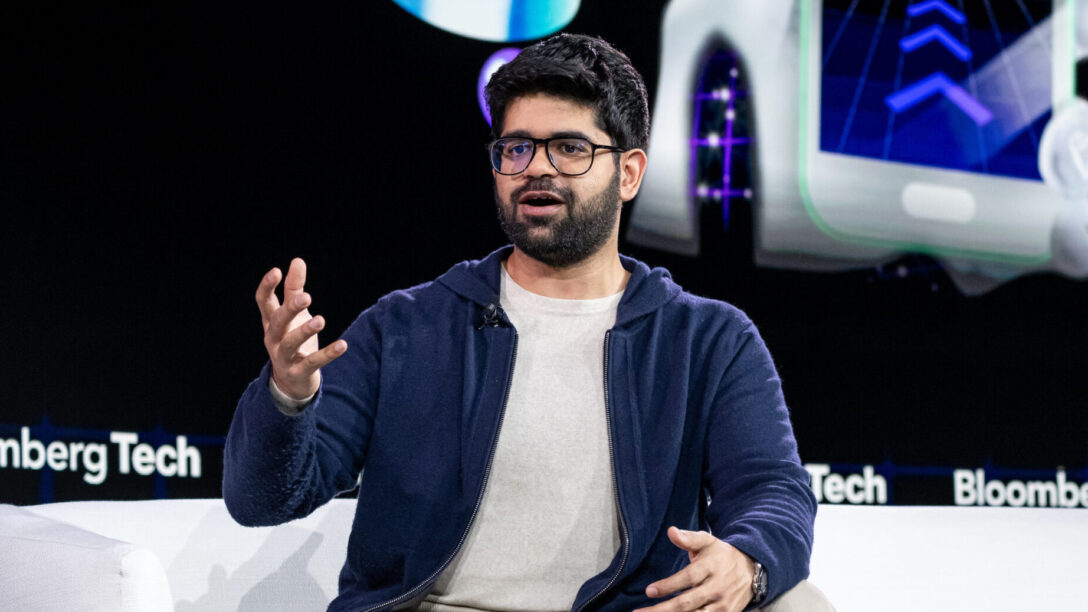
You’ve got to admire the chutzpah of Aravind Srinivas, the 31-year-old co-founder and C.E.O. of Perplexity, who made a totally unsolicited, $34.5 billion all-cash bid last week for Google Chrome. Yes, I’m sure the upstart A.I. search engine company would love to have Chrome and its 3.5 billion monthly users, which would allow Perplexity to leapfrog OpenAI in the industry’s current land grab. But Chrome, which is part of Alphabet’s Google Services division, isn’t even for sale.
There are other glaring problems with this bid. To start, the ChatGPT competitor doesn’t have $34.5 billion in cash—although its deep-pocketed backers, including Nvidia, Jeff Bezos, Eric Schmidt, New Enterprise Associates, and SoftBank—could certainly come up with the money if somehow things got real. Also, Perplexity’s own $18 billion valuation, as of July, is barely half of what it’s offering to pay up for Chrome.
But Google’s would-be rivals are feeling gutsy after a federal judge ruled that the company violated antitrust laws with a monopoly on internet search; by the end of this month, Google could be forced to sell its web browser. Indeed, a couple days after the Perplexity bid, Search.com, a division of Public Good, made its own $35 billion offer for Chrome, supposedly backed by JPMorgan Chase.
Of course, neither bid is unprecedented. M&A lore is filled with examples of minnows attempting to swallow whales whole. And the fact that Perplexity is offering cash, not stock, means that Perplexity shareholders would not, in effect, be selling Perplexity to Alphabet. But none of that makes Perplexity’s bid less befuddling. There may, however, be a good explanation—and once again, the M&A lore can offer some guidance.
The Comcast Paradigm
When I first heard about Perplexity’s offer, I immediately thought back to a very big deal I worked on 25 years ago, when I was a managing director in the M&A group at JPMorgan Chase. At the time, Comcast was trying desperately to grow its cable footprint. To that end, it made an unsolicited $72 billion bid for AT&T Broadband, the cable subsidiary of AT&T—which, like Google Chrome, was not at all for sale. But Brian Roberts, the Comcast C.E.O. and scion of the founding family, was determined to get it. What could he do? Well, thanks to an idea conceived of by Rob Kindler, my boss at the time, Roberts effectively made an offer that AT&T shareholders couldn’t refuse.
It was timed to cause maximum disruption. The offer was announced shortly after AT&T’s shareholder meeting in 2001, where the participants voiced their frustration with the stagnating stock price in the wake of various failed efforts by management to get it moving. Shareholders were restless and willing to put pressure on AT&T and its board to seriously consider the offer, which consisted of Comcast stock and assumed debt.
The gambit actually worked. The $72 billion deal was announced December 2001, despite the horrific events of September 11—that very morning, Comcast management met with legal and financial advisors at Davis Polk, Comcast’s law firm, on Park Avenue, to review a presentation I was making about the ratings agencies’ reaction to the proposed deal. It closed 11 months later, creating the largest cable company in the United States, with 22 million subscribers. AT&T shareholders owned a big chunk of Comcast, but the Roberts family still controlled the company through its supermajority voting stake.
In other words, deals like this have happened before, against all odds. So does Perplexity have a prayer of buying Google Chrome, which has about a 68 percent share of the global browser market, according to StatCounter? To noodle that idea around, I turned to my old friend Kindler, who recently returned to practicing law at Paul Weiss after long stints at both JPMorgan Chase and Morgan Stanley as an M&A banker.
A Long Putt
Rob and I agree that, like Comcast a generation ago, Perplexity does have an opening, thanks to the Justice Department’s ongoing antitrust lawsuit against Google. A year ago, Amit Mehta, the judge in the case, ruled that Google had an unlawful monopoly in online search. Mehta is supposed to decide by the end of the month what the remedy in the case should be. That makes the timing of Perplexity’s $34.5 billion bid a lot less coincidental: It could sway the judge into thinking that, should he force a sale of Google Chrome, there are buyers willing to pay big money for the browser. (Estimates of the value of Chrome have ranged from $15 billion to $50 billion; analysts at Baird, a small investment bank, put the value of Google Chrome at closer to $100 billion.)
There is some irony in all this. Google has been arguing that a divestiture of Chrome would destroy its value and utility to the public, declaring in a May blog post that such a move “would break” the browser, rendering it “insecure and obsolete.” The company added that “a wide range of voices agreed that it would do more harm than good.” And yet, if Chrome were acquired by Perplexity or some other company willing to pay more for it (such as Search.com), Google’s argument kind of falls apart.
However, Rob believes this is a very long putt at best. First, even if Judge Mehta were to order the divestiture of the browser in the next few weeks, his decision is subject to appeal, a process that could take years to get resolved. Then, Rob continued, even if an order to sell Chrome were upheld, Alphabet would be hard-pressed to actually sell it for cash, due to the enormous and prohibitive tax hit that would entail. (Alphabet’s tax basis in Chrome has to be close to zero.)
Indeed, if Alphabet were ultimately forced to sell Chrome, after years of appeals, it would almost certainly choose to spin it off to its shareholders in a tax-free transaction, in the same way that Comcast is spinning off Versant, and Warner Bros. Discovery is spinning off its Streaming & Studios business. Generally speaking, any sale of Google Chrome after such a spinoff would need to come after two years, at least, in order to not jeopardize the tax-free nature of the original spin. What’s more, even after the appeals, and the spin, and the two-year waiting period—hello, 2030!—it’s likely that another company with A.I. ambitions and far more resources than Perplexity or Search.com would get Google Chrome… perhaps even OpenAI.
Srinivas is being hailed in some quarters for the audacity of his bid, which makes for a great headline and asserts the scale of Perplexity’s ambitions, even if it’s something of a Hail Mary. But it’s also a little embarrassing—no wonder the company hasn’t cited its financial and legal advisors, if there are any. Still, planting the idea in the judge’s head that there are bidders out there who would be interested in buying Google Chrome at a big price, and preserving it, puts the wood to Google’s argument that a divested Chrome would wither and die. That alone makes the whole situation a lot more interesting than it was a week ago.