 |
 |
|
Hello, and welcome back to The Best & The Brightest, foreign policy and national security edition.
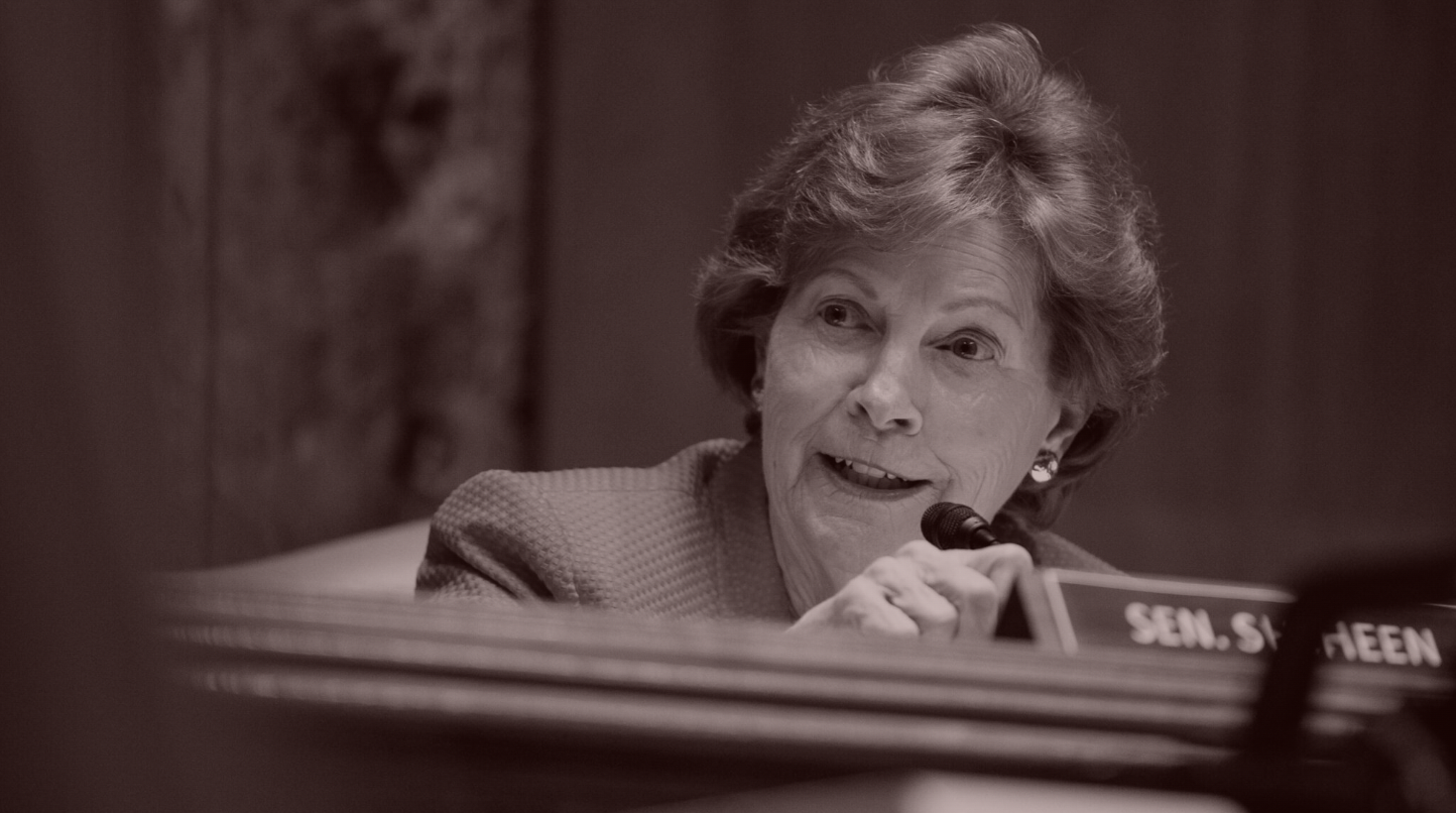
This week, I talked to Senator Jeanne Shaheen, Democrat of New Hampshire and a core staple of the foreign policy universe. She scored a big coup on the Senate floor last Wednesday with the confirmation of Dr. Geeta Rao Gupta as the head of the State Department’s Office of Global Women’s Issues, and wanted to talk. But first…
For those of you keeping track, Ukrainian forces have been able to retake some of the land around Bakhmut, endangering Russia’s remaining supply line. Military analysts are cautious, though, warning that these are just fields around the city—though the fight for them has been ferocious—and that things inside the city are not going nearly as well for the Ukrainian military. Still, these attacks are clearly a kind of prelude to the main, much anticipated offensive. As Michael Kofman noted over the weekend, they “appear to be early stages of what will likely be a series of offensive operations, rather than the main effort.” As for when the primary effort begins, well, we’re all still waiting, as are the Russians, who have begun evacuating villages they occupy near the frontline in Zaporizhzhya, apparently in anticipation.
|
 |
| One Shaheen Moment |
| The New Hampshire senator opens up about the gendered confirmation process, the upper chamber’s support for Ukraine, and the Tommy Tuberville fiasco. |
|
|
|
| On Wednesday, New Hampshire Senator Jeanne Shaheen finally accomplished what she had been trying to do for 18 months: she confirmed the appointment of Dr. Geeta Rao Gupta, who was nominated by Joe Biden to lead the State Department’s Office of Global Women’s Issues all the way back in November of 2021. The office, which is supposed to make sure that the empowerment of women and girls around the world is part of U.S. foreign policy, was first headed by Melanne Verveer, a veteran member of the Clinton White House and a longtime friend and aide to Hillary. Back in 1995, the First Lady famously declared, at the U.N.’s World Congress on Women, held that year in Beijing, that “women’s rights are human rights.”
Gupta, a Ph.D., has a long track record of working on HIV/AIDS and on women’s specific vulnerability to infection. She had served at the U.N. and as a deputy director of UNICEF. And yet, Gupta’s nomination got stuck in the Senate so long that it had to be returned to the president’s desk—twice. (This is standard operating procedure: a nominee who has neither been confirmed nor rejected by the end of a session, or after a long recess, has to be renominated to be considered for the position.)
As I reported last fall, the Biden administration’s foreign policy was a bit hamstrung by the fact that more than 20 percent of America’s ambassadorial posts were still unfilled. For many of those positions, as well as those of political nominees at State, the issue came down to being stuck in Senate purgatory. Many didn’t even make it out of the Senate Foreign Relations Committee, which was evenly split between Democrats and Republicans until the 2020 midterms gave Democrats an outright majority in the chamber. This allowed the committee’s Republicans to block Biden’s nominees—or to demand specific concessions from the administration in exchange for releasing their hold. It resulted in unprecedented political hostage-taking for even the most routine nominees.
But the process was even more treacherous for Biden’s female nominees. From what I heard, committee members, both Republicans and Democrats, treated these women with an almost Mad Men level of condescension and disrespect. One male staffer reduced a Biden nominee, a woman who had been held captive by FARC guerilla fighters for months, to tears with his badgering. Afterwards, in order to head-off such attacks, she was accompanied by State Department minders for every meeting on the Hill. Another nominee, Sarah Margon, who was nominated to serve as the Assistant Secretary of State for Human Rights, Democracy, and Labor, was blocked ostensibly for a tweet about the BDS movement. But behind closed doors, Republicans on the committee complained about her “tone.” (After nearly two years in limbo, Margon withdrew her name.)
Tamara Cofman Wittes, nominated by Biden to be assistant administrator of the U.S. Agency for International Development for the Middle East, also ran into headwinds. Wittes, a longtime Brookings fellow and an expert in the region, as well as in the Arab-Israeli conflict, had criticized the Trump administration’s Abraham Accords as a win for the region’s authoritarian leaders and “a betrayal” of Palestinians. It didn’t matter that Wittes, like Margon, is Jewish. The non-Jewish Republicans on the Committee took it upon themselves to defend the Jewish state from these two women. (It also didn’t help that Wittes is married to Lawfare’s Benjamin Wittes, who became famous in Washington for his boisterous, shall we say, dot-connecting during the Russiagate years, earning him many enemies in the G.O.P.) Tammy Wittes, according to people familiar with her dead-in-the-water nomination, was described by Republican Senators and staffers as “arrogant” and “condescending.”
Amy Gutmann, the daughter of a Jewish refugee from Germany and the former president of the University of Pennsylvania, barely made it to her appointment as the U.S. ambassador to Germany. Senators Risch, Rubio, Johnson and Cruz protested that UPenn had given Biden a lucrative professorship and taken Chinese money while she was president. None of them had voted to convict Donald Trump for this, but Gutmann, they felt, was guilty of taking part in a “quid pro quo.”
And, speaking of feisty Jewish ladies held up in the Foreign Relations Committee, Deborah Lipstadt, a historian of the Holocaust and Biden’s nominee to be special envoy to combat anti-Semitism, got stuck for six months after Republicans demanded “additional vetting” of the renowned scholar. It was all because she had called out Wisconsin’s Ron Johnson for “white supremacy” after he declared that he only would have been worried about the January 6 rioters if they had been members of Black Lives Matter. Johnson then accused Lipstadt of spreading “malicious poison,” a phrase that is itself redolent with anti-Semitism.
Gupta, for her part, was blocked because she had said that she is personally pro-choice, though the office she was to head does not deal with reproductive health. (That’s the purview of another part of the foreign policy bureaucracy.) People involved in the nominations process have told me that the G.O.P. wing of the committee has learned to use abortion politics to block Biden’s nominees. If a nominee is a Democrat and female, she must be an abortionist.
And so, after finally getting Gupta over the finish line, Shaneen reached out because she wanted to talk. She had previously called out my reporting on the issue on the Senate floor and she wanted to let me know how this one particular battle had ended. We also talked about Ukraine and the unprecedented holds that Alabama Senator Tommy Tuberville has placed on Pentagon nominations, ostensibly over abortion access. (Shaheen and Tuberville are on the Senate Armed Services Committee together.) I hope you found our conversation, which has been edited for clarity and length, as interesting as I did. |
|
A MESSAGE FROM OUR SPONSOR
|
| |
 |
| PBMs put their profits before your wellness.
Pharmacy benefit managers (PBMs) decide if medicines get covered and what you pay at the pharmacy, regardless of what your doctor prescribes. When you’re sick, you should be fighting your illness, not middlemen.
You need to see what’s going on. |
|
|
| The Gender Nomination Problem |
|
| Julia Ioffe: Senator, let’s talk about the confirmation of Dr. Gupta. How were you able to break the logjam eventually?
Jeanne Shaheen: I think the hold-up was the opposition that came from anti-choice groups that tried to persuade all of our Republican colleagues that Dr. Gupta was going to try to get abortion programming done. They clearly don’t understand what the Office of Global Women’s Issues does, and I tried to say that, but there was a real effort to make this about reproductive rights, not about what the Office does and what Dr. Gupta’s past has been. She is pro-choice, but that doesn’t mean that that’s what the office is about. I supported Donald Trump’s ambassador to the Office of Global Women’s Issues, even though she was anti-choice, because I wanted somebody there who had other expertise to do what we needed to be done in that office.
So what broke the logjam?
Majority Leader Schumer agreeing to bring her nomination to the floor for a vote, because she had support from Susan Collins and Lisa Murkowski. Susan Collins met with her and was impressed by her history and background. And Lisa Murkowski felt the same way, and understood how important it was to have someone in the leadership role at the Office of Global Women’s Issues because it’s so critical to our foreign policy.
It’s interesting that you mentioned two women senators being the keys to getting Dr. Gupta’s nomination unstuck. Until this year and the addition of Tammy Duckworth, you were the only woman on the Senate Foreign Relations Committee. And a lot of the Biden nominees that get stuck are also women.
Yes, that’s correct.
What’s going on?
Unfortunately, there is proclivity on the part of some Republican senators to treat women nominees differently than they treat male nominees.
From what I learned in my reporting, it sounds like one of the issues is that, if you’re a female Democratic nominee, you will be grilled on abortion. That must be your central issue. Do I understand that right?
That’s certainly how I understand people to be approaching nominees. I had an exchange with James Lankford on the floor of the Senate on this very issue, where I said to him, You know, it seems to me that the only thing you’re concerned about when you’re talking to women nominees is whether they can bear children or not.
What did he say to that?
He said, I have a wife and daughter and that’s definitely not my approach.
Why do you think your Republican colleagues are taking this approach? Is it truly a philosophical difference or is it because, in these nomination fights, they’re thinking more about the optics back home in their states rather than what the country needs abroad? Or is it just a way to throw sand in Biden’s gears?
I hope not, because I certainly think it’s not what we should be doing. We need to recognize how important these ambassadorial positions are to our foreign policy, not only to our national security, but our global security. As we look at the competition with the People’s Republic of China, as we look at the challenges we are facing with Russia, with Iran, with North Korea, getting these ambassadors confirmed and in position is really critical.
I just went to South America with a group of Republicans in April, and we were in Colombia, which is one of the few countries in Latin America that has not bought into China’s Belt and Road Initiative. We still don’t have an ambassador there, because the ambassador is being held up because somebody has a problem with something the ambassador said—even though this nominee is a career foreign service person. You know, look how long it took us to get an ambassador to India. We still don’t have an ambassador to Italy. I mean, for Pete’s sake, come on. The administration has been too slow on that one. They should have gotten us the nominee. [N.B.: Over the weekend, Biden nominated Jack Markell, a former governor of Delaware, for the nomination. Markell was, until now, the U.S.’s ambassador to the O.E.C.D.]
Why was there such a long holdup with nominating an ambassador to Italy? Were they really holding it for Nancy Pelosi?
I doubt that, but I don’t know. I don’t have any inside information on it.
You said that some of your Republican colleagues seem to be treating female nominees differently than male nominees. Are male nominees from the Biden administration having a relatively easier time getting through the process?
I haven’t done the numbers on that, but it certainly seems that there are a lot of women who have been delayed and held up as they’ve been nominated for posts. When we went down to Latin America, we went to Panama. The U.S. ambassador to Panama was somebody who had served in a variety of roles in the Latino community, speaks Spanish, and had a really stellar record, but it took a very long time to get her into place. She had only been on the ground, I think, for about two months when we were there, and was already getting very good reviews.
But again, given the challenges that we’re facing with this great power competition, and given what I believe is very strong bipartisan agreement that China is not just a national security threat, but an economic threat—China has a bigger diplomatic footprint than we do now, with more embassies and consulates across the world—the fact that it’s taking us so long to get these nominees into place is really hurting our national security.
Look at what Senator Tuberville is doing, holding up members of our military [from being confirmed to key posts]. That has never happened before. I was talking to one of the uniformed officers who’s being held up who was supposed to move his family, take on a significant role. He doesn’t know what’s going to happen. How are we going to compete with China when we’ve got somebody who is so fixated on abortion that he doesn’t understand how important it is to our military to get our people in place where they need to be?
I’ll get to Senator Tuberville, but I want to stick with State Department nominees for a moment. I often hear people at State or in the broader foreign affairs community talk about how China has a larger diplomatic footprint than the U.S. does. For people who might not understand why that’s important, well, why is that important?
Because the ambassador who serves in a country acts as the eyes and ears of the United States of America. When we have Americans who are traveling and need assistance, having that ambassador there is absolutely critical. When we have American businesses that are seeking to operate in another country, having an ambassador who can speak for the United States is critical.
I have had several experiences, one in Lebanon, where a citizen from New Hampshire was taken into custody improperly, was in jail for months and months, and, without that ambassador to help get him out, he probably would still be in there. I had a constituent whose wife had a heart attack in South America, and they medevaced her to Chile. I got a message that they were trying to get her back home and he didn’t know what to do. So we called the ambassador, who worked with the government to make sure that that could get done. It is absolutely critical for all kinds of reasons. Having an ambassador there who can address national security concerns is equally critical.
About the female nominees having a hard time. I know Sarah Margon, formerly of Human Rights Watch, had to pull out of her nomination. Tammy Cofman Wittes has also had issues. For them, it seemed like the issues were their “tone” or their positions on Israel-Palestine or their tweets. What happened with those two women?
I don’t have anything beyond what you just said, Julia. But, again, I think it’s reflective of the challenges that seem to be more prevalent for women than for men in the nominations process. When somebody says, Well, it’s the tone, that’s not a very good reason to say that I won’t support somebody. |
| The Trouble with Tuberville |
|
| About Senator Tuberville. He’s holding up nearly 200 Pentagon nominations, some of them to incredibly sensitive and critical positions, like the commanders of 7th Fleet, in the Pacific. You are also on the Senate Armed Services Committee with him. You mentioned his being fixated on abortion, but I wanted to ask you about something else. There’s this idea among your Republican colleagues that the military is too woke. And then you have Senator Tuberville saying, essentially, that we need to keep white nationalists and white supremacists in the military. What do you make of that?
I think it’s outrageous and we need to stop making the military a partisan football. We need to stay focused on the role that our men and women who serve are playing. It is an institution that is respected by the American people and we need to do everything we can to ensure that they can do their jobs, particularly at this time in our history when the threats against the United States are so dramatic and real.
Okay, but just to press the point. You look at what happened, allegedly, with Jack Teixeira and the Discord leaks. It seems Teixeira had a lot of those same views that Senator Tuberville is trying to defend. Do people with those views pose a national security risk if they are in our uniformed military?
I think they do. I think they don’t recognize the importance of our democracy if they are characterizing someone because of the color of their skin, because of their religious background, because of their gender identity. It’s a problem for being able to get along with the people who are in our military.
Just to go back to the abortion question and Tuberville holding up appointments right now: Over 17 percent of our military are women, and we have real challenges with recruiting the numbers we need to serve in our military. Without women, we would not be able to meet those numbers. It is absolutely critical that we ensure that women who are serving in our military have access to the reproductive care that they need in order to serve as effectively as possible. We know that unintended pregnancies for women in the military are higher than the average population as a whole. We know that access to reproductive care is difficult for some people who serve. We don’t tell them they can go where they’re going to be able to get protective care; we tell them to go wherever we send you. This is an argument that we should not even be having right now. |
|
|
| Finally, On Ukraine, Russia & China |
|
| You’re part of the Ukraine Caucus in the Senate. Do you think there’s appetite on the Hill for more Ukraine aid or do you feel that the skepticism towards supporting Ukraine, from people like Senator Hawley and some members in the House, is starting to catch on more?
I don’t agree with your notion that it’s catching on more. Most reports that I’ve seen single out a handful of extremists like Josh Hawley and Marjorie Taylor Greene, and talk about how support for Ukraine is waning. But I would bet that there is Russian disinformation circulating that is holding up people as opposing the Ukraine war as a way to sow dissension among members of Congress, and in the United States. I’ll tell you that all of the people who I talked to who are in the mainstream in Congress—remember Josh Hawley was one vote against Sweden and Finland joining NATO and 99 votes were in favor. He is an outlier. And the fact that you guys keep holding these people up, I find really frustrating, I’ve got to tell you. Because if you talk to the Republican chair of the Foreign Relations Committee, if you talk to Mitch McConnell, if you talk to the people who represent the mainstream views on the war in Ukraine, they continue to be very strong supporters.
And my last question is about the people you mentioned, who you don’t like people like me bringing up. They seem to be quite hawkish on China, whereas they’re quite soft on Russia. What do you think accounts for that?
I assume it’s because of Donald Trump. He’s the one who, as we saw in this town hall last week, is refusing to say whether he would continue support for Ukraine, refusing to say whether he thought Vladimir Putin is a war criminal, refusing to say whether Ukraine should win. And yet he’s done everything possible to hold up China as an adversary. So I assume they’re parroting his philosophy.
Sure, but why? Why the difference in the approach?
You’ve got to ask Donald Trump about that. I can’t speculate, but it doesn’t make any sense to me. |
|
|
| That’s all from me, friends. I’ll catch you back here next Tuesday, same as always. Until then, good night, tomorrow will be worse.
Julia |
|
|
|
| FOUR STORIES WE’RE TALKING ABOUT |
 |
|
 |
| Tea at Tiffany’s |
| Inside a rift two years into the Tiffany-LVMH marriage. |
| LAUREN SHERMAN |
|
 |
|
 |
|
|
|

|
 |
|
|
|
Need help? Review our FAQs
page or contact
us for assistance. For brand partnerships, email ads@puck.news.
|
|
|
|
Puck is published by Heat Media LLC. 227 W 17th St New York, NY 10011.
|
|
|
|