|
Hello, and welcome back to The Best & The Brightest. It’s foreign policy Thursday and I’m Julia Ioffe.
Washington is reeling from the assassination of two young staffers from the Israeli embassy—a couple that was, apparently, days away from getting engaged—during an event at D.C.’s Jewish Museum. There are videos of the suspected killer shouting “Free, free Palestine!” as he is escorted away by police.
Two young people on the cusp of their adult lives are now dead. Their murder does nothing to stop the starvation of Palestinians in Gaza or Israel’s full-scale expropriation of the West Bank. It does nothing to stop Netanyahu’s now overt plans to ethnically cleanse and take over Gaza. My first thought when I saw photos of A.G. Pam Bondi and D.C. Attorney Jeanine Pirro showing up to the crime scene was: The killings of Yaron Lischinsky and Sarah Lynn Milgrim will become a political football, yet another pretext that the Trump administration will use to stifle free speech, break the back of liberal academia, and terrorize international students. Mark my words.
In today’s issue, a postmortem of Monday’s Trump-Putin phone call and how Zelensky played it exactly right—and still lost.
|
|
|
Disney has been bringing happiness to families and communities for over a century, and continues to be a powerful economic contributor.
Here’s how: Since 2017, Disney has nearly doubled spending on film and television content, and is spending $23B in FY25.
Explore Disney’s Impact
|
|
|
|
But first, here’s Abby with the latest from the Hill…
|
|
|
 |
Abby Livingston |
|
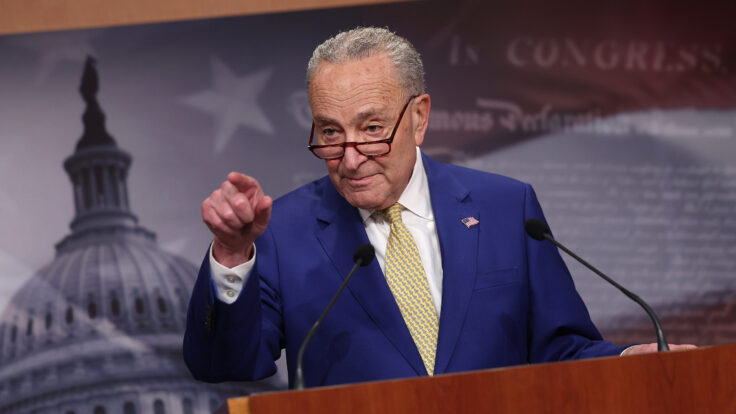
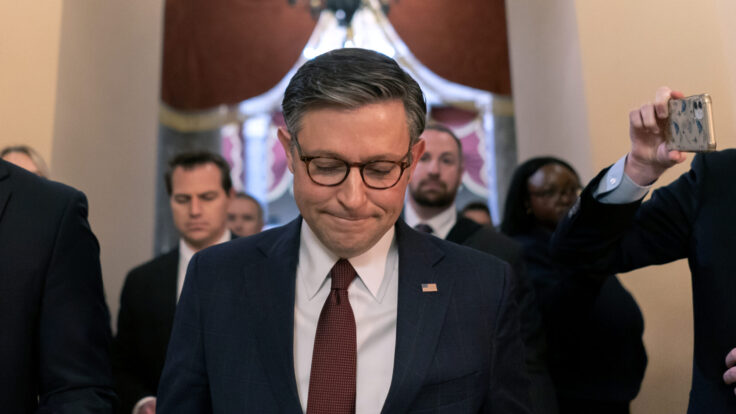
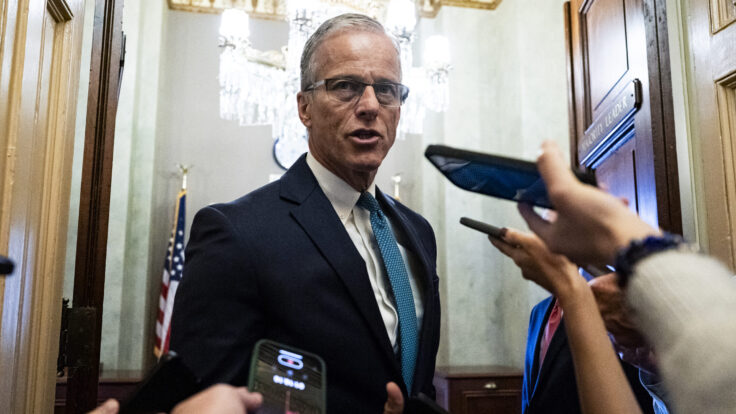
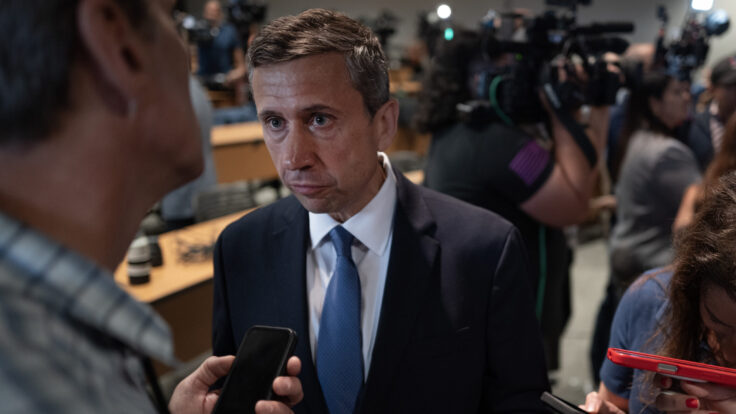
For those who didn’t stay up watching C-SPAN, the officially titled “One Big Beautiful Bill Act” passed the House early this morning, marking yet another extraordinary skin-of-his-teeth performance by Speaker Mike Johnson. In pushing the “megabill” forward, Republican leaders met Johnson’s self-imposed deadline of Memorial Day, and once again overcame their tiny margin. In the end, the bill passed 215–214, following the death of Democratic member Gerry Connolly. While Johnson had enormous help from Trump in wrangling his conference, a win is a
win.
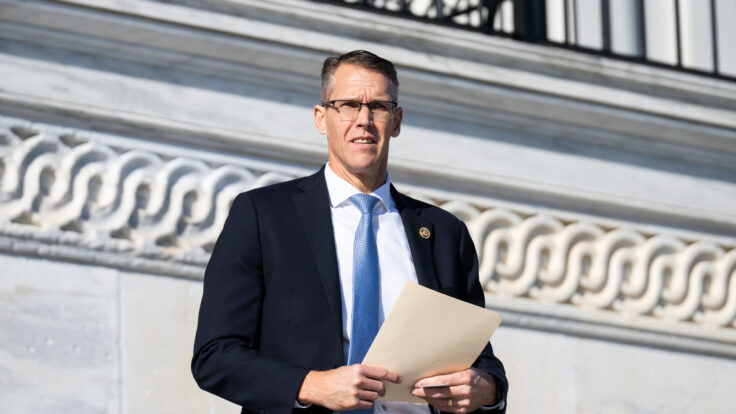
The bill now heads to the Senate, and while no one knows how the two chambers will reconcile their visions of Trump’s agenda, conventional wisdom holds that something will pass. Among the most likely casualties could be the higher SALT cap, for which blue-state Republicans like Rep. Mike Lawler went to the mattresses. As my partner Leigh Ann Caldwell noted yesterday, the SALT issue has no Republican advocates on the Senate side, where only Democrats represent the high-tax states of California, New Jersey, New York, Connecticut, and Massachusetts.
As usual, the Republican senators to watch are Susan Collins and Lisa Murkowski, along with North Carolina’s Thom Tillis, the most vulnerable of the bunch up for reelection next year. Kentucky Sen. Rand Paul, meanwhile, has been quite noisy lately on issues like free trade, and he’s currently “ a hard no” on the bill’s current iteration, which raises the debt ceiling by $4 trillion. It might also be worth keeping an eye on senators from the four Republican-held states with the highest proportion of Medicaid recipients: Arkansas ( John Boozman and Tom Cotton), Louisiana ( Bill Cassidy and John Kennedy), Kentucky ( Mitch McConnell, but not so much the libertarian Paul), and West Virginia ( Shelley Moore Capito and Jim Justice). Apart from McConnell, most of them will be reluctant to challenge party leaders publicly, but they’ll probably make themselves heard.
|
|
|
|
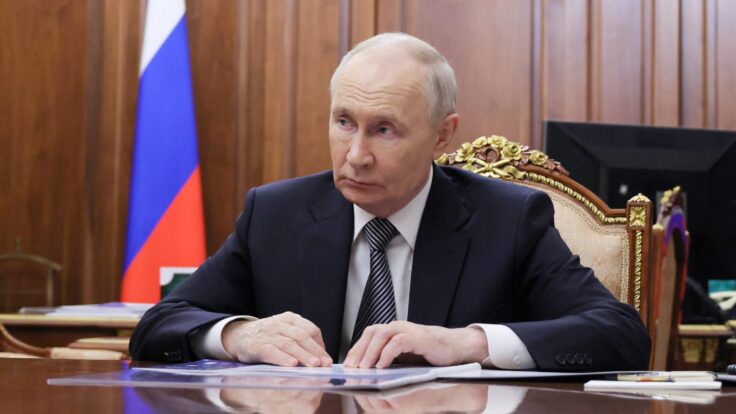
The Trump White House is belatedly recognizing what the foreign policy world has understood for years: Putin has no interest in ending the war in Ukraine until he gets exactly what he wants. And he’s prepared to out-suffer the West to get it.
|
|
|
On Monday, while flying back from Rome, Vice President J.D. Vance offered reporters his take on the war in Ukraine. “I think, honestly, that President Putin, he doesn’t quite know how to get out of the war,” Vance said aboard Air Force Two. “He’s got a million men under arms. He’s reengineered his entire economy. What used to be manufacturing facilities making products for people to use in their civilian lives are now making tank shells and artillery shells and drones. And so, this is a little bit of a guess—and I’m sure the president would agree—but I’m not sure that Vladimir Putin has a strategy himself for how to unwind the war.”
For all his theatrical disdain for the foreign policy blob, Vance was essentially repeating the warmed-over conventional wisdom that had made the rounds in D.C. last year—the notion that Putin couldn’t possibly sustain his current level of defense spending and that, any day now, the Russian wartime economy would come crashing down. We’re all still waiting, of course.
Kremlin propaganda pounced on Vance’s remarks. “That’s you, not us,” tweeted Margarita Simonyan, the editor-in-chief of RT and one of Putin’s favorite and most vicious propagandists. “A charmingly American bit of projection from Mr. Vance, who is often sensible otherwise.”
|
|
|
Disney has been bringing happiness to families and communities for over a century, and continues to be a powerful economic contributor.
Here’s how: With more than $30 billion in investments in U.S. parks, Disney is creating nearly ten thousand jobs.
Explore Disney’s Impact
|
|
|
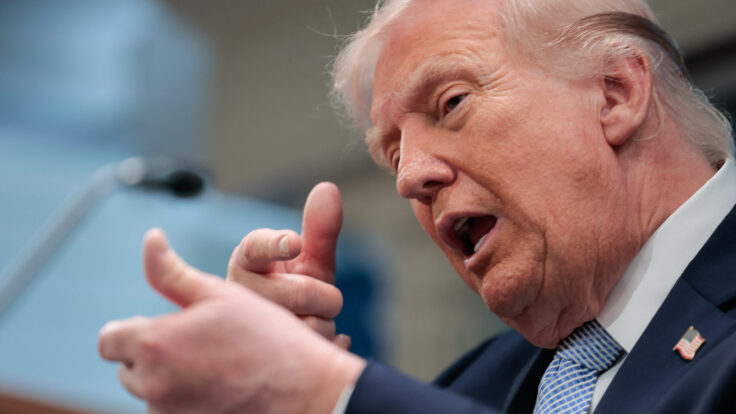
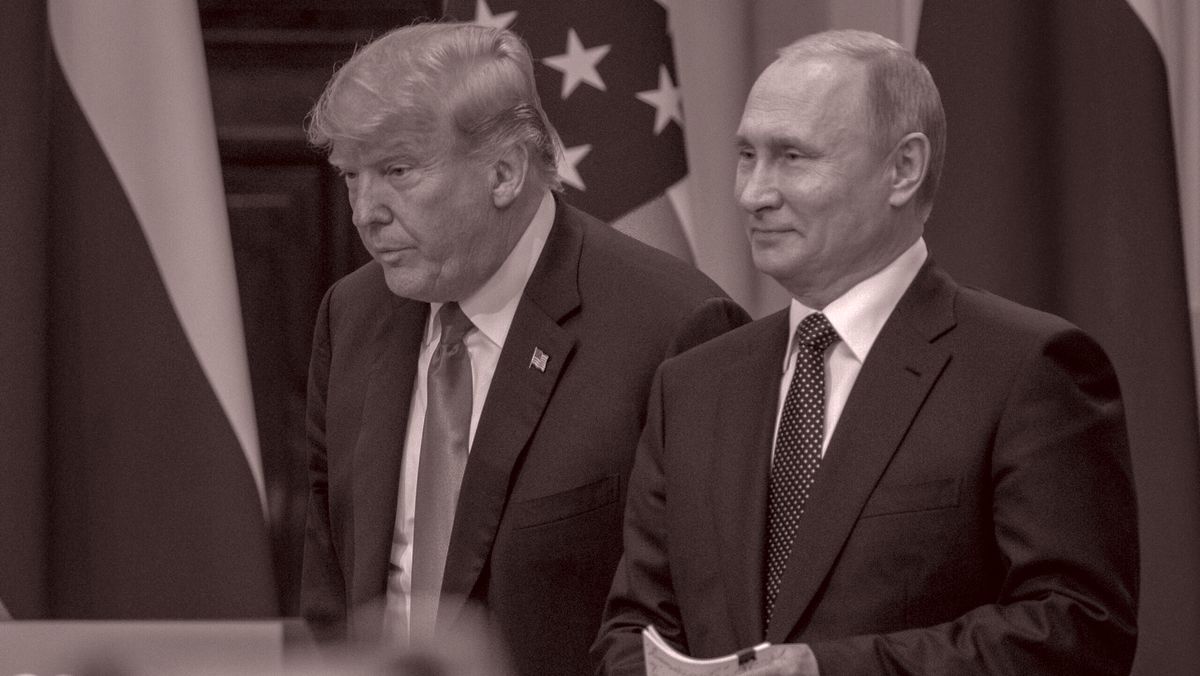
She was right. Putin knows his way out of the war: victory, at all costs. Sanctions, no sanctions, Putin wants Ukraine. And finally, it seems, even Vance’s boss is starting to get it. “I think Vladimir does not want peace,” Trump reportedly told his European counterparts on a call Monday after speaking to Putin for two hours—because, the president said, Putin believes that he is winning the war.
He has ample reason to think so. The Russian military is a few weeks into its summer offensive, and is starting to see gains in the Donbas. There have been reports that Russian troops have broken through the border in the Sumy region, which abuts Russia’s Kursk. Far from making him eager to end the war, it is revealing what Putin has always been after: the whole entire thing. In recent days, Putin “ joked” about occupying Sumy, in addition to the four Ukrainian regions (Donetsk, Luhansk, Zaporizhzhia, Kherson) that he illegally annexed nearly three years ago. (Just in case anyone seriously thought Putin would stop with those four.) His legal advisor laid out an elaborate theory about why the dissolution of the Soviet Union was actually illegal, why the U.S.S.R. still actually exists, and how that would mean the war in Ukraine is actually, in his words, “an internal conflict.”
Ukraine, meanwhile, is exhausted and outmanned, and its main supporter, the United States, is walking away. A year ago, when Trump was still a candidate and promising to end the war in 24 hours, his advisors on the region, such as they were, tried to flesh out his concepts of a plan. There would be carrots, they said, and there would be sticks. The carrot for Russia would be normalized relations with the United States. The stick would be more sanctions and flooding Ukraine with weapons— like you wouldn’t believe.
And yet, even as Trump has apparently come to understand that Putin doesn’t want to make peace and is “ tapping” him along, none of the promised sticks have materialized. Trump pilot fish Senator Lindsey Graham now says he has 81 co-sponsors on a sanctions bill that would target the Russian energy sector, but so far, the proposed legislation is only that: proposed legislation. After excluding Russia (but not Ukraine) from his Liberation Day tariffs, Trump has indicated that he is not ready to apply more sanctions to Russia. Nor is his administration getting ready to send more weapons to Ukraine. It’s not even clear that the current shipments will continue. The best-case scenario seems to be that Trump won’t bar Europe from buying American weapons for Kyiv.
|
White Socks and Comic Books
|
Putin has weaponized the carrot, too. The idea of normalizing relations between Washington and Moscow was supposed to be something that the American president dangled for a hungry Putin. Instead, Putin has turned the offer on its head, constantly raising the prospect of American businesses coming to work and profit in Russia—as if access to the small Russian market, policed by F.S.B. raiders, should be the reward for America, and not the other way around. And Trump, predictably, has taken the bait. As a Russian satirist once wrote, the Kremlin doesn’t need a stick—it can fuck you up with a carrot, too.
Trump and his supporters believe that his purported ability to strike deals is an asset to the United States on the world stage. But to much of the rest of the world, including Putin, that transactionalism—the materialism, the obsession with economic well-being—is America’s most fundamental weakness. Putin has always had us pegged as soft and cowardly, unwilling to suffer even the slightest discomfort for an important cause. Back in 2017, I interviewed the arch-conservative oligarch Konstantin Malofeev, who was under sanctions for funding Russia’s astroturf separatists in Ukraine. He distilled this view with bone-chilling clarity. In the coming eschatological showdown between Russia and the U.S., he said, Russia would win because of its higher capacity for suffering. “American boys go to war in white socks and with comic books,” he told me at the time, “while Russian boys go to war to die.”
|
|
|
To many around the world, and especially in Russia, Trump embodies the ultimate caricature of an American—someone who cares more about money than national glory, the collective good, or the world-historical. Indeed, Russians suspect that most Americans don’t even care about the things we say we care about, like human rights and democracy, especially when money is at stake. If we did, then why would we toss it all overboard just to ask our ally Saudi Arabia to make oil cheaper? Why, as people in Moscow have asked me, did we not put our money where our mouth was and put troops in Ukraine? The answer is perfectly clear to Russians: Americans care about democracy and human rights so long as doing so doesn’t raise our gas prices or result in our boys getting blood on their white socks.
Meanwhile, Trump’s eagerness to do business from the White House has been perceived not merely as tolerance for corruption, but also an affirmative announcement that he would like to be bought. Why else did the president’s Middle East trip result in new riches for the Trump, Kushner, and Witkoff families? Why is Eric Trump breaking ground on a Trump golf resort near Hanoi while Vietnam is trying to get out from under Trump’s tariffs? Why did the administration reach out to Qatar to ask for a luxury jet to be used as Air Force One? The same reason that, while Trump’s administration was negotiating a minerals deal with Ukraine, Putin offered Trump the opportunity to get in on Russia’s rare earths. Trump has pointed everyone to his Achilles’ heel, and it is no surprise that everyone is aiming for it.
|
After their Oval Office confrontation, President Zelensky pivoted his strategy to simply saying “yes” to Trump as often as possible. It was all that he could do. Trump said he wanted the negotiations to play out a little bit so he could see who was the real impediment to peace. As I wrote at the time, Zelensky’s idea was to buy enough time for Putin to show his true colors. Once Trump saw that Putin was a scorpion, the thinking went, he would… well, it wasn’t clear, exactly. But it would be good for Ukraine, according to Kyiv’s allies in D.C.
And now here we are. Zelensky said “yes” to everything, while Putin, in the words of one source, kept saying “yes in theory, but no in practice.” Trump now understands that Putin, not Zelensky, is the one uninterested in a peace deal. He has told people that he understands it’s Putin who wants to continue the war in Ukraine so that he can get “ the whole thing.”
Yet, somehow, Zelensky didn’t win. Putin did. After Monday’s call, Alexey Chesnakov, a Russian official who was involved in the Kafkaesque Minsk negotiations, noted on his Telegram channel that Trump had agreed to what Putin wanted: negotiations before a ceasefire. (That means more absurdity and stalling from the Russians.) No new sanctions for Russia, Chesnakov wrote. No new weapons for Ukraine. Russia is being offered special conditions for economic cooperation. “Putin wins this round,” Chesnakov said. “Zelensky’s plan obviously didn’t work even a little bit.”
|
That’s all from me, friends. Have a good Memorial Day weekend, and I’ll see you back here next week. Until then, good night. Tomorrow will be worse—especially since the Earth’s core might be leaking?!
Julia
|
|
|
|
Unique and privileged insight into the private conversations taking place inside boardrooms and corner offices up and down Wall Street, relayed by best-selling author, journalist, and former M&A senior banker William D. Cohan.
|
|
|
|
Finally, a media podcast about what’s actually happening in the media—not the oversanitized, legal-and-standards-approved version you read online. Join Dylan Byers, Puck’s veteran media reporter, as he sits down with TV personalities, moguls, pundits, and industry executives for raw, honest, sometimes salacious conversations about the business of media and its biggest egos. New episodes publish every Tuesday and Friday.
|
|
|
Need help? Review our FAQ page or contact us for assistance. For brand partnerships, email ads@puck.news.
You received this email because you signed up to receive emails from Puck, or as part of your Puck account associated with . To stop receiving this newsletter and/or manage all your email preferences,
click here.
|
|
Puck is published by Heat Media LLC. 107 Greenwich St, New York, NY 10006
|
|
|
|


_01JV4YY3YKK5JG7YZT23W7S98M.png "Disney")
_01JV4YY63TFMRNXWFFY3PBNV6R.png "Disney")
_01JV4Z37KEHNPJCDB06MZXJWTA.png "Disney")
_01JV4Z34W72BJER4GXC7PHH9RY.png "Disney")