{{ 'now' | timezone: 'America/New_York' | date: '%b %d, %Y' }} |
|
|
Hello, and welcome to The Best & The Brightest. I’m Julia Ioffe, reporting from
Washington, D.C., where locals are responding to Trump’s attempt to take over their city by protesting—and [checks notes] throwing sandwiches at federal agents. It’s something D.C. denizens have dubbed “assault with a deli weapon.” You’re welcome.
Tonight, we look ahead to tomorrow’s historic summit as
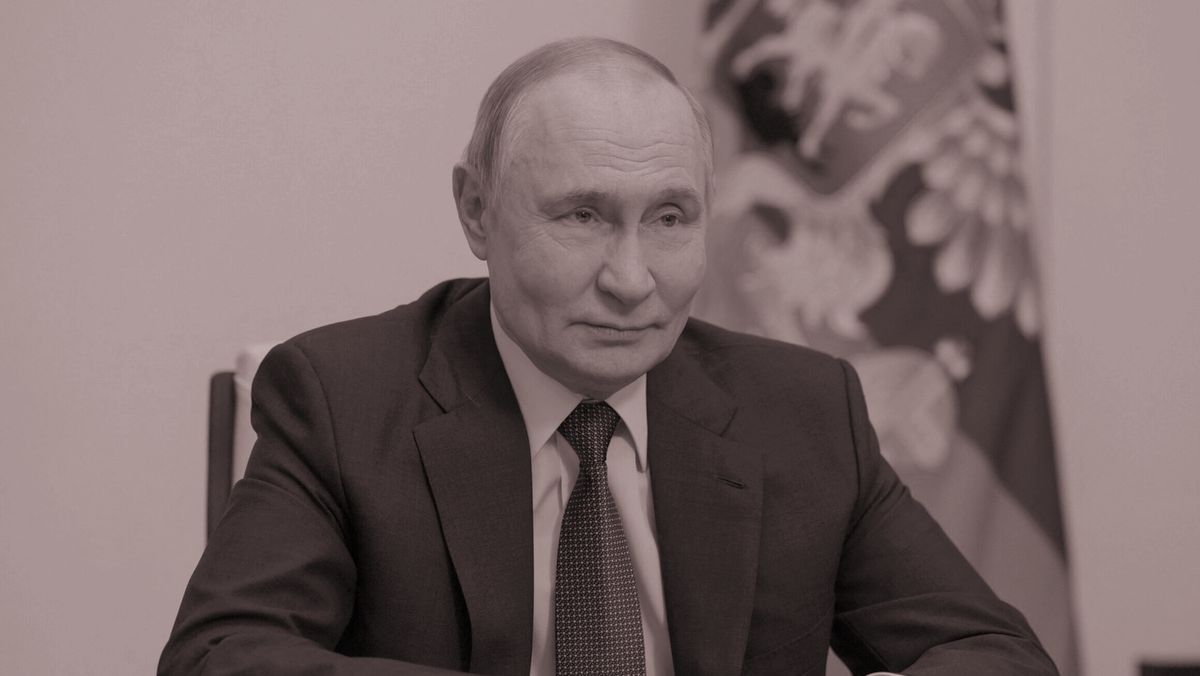
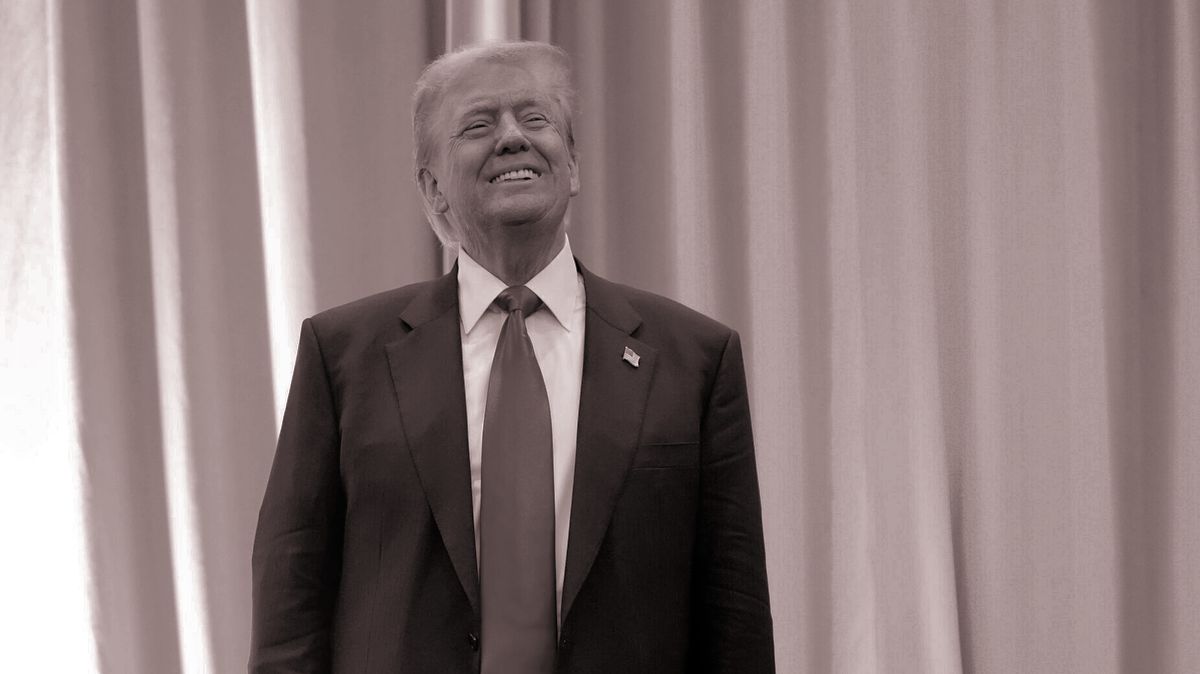
Vladimir Putin, who has an I.C.C. warrant for his arrest, sets foot on U.S. soil for a meeting with Donald Trump. It’s an incredible diplomatic coup to score a one-on-one with the head of the country that has led the West in enforcing Russia’s isolation—and a very good thing for Putin that America does not recognize the jurisdiction of the I.C.C. From what I’m hearing out of Moscow, Russians are really feeling themselves and see the meeting as both a victory and
an opportunity to ask for more. As one prominent Kremlin TV commentator boasted to me this week, “The very fact of the summit means the beginning of the end of the Western blockade of Russia.”
But first, here’s Abby with an update on the redistricting mess… |
|
|

| Abby Livingston
|
|
- Newsom goes nuclear: Now
that California Gov. Gavin Newsom has officially launched his statewide initiative for the legislature to temporarily take back congressional map-drawing powers, several California Republicans could be on the chopping block. But before that happens, Newsom has to actually pass the plan, and it’s an open question whether Californians will go along with it. Bare-knuckled gerrymandering is not popular in California, and the champion of the Fair Maps initiative,
former Gov. Arnold Schwarzenegger, is expected to make his antipathy known. (His spokesman previously told me gerrymandering is “evil.”)
Statewide polling shows that California’s independent redistricting commission is popular with a majority of Democrats, and especially with independents. But California Republicans aren’t unconcerned that those numbers could flip once Gavin’s campaign gets underway. I was stunned to learn last week that California Republican Rep.
Kevin Kiley had given an interview to a local ABC Dallas affiliate to decry redistricting in Texas—the ostensible trigger for Newsom’s counterstrike. Outside of politicians running for president, I can’t recall a time when a House member did an interview with a local TV station in another state. We are in strange times.
|
|
|
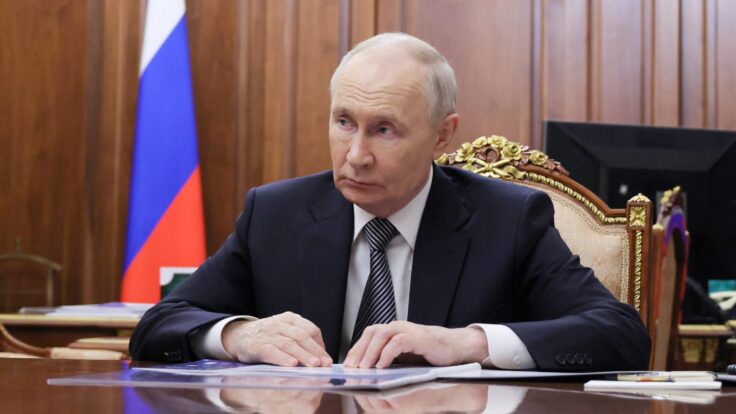
Putin is swaggering into his meeting with Trump, brimming with arrogance as state propaganda
hammers the idea that Russia is on the cusp of victory. As one person close to Putin told me, however, there’s a case for cautious optimism that the summit in Alaska could be the beginning of the war’s end. |
|
|
Tomorrow morning, Donald Trump and Vladimir Putin will meet face-to-face in
Anchorage to discuss the end of the war in Ukraine. And while the White House is trying to tamp down expectations, and Trump is promising unspecified “severe consequences” should the talks fail, the mood in Moscow is downright
giddy. Russian state television and loyal Telegram channels are celebrating a breakthrough by Russian troops in the Donetsk region. Granted, this
entailed just a small group of soldiers breaching a porous part of the Ukrainian line—not enough of them to actually hold territory—but none of that nuance is, well, breaking through.
It’s not supposed to. “The Russian soldier,” according to the official line, is creating facts on the ground that, sooner or later, will force Ukrainian
President Volodymyr Zelensky to accept the inevitable: a Russian victory. Thus, Russia has no need for a negotiated solution. The Alaska thing is just for kicks.
Putin is swaggering into this summit from a position not of strength, but of arrogance. Consider the background theatrics he’s ginned up: Western observers have detected movement at a nuclear test site in Novaya Zemlya, in the Arctic, indicating that Russia might be
preparing to test a new nuclear-armed, nuclear-powered missile, flexing that most overworked of Moscow muscles. Putin also gave a little parting fuck-you to America during Trump envoy Steve Witkoff’s visit to Moscow last week: an Order of Lenin medal for Witkoff to bring to the high-ranking C.I.A. officer whose mentally ill son was killed fighting for the Russian army in Ukraine.
Behind Putin at home, a Greek chorus of propaganda is reinforcing the feeling
that victory is so close that a negotiated settlement would actually be bad for Russia. Alexander Dugin, the ultranationalist philosopher, repeated the claim that all of Ukraine is Russia by another name, and wrote on his Telegram channel that “there aren’t the conditions in place for a truce,
a ceasefire, and much less for peace.” He went on: “We’ve just now started getting it right. We have enough drones, people, experience, and decisiveness. And now, once again, they’re trying to disrupt it.”
Others, like the war blogger and propagandist Alexander Kots, are wondering why Russia should agree to a potential air ceasefire when they are the stronger side. “Sure,” he wrote, “Kyiv is creating problems for us with their drones”—which have conducted strikes on oil
refineries and caused massive disruptions in air travel. “But the damage that we are inflicting on the Ukrainian military infrastructure with [Shahed drones], cruise missiles, and [glide bombs] is many times greater. And they are suggesting that we voluntarily stop using our ace.”
It’s all aimed at creating the impression that Putin’s trip to Alaska is a favor to the American president. Russian propagandists are teasing Trump, referring to him wryly as a “dealmaker from the ’90s” and noting his near-desperate thirst for some kind of deal. If Trump really wants it so badly, they say, let’s talk about what Washington will have to do to earn back Moscow’s trust, such as unfreezing the Russian assets now stuck in the U.S.
When I asked Igor Korotchenko, one of the Kremlin’s favorite military analysts and the editor-in-chief of Russia’s National Defense
magazine, what the U.S. would get out of doing this, he responded that maybe Russia would spend some of the funds in the U.S. and boost the U.S. economy. (Thanks?) He also told me that American companies would be allowed to operate in Russia in exchange for this concession. “We’re not waiting for Coca-Cola and McDonald’s; their spot is taken,” Korotchenko offered magnanimously. “But energy companies and companies like Boeing can find their niches and make a profit.” (Ask
Michael Calvey about the business climate in Moscow these days...)
“Ukraine is a ball and chain on the leg of the U.S. that is dragging down the 47th president,” Korotchenko continued. “Trump will unchain this ball and go forward with a light heart.” |
Notwithstanding all this, there’s cautious optimism in some quarters of Moscow that Anchorage can mark the
beginning of a real peace process. “I don’t expect that there will be peace the next day—that obviously won’t happen—but I do think that if they can agree to some coordinated actions to bring peace closer, then that’s good,” a source close to the Kremlin told me this week. “It’s what you call ‘a path to peace.’ And I think there’s a chance.”
I took this prognosis with a grain of salt. The source, who has been close to Putin for decades but comes from a more liberal, Western-friendly wing
of the Russian ruling elite, has spent quite a bit of time here in D.C., working to soften the ground for some kind of agreement. In the 15 years I’ve known this person, their eminently reasonable predictions haven’t always panned out. But I always trust their pragmatic insight into what Putin and his inner circle are thinking. It is always, at the very least, interesting.
For all their maximalist bravado, both Russia and Ukraine are, in this source’s estimation, ready and willing to end
the war—provided that their two leaders get some guarantees, for their own political sakes as well as for their countries’. Zelensky, said the source, can’t possibly concede Ukrainian territory and allow the world to recognize it as Russian after his people have suffered and sacrificed so much to defend the land. “It would be easier to hang himself,” this person said. But Ukrainians are exhausted, and even unlimited Western military aid wouldn’t solve Ukraine’s manpower issue, or alter the terrible military strategy that even the most sympathetic observers have acknowledged for years.
One off-ramp for Kyiv might be to agree that the territory has been lost de facto but not de jure to Russia, the
Moscow source suggested. Ukraine’s leaders could tell the population that these are their rightful territories, that they don’t recognize or legitimize Russia’s occupation of them, but that they simply don’t control them right now and that, one day, they’ll get them back through a diplomatic rather than military route. Russia can reciprocate with its own version, the source explained: Withdraw from territory they hold in the Kharkiv and Sumy regions—“Putin never said that these are Russian,”
this person reminded me—and focus on the territory they have captured. As for the parts of the Donetsk, Kherson, and Zaporizhzhia regions that Russia still hasn’t seized, Putin can say, Yes, these are our territories, as recognized by the Russian constitution—per the sham referenda held in the four eastern regions of Ukraine in September 2022—and we’ll get them back one day, but not militarily. (Luhansk is fully controlled by Russia.)
If Putin is able to get
some kind of satisfactory guarantees that Ukraine won’t join NATO and that the rights of Russian speakers in Eastern Ukraine will be respected, the source posited, then he just might be willing to accept such an agreement. This would have to be balanced with security guarantees for Ukraine, which would have to be enough for Ukraine but not too much for Putin. “Ukrainians are in a tough position and I feel for them, I really do,” the source said. “But things won’t get better for Ukraine, they’ll
only get worse. If they don’t agree to this, in another year, they’ll have the same discussion, but more people will have died and more territory will have been lost. And if Putin is told that Ukraine will be in NATO, then he’ll fight until Ukraine collapses as a state and vanishes from the Earth.” |
“You Have to
Speak to Him”
|
The Moscow source pointed to a few reasons they’re optimistic that Anchorage could mark the beginning of the
end of this war. The first pertained to Putin’s last meeting with Witkoff. “The main thing [Witkoff] wanted to hear from Putin is that if he hears answers to these main things”—like Ukraine’s NATO bid—“he’s flexible on the rest. And he gave this signal. It was a good meeting.” Putin called his international
allies in China, India, and South Africa to brief them on those talks afterward, the source pointed out, contending Putin had “sent everyone a strong signal that he’s ready for compromise.”
Buttressing this source’s optimism was the fact that the White House seems to be actively ratcheting down expectations. On Monday, Trump called the summit “really a feel-out meeting, a little bit.” Today, NBC News reported that Trump reassured Zelensky and European allies that he won’t do any land swapping with Putin in Alaska. “This is good because before [the administration] had this cowboy approach, saying, We’ll end it
in 24 hours,” the source said. “Pushing on Putin is pointless. You have to speak to him. What’s good is that the Americans have finally understood that this is all complex, and that it will all take time.”
Between the militant propaganda and attempting to sound willing to compromise, it’s clear that Putin, as always, is trying to keep his options open until the last possible minute. It’s also clear that Trump, for his part, has realized that Putin isn’t his buddy—whether or not
something “happened” to Putin during the Biden interregnum, as Trump has reportedly asked people, or whether he was always this way, as the experts could have told him.
Personally, I don’t think the summit in Anchorage will result in the kind of deal that Trump has been promising. The absolute best-case
scenario is the one the Kremlin-proximate source outlined: a modest beginning of a very long and even more tenuous peace process. (In the near term, though, we will of course get some insane soundbites from the joint Trump-Putin presser after their meeting.) And even then, I imagine a settlement will look the way military analyst Michael Kofman once described it to me: something that resembles the late 20th century status quo between Israel and the surrounding Arab states,
involving a hot war every few years, followed by a bitterly cold peace. Rinse and repeat, for decades and decades to come. |
That’s all for me, friends. I’ll see you back here next week. Until then, catch me on your TVs digesting the
summit and, as always, good night. Tomorrow will be worse.
Julia |
|
|
Unique and privileged insight into the private conversations taking place inside boardrooms and corner offices up and down Wall
Street, relayed by best-selling author, journalist, and former M&A senior banker William D. Cohan. |
|
|
Join Puck’s chief political columnist, John Heilemann, as he roams the corridors of power and influence in America on this
twice-weekly interview show, taking you beyond the headlines with the people who shape our culture: icons and up-and-comers, incumbents and insurgents, moguls and machers in the overlapping worlds of politics, entertainment, tech, business, sports, media, and beyond. The conversations are rich and revealing, unrehearsed and unexpected… and reliably impolitic. A Puck-Audacy joint, new episodes drop every Wednesday and Friday. |
|
|
Need help? Review our FAQ page or contact us for assistance. For brand partnerships, email ads@puck.news. You received this email because you signed up to receive emails from Puck, or as part of your Puck account associated with {{customer.email}}. To stop receiving this newsletter and/or manage all your email preferences,
click here. |
Puck is published by Heat Media LLC. 107 Greenwich St, New York, NY 10006 |
|
|
|