{{ 'now' | timezone: 'America/New_York' | date: '%b %d, %Y' }} |
|
|
Welcome back to Wall Power’s Inner Circle. I’m Marion
Maneker.
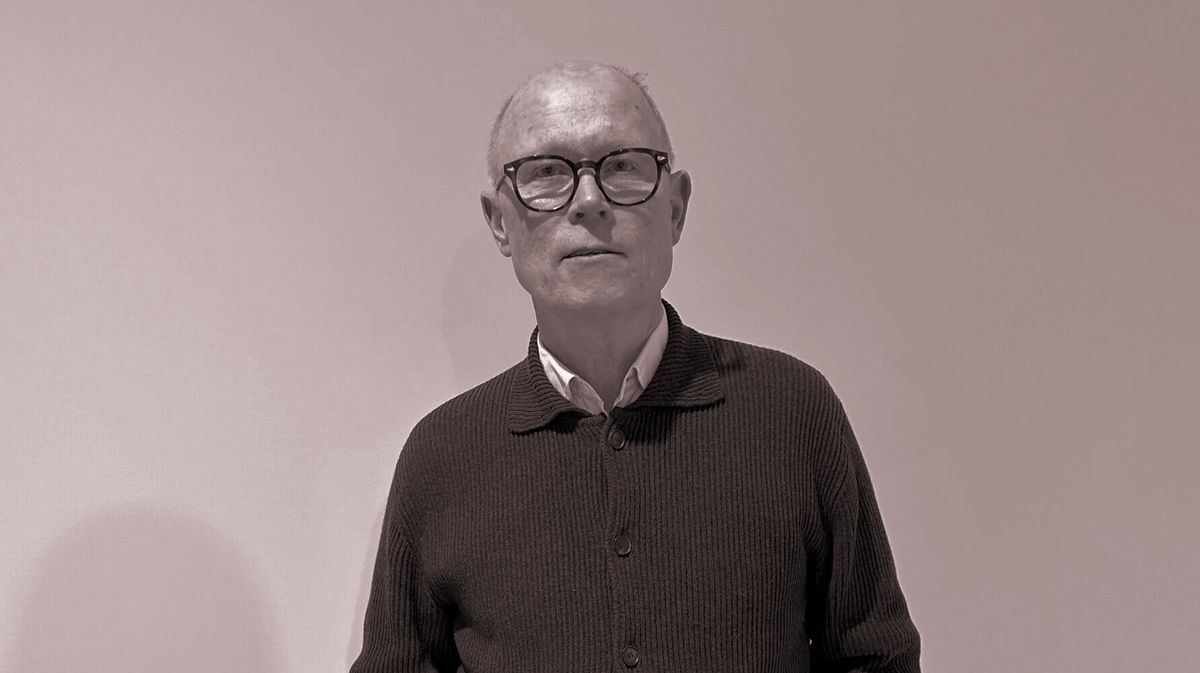
Tonight, we’re talking to Anders Kold. He’s the curator at Denmark’s Louisiana Museum of Modern Art, which has just opened a show of 50 Jean-Michel Basquiat works on paper, all focused on heads that the artist drew and mostly kept for himself. The show is called Headstrong, and it’s been getting a lot of attention on Instagram and in the
press. There’s also news of appointments at the Hepworth Wakefield gallery in Yorkshire, and David Zwirner gallery teaming up with artist Louis Fratino. Plus, I have more on the art-world phishing scams that are going around like the flu.
Also mentioned in this issue: Henri
Matisse, Laura Smith, Olivia Colling, Alfred Barr, Pablo Picasso, William Kentridge, Philip Guston, George Condo, Richard Prince, Robert Longo, Arthur
Jafa, Fondazione Prada, and many more…
Let’s jump right in… |
- David Zwirner adds Louis Fratino to his roster: David Zwirner gallery announced today that it will have a new work by Louis Fratino at its Frieze Los Angeles booth, and will hold a solo show of the artist’s work in London this fall. (Fratino will continue to be represented by Sikkema Malloy Jenkins in New York and Galerie Neu in Berlin.) The artist is also the subject of an
exhibition at the Baltimore Museum of Art: Fratino and Matisse: To See This Light Again, opening next month. Building on the B.M.A.’s extraordinary Cone Collection, with additional borrowed works and new paintings by Fratino, the show contrasts Matisse’s female figuration with Fratino’s focus on male models, juxtaposing “figure
studies, interiors, still lifes, and self-portraits by both artists,” per the museum’s overview. Fratino’s auction market first blew up in 2022, when 21 works sold for a total of almost $2.2 million; the following year, 42 works sold at auction for a total of $3.14 million. There was a dip in sales in 2024, but Fratino’s market recovered last year, with another 22 works sold at auction for a total of $1.7 million.
|
|
|
A MESSAGE FROM OUR SPONSOR |
Created for aviator Alberto Santos-Dumont to tell the time mid-flight, this is the first modern watch
specifically designed to be worn on the wrist. Bold creativity soars with signature visible screws, rounded angles, and innovative new models. Shop Santos de Cartier. |
|
|
-
The Hepworth Wakefield gallery appoints co-directors: The Yorkshire art gallery has announced the appointment of Laura Smith and Olivia Colling as co-directors, with Smith as artistic director and Colling as executive director. Colling started at the Hepworth Wakefield a decade ago as communications director and went on to become deputy director, then interim director and C.E.O. Smith joined the gallery in 2022 as director of collections and
exhibitions.
- Phishing trips: A number of you responded to my question about phishing attempts with stories of your own. The most troubling came from an art dealer whose systems had been hacked to resend an invoice to a client with new payment instructions. Luckily, the counterparty’s bank flagged it for verification. The dealer described the experience as “very invasive,” and said it “feels horrible.” I’m telling you this because I’ve heard from
journalists, lawyers, and dealers alike that someone has been impersonating them, which suggests art-related businesses are being targeted. If you have a story of someone impersonating you or your gallery, or sending fraudulent invoices, please let me know. Forewarned is forearmed.
|
Now we’re ready for the main event… |
|
|
Forty kilometers north of Copenhagen lies the unlikely host to some of the most
powerful exhibitions of contemporary American artists. Kold, the curator of the Louisiana Museum, opens up about his pioneering new Basquiat show, the beauty of works on paper, and the “sauna” effect of a rural museum. |
|
|
Much like it fell to the Rolling Stones to teach (white) America about the blues, and to the Japanese to
revive New England prep, distinctly American artists sometimes benefit from a fresh perspective from afar. A half-hour’s drive from Copenhagen, the Louisiana Museum of Modern Art has been showing contemporary artists—many of them American—with an ingenuity and point of view that make other, larger institutions seem flat-footed. It mounted a major Richard Prince exhibition in 2022 and showed a retrospective of Robert Longo’s large drawings last year. Now, the
museum has opened a new Basquiat exhibit, featuring 50 works on paper from the early 1980s that the artist never sold.
To Anders Kold, the Louisiana’s curator and head of acquisitions, the works offer “a glimpse of an artist whose research involved being the first Black man on an entirely white stage in 1980s New York.” They also help settle the question of whether Basquiat was a great draftsman as well as a great artist. As always, this conversation has
been edited slightly for clarity and length. |
Marion Maneker: Can you start by explaining what the
Louisiana is and why it’s so distinctive?
Anders Kold: This institution was founded in 1958 by a private businessman. It’s not like hopping in and out of the Whitney. You are mentally accommodating to a small spree in the country. This is what the founder, Mr. [Knud] Jensen, termed the “sauna principle”: You come for something hot and get something cold—or vice versa. The building, magnificently placed
on the Baltic coast, has developed organically. From a curatorial point of view, it has been able to adapt to the needs and prerequisites of contemporary art. It’s a very beautiful place, and that puts us in a particular position with a particular mandate: not only to put pretty things inside, but also to provide content to as many people as possible. We passed 700,000 guests this year, which is quite a lot. And while the interest and pressure on us have been expanding noticeably, we’re not
expanding physically. We do not wish to grow [in that way]. It is a big institution, but it doesn’t come across as vast or monumental. |
|
|
A MESSAGE FROM OUR SPONSOR |
|
|
What makes the museum’s focus on contemporary art
unique?
It has a “MoMA feel,” only it isn’t placed in a capital of the Western world; it’s in a snug little place off the coast. You’ll meet wonderful displays of work, basically from the postwar era—a continuous stream of this and that, meaning both collections and temporary exhibitions. We are famous for our programming. We spend a lot of time on it with our audience in mind, trying to construe something that feels relevant to the “now” while
making connections to the past.
We are a real “MoMA” in the Alfred Barr sense: We show photography, contemporary video, and film, but we also have hefty architectural content-making. For decades, we’ve been doing shows on contemporary architecture. Cultural history has always been part of this place’s visual repertoire, though we don’t do much in the field of archaeological digs anymore. The museum’s visceral culture is wide and distinguished by an appetite for many
things.
More than most museums, you highlight individual artists, creating a space for them that they don’t necessarily get elsewhere. And a lot of these artists of the past 50 years are American.
There is a long tradition here of working with artists. It’s what brings the most joy and pride to our work. We have established many great relationships over the years. While they aren’t only American, this house has a strong tie with
America. When the museum was founded, it became the first funnel from the outside world into this country, which had still been in the wake of war and very focused on national agendas. Basically, the idea of international art came with Louisiana, and this is what we feel is our lasting mark on the museum business—that our visitors come here to see in-depth exhibitions of artists relevant to the day.
Is there a philosophy driving this, or is this just your interpretation of the
best way to present contemporary art?
The sense of an artist engaging with the modern world has always been a driving force. It could be a way to connect to Picasso, but it could also be William Kentridge engaging with the darker sides of a colonial past. We have produced nearly 1,500 films on
living artists—architects, writers, mainly visual artists. This is an immediate extension of our interests. Our channel uses a simple, journalistic format: “Tell us about your world, what you do, what you think.” We get into people’s heads—and their studios. And we do this with the same motivation as our exhibitions. We assume there’s an interested audience because we’re interested. Our exhibitions are not “books hung on the wall.” They are always physically specific to the galleries. You have
to calibrate the institution to the artist—in doing so, you achieve the best possible exhibitions. |
I was reading your introduction to the Basquiat
Headstrong show, and you mentioned the museum’s emphasis on works on paper. Is that happenstance or a strategy—to use a more “immediate” medium?
I think one comes to understand that there cannot be any leftovers from 19th century categories and supremacies of any one medium. The museum has always collected works on paper, but a 2006 show of Philip Guston’s works really shaped a mold in
our heads. It was pretty clear you could understand Guston through that presentation. There is also the loveliness of a lighter approach in terms of shipping, insurance, and money.
You are a museum outside a major capital in a relatively small country, and you’re using strategies that allow you to punch above your weight to get at these artists without necessarily dragging 75 of their most important paintings from all over the world to one
place.
You can use the Basquiat show as an example. It’s immediately clear what it would take to do a 75-piece painting show by Basquiat, and I’m not even sure that would be our first interest. To me, Basquiat is a great painter, but he is drawing when he is painting. By narrowing it down to 50 works from 1981 through 1984 that show a motif that clearly engaged and haunted him, there is a good case for a first show of his work here. Over the last
eight years, we have shown George Condo, Richard Prince, and Robert Longo—all on paper. This initiates a new encounter for audiences. And it allows for a reevaluation of the 1980s that is not done [with] the turpentine-induced hype of the early ’90s. We run into artists who emerged at a time when the role of the male artist was being questioned, revised, and ironized. |
|
|
Basquiat is a towering figure on the market, but recent shows, like those at the Beyeler or
Fondation Louis Vuitton, haven’t come from conventional museums with staff curators like yours. Is that because museums famously missed out on him?
There were major shows in the years following his death. There were big shows at the Whitney and the Brooklyn Museum. But you’re right—there was institutional unease about Basquiat. Back then, there was a conservative wait-and-see approach. There were many factors involved in asking this young Black man’s work to enter the glorified
reservoirs of Western art. We take pride in narrowing the concept. If you show 50 major drawings with the same motif, you can figure out whether he is a good artist or not.
That’s an excellent point. There’s a vast gap between his enormous popularity and the number of museum shows. Just being able to talk about the work—Let’s look at the heads drawn on paper and see what the guy can do—is
key.
A curator can’t help but wonder: Why were these not on the market? Why did he not show them? They pop up in all kinds of other ways—in photos, in Xeroxes, in paintings, there are always symbols. So we focused on the drawings themselves. I think you should be able to leave the show and figure out whether he’s a great draftsman and a great artist. When you really start looking, they aren’t portraits, cartoons, or skeletons—they are hybrids,
often several things at once. Some are cartoonish, others are frenetic.
Can we talk about that range of style? You look at these drawings and there are four or five distinct signature styles from the same artist, a bit like Picasso. They feel like a sketchbook of someone trying out different things.
They are done with great physicality. You can look at them, you can read them. There’s a frenetic element about them. They can be
spare [or] be more elaborated, but they’re done at speed. They are not studies for something else. We can only guess why they never went onto the market and why he kept these to himself. As with most great art, Basquiat leaves an imprint of himself in what he does. I see them as an archive of spirits, visions, sights, and annotations, and of a sort of mental character. They aren’t traditional portraits. The great effect of them is that they are pendulating back and forth between a head-on
desperation and humor.
In his paintings, you find references to the diaspora and identity that we readily pick up today. You glimpse an artist whose research involved being the first Black man on an entirely white stage in 1980s New York. Other Black artists didn’t reach that same fame in that brief moment.
It sounds like you’re happy with the show you’ve put on.
I love to do it like this. It’s fitting for us. If I were a
curator at the Studio Museum in Harlem or MoMA, I would probably be obliged to think differently, but here we are. We are blessed to be the initiator of a Basquiat show in Scandinavia. I hope it leads to others being interested. We did one of the first big Arthur Jafa institutional shows, and now he is showing with Richard Prince at the Prada Foundation. This is how museums work, and we’re only happy to contribute. |
My thanks to Curtis Rowser, who does such a great job making these
longer conversations into something really impactful.
Let’s get together again on Friday,
M |
|
|
Puck founding partner Matt Belloni takes you inside the business of Hollywood, using exclusive reporting and insight
to explain the backstories on everything from Marvel movies to the streaming wars. |
|
|
The ultimate fashion industry bible, offering incisive reportage on all aspects of the business and its biggest
players. Anchored by preeminent fashion journalist Lauren Sherman, Line Sheet also features veteran reporter Rachel Strugatz, who delivers unparalleled intel on what’s happening in the beauty industry, and Sarah Shapiro, a longtime retail strategist who writes about e-commerce, brick-and-mortar, D.T.C., and more. |
|
|
Need help? Review our
FAQ page or contact us for assistance. For brand partnerships, email ads@puck.news.
You received this email because you signed up to receive emails from Puck, or as part of your Puck account associated with {{customer.email}}. To stop receiving this newsletter and/or manage all your email preferences, click here. |
Puck is published by Heat Media LLC. 107 Greenwich St., New York, NY 10006 |
|
|
|