{{ 'now' | timezone: 'America/New_York' | date: '%b %d, %Y' }} |
|
|
|
Welcome back to Wall Power’s Inner Circle, where we get up close and personal with the
art industry’s leaders. I’m Marion Maneker.
We have a packed issue tonight, starting with my exit interview with Christie’s impressionist and modern chairman Giovanna Bertazzoni, who is retiring this fall after nearly 30 years. Modern art is driving the current recovery in auction sales, and we discussed how that affects the market overall, her career, and what she plans to do next.
Up top, I have the very strong numbers that Christie’s released
for the first half of 2026. (Auction sales were up 71 percent.) Sotheby’s set a new record for a dinosaur skeleton at $50 million. And Felix, the Los Angeles art fair, is revamping for 2026. Finally, there’s been a number of interesting stories in the press. My endnote examines the unintentionally funny story surrounding the cancellation of an exhibition of bongs at the Toledo Museum of Art, new details on how Dior designer Jonathan Anderson collaborates with artists, and the
latest moves in the long-simmering battle between Altice creditors and Sotheby’s owner Patrick Drahi.
Also mentioned in this newsletter: Ken Griffin, Guillaume Cerutti, Bonnie Brennan, Laurence des Cars, Laurent Le Bon, Jussi Pylkkänen, Adam Levine, Susie Silbert, Lynda Benglis, Amedeo
Modigliani, Liu Yiqian, Wang Wei, Rebecca Wei, and more. |
-
Sotheby’s sells T. rex “Gus” for $50 million: The dinosaur market continued to rise with Sotheby’s sale of the 38-foot-tall “Gus” for $50 million yesterday. According to the auction house, there were seven bidders pursuing the fossilized specimen for 10 minutes. The sale exceeds the previous record, set at nearly $45 million two years ago when Ken Griffin bought “Apex,” a stegosaurus fossil. Griffin subsequently loaned Apex to the American Museum of Natural
History in New York.
- Christie’s $4.5 billion first half: Christie’s released strong H1 numbers today, announcing $4.5 billion in sales. That breaks down to $1 billion in private sales and $3.5 billion in auction sales, which rose 71 percent over the previous year. The overall sell-through rate was 91 percent. And Christie’s says the hammer ratio for the first half of the year was a quite dynamic 1.24. (Last year that number was 1.12.) Lots estimated
between $20,000 and $100,000 had an even more impressive hammer ratio of 1.48, up 21 percent from the previous year.
Christie’s offered a breakdown of the $3.526 billion in auction sales: The 20th/21st Century division accounted for $2.3 billion, up 79 percent; luxury, including cars, saw sales of $539 million, up 15 percent; Asian and world art reached $249 million, up 60 percent; Classics totaled $241 million, up 168 percent; and Old Masters reached $183 million, an increase of 232
percent. - Felix Art Fair comes down from the tower: The independent Los Angeles art fair, Felix, announced yesterday that it would make a significant change to its 2026 edition. Felix takes place in February at the Roosevelt Hotel in Hollywood, with galleries arrayed in the cabanas surrounding the pool and, at least previously, in rooms at the top of the hotel’s tower. This year the tower rooms—accessible only by elevators that cause long lines and no
small amount of frustration among fairgoers—will be eliminated, and the fair will be held only in the two-story cabana rooms. The fair will also shift “the majority of rooms to single- or dual-artist presentations.”
- Inner Circle members have access to discounted Art of Influence tickets: We’ve set aside a limited number of preferred price tickets for Inner Circle members to this year’s edition of Puck and FLAG Art Foundation’s Art of Influence
conference. If you want a ticket, then you can get one here while they last.
Come see our lineup of speakers, including Christie’s C.E.O. Bonnie Brennan; Pace Gallery founder and chairman Arne Glimcher; Pace C.E.O. Marc Glimcher; Metropolitan Museum of Art trustee Jen
Rubio; and Siren Projects founder Sophia Cohen. FLAG founder Glenn Fuhrman and I will moderate. (More speakers will be announced in the coming weeks.)
|
Now, let’s talk to Giovanna… |
|
|
|
An insightful conversation with Christie’s retiring head of
impressionist and modern art on the importance of working in the trenches, how Asia changed the London art market, and why she wants to retire like a banker. |
|
|
|
As the auction business comes roaring back to life on a wave of interest in historical art,
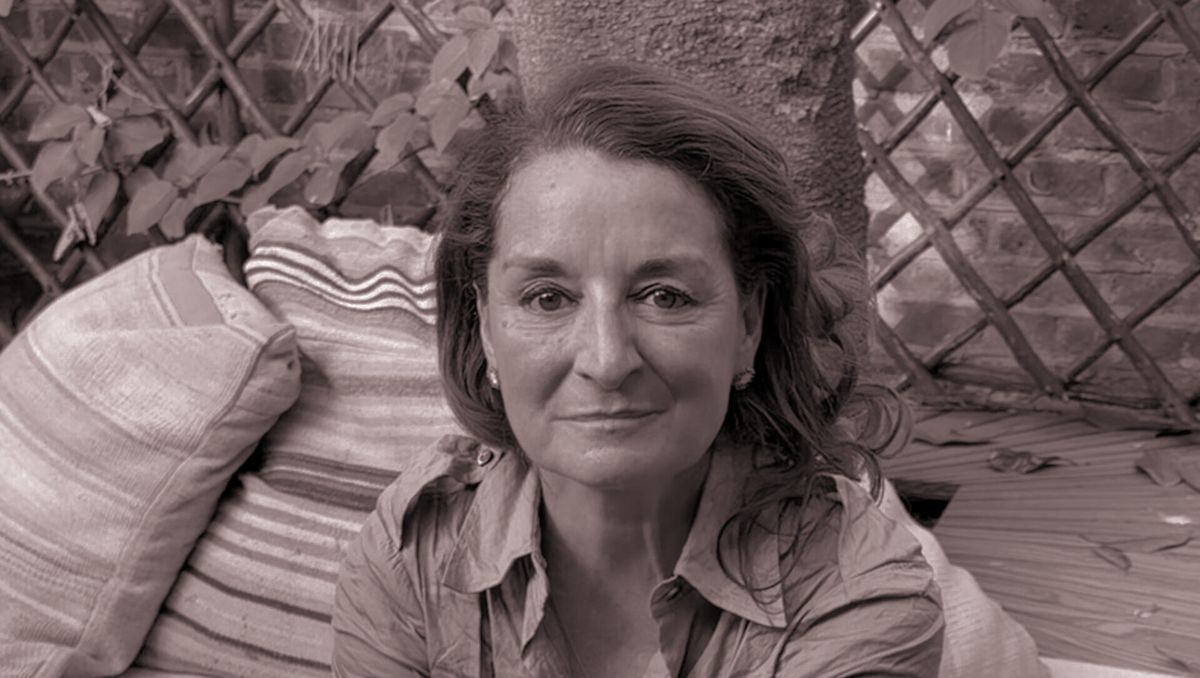
impressionist and modern masterpieces have renewed their role as drivers of the market’s health. At the same time, a generation of auction house leaders is beginning to move on. Giovanna Bertazzoni started at Christie’s in 1997, when impressionist and modern art still dominated the scene and London played a central role in global art—positions to which they’re now returning, thanks in part to people like her. Recently, the 58-year-old Bertazzoni announced that she will be
retiring this fall. I spoke to her about her career and plans for the future. As always, the following conversation has been edited for length and clarity. |
Marion Maneker: You’re leaving Christie’s after almost
30 years in London. How did you get started there?
Giovanna Bertazzoni: I grew up in northern Italy. My father was a biochemical engineer and academic who worked for the European Community, so we moved everywhere. It was a very Francophile family, which probably explains my deep friendship with Guillaume Cerutti. I studied classics in Italy—a lot of Latin, Greek, and art history, which became my major.
Then I went to France because I wanted to become a curator, and I did the program that the French use to select people who work in museums and libraries. My cohort included Laurence des Cars, Laurent Le Bon—all people who have now been heads of museums.
I wanted to continue, but I was in love with a man who was doing a Ph.D. in economics at Stanford, so I went to San Francisco. For two years I was at the Achenbach Foundation at the Fine Arts Museums there.
It was fascinating, fantastic. I loved it. And we’re still married, so it was a good thing that I went all that way. It was a good investment.
Where did you go next?
After my husband finished his Ph.D., we landed in London in 1997. I got a job with Jussi Pylkkänen, who needed researchers in the impressionist department. I was coming from a museum. I didn’t have a commercial bone in my body, so he said, “Okay, write
the catalogues.” What I found was an institution that suited me because it was serious, academic, with real integrity. Even with my Oh, I’m more than this, I’m a curator, I don’t want to be in the market attitude, it caught me, and I ended up staying for 30 years… My personal story is a story of many firsts: first woman head of department in London in 2008, first woman global head in 2011.
The impressionist and modern categories have been eclipsed a number of times by
contemporary art. But you’ve also had periods like 2011 to 2015, when the market rose on record prices for modern works. How did you navigate that?
We were worried for impressionism, because pure impressionism was dying a slow death. In 2013 Asia entered the scene, and that was the first time we saw Asians changing everything. A year prior, I went to Hong Kong and realized that we weren’t really in China and needed to be. Southeast Asia
was becoming huge; Taiwan and Hong Kong had been huge for 40 years because they were essentially British and American and now had amazing buying power with a traditional, classic taste. The Middle East was coming up too, but many Middle Eastern institutions were buying privately, so there weren’t the big public prices that catalyze consignments. We needed big auction moments for impressionist pictures to catalyze confidence from Asia, and we needed to be present there.
And the symbol of
everything becoming global is that we sold the Modigliani to the famous Shanghai couple, Liu Yiqian and Wang Wei… To me, that was a wow moment—an Italian artist, a pillar of Western art, going so far away to another culture. That opened the gate for even more hybridization and connection. We went from an isolated Impressionist and Modern department selling only to Europe to a complete circus of global interest. Then, in 2020, it became
formalized with the merger, and from that moment everything changed. |
“You
Can’t Be Half Pregnant”
|
The last few years were defined by a retreat in public buying from Asia and a shift toward
contemporary and young representational artists. Now it feels like we’re rediscovering a truly global market, with a strong European presence, too. What’s your read on the market over the past six years?
One fundamental difference between America and Europe is how property comes to market. America is an estate market, and our seasons depend on them. It’s strategic meetings, brainstorming about the legacy, how to represent it, our storytelling,
our respect for the family, and how we translate that.
It’s completely different in Europe. In Europe there’s no advantage to selling after you die. Europe is now yielding gems, housed in well-honed collections gathered in the 1950s, 1960s, and 1970s, where the paterfamilias and the materfamilias decide how and when to sell—not the estate. Or take the example of our “The Art of the Surreal” sales, which we hold once a year in London in March. That sale is built on uncompetitive business,
won on old-fashioned relationships, working with collectors from Belgium, France, Spain, Italy, Switzerland, Greece…
But the big collection still has to be thought about: how to sell it, divide it, understand it. And it’s not about the pitch or the strategy. It’s about the relationship. How many times you’ve seen them, how well you know them, how far under the skin you’ve gotten.
I’m part of the fabric of many families because I travel all the time in Europe. That’s what you build
as a legacy for Christie’s, and that’s the fundamental difference between the two paces, tempos, and geographies. And I can tell you that we’re going to see very cogent sales in Europe very soon because this is the moment. The baton is passing, the generational shift is happening now. It’s up to us to make sure we’re in the picture and that we’re real, because there will be a lot of relationships where we’re much more featured than the competition, and vice versa.
That raises my
next question. You’re leaving for personal and family reasons. Are you retaining a relationship with Christie’s? Advisory work? It doesn’t sound like you’re out by any means.
No. I’m doing something new. I think I’m among the first people to leave not to become an advisor, not to build a portfolio with a market-related agenda, and not to join the competition. I want to use the Anglo-Saxon model of Wall Street and the big law firms, where between
55 and 60, the partner retires—because this is like executive banking. We work 20 million hours a day. There’s no holiday. My whole life has been about working. I’ve done a great job. I loved it. I want to remember it as great and I want to go like the big banker. That’s why I use the word “retired”—I really mean it, and I don’t want any stigma attached to it.
I also don’t want to stay in the market, though I love it. You can’t be half pregnant. If you’ve been in every pitch, cataloguing
works, still going downstairs to do condition reports because someone’s not there, knowing every buyer and seller—the way you are in the trenches—you can’t be out and still think you can do the same job.
So my museum side is coming back. Three years ago, I joined the development board of the National Gallery in London… I’m now at a stage where I’ll find it more exciting to get $1 million for the National Gallery. For example, my former colleague Rebecca Wei and I helped a
major Asian collector—one of the defining collectors, who in my 2015–2017 years bought some of the best works from the best collections—to give a very good amount to the National Gallery for the 2024 reopening. That was wonderful, because it anchored the family to London and created a connection that’s properly global and real. They now have a foot in London in a major philanthropic way, and they feel at home when they come from Hong Kong.
I had to listen to that in myself. I want to
study. I want to do a Ph.D. I want to do everything I never had time to do, take the information in my head and put it in another context. Christie’s has been amazing about it.
Some collectors want me involved, and I’m happy to be, but I’m not an advisor or consultant. When these people want to sell, I’ll be back to hold their hands, and I’m delighted to, because it means they trust me. I’m on the will of some of them, so I have to. But I’ll do it as a civilian. |
Before I let you go, I have to draw your attention to the unintentionally hilarious
story in The New York Times about the last-minute cancellation of a show highlighting the art and artistry of bong making at the Toledo Museum of Art. (Yes, bongs, water pipes for smoking pot.) In typically Timesian fashion, the story tries to uncover a scandal despite director Adam Levine’s frank
interview with the reporter discussing the confusion around promoting an industry that is legal at the state level, including in Ohio, but illegal federally. “From a risk management perspective, we would have wanted to play it safe,” Levine told the Times. “There hasn’t been an exhibition done like this before.”
The comedy comes from the fact that one of Levine’s reasons for canceling the show, in which the museum had already invested $250,000, was that paperwork for loans and
insurance on the bongs was not complete. The disappointed curator of the show, Susie Silbert, told the newspaper “that some delay was caused by artists’ ignoring emails from Adam Levine, the museum’s director, thinking they were from someone posing as Adam Levine, the Maroon 5 frontman.”
Staying with the Times for a minute, Sunday’s story on Dior designer Jonathan Anderson using Lynda Benglis as an inspiration for his new collection contains the interesting tidbit that there was a contract and a fee paid to the artist, who was given the opportunity to sign off “on every single piece.”
Finally, the Financial Times has been tracking Sotheby’s owner Patrick Drahi’s battles with his creditors in Altice. Now the FT reports that Altice’s creditors are starting the lengthy legal process to call in loans. That’s a threat to get Drahi to stop shuffling assets that are used as collateral. Don’t expect much to happen anytime soon. The story is clearly a shot across Drahi’s bow.
That’s more than enough for today. Isn’t July supposed to be quiet? Thanks to
Curtis Rowser for all his help editing the Bertazzoni interview. On Friday, I’ll be back to tell you what else has happened this week.
M |
|
|
|
Puck founding partner Matt Belloni takes you inside the business of Hollywood, using exclusive reporting and insight
to explain the backstories on everything from Marvel movies to the streaming wars. |
|
|
|
The ultimate fashion industry bible, offering incisive reportage on all aspects of the business and its biggest
players. Anchored by preeminent fashion journalist Lauren Sherman, Line Sheet also features Rachel Strugatz, who delivers unparalleled intel on what’s happening in the beauty industry, as well as Malique Morris on retail, D.T.C., and more. |
|
|
|
Need help? Review our
FAQ page or contact us for assistance. For brand partnerships, email ads@puck.news.
You received this email because you signed up to receive emails from Puck, or as part of your Puck account associated with {{customer.email}}. To stop receiving this newsletter and/or manage all your email preferences, click here. |
Puck is published by Heat Media LLC. 107 Greenwich St., New York, NY 10006 |
|
|
|
|