 |
|
Hello, and welcome back to The Best & The Brightest, I’m Julia Ioffe and this is your daily dispatch from Washington, D.C., where everyone is in full freak-out mode over Joe Biden’s debate performance. The Supreme Court’s decision Monday to grant presidents absolute immunity for official actions has only poured jet fuel on the collective conflagration.
If you missed my colleague Peter Hamby’s exclusive scoop yesterday about a Democratic post-debate poll that shows Biden nosediving not just in swing states but in safe blue ones, check it out here. New polling out today seems to confirm what Peter reported.
I have some thoughts on this, too, but first, here’s Abby Livingston with the view from the Hill…
|
|
|
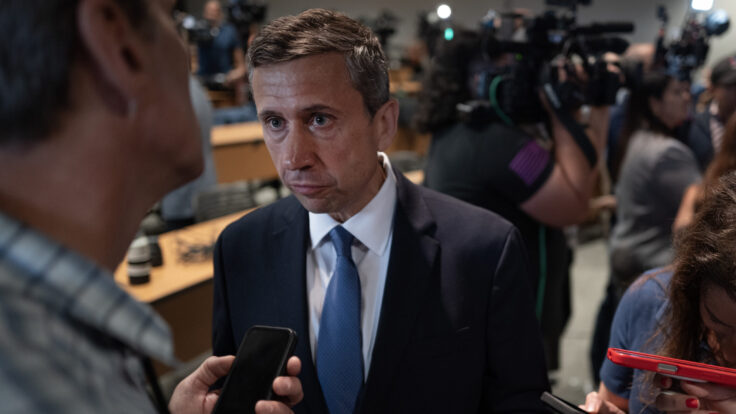
| On Tuesday, the 77-year-old, 15-term congressman Lloyd Doggett became the first member to articulate publicly what so many of his Democratic colleagues have been saying privately: It’s time for Joe Biden to “make the painful and difficult decision to withdraw” from the presidential race. That same afternoon, Speaker emerita Nancy Pelosi opened the door to the possibility, acknowledging that “it’s a legitimate question to say: Is this an episode, or a condition?” Rep. Jim Clyburn, another steadfast ally, said he would support Vice President Kamala Harris at the top of the ticket, were Biden to step aside—a provocative hypothetical that would have once bordered on heresy.
Then Rep. Jamie Raskin pushed the talking points further on Tuesday night, telling Chris Hayes on MSNBC that any change “has got to happen quickly … and it’s happening very quickly.” This morning, Rep. Don Davis of North Carolina said, “If he’s going to stay in, he needs to step up.” Rep. Debbie Dingell of Michigan echoed that sentiment this afternoon. “He’s got to show the American people that he can do this job,” she said. “He can’t be wrapped in bubble right now.” Just a few hours later, 76-year-old Rep. Raúl Grijalva of Arizona joined the chorus: “What he needs to do is shoulder the responsibility for keeping that seat—and part of that responsibility is to get out of this race.”
There is a palpable sense of both whiplash and grief on Capitol Hill. Several sources expressed their frustration, in particular, at how the Biden campaign attempted to spin the president’s nationally televised debacle as no big deal—a line that members felt they couldn’t possibly sell to voters back home. The agitation to replace Biden at the top of the ticket is especially acute in the House, in part, because Democrats believe the lower chamber is more winnable than the Senate, where the map heavily favors Republicans this year. The White House, too, was considered a coin toss, even before the debate. Now, with Biden leading the ticket, these people fear, down-ballot candidates could suffer as well—raising the odds of a Republican sweep.
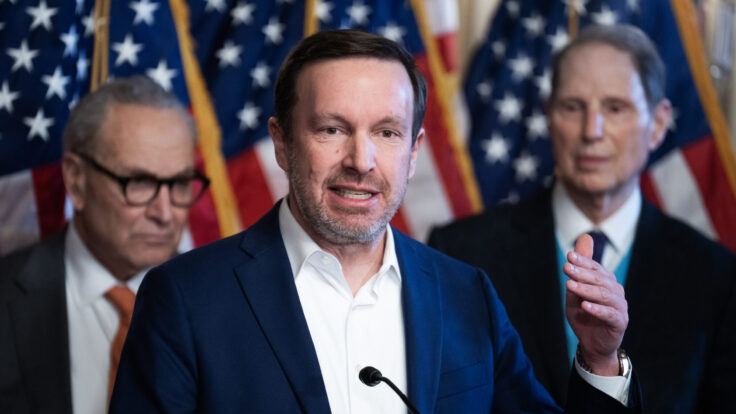
Many Democrats at the staffer and member levels also feel embarrassed for so vigorously defending him when Republicans mocked his age. “I have yet to talk to anyone on the Hill who thinks he should be on the ballot,” a plugged-in lobbyist told me on Tuesday. “No matter what they’re saying publicly.” That is not entirely true, but this emerging disunity is particularly remarkable, of course, given Biden’s reputation as the most plugged-in president on the Hill since L.B.J. And yet, it took Biden five days to reach out to the House Democratic leader, Hakeem Jeffries, and his closest ally in the upper chamber (and home-state senator), Chris Coons. Biden has always stayed in close touch with the Hill: Why would he neuter his expansive and deep relationships now?
In the absence of clear marching orders, rank-and-file members are on their own. They’re watching leadership closely, but keeping their powder dry as the party’s elder statesmen test an evolving, open-ended message on social media and cable news. Even the Democrats who are willing to entertain Biden’s defenses are repelled by...
Continue reading online… |
 |
| Biden: Lost in Translation |
| Overseas political observers are asking how the world’s greatest democracy ended up with the choice of Biden versus Trump: “We see the same videos—and debates.” |
|
|
|
| It’s been six days since Joe Biden stood like a deer in headlights on the debate stage in Atlanta, and the Democratic freak-out fever has yet to break. Sources inside the campaign tell me that people are still in the grips of panic, people on the Hill tell me the halls are quaking, and everyone is hoping a decision will come by the end of the week because time is rapidly running out. “I think doing nothing is untenable,” one senior Biden campaign source told me. Then again, said a source close to Democratic leadership, “I’m betting he stays. Everybody thinks Kamala sucks.”
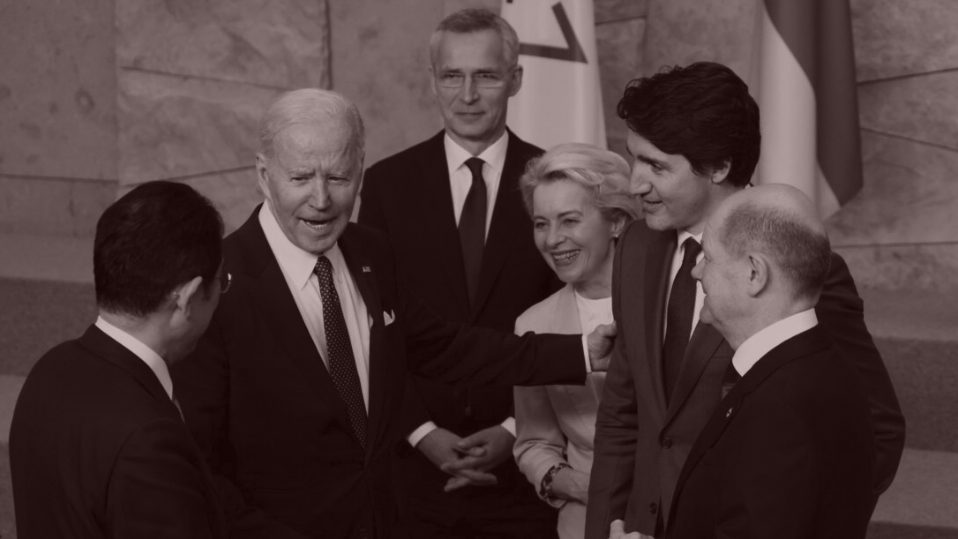
From where I sit in the foreign policy realm, the issue of Biden’s age and physical fitness is not new. For the last couple of years, I’ve heard worried chatter from foreign diplomats and functionaries who wondered whether Biden running for reelection was the best course of action, given the threat that Donald Trump posed to both the U.S. and the international world order. They and their governments have already gotten used to dealing not with Biden but with his advisors—more than is normal, anyway. Foreign governments have realized, for example, that the seat of power in international affairs is National Security Advisor Jake Sullivan, more so than the president. How will that dynamic have evolved in one year, they wonder, or in another four?
When I reached out to a very senior European government source and asked how all this looked from abroad, they said, “Not good.” When I pressed further, this source said, “I believe many Americans have the feeling that even while supporting Democrats, it is difficult to support Biden this time, as his physical condition is a huge challenge and concern already now. Not even talking about the future years.” As for the Europeans, the source said, “We see the same videos—and debates.”
I just spent nearly two weeks out of the country, in Georgia, which is facing its own existential election in October, when voters will decide if the country continues on its Western trajectory and joins the E.U., or drifts back into Moscow’s orbit and becomes like Belarus. While in Georgia, even before the debate, I kept getting some version of the question everyone is asking in Washington: Is it too late to get Biden out of the race? Why did he run for reelection anyway? And, in a country of 333 million, the only two people you guys could find to run for president are these two very old men? Good questions, all—especially the last one, which came from an independent Russian journalist who’s been on the front lines of fighting for democracy in Russia.
The answer—about the two-party system, primaries and deadlines for getting names on ballots, party loyalties, Trump’s cult of personality on the right and Democrats not wanting to challenge their party’s leader on the left—is not very satisfying, especially to anyone abroad who has sacrificed so much to fight for democracy in their country (even those who have barely tasted it). They don’t understand why we, having had it all, would then risk it all—for ourselves and for those like them in the world.
It’s something I’ve been thinking about since getting back, and this is what I keep coming back to: Biden has been a successful president, a very good president, even. But the job is a hard one, and it accelerates, amplifies the natural effects of time. It ages everyone, even young men like Barack Obama and Bill Clinton, who were noticeably grayer by the end of their eight years, battered by the demands of the office. It has aged Biden, too, the oldest man to ever hold this office, and doing so at a time when the world keeps throwing crisis after flaming crisis his way.
There is nothing wrong with getting older, frailer, slower. But I can’t help thinking about 2018 and 2019, when, during the nadir of the Trump years, the talk among Democrats, including those encouraging him to run, was that Biden was interested in being a one-term, caretaker president—a bridge. The establishment argument for Biden running was that he—an older, white man who could plausibly reassure both the white working class and the establishment interested in norms and the rule of law—could beat Trump in the way that, perhaps, a woman or person of color, they feared, could not. Having done so, he could right the ship of state, fix what Trump had broken, and pass the baton to a younger generation of Democrats.
But precisely because Biden is only human, because he has spent his entire political life trying to get to this highest of offices, and because no one who wants to be president ever wants to relinquish that power—which is why the Constitution imposed term limits—Biden changed his mind. Why should he, as a president whose policies have been broadly popular and effective, not get a second term? Reagan, Clinton, Bush, Obama all got one. Why couldn’t he at least try? |
|
|
| Here’s another thought I keep coming back to: How important is this election, really? Biden and his team have tried to drive home the very real and fully valid point that the choice in November is between continuing the great American experiment of democracy or slipping toward dictatorship. Will America remain a democracy, however imperfect, or, as Anne Applebaum hauntingly asked, will we shift over into the column of world autocracies?
The Supreme Court decision on Monday made that choice even starker. Given what Trump and his allies have already told us they’d do in a second term—becoming “dictator” from Day One, purging the civil service, weaponizing the D.O.J. to settle political scores, allowing red states to track women’s menstrual cycles, going after the free press, etcetera—we can be assured that not only would he do it, but that we wouldn’t be able to hold him accountable for even the most egregious abuses of power. Should he come back to power, there will be even fewer checks on him than in his first term.
As legal commentator Elie Mystal wisely pointed out, the court’s decision makes even impeachment improbable, because if a president has absolute immunity for official actions, aren’t they also immune from being charged with “high crimes and misdemeanors”? When Republican senators explained their refusal to vote to impeach Trump for his role in January 6, they said that it was not a matter for Congress, but the judicial system. Now, the judicial system has said that it is not the place to adjudicate those concerns, either. The legislative and judicial branches—that is, the very system of checks and balances envisioned by the Founders—have abdicated their constitutionally mandated roles. The executive branch is primed for unchecked power, on the eve of a potential Trump victory.
If the choice is really so stark and so apocalyptic, then what is the Biden team doing here? Before Thursday, Biden loyalists could deflect concerns about his age and claim it was all Republican propaganda. They can’t do that anymore. They can’t tell people they didn’t see what they saw. Politics just doesn’t work like that. It works that way for Trump, but it doesn’t work for literally anyone else. For example, see how poorly the Biden camp is doing in convincing voters that the economy is great and that people’s paychecks go as far as they did two, three years ago. Politics, at least in America, is about hearing people, about meeting voters where they are, not about trying to convince them that what they feel and see isn’t valid.
Moreover, if the whole point of your campaign is to instill fear in your electorate, to grab them by the shoulders and shake them, to make them understand that we are at a precipice, you can’t then tell them not to be afraid when they size up the situation, and conclude that maybe you’re not the man to defeat the villain. It’s a hell of a turn to tell people to be afraid—and then mock them as bed-wetters when they comply.
There are reports today that Biden is deliberating whether to stay in the race. Whether he does or not, the time to act was Friday. If, that is, the stakes are what Biden and his team say they are. |
|
|
| That’s all for me, friends. These are grim, terrifying times and, though I hope it isn’t so, I fear again that tomorrow will be worse.
Julia |
|
|
|
| FOUR STORIES WE’RE TALKING ABOUT |
 |
| TikTok Omerta |
| Why won’t Hollywood speak up for TikTok? |
| ERIQ GARDNER |
|
 |
|
 |
| Biden Media Games |
| Revealing exclusive polling on Biden in battleground states. |
| PETER HAMBY |
|
 |
|
|
|

|
 |
|
|
|
Need help? Review our FAQs
page or contact
us for assistance. For brand partnerships, email ads@puck.news.
|
|
You received this email because you signed up to receive emails from Puck, or as part of your Puck account associated with . To stop receiving this newsletter and/or manage all your email preferences, click here.
|
|
Puck is published by Heat Media LLC. 227 W 17th St New York, NY 10011.
|
|
|
|