 |
 |
|
Aloha, labvakar, and welcome back to The Best & The Brightest: Impolitic, coming at you tonight as usual from Gotham City, where I spent the entirety of the long July Fourth holiday weekend not resting, not recreating, and certainly not staycationing—though when it comes to self-medicating, I’ll respectfully decline to comment—but instead engaged more or less 24/7 in the conversation that has consumed the political world for the past ten days across countless platforms yet focused on a single topic: Joe Biden’s survival as the Democratic nominee for president of the United States. Which is, not surprisingly, the subject of this week’s column, which takes the form of an extended colloquy with Puck’s irreplaceable, irrepressible, and occasionally irascible grand poobah, Jon Kelly.
But first…
🎧 Essential listening from the podcast prefecture: Last week on Impolitic With John Heilemann we dropped a pair of episodes worth paddling back for. On Tuesday, I was joined by political savants extraordinaire David Axelrod and Mike Murphy to discuss the fallout from the Biden debate debacle, from the incipient movement among Democrats to prod the president with enough force (but not so much that he’d bridle) to induce him to bow out of the race of his own volition to what might follow if he did. And on Friday, I sat down with legendary journalist, Yale-trained lawyer, and prolific author Steven Brill for a talk about the Supreme Court’s landmark decision on presidential immunity, as well as a deep dive into his new book, The Death of Truth, about how social media and the fake news ecosystem it has spawned is destroying, well, pretty much everything that matters. You can find both episodes—and, if you please, subscribe to the pod—here or here or here.
📈 Penny for your thoughts: If you have opinions about how we do things at Puck—and I bet you do—please participate in our new study. Although you won’t actually receive one red cent in compensation, we really, truly want to hear from you so we can make your experience around here even better!
|
 |
| Biden vs. The World |
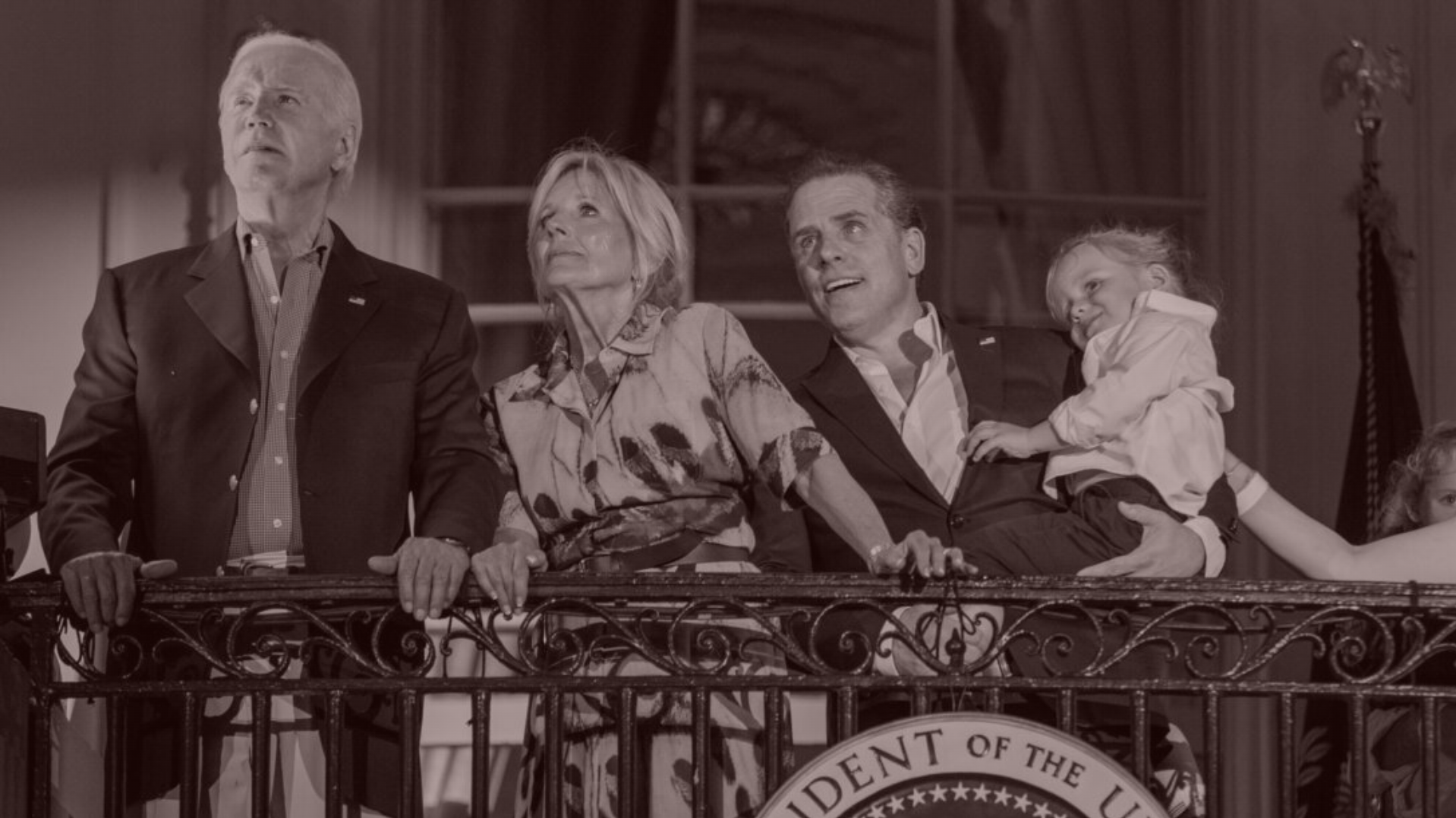
| He may have already lost the backing of Democrats on Capitol Hill and in the donor class. But in the face of Joe Biden’s go-for-broke, damn-the-torpedoes embrace of sheer defiance—along with denial, delusion, and desperation—as a strategy for survival, will being abandoned by his own party be enough to make him quit the race? |
|
|
|
| As Joe Biden’s post-debate, post-Stephanopoulos existential campaign crisis grew even deeper and more imperiling this weekend, I got on the horn with Puck’s co-founder and editor-in-chief, Jon Kelly, to exchange notes on the Democratic donor revolt, the brewing rebellion in the House and Senate, the escalating anger at Bidenworld, and where all this might end. Herewith… |
|
A MESSAGE FROM OUR SPONSOR
|
 |
| You work hard to provide the essentials for your family. We are honored to do the same. America’s freight railroads transport just about everything. The device you’re using? Diapers for your kids? And the food in your dog’s bowl? All were likely on a train at some point.
As a key link in the supply chain, we help move about 61 tons of goods per American every year. That’s a lot of precious cargo. To move your essentials safely, we invest about $23 billion annually to maintain and improve our infrastructure. These ongoing investments earned the highest grade for infrastructure in the last two American Society of Civil Engineers’ report cards. And it’s one of the reasons why freight rail remains the safest and most fuel-efficient way to move your most important stuff. Learn how freight rail works. |
|
|
|
|
| Jon Kelly: John, suffice it to say that no one among the Democratic political class or national news media has taken any time off during this long holiday weekend. The post-debate freak-out has certainly not abated, and Biden’s future has become the all-consuming story of this moment. The pressure campaign on him to drop out of the race has multiplied during the past week: Donors, House members, and Senators are fuming in private and threatening to go public with their discontent. Meanwhile, a burgeoning Kamala Harris boomlet is afoot.
We’ll get to the Stephanopoulos interview in a moment, but I know you’re talking to everyone as this extremely dynamic situation unfolds. What’s the current state of play?
John Heilemann: To say that the Democratic freak-out hasn’t abated is a rare understatement in a supremely, if justifiably, overheated moment. As of now, just five House Democrats—and only one from a swing district, Angie Craig of Minnesota—have publicly called for Biden to drop out, but the number of congressional incumbents privately convinced he can’t win is vastly higher.
An A+ Democratic Senate source of mine reckons that, of the 51 sitting Ds and independents aligned with the party in the upper chamber, no more than half a dozen (including Delawareans Chris Coons and Tom Carper, as well as John Fetterman, who spent today on the campaign trail in Pennsylvania with the president after colorfully advising his party’s naysayers “to get a spine or grow a set”) believe he still has a plausible chance in November and want him to stay in the race. The ratio on the House side, as best as I can tell, is roughly the same.
As for the cash-raisers and check-collectors, a front-page story in the Sunday Washington Post quotes a “donor adviser” saying that “for every 10 people who think he should exit, one thinks he should stay.” Which sounds about right to me, with the added proviso that it’s probably more like one in 20 among big-dollar buckrakers on Wall Street and in Hollywood, where the post-debate backlash is particularly pitched.
In Bidenworld, however, the only impact all this appears to be having is the polar opposite of its intended effect. Despite credible midweek reporting that Biden had conceded to allies that he might not be able to save his candidacy, his posture has since hardened—publicly and privately—into the unalloyed defiance on display at his Friday rally in Wisconsin: “They’re trying to push me out of the race. Well, let me say this as clear as I can: I’m staying in the race!”
The tenor of those remarks is now the prevailing, on-the-record attitude at the senior levels of the campaign and the White House. Citing an encouraging set of new battleground-state poll numbers from Bloomberg/Morning Consult, Team Biden is pressing the case that calls for him to step aside are coming from out-of-touch insiders—party elites, click-hungry corporate media shills, fat cat donors, know-it-all pundits, disgruntled and unemployed consultants, and their wretched ilk—and are dramatically out of step with the views of rank-and-file Democrats.
The Defiance Defense, as I’ve come to think of it, has a clear strategic aim: to create pressure on elected Democrats not to go public with their private fears/convictions by raising the potential political cost of abandoning Biden at this late stage. But it also has a political price tag of its own: the wide and growing sense among those who aren’t members of the Biden family, or on the payroll, that the defiance of the president and his people is being animated by some lethal combination of denial, delusion, and desperation.
Kelly: So I guess the Stephanopoulos interview didn’t exactly turn the tide… You and I exchanged the text equivalent of eye rolls on Friday when you told me that the campaign was trying to limit the sit-down with George to 15 minutes—telegraphing a clear lack of confidence in Biden’s ability to handle a sustained, high-stakes grilling. But my sense is that the interview simply confirmed for many Democrats that Biden just isn’t cognitively strong or rhetorically forceful enough to effectively take on Trump this fall, yes?
Heilemann: One-hundred percent on all counts. Given the time constraints and the stakes of the interview, George did a great job, I think. He was respectful but direct and persistent on the most essential questions, and he managed to eke out seven minutes more than Team Biden initially proposed. But the president would have been (or should have been) prepared for every one of those questions. The only way for him to put the debate catastrophe firmly in the rearview mirror would have been to sit for an extended, ask-me-anything interview, complete with queries on unexpected topics—not gotcha or trick questions, but a colloquy that included issues other than the debate, his mental acuity, and the calls for him to stand down—and hit them out of the park. But no one in Bidenworld would have been comfortable with that kind of uncontrolled, freewheeling colloquy with George, and given the performance that Biden proceeded to turn in, it’s easy to see why.
Was he awful? No. Disqualifyingly addled? No. But was he anywhere in the vicinity of what it would have taken to reassure Democrats—most of whom, let’s keep in mind, have enormous affection for Biden and respect for what he’s accomplished as president—that he was up to the task at hand, which Biden himself has rightly defined as saving American democracy from an out-front, wannabe autocrat? Fuck no.
Following the interview, the usual flood of text messages came pouring in, this time from just shy of 75 top-drawer Democrats across the ideological spectrum in the party. If I had to cite just one of their reactions to summarize their collective judgment, it would be a single sentence from one of the most influential progressives in the country: “Not bad compared to being comatose [like he was in the debate], but it won’t do anything to save him.”
Finally, one element of the interview fueled the roiling anger toward Biden among these Democrats, and another deepened their sense of alarm. They were infuriated by his answer to George’s question about how he would feel in January, if he stayed in the race and Trump eventually won: “I’ll feel as long as I gave it my all and I did the goodest job as I know I can do, that’s what this is about.” And they were alarmed by his reply regarding the polling that showed him trailing Trump nationally and in the battleground states, and that put his approval rating at a place from which no incumbent president has ever won reelection: “I don’t buy that.”
In his reliably insightful Message Box newsletter today, former Obama White House comms director Dan Pfeiffer wrote, “Biden seems detached from the crisis enveloping his campaign. He dismissed the mountain of polling that showed him behind. … He dismissed the growing calls for him to step aside and the concerns voters have about his capacity. He certainly didn’t seem like someone wrestling with a monumental choice upon which democracy may depend.” And that combination of blithe dismissiveness and myopic self-centeredness has exacerbated, rather than ameliorated, the crisis that Biden is facing. |
|
A MESSAGE FROM OUR SPONSOR
|
 |
| Nearly everything you care about was on a train at some point. Take the camera you’ll use to capture family memories on this year’s summer vacation. It was likely brought to you by a freight train.
Our cameras make sure your cameras arrive safely. America’s freight railroads use high-speed cameras and machine vision to identify potential issues that would go unseen by the human eye. Train inspection portals use cameras that can capture 40,000 images ... per second. All while the train is moving at 60 MPH. With this technology, railroaders can spot and resolve issues faster. Every year, the nation’s largest freight railroads invest about $23 billion back into our network in advanced technology and infrastructure upgrades. It’s one reason why freight rail is the safest and most fuel-efficient way to move your most important stuff across the country. Learn how freight rail works. |
|
|
|
|
|
| Kelly: Speaking of the polls: A week before the debate, Biden campaign chair Jen O’Malley Dillon was on your podcast, Impolitic, and asserted with brio, “We are going to win.” Given the debate and Bidenworld’s maladroit handling of the fallout, there’s been a ton of finger-pointing among Democrats at Biden’s campaign team, and especially his inner circle—the family, Mike Donilon, Ron Klain, Anita Dunn, Bob Bauer, etcetera—for misleading the president’s supporters about his condition and now shielding him from the dire reality of his situation. How pissed are Dems? Are they right to be? And who’s really to blame?
Heilemann: The anger toward Team Biden is scathing, all-encompassing, and, as I wrote in my last column, laced with a bitter sense of betrayal. Some of the anger is hyperbolic and melodramatic; much of it is ludicrously free of introspection by those doing the finger-pointing, who refused to ask questions about (or even admit to themselves) the extent of Biden’s recent decline, which was plainly evident to many in recent proximity to the president.
That said, it’d be crazy to argue that Democrats grappling with a political calamity of this size and severity—not just the debate itself, but the actions and inactions that led to it and the mismanagement of the aftermath—don’t have a right to be apoplectic. And unless Biden somehow manages to defy the odds and shock the world by defeating Trump, history will have a lot of hard questions for his notoriously insular inner circle, starting with those at its nucleus: Dr. Jill, Hunter Biden, and, to a lesser extent, his sister and close political advisor, Valerie Biden Owens; his longtime strategist, ad guru, and all-around savant Mike Donilon; and his best friend and generational peer, the 85-year-old Ted Kaufman, who had the clarity of vision and political good sense to convince Biden to throw in the towel during the plagiarism scandal that sunk his presidential bid back in 1988.
By comparison to this group, J.O.D. is a mere Bidenworld arriviste. And even Anita, her husband Bob (Biden’s personal attorney), and Ron exist at a slight remove from the sanctum sanctorum and at times fall out of favor with those inside—which apparently is what’s happened in the wake of the debate, as Jill and Hunter have increasingly asserted themselves in the campaign, taking on active roles as gatekeepers and counselors to the president. The Defiance Defense has the Biden family’s fingerprints all over it. So do the leaks, once strikingly rare in Bidenworld, casting aspersions on Klain, Dunn, and Bauer for the ostensible failures of Biden’s multiday debate prep sessions at Camp David. Internal sniping (echoing loud critiques from outside) is being aimed at the Dunn-driven comms strategy of effectively bubble-wrapping Biden; similarly, questions are being raised about whether Donilon is giving his boss a full and frank readout of his standing in the polls.
In short, Jon, for as much blame is being cast on the Biden inner circle by top Democrats far and wide, the same dynamics are playing out just as intensely (and maybe even more toxically) within the upper echelons of Bidenworld itself—a close-range circular firing squad that makes the final scene of Reservoir Dogs look like something out of a Merchant Ivory movie. |
|
|
|
|
| Jon Kelly: So the Democratic establishment wants Biden out, but Biden, his family, and his team are totally dug in—each side essentially trying to stare the other down. How does this end? When does it end? Who blinks?
Heilemann: The starting point here has to be an invocation of the great political philosopher Yogi Berra: Prediction is always difficult, especially about the future. And when it comes to what Democrats will or won’t do, prediction is more than difficult; it’s the surest way to wind up looking like a total putz. And, for the umpteenth time in this batshit political era, we are racing headlong into terraincognita without a map or compass, let alone G.P.S. The president of the United States is playing a gnarly game of chicken with his own party—a game in which, as my old pal John Harris put it in Politico, his “best hope for survival is the timidity of his skeptics.”
As we speak, congressional Democrats are returning to D.C. from recess, having been in their districts hearing from their constituents every day since the debate. One plausible (but far from certain) assumption is that however high their dudgeon, it’s likely to be spun up further once they’re face to face and all in one place—planning, plotting, and banding together. Everyone covering this drama, very much including me, has heard from electeds over the last week, and especially post-Stephanopoulos, who say they’re on the brink of speaking out or signing letters calling on Biden to take a powder. How many, and which ones, actually will? Good questions.
But if the news breaking as I type this is any indication, the answers could turn out to be: a lot, and ones who matter. Per the Times, during House Minority Leader Hakeem Jeffries’ Zoom call for ranking committee members earlier today, four senior members on the call (Jerry Nadler of New York, Adam Smith of Washington, Mark Takano of California, and Joe Morelle of New York) said explicitly that Biden should end his candidacy, while two others (Jim Himes of Connecticut and Susan Wild of Pennsylvania) voiced doubts about his path forward. The Times noted that two attendees issued statements of support for Biden, but the story’s lede minced no words about the implications of the meeting: “President Biden’s base of support among key Democrats on Capitol Hill began to crumble.”
Meaningful as the House and the members above may be, Biden will surely be paying far more attention to whatever public opposition emerges in the Senate, where the president forged the foundation of his political career and which he still regards, to this day, as his spiritual home. Virginia Senator Mark Warner, who had privately voiced concerns about Biden’s prospects and viability long before the debate, is organizing a meeting of fellow doubters to discuss options tomorrow night—a meeting that, if my sources aren’t huffing glue, could prove to be even more ominous for Biden than the Jeffries call.
If the numbers of Democrats in the House and Senate turning publicly against Biden become overwhelming, that could be enough to shatter his defiance. More likely, however, something more will be required: to hear directly from the small coterie of party leaders for whom he has an altogether higher level of respect. That coterie consists, I’d say, of just four Democrats: Chuck Schumer, Nancy Pelosi, Jim Clyburn, and Jeffries. All four understand the stratospheric stakes of what’s unfolding, along with the historic gravity of the moment. All four have been carefully calibrating their every public utterance since the debate. And much as all four love and revere the president, I’d bet every dollar in your bank account, Jon, that not one of them will shy away from telling Biden that he can’t go forward if they’ve reached the conclusion that he’s lost the party—and, more crucial, is destined to lose to Trump.
Kelly: Given the fluidity and unpredictability of the situation, you might tell me I’m nuts to ask about how the dominoes might fall if Biden does drop out—but it’s a huge question on everyone’s mind. I mentioned the Kamala boomlet earlier, but plenty of Democrats don’t think she can beat Trump, either, and would rather see someone like Gretchen Whitmer, Mark Beshear, or Josh Shapiro as their nominee. Last week, Clyburn floated the idea of a “mini-primary” leading into Democratic convention. Do you think that would happen? Or does Biden just endorse Harris and that’s that?
Heilemann: I don’t think you’re nuts at all, but I would like to resurrect Yogi Berra and send him to your house to have a word. Without venturing too far out over my skis, I can say that the following things are true: (1) Given the crowdedness of the calendar—this week there’s the NATO Summit in D.C., next week is the G.O.P. convention in Milwaukee, then the Olympics kick off in Paris—and how fast the clock is ticking, the Democratic convention is going to be upon us before we bat an eye; (2) everyone believes, therefore, that if Biden is going stand down, he absolutely needs to do it by this Friday at the latest, which means that by next Sunday, Democrats will—or at least should—have already answered the question you’re asking; and (3) the basic choice here boils down to coronation versus competition, and no one who has any understanding of the Democratic Party could possibly believe that it will choose the former over the latter. Also (4), if you want more elaboration on the previous point, check out the episode of Impolitic that I taped last week with David Axelrod and Mike Murphy. Axe laid out a compelling case for some version of Clyburn’s mini-primary proposal.
And, finally (5), for a variety of reasons beyond Harris’s rising poll numbers and long-overdue reappraisal by the party and the national media—from the fact that she’s the only fully vetted Democrat out there and the only potential replacement nominee who can easily lay claim to the $250 million-ish the reelect has on hand, to her historic status as the first woman of color to sit in the V.P.’s office and the attendant difficulties that her party would encounter in spurning her in favor of any one of those compelling Caucasian candidates you listed—my sense is that Harris would be the prohibitive favorite to win the mini-primary.
I also suspect that she just might give Trump fits in the general election by leaning into her most obvious strength in a race against him: that she’s a prosecutor and he’s a criminal. This, at least, is what Democrats will be telling themselves if the rest of this scenario comes to pass, and who can blame them? After living through a grisly plot twist that turned a tedious sequel into a horror show worthy of Wes Craven, they’ll have earned the right to indulge in the dream of this story having a fairy-tale ending. |
|
|
|
| FOUR STORIES WE’RE TALKING ABOUT |
 |
|
 |
|
 |
|
 |
| Shari Saga Cont’d |
| Breaking down the rebooted Ellison/Paramount deal. |
| WILLIAM D. COHAN |
|
|
|

|
 |
|
|
|
Need help? Review our FAQs
page or contact
us for assistance. For brand partnerships, email ads@puck.news.
|
|
You received this email because you signed up to receive emails from Puck, or as part of your Puck account associated with . To stop receiving this newsletter and/or manage all your email preferences, click here.
|
|
Puck is published by Heat Media LLC. 227 W 17th St New York, NY 10011.
|
|
|
|