 |

|
|
I’m Abby Livingston, and welcome back to another special Friday edition of The Best & The Brightest.
In tonight’s issue, a close look at Silicon Valley’s decidedly unforced march to Washington—mostly by way of Mar-a-Lago—where right-leaning tech titans have joined Trump’s inner circle and landed comfortably in his kitchen cabinet. And while it appears the incoming administration will be taking the lead on tech issues, the Hill is undergoing a significant changing of the guard that will also have serious implications for the sector. All that and more, below the fold.
And stick around for an excerpt of my recent conversation with my Puck partner Baratunde Thurston, presented by Meta, on how the trillion-dollar politics of A.I. has led to some strange bedfellow in Congress…
|
|
A MESSAGE FROM INSTAGRAM
|
|
|
Instagram Teen Accounts: a protected experience for teens, guided by parents
Instagram Teen Accounts are designed to address parents’ biggest concerns, providing automatic protections for who can contact their teens and the content they can see.
The impact: Built-in limits give parents more peace of mind when it comes to protecting their teens.
Learn More
|
|
|
But first, a few notes from my partner Dylan Byers…
- Trump v. Stephanopoulos: A federal judge has ordered President Trump and ABC News’s George Stephanopoulos to sit for four-hour depositions next week in the libel lawsuit the president-elect brought against the network after Stephanopoulos said on air that Trump had raped E. Jean Carroll. (The jury did not come to that conclusion, though the judge suggested that may have been a legal distinction.) —Dylan Byers
- Post haste to FP: The Washington Post’s deputy opinion editor Chuck Lane is leaving the paper to join Bari Weiss’s Free Press, a departure that comes on the heels of managing editor Matea Gold’s own defection to The New York Times. Meanwhile, still no update on whether the Times’s Cliff Levy is getting the Post executive editor post. Though it’s hard to imagine why he wouldn’t have it already if they really wanted him in the seat. —Dylan Byers
|
 |
| Silicon Valley Goes East |
| Elon Musk was only the first pioneer in a mass migration of Trump-friendly tech moguls salting the ground in Washington in advance of a deregulatory assault on the agencies policing crypto and A.I. |
|
|
|
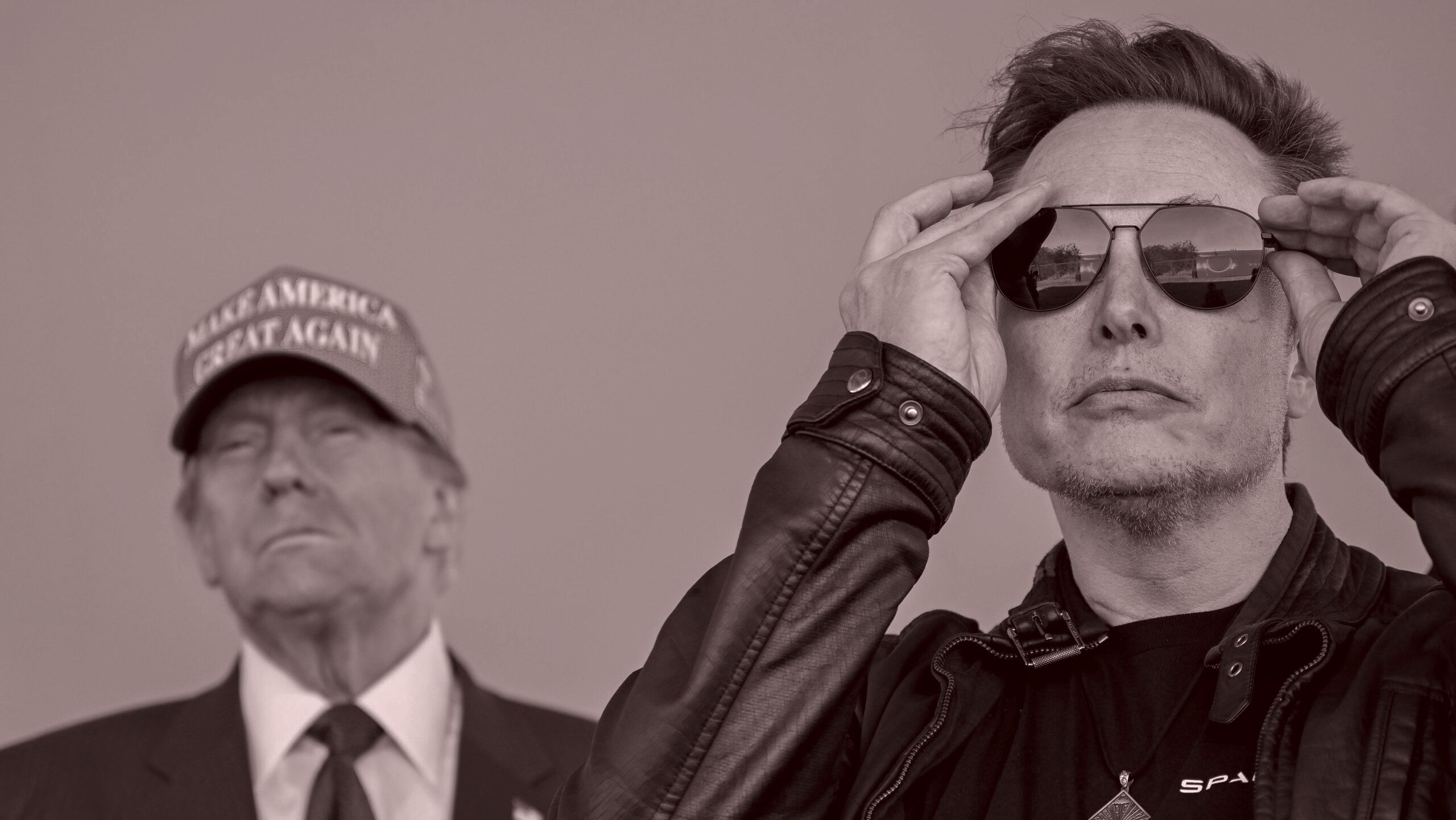
| Silicon Valley is on the march in Washington—and nowhere is its arrival more apparent than in Donald Trump’s strikingly tech-friendly circle of advisors and hangers-on, who have gotten themselves appointed to key agency roles, become top surrogates for the incoming administration, or secured “czar” titles that didn’t previously exist. “It’s more likely for the administration to take action than Congress,” said Nu Wexler, a tech communications consultant who previously worked for Twitter, Facebook, and Google. “I don’t think there are high expectations for this Congress with a one- to three-vote majority in the House. Also, given the history of Congress not acting on tech legislation over the last eight years, it just hasn’t been possible.”
Meanwhile, Trump’s kitchen cabinet is being stocked with tech moguls, entrepreneurs, and venture capitalists who have flocked to Mar-a-Lago to curry favor with the president-elect. Elon Musk—practically an honorary Trump at this point—is supposedly in charge, along with Vivek Ramaswamy, of cutting government red tape via the new and still effectively powerless DOGE committee. Peter Thiel protégé J.D. Vance will soon decamp to the Naval Observatory. And earlier this week, Trump named the tech investor and All-In podcaster David Sacks, whose campaign fundraiser at his San Francisco home presaged Silicon Valley’s rightward tilt, as his “A.I. and Crypto czar,” a title in search of a portfolio.
Others appear to be forging less formal alliances, or at least smoothing things over with the once-and-future president. Mark Zuckerberg headed down to Palm Beach to pay his respects—and pledge $1 million to the Trump Inauguration, a sum Jeff Bezos and OpenAI’s Sam Altman each matched a day later. Salesforce C.E.O. Marc Benioff, the owner of Time magazine—which just selected Trump as its 2024 Person of the Year—recently heralded the moment as “a time of great promise for our nation.” And while he has no official role, venture capitalist Marc Andreessen told Bari Weiss that since the election, he’s “spent half his time at Mar-a-Lago.” |
|
A MESSAGE FROM INSTAGRAM
|

|
|
Instagram Teen Accounts: automatic protections for teens
Parents want safer online experiences for their teens. That's why Instagram is introducing Teen Accounts, with automatic protections for who can contact teens and the content they can see.
A key factor: Only parents can approve safety setting changes for teens under 16.
Learn More
|
|
|
| Of course, one hire they will all be cheering is Republican Andrew Ferguson, Trump’s pick to replace Biden appointee Lina Khan at the head of the Federal Trade Commission. Khan, a specialist in antitrust law, infuriated many business leaders with her expansive and sometimes romantic view of antitrust. Ferguson, who clerked for Justice Clarence Thomas and served as counsel to Mitch McConnell, has criticized Big Tech as overly censorious of conservative voices while also intimating that he would take a more hands-off approach to corporate M&A. |
| Congressional Musical Chairs |
|
| While the incoming administration will be taking the lead on tech issues, the Hill is still worth watching as it undergoes a changing of the guard with jurisdiction over the sector. To wit: San Francisco was long the center of California power in Congress, but since the death of Dianne Feinstein and ascent of Kamala Harris, power (and Senate seats) has shifted south to Angelenos like Alex Padilla, Laphonza Butler, and Senator-elect Adam Schiff, a major beneficiary of crypto donations last cycle. One Silicon Valley congresswoman, senior House Energy and Commerce Democrat Anna Eshoo, is retiring, while another—Rep. Ro Khanna—has recast himself as a sort of populist bridge between Bernie and Bannon. The upshot is that, while Silicon Valley descends on a Republican administration in D.C., the previous generation of California Democrats aren’t as close to tech as they used to be.
Meanwhile, Washington state, home of Microsoft and Amazon, is seeing its own evolution with the retirement of House Energy and Commerce chairwoman Cathy McMorris Rodgers, who represents a district in the northern part of the state. Washington’s junior senator, Maria Cantwell, one of the most powerful tech-focused lawmakers on the Hill, who worked in the sector between House and Senate stints in the 1990s, will lose her gavel at the Senate Committee on Commerce, Science, and Transportation on January 3, when the upper chamber flips to Republican control. She has been pushing the passage of an online children’s safety bill—which passed the Senate overwhelmingly this summer—but hopes are dimming that House Speaker Mike Johnson will use time on the issue during the lame duck. Expect reviving it to be her immediate priority in the 119th.
Replacing Cantwell as the chair of Commerce is Senator Ted Cruz, among the most vitriolic critics of Section 230—the law that protects online companies from liability for the third-party content they host as well as for any “good faith” efforts they make to restrict it. Section 230, of course, is despised by both parties, although for different reasons: Democrats fear it allows hate speech and misinformation to flourish online, while Republicans like Cruz argue it’s been deployed to censor users, particularly conservatives, on social media. Cruz has not made any major announcements on 230, but given his track record at Commerce, it’s worth keeping an eye on.
Energy and Commerce can have a bipartisan atmosphere, and we may see this on the House side. Perhaps the biggest tech-related news this week on Capitol Hill was the ascent of Kentucky Republican Brett Guthrie to chair House Energy and Commerce. (He has partnered with Democrats Doris Matsui and Kathy Castor on legislation in the past.) Other Energy and Commerce members of interest are the campaign committee chairs, Suzan DelBene at the D.C.C.C. and Richard Hudson at the N.R.C.C., who are back for a second tour. (DelBene is a former Microsoft exec who was part of the team that launched Windows in the 1990s.)
As usual, the judiciary committees in both chambers will have jurisdiction over antitrust law. In the Senate, Iowa Republican Chuck Grassley will return to helm the committee with whip Dick Durbin as the ranking Democrat. Jim Jordan will keep his gavel in the House committee, alongside incoming ranking member Jamie Raskin. |
|
|
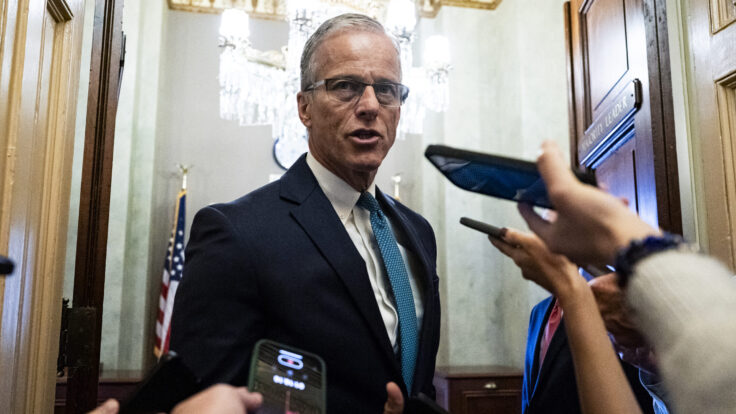
| And yet, perhaps the most sweeping tech-related question facing Congress is what guardrails to put on artificial intelligence and cryptocurrency. A.I. is a unique source of bipartisanship, and at least two on-the-rise senators on Commerce—incoming Senate Majority leader John Thune and senior committee Democrat Amy Klobuchar—paired up last term to introduce a bill that would call for A.I. companies to be transparent about what is and is not real online.
As for crypto, the sector has many new friends on Capitol Hill. Three crypto-aligned super PACs—the bipartisan “Fairshake,” the Republican “Defend American Jobs,” and the Democratic “Protect Progress”—spent a combined $133,000,000 last cycle, according to the Center for Responsive Politics. The top three donors for each arm were Andreessen Horowitz, Coinbase, and Ripple. In all, the three super PACs cash deluge helped elect seven senators (three Democrats, four Republicans) and 49 House members (29 Democrats and 20 Republican). The next Congress will show just how much sway Bitcoin can buy.
And now, a little bit more on how the A.I. debate is playing out on Capitol Hill, courtesy of my recent conversation with Baratunde Thurston… |
|
|
| The trillion-dollar politics of A.I. has led to some strange bedfellows in Congress, where Republicans and Democrats have paused hostilities (well, in some cases…) to work together on regulation, investment, spy programs, and more. In this excerpt from my recent conversation with my Puck partner Baratunde Thurston, presented by Meta, we dig into some of the opportunities and challenges that A.I. brings on the legislative front.
Baratunde Thurston: Given your lens into Congress, I’m curious about some of the dynamics you’re seeing around the push—or lack thereof—for A.I. regulation from members.
Abby Livingston: I think the most interesting thing about A.I. is that it attracts bipartisan alliances, which can be said of very few things on Capitol Hill. I’ve seen a number of proposals that have bipartisan backing. In September, for example, Pennsylvania Republican Brian Fitzpatrick joined three other House members, including two Democrats—Derek Kilmer and Adam Schiff—to introduce legislation about A.I. in political ads that involved banning fraudulent characterizations of opponents. There’s another interesting pairing—Democrat Madeleine Dean of Pennsylvania and Republican Maria Elvira Salazar of Florida—who are working together on unauthorized deepfakes. The most interesting player in A.I. on Capitol Hill next term is going to be new Senate majority leader, John Thune, who partnered with Democrat Amy Klobuchar on an A.I. bill.
What would the Thune-Klobuchar bill do?
The bill is from 2023, and without getting into the weeds, it would put some standards on how A.I. is used—everything from its deployment in infrastructure, to transparency on what is and is not real online. What’s also interesting here is that it gives us a sense of whom the new Senate majority leader will work with. Thune and Klobuchar are longtime members of the Senate Commerce Committee; other backers of the bill include Roger Wicker of Mississippi, John Hickenlooper of Colorado, Shelley Moore Capito of West Virginia, and Ben Ray Luján of New Mexico.
Read the full story online. |
|
|
|
| FOUR STORIES WE’RE TALKING ABOUT |
 |
|
 |
|
 |
|
 |
| Red Pete |
| A conversation with veterans advocate Paul Rieckhoff. |
| TARA PALMERI |
|
|
|

|
 |
|
|
|
Need help? Review our FAQs
page or contact
us for assistance. For brand partnerships, email ads@puck.news.
|
|
You received this email because you signed up to receive emails from Puck, or as part of your Puck account associated with . To stop receiving this newsletter and/or manage all your email preferences, click here.
|
|
Puck is published by Heat Media LLC. 227 W 17th St New York, NY 10011.
|
|
|
|