{{ 'now' | timezone: 'America/New_York' | date: '%b %d, %Y' }} |
|
|
|
Welcome to The Hidden Layer. I’m Ian Krietzberg, preparing for the Knicks parade
on Thursday!
It was yet another weekend of abject chaos for Anthropic, whose latest model was essentially banned by the U.S. government—presumably not what Dario Amodei had in mind when he told everyone that Mythos was a cybersecurity threat. Today, we’ll get into everything we know about what exactly is going on. Plus, for the main event, a look at a burgeoning conversation around efforts to socialize, or even nationalize, A.I.
Also mentioned
in this issue: Sam Altman, Bernie Sanders, Donald Trump, Peter Harrell, Vinod Khosla, Adam Thierer, David Sacks, Jeff Bezos, Satya Nadella, Andy Jassy, Pete Hegseth, and more.
Let’s get into it… |
Two Things You Should Know...
|
- Dario
vs. Trump, redux: At 5:21 p.m. on Friday, Anthropic received an “export control directive” from the U.S. government, demanding that it prevent any “foreign national,” whether in- or outside the U.S., from accessing its models Mythos 5 and Fable 5, a guardrailed version of Mythos that had launched just a few days before. The result, Anthropic said in a statement that evening, “is
that we must abruptly disable Fable 5 and Mythos 5 for all our customers.” A source familiar with the matter told me that Anthropic was given only 90 minutes to comply, and was not provided with specifics as to the administration’s concerns beyond “national security.”
According to Axios, researchers at Amazon—one of Anthropic’s largest
investors—discovered a “jailbreak,” or a means of bypassing a model’s guardrails, and C.E.O. Andy Jassy shared those findings with the government on Friday. An Amazon spokesperson told me that “it’s not uncommon for governments to seek our counsel on potential security risks. When they occur, we don’t share the details of these discussions.” Meanwhile, a source close to Anthropic said they had seen Amazon’s jailbreak assessment, but determined that the model’s safety systems
weren’t compromised. “We disagree that the finding of a narrow potential jailbreak should be cause for recalling a commercial model deployed to hundreds of millions of people,” Anthropic said in a statement, adding that it “believes the government should have the ability to block unsafe deployments, as part of a statutory process that is transparent, fair, clear, and grounded in technical facts. This action does not adhere to those principles.”
Perhaps unsurprisingly, the timeline for how
this played out is a little fuzzy—and contested. David Sacks, the former White House “A.I. czar,” said the administration first asked Anthropic to fix the jailbreak, but C.E.O. Dario Amodei “refused.” According to
Politico, the White House reached out to Anthropic on Friday morning, but was unable to reach Amodei until after 1 p.m. because he was at a “wellness retreat.” A source close to Anthropic told me that Amodei was not at a wellness retreat, and that the company was in touch with the
White House within 15 minutes of their initial call.
On Friday afternoon, Amodei had a series of phone calls with senior members of White House staff, including national cyber director Sean Cairncross, Treasury Secretary Scott Bessent, Commerce Secretary Howard Lutnick, and White House staff secretary Will Scharf. A source close to Anthropic told me that senior company leaders met with White House officials in D.C. on
Sunday morning, had met virtually with White House officials on Friday and Saturday, and met again at the Department of Commerce on Monday. Alas, the issue remains unresolved.
Of course, this is not the first time Anthropic has warred with the Trump administration. Their initial clash over the military deployment of models is still playing out in court. Sacks, for his part, has claimed this second spat is unrelated to the first. But on Saturday, Defense Secretary
Pete Hegseth tweeted, “Three months ago, [DoD] kicked [Anthropic] out of our building—forever. Every passing day proves why that was the right move.” Neither the White House nor the Department of Commerce responded to requests for comment.
|
|
|
|
A MESSAGE FROM OUR SPONSOR |
Become a more intelligent enterprise Imagine your entire company working in
perfect sync. Strategy, operations, tech, and AI – all connected. At PwC, we design the solutions that can help you get there. |
|
|
|
- Elon’s
$60B Anysphere deal: Earlier today, SpaceX officially acquired the A.I. coding startup Cursor for $60 billion, paid almost entirely in SpaceX stock. (SpaceX shares have been soaring since its I.P.O.; the company is now valued around $2.5 trillion.) SpaceX and Cursor first announced a partnership in April, when SpaceX said that Cursor had granted them the right to acquire the company for $60 billion, “or pay $10 billion for our work together.” In its
announcement on Tuesday, SpaceX said that it has spent the past few months “jointly training” an A.I. model with Cursor, which will be released soon. In a regulatory filing published Tuesday, SpaceX confirmed that Cursor will
survive the merger as a wholly owned subsidiary of SpaceX. Congrats to all of the Cursor and Grok developers who made it past the vesting cliff.
|
Quote of the Week: Satya Unchained!
|
“The last thing any of us want is a world where every company across every sector is ceding value to a few
models that eat everything they see. If all the value is accrued by only a few models, the political economy will simply not tolerate it. There is no societal permission for an A.I. future that hollows out entire industries.”
—Microsoft C.E.O. Satya Nadella, advocating in a recent essay for “frontier ecosystems” rather than frontier models, so that companies
can own their own transformation, rather than be dependent on, say… OpenAI. (Microsoft is one of OpenAI’s largest investors.) |
- Salesforce
acquired Fin, formerly Intercom, for $3.6 billion on Monday.
- Prometheus, the A.I. startup founded by Jeff Bezos, closed a $12 billion round last week at a $41 billion valuation. In an interview with CNBC,
Bezos said the startup was building tech to speed up the “invention loop.”
- Igor Babuschkin, an xAI co-founder who recently jumped ship, launched his own A.I. company last week: River, which is focused on building personal A.I.
- OpenAI
acquired Ona, an agentic A.I. startup, for an undisclosed amount last week. The company will be joining OpenAI as part of its Codex team.
- After first announcing their partnership in 2024, Lionsgate last week agreed to deepen its
partnership with A.I. media-generation company Runway, announcing its intent to take an equity stake in the company. The two will work to develop and release hybrid A.I. content.
|
And now for the main event… |
|
|
|
The idea of the U.S. government taking a stake in the major A.I. labs—to mitigate economic
disruption, or just to spread the wealth—is gaining traction on both sides of the aisle. But is it the best solution, or even feasible? |
|
|
|
Back in April, when Sam Altman
floated the idea of a sovereign wealth fund to provide U.S. citizens “with a stake in A.I.-driven economic growth,” he probably didn’t expect to capture the interest of both Bernie Sanders and Donald Trump. Altman had been on something of a goodwill tour, testing a
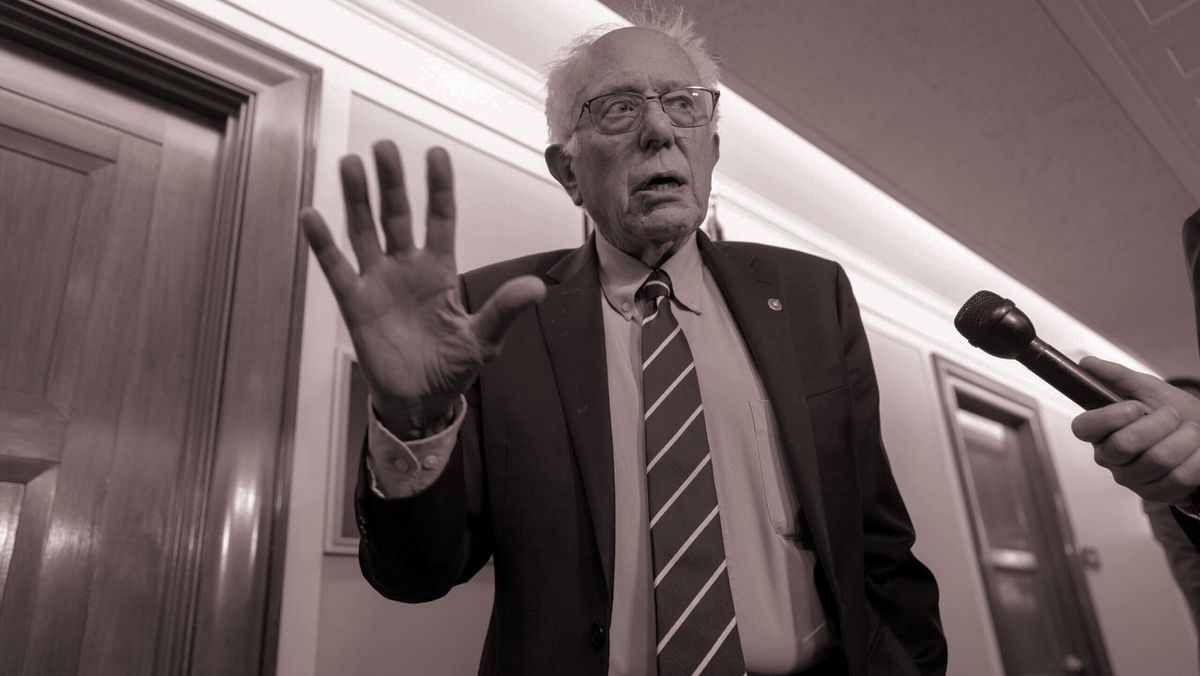
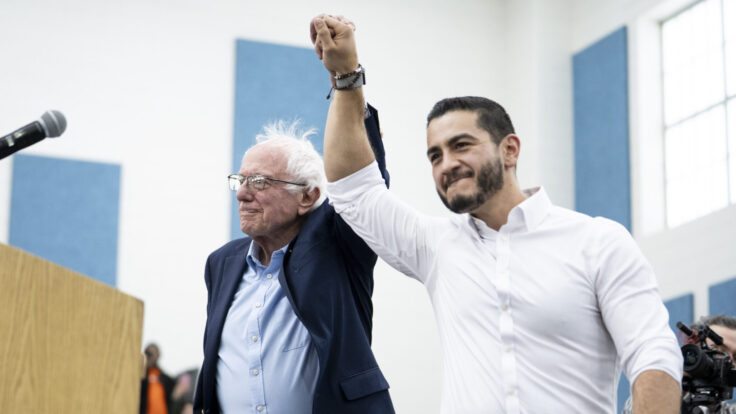
softer, more human policy message in Washington. But where OpenAI offered an inch, Sanders wanted a mile. On June 1, the Vermont senator pitched a one-time, 50 percent tax on the largest A.I. companies in the U.S.—paid in stock, not cash. “The federal government would have the power, through its voting shares and an equal
representation on each company’s board, to block decisions that hurt our citizens and to push for policies that help them,” Sanders wrote. Nationalization, in other words.
Less than a week later, Altman met privately with Sanders on Capitol Hill, where he expressed his general agreement with the notion that the
public should have equity in A.I. companies, although he couldn’t support a number as high as 50 percent. And, naturally, he doesn’t want his company to be nationalized. According to an industry source, OpenAI’s preference would be for the government to establish something akin to the Alaska Permanent Fund, which invests the state’s oil and gas revenues into a diverse range of assets and pays each resident an annual dividend. OpenAI, which didn’t return a request for comment, has also proposed
new safety nets, investments in workforce development, and tax modernization—all solid ideas that seem designed to stave off the pitchforks. |
|
|
|
A MESSAGE FROM OUR SPONSOR |
Become a more intelligent enterprise Imagine your entire company working in
perfect sync. Strategy, operations, tech, and AI – all connected. At PwC, we design the solutions that can help you get there. |
|
|
|
Whatever form an eventual partnership might take, the idea itself seems to have reached escape velocity. On
June 5, aboard Air Force One, Trump told reporters that he planned to meet with major A.I. firms to discuss taking “pieces” of their companies (although this was news, apparently, to the A.I. firms). “There’s something very interesting about it, where it almost becomes a partnership with the American public, where the American people can benefit from
the success of A.I.,” the president said. The White House didn’t respond to a request for comment on whether the meetings have taken or will take place. |
In some ways, these conversations aren’t entirely surprising. As one industry source told me, A.I. developers
have long believed that nationalization was inevitable, even though the concept hadn’t gained any real political traction until now. Vinod Khosla, the legendary venture investor, broached the topic in October, although his pitch was for 10 percent stakes rather than 50. Meanwhile, in a recent
essay by Dario Amodei, the Anthropic chief argued that if A.I. does end up having a permanently negative impact on employment, “long-term income support” would likely be necessary. “Universal basic income could be financed through taxes on relevant companies or raising the capital gains tax,” he wrote. “Universal
capital accounts offer another vehicle. Broadly speaking, fast economic growth should create the tax base for shared prosperity.” Elon Musk, for his part, has endorsed the idea of a universal basic income—an idea that Altman had also supported until very recently, when he started talking up the idea of universal basic… access to
compute.
Anyway, not everyone thinks the idea is so clear-cut. Andrew Metrick, the prominent Yale economist, told me that the government tends to make “poor investment decisions and is a lousy overseer of private companies,” adding that “government ownership of private firms often leads to corruption, mismanagement, and lots of wasted taxpayer money.” Despite this, he believes we’re “still in the early stages of what is the most significant technological transformation in
human history. If we are going to survive as a society, we’ll need to figure out some way to transfer some of those windfall returns to ordinary people.” Metrick would prefer this done through taxation of corporate profits, but the scale of the predicted societal impact of A.I. has him “willing to seriously consider a heretical position that would include some government ownership of private firms during this massive transition.”
David Sacks, Trump’s former A.I. czar, is
also staunchly opposed to nationalizing these companies. “The C.E.O.s of the leading A.I. labs have told us repeatedly that they will cause massive job loss,” he wrote on X, adding that it’s unsurprising that Sanders’ proposal is resonating across the political spectrum. But, he said, the “nationalization of A.I. will accelerate the corporate-government fusion we’re already sliding
toward.” Robert Winterton, the V.P. of public affairs at industry group NetChoice, agreed: “This kind of backdoor nationalization is a direct threat to free speech, giving bureaucrats the leverage to censor viewpoints and control how Americans get their information,” he told me.
If these conversations move forward, Adam Thierer, a senior fellow at the R Street Institute, told me that he expects the administration to face resistance from corners of his
coalition that bristle at anything resembling socialist policy. “It’s unclear what happens next,” he said. Once you start nationalizing industries, where does the project end? |
In some ways, Trump has already crossed that Rubicon. Since 2025, his administration has inked more than a dozen such deals, including paying $8.9 billion for a 10 percent stake in Intel. In most of those cases, however, the government was ostensibly trying to orchestrate some kind of industrial policy—supporting chipmakers and mining companies that are strategically important. The same argument might be made for A.I. on national security
grounds. But unlike those other sectors, Big Tech hardly needs government backing to thrive. As former White House economics advisor Peter Harrell told me, A.I. companies clearly have no trouble raising money—and they’re not earning much revenue in the form of government contracts, either.
The pursuit of equity stakes, Harrell continued, would also raise a bunch of thorny legal and political questions. Would Republicans be okay with Sanders being seated on the board of
OpenAI? Conversely, would Democrats be okay with, say, Brendan Carr on the board of Anthropic? And would the equity be a gift to the government, or would the government pay for it? The latter, Harrell said, would make any agreement start to resemble a bailout. “I’m actually quite willing to believe we are about to have some fairly substantial societal transformations as a result of A.I.,” Harrell said. “I’m skeptical that government equity stakes in the A.I. companies are the
right way to raise that revenue.”
He continued: “This idea of equity seems to be a shiny object that policymakers are latching on to because they think it’ll somehow magically deliver money for the government, and seems easier than taxing and regulating,” he said. “I think, at the end of the day, we’re not likely to see the government taking a lot of equity here, and over the long term, it would be more effective for policymakers to get their act together and pass some taxes and
regulations.” |
That’s all for today. I’ll see you on Thursday.
Ian |
|
|
|
Puck fashion correspondent Lauren Sherman and a rotating cast of industry insiders take you deep behind the scenes of this
multitrillion-dollar biz, from creative director switcheroos to M&A drama, D.T.C. downfalls, and magazine mishaps. Fashion People is an extension of Line Sheet, Lauren’s private email for Puck, where she tracks what’s happening beyond the press releases in fashion, beauty, and media. New episodes publish every Tuesday and Friday. |
|
|
|
A professional-grade rundown on the business of sports from John Ourand, the industry’s preeminent journalist, covering the
leagues, players, agencies, media deals, and the egos fueling it all. Plus, the latest intel from Eriq Gardner on the sports legal beat. |
|
|
|
Need help? Review our
FAQ page or contact us for assistance. For brand partnerships, email ads@puck.news.
You received this email because you signed up to receive emails from Puck, or as part of your Puck account associated with {{customer.email}}. To stop receiving this newsletter and/or manage all your email preferences, click here. |
Puck is published by Heat Media LLC. 107 Greenwich St., New York, NY 10006 |
|
|
|
|