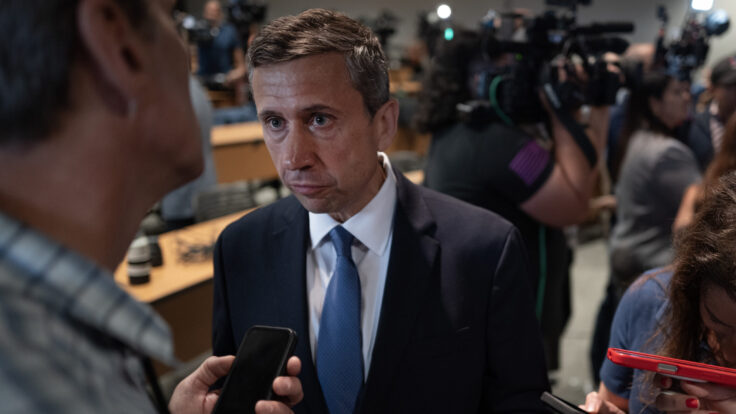
Greetings! As you can probably tell, today’s newsletter looks a little different. After three years, we’ve redesigned the look and feel of our private emails, and want to know what you think. If you have any feedback, please click here to take a brief survey.
|
|
Welcome back to The Best & The Brightest, I’m Peter Hamby.
Holiday greetings from my family’s house in Richmond, Virginia, a city where sleeve tattoos and salted ham biscuits coexist in blissful harmony. Tonight, as Democrats struggle to understand an evolving media environment mastered by Donald Trump, my conversation with progressive content creator Brian Tyler Cohen, who has more than 7 million followers across his platforms and some advice for Dems on how to start prioritizing the small screen over the big one.
|
|
|
Open source AI helps more people build amazing things.
Meta’s open source AI is available to all, not just the few. Which means more people can build amazing things.
It enables small businesses, start-ups, students, researchers and more to download and build with our models at no cost.
Learn more about open source AI.
|
|
|
|
But first, here’s Abby with a final word on the Gaetz scandal…
|
|
|
 |
Abby Livingston |
|
Two weeks from the end of a House term with no shortage of drama, the House Ethics Committee dropped a farewell bombshell, releasing its report that found ex-Rep. Matt Gaetz had committed statutory rape under Florida law, paid for sex, used illegal drugs, expedited a passport on behalf of a sexual partner he falsely claimed was a constituent, and broke other basic rules that govern the U.S. House. (The committee did not find that Gaetz violated federal sex-trafficking laws, for what it’s worth.)
The broad strokes of the story, of course, have been largely public since 2021 reports of a Justice Department investigation that
ultimately wrapped up with no charges filed. Indeed, the specific allegation that Gaetz had “slept with a 17-year-old” was already familiar by the time that ex-speaker Kevin McCarthy publicly resurfaced it this spring. One surprise, however, was that Ethics decided to release the report at all—a highly unusual, though not unprecedented, move concerning an ex-member. (The committee lost jurisdiction over Gaetz when he resigned from Congress in November.)
But even by the standards of recent headline-grabbing House member personal-life antics ( Lauren Boebert, George Santos, etcetera), the report enters uncharted territory. To wit: It says Gaetz used drugs and had sex with a minor in front of multiple witnesses while leaving a paper trail of texts soliciting drugs. It also includes his denial of the most explosive claim: “He has publicly stated that Victim A ‘doesn’t exist’ and that he has not ‘had sex with a 17-year-old since I was 17.’”
Also of interest is the degree to which the report takes aim at Merrick Garland’s Justice Department, which closed its own investigation into Gaetz in February 2023. Ethics had deferred to Justice initially, then picked up the ball. But Justice refused to share evidence to the point that the committee “submitted FOIA requests to several relevant D.O.J. offices, which to date have not been adequately processed.” Indeed, the Ethics report blames Justice, alongside Gaetz, for the repeated delays that explain its late publication. Gaetz, for his part, has spent the day on social media reiterating his contention that he never paid for sex but gave funds to women he was dating, and retweeting supporters. Sample defense from a well-wisher: “If gifts are now prostitution, then everyone in Congress is now a hoe.”
|
|
|
|
And now, on to the main event…
|
|
|
|
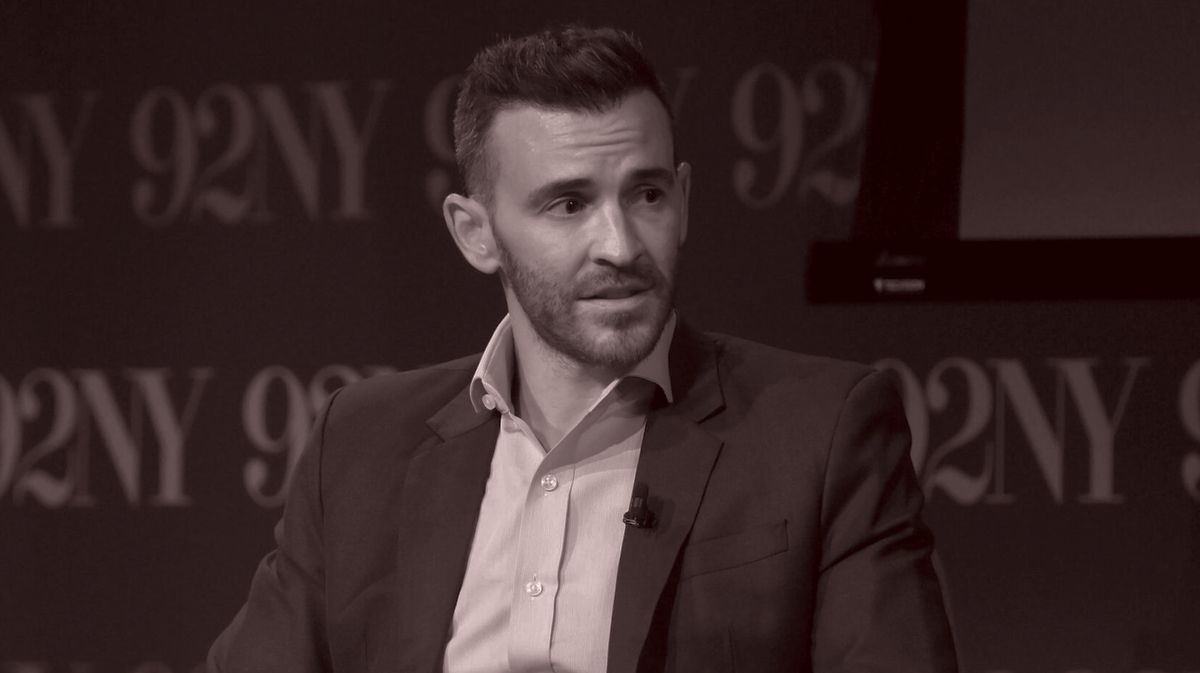
Multiplatform content maven Brian Tyler Cohen reveals how the Democratic blob can finally move beyond its depressing greenroom biases and play a game that the Republicans started mastering a decade ago.
|
|
|
The mark of a good political pundit is to take obvious statements and make them sound profound. Van Jones, the CNN analyst, might be the reigning champ of that particular skill set. Take what he told a post-election panel at The New York Times’s DealBook Summit earlier this month regarding the Democrats’ inability to understand the modern media environment. “I’m telling you guys, the mainstream has become fringe and the fringe has become mainstream,” Jones said. “There are platforms, there are people out there that are getting 14 million streams, and we’re on cable news getting 1 or 2 million. There’s a whole world out there. Donald Trump understood that and we didn’t.” (Actually, during some hours on CNN, they’re lucky to break six figures in the key news demo, but whatever… the point stands.)
The fact that this pat observation was presented as a revelation is perhaps the most significant indictment of the establishment Democratic blob. Anyone with a smartphone could have made this observation at any point in the last decade, but apparently it’s taken an old-fashioned electoral ass-kicking for greenroom Democrats to realize that their media habits are both abnormal and outdated. Very few Americans actually follow mainstream news—even Fox News, if you want to call that mainstream. The ones who do care about news typically have college degrees, a minority position in this country. As I wrote a few months ago, even fewer Americans actually pay for news subscriptions. And yet, every rank of the Democratic Party, from Hill aides to senators, is occupied by people who care deeply about the MSNBC hit and the New York Times profile.
I was talking about this the other day in Los Angeles with Brian Tyler Cohen, a progressive content creator who has amassed over 7 million followers across a multitude of platforms since firing up his iPhone camera in 2018 to rage against Trump. Cohen and I have both been working in the trenches of digital content for years, so we shared a few eye-rolls while sorting through some of the Democratic election postmortems. More podcasts? Sure, but you know podcasts existed a decade ago, right? And that sometimes more people watch them on YouTube? On YouTube alone, Cohen has netted over 3 billion views to date, and with that rising influence, he’s interviewed dozens of Democratic politicians including President Biden, A.O.C., John Fetterman, Pete Buttigieg, and Gretchen Whitmer. And, yes, he has a podcast too. “Hopefully, the silver lining out of this loss will be that Democrats finally recognize the media environment we’re in and they start to operate accordingly,” Cohen told me.
I talked to B.T.C., as his friends know him, about how Democrats can be more creative and aggressive in their work with independent and digital media, as traditional TV ratings continue their decline and the plague of news-avoidance inflicts ever more damage on shrinking newsrooms. No, Kamala Harris didn’t lose the election because she passed on Rogan, but the general and historic liberal undertones of the mainstream media have created a false comfort zone for the Democrats, making them less enthusiastic about exploiting other channels to convey their message. As a result, they’ve found themselves screaming to a declining cable audience in hearing aids while altogether ignoring an emergent landscape where
persuadable and low-propensity voters actually live. As usual, this conversation has been lightly edited for length and clarity.
|
|
Peter Hamby: The post-election conventional wisdom is that Democrats and progressives lost, in part, because they were too slow to understand digital media, distributed content, and the podcast universe. Donald Trump, on the other hand, has embraced alternative media for years. Do you agree with that thesis generally?
Brian Tyler Cohen: Yes. Democrats are operating under this notion that unless a message is delivered on legacy media, then it’s not legitimate, it’s not valid. Independent media for them still feels extraneous. In their minds, any real news has to be broken under the glossy veneer of legacy media. Any juicy interviews have to be conducted under the glossy veneer of legacy media. But the reality is that not only is legacy media’s influence waning, not only is their audience smaller, but if the goal is persuasion—which it is, ostensibly, for politicians seeking to win elections—then you need to talk to an audience that’s actually persuadable. Democrats have high-information voters already. By virtue of heaping more attention onto the same people whose votes we already have, you’re just bringing sand to the beach. You have to go where the persuadable people actually are.
|
|
|
Open Source AI: Available to all, not just the few
Meta’s open source AI enables small businesses, start-ups, students, researchers and more to download and build with our models at no cost.
When AI models are open source, they’re available to all. And when AI models are available to all, everyone benefits.
Learn more about open source AI.
|
|
|
|
On that note, how would you define your audience? You do progressive content, and I assume you have liberal followers, but it sounds like you have a lot of lower-info independent viewers, too.
Of course I have a Democratic base of people, but you have to think of it in a different way: One piece of content can actually be served up as a hundred different pieces of content, depending on where you put it. And inevitably, you’re going to have broader reach depending on the platform. If I cut a clip from an interview that aired on YouTube, Facebook, and TikTok, and then I cut a clip that I put on Twitter, Threads, and BlueSky, that gets millions and millions of views.
You have to think beyond your established audience, to the potential audience of how many people have the opportunity to see it, just by virtue of scrolling on these platforms, which serve as the world’s biggest search engines. Because I’m on so many different platforms, my audience is not some monolith based only on the demographics of my YouTube channel. I have almost a million followers on Facebook. That audience is going to look a hell of a lot different than my audience on YouTube, which is going to look a hell of a lot different from my audience on Snapchat and Instagram and Threads, BlueSky, and Twitter.
Why do you think you were able to catch on in the first place, and what lessons can you share with Democrats and their staffers trying to make attention-grabbing content? What’s the formula?
I like to think it’s a mix of things. A lot of legacy media operates in such a way that they produce content from the content producer’s perspective as opposed to the content consumer’s perspective. I wouldn’t want to sit there in front of the TV and watch news 24 hours a day—and I’m obsessed with the news. I want to get everything I need to know in a few minutes. And so that’s how I make content, just the way that I would want to consume it.
Another thing: I lean on my commentary as the focus, without many bells or whistles. My background has always been plain. I like to think that’s a draw for people. This is a media environment that values authenticity, and I talk like a regular human being. That’s something that the Democrats are learning the hard way. We have to get better at doing that, instead of making sure that all of our messages are poll-tested, safe, inoffensive, and uncontroversial.
And, as you’ve told me, Democrats have spent very little time validating any media infrastructure beyond legacy media.
Right. Whereas Republicans do a great job of going into these new spaces. If anyone has 60 bucks to buy a microphone, Donald Trump will show up to talk to them for 10 minutes, and not only validate that person, not only legitimize that person, but make that person a missionary for him for the other 364 days a year. Talk about a return on investment. It doesn’t get better than that. Democrats never bothered doing that because we just assumed that the mainstream media was going to do our job for us. Our hubris is coming back to bite us, because Republicans have a 10-year head start on Democrats in the independent media landscape.
|
|
You’ve interviewed a bunch of Dems over the last few years. President Biden, A.O.C., Beto, Fetterman. Who on that long list of Democrats gets what you are talking about?
Pete Buttigieg deserves a lot of credit. At the Democratic Convention, Pete had a two-hour block with 10-minute increments for all of these creators. He’s walking the walk. He’s doing exactly what I think people should be doing. He didn’t discriminate based on how big somebody’s platform is. I have like 7 million followers across my platforms. The very next person in line after me was somebody who had 10,000 followers on Instagram. Pete is doing the work and validating all these creators. I know for a fact that he’s helped launch creators’ careers, because when they nab an interview with somebody like Pete Buttigieg, that instantly validates them.
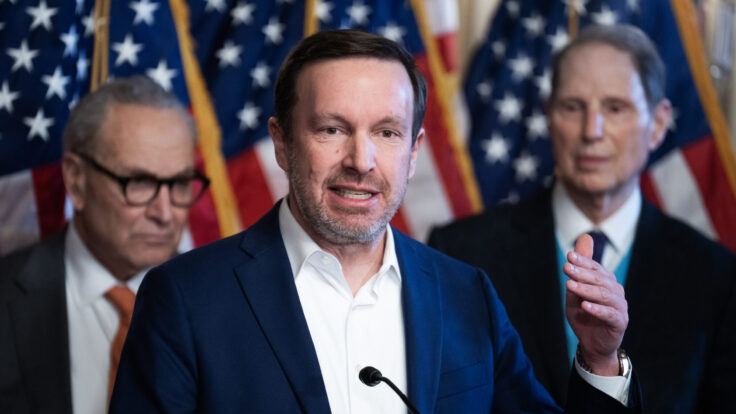
A few others would be Jamie Raskin, who has been really, really generous with his time. Eric Swalwell is really generous with his time. In the Senate, Chris Murphy and Brian Schatz.
|
|
|
|
I think a common thread with the people who get it is they’re either millennials themselves, or they have kids.
I think that’s right. I mean, obviously the people who’ve never used TikTok or Snapchat are not going to understand the importance of TikTok or Snapchat.
I’ve gotten pitched so many times for my Snapchat show— from cabinet officials, members of Congress, people running for office—and I have to respond and say I appreciate it, but what’s the angle? Because I can’t do a traditional interview with the secretary of the treasury and make it appealing to a 17-, 18-, 19-year-old Snapchatter. This relates to what Democrats have been talking about since the election—how they need their own digital media ecosystem, or they need to go on Joe Rogan. But you can’t just waltz into these spaces unless you have something compelling to say.
That’s honestly going to be the challenge for us on the left—to figure out how to deliver some of that important, maybe less sexy information, within some more attention-grabbing packaging. How do you deliver that? I think of it as putting a pill in peanut butter for the dog. I view my job as having a responsibility not to react to Trump doing X, Y, Z, but to say, Trump did X, Y, Z—and here’s how that compares to what Democrats are seeking to do. I use that as an opportunity to deliver something that people wouldn’t click on as a stand-alone. I know I’m not going to get people to click on a video about antitrust or Medicare or Social Security or some of these less sexy topics, but I know how to get people to watch a video. So once I have them, I view my position as having a responsibility to deliver other pertinent information within that broader package.
|
Policing the Language Police
|
Harris’s deputy campaign manager, Rob Flaherty, who also ran digital for the Biden and Harris campaigns, made an important confession to Semafor last week. He said that digital media tactics—doing more podcasts and YouTube shows—only go so far for Democrats today because their party and their leaders have lost their cultural cachet. Trump has always been viewed as a celebrity, so it’s been easier for him to show up in new media spaces.
Absolutely. Jon Lovett has a great take on this. He said that Trump and his supporters have back-of-the-classroom energy, and the Democrats today have front-of-the-classroom energy. Especially for younger audiences, this topic is really the whole ballgame, because politics is downstream of culture. The lesson Democrats have to learn coming out of this election is that we have to be a little less insistent on the purity tests we impose. Right now, in order to be a member in good standing in the Democratic Party, you have to abide by a really narrow set of guidelines and language. We have to be willing to be a little less safe, a little more controversial, and not be so fast to punish somebody if they don’t pass all of our litmus tests.
Democrats have to realize that with our politicians, we’re not looking for a partner, we’re not looking for a spiritual leader. We are looking for somebody to win elections, to get us in power, so we can then enact or to implement as much of our agenda as we can. Oftentimes, I think Democrats would rather be out of power with 100 percent agreement, rather than in power with only 75 percent agreement—even though, in the latter situation, we can actually
enact change. Until we change that mentality, I think we’re going to be in the wilderness and pushing people away in the process.
How much is this a staff problem? It seems like communications staffers in Washington don’t have a lot of imagination.
I think that oftentimes they look at creators the wrong way. So instead of just sending press releases out to NBC or Politico, now they send press releases out to me. But we don’t operate that way. I’m not going to read your press release on air at the 6 p.m. broadcast. It doesn’t work like that. If you want to talk about something, offer up the principal, and I’ll have him or her on, and we can have an interesting conversation for 20 minutes and go in depth about something. You have to think about what independent media actually is. And I think that Democratic staffers often are so stuck in their ways of how the media used to be, that they’re not able to think about how indie media operates and also think about the opportunities that it presents.
The Harris campaign made a big deal out of their TikTok effort. Kamala HQ kind of became the way we in the press understood their digital efforts, and the vibe shift on TikTok after Biden left the race was real. But I also think a lot of reporters confused Kamala’s buzz on social media with real-life excitement among young voters, which obviously didn’t turn out to be the case. Was TikTok too much of a focus this cycle?
Let me put it this way: What they did on TikTok, that should be the bar. The reality is that we just got completely pummeled in terms of the sheer amount of content everywhere, and sometimes it’s just a numbers game. We are at a fundamental systemic disadvantage on the left in terms of the content and the number of creators on all of these platforms. TikTok felt like the only one where the left has a slight edge over the right, but I’m sure that’s about to disappear.
It’s just a matter of getting out in front of people and trying to slow some of the advantages that Republicans have on all these platforms. We need to be ubiquitous on the left, and it shouldn’t just be on Kamala HQ to do that. We’ve squandered years and years and years of being able to build up a progressive or left-of-center media ecosystem. We should have spent the last few years making it so that we have a ton of creators on the left that are doing this work. We haven’t. I think that largely falls on the shoulders of Democrats who refuse to see the writing on the wall and refuse to nurture and embrace independent media. But hopefully the silver lining out of this will be that Democrats finally recognize the media environment that we actually live in, and operate accordingly.
|
|
|
|
Join Emmy Award-winning journalist Peter Hamby, along with the team of expert journalists at Puck, as they let you in on the conversations insiders are having across the four corners of power in America: Wall Street, Washington, Silicon Valley, and Hollywood. Presented in partnership with Audacy, new episodes publish daily, Monday through Friday.
|
|
|
|
Unique and privileged insight into the private conversation going on inside Wall Street, as told by the best-selling journalist and former M&A banker.
|
|
|
Need help? Review our FAQ page or contact us for assistance. For brand partnerships, email ads@puck.news.
You received this email because you signed up to receive emails from Puck, or as part of your Puck account associated with . To stop receiving this newsletter and/or manage all your email preferences, click here.
|
|
Puck is published by Heat Media LLC. 107 Greenwich St, New York, NY 10006
|
|
|
|



_01JEBMRTVXP3K52FH8Q040XBK0.jpg "Meta")
_01JEBMRCHB4835PM0AT4DQ83QA.jpg "Meta")