 |
|
Happy Monday, I’m Peter Hamby and this is The Best & The Brightest, our daily political email focused on the inside conversation in Washington. Tonight, with the Iowa State Fair kicking off this week, notes on the declining importance of early state politics in national presidential campaigns, and how the DeSantis campaign fell through the social media looking glass.
But first, a few words from Abby Livingston…
|
| The Capitol Hill Cafeteria Report |
|
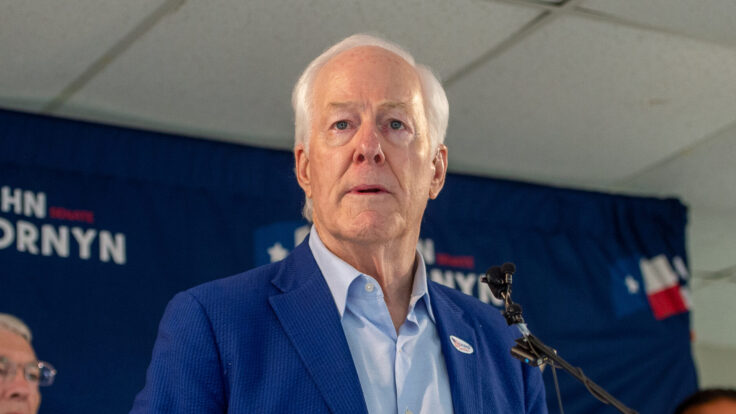
- Cruz Feels the Burn: Ted Cruz is the top fundraiser among the incumbents and candidates running for Senate this cycle, but he has burned through much of that cash, according to recent F.E.C. tabulations. Cruz has raised $37 million during the last four years but has had a strikingly high burn rate—he has spent $33 million—pushing his cash on hand well below the $5.7 million banked by his Democratic challenger, Colin Allred. Traditionally, senators save as much money as possible during the four years when they’re not actively running, and wait until their re-election year to deploy their funds.
The most disciplined spenders this cycle, Jon Tester and Kyrsten Sinema, have brutal campaigns ahead. Tester had the lowest burn rate among the top fundraisers (31 percent spent), and he will need it to survive a ferocious G.O.P. offensive against him, led by his fellow Montanan and this term’s N.R.S.C. chairman, Steve Daines. Sinema, an independent, has yet to officially announce whether she is running for re-election. But she’s pinching pennies: She has only spent 32 percent of the money she’s raised since early 2019. That frugality is part of the reason she has a $7 million cash-on-hand advantage over Democrat Ruben Gallego, who entered the campaign earlier this year and outraised her last quarter.
|
- Well, This Is Awkward: Nobody is more uncomfortable with the open Democratic primary to replace Senator Dianne Feinstein than colleagues of Reps. Barbara Lee, Katie Porter, and Adam Schiff, who have divided California’s powerful state delegation by all running for the same seat. (Cam Joseph, writing for The Los Angeles Times, captures the awkwardness here.)
So far, it seems, the candidates are working overtime to keep things friendly. Schiff and Porter have been spotted on the same crosscountry flights out of LAX, and Porter said she and Lee recently shared a ride on the House subway. Interviews “revealed that the trio of lawmakers had remained civil adults and had not put any of them in a tough spot,” Joseph writes. While California Democratic bystanders were relieved, others expressed concern that the fight could still turn ugly, thanks to California’s top-two primary system, which practically guarantees some blue-on-blue violence in the general.
What’s keeping the peace—and haunting the Californians—are still-raw memories from the notorious 2012 member-member race known as “the Berman-Sherman fight,” that pitted Howard Berman against Brad Sherman in a nasty, San Fernando Valley-based Congressional showdown that very nearly came to blows at a debate. Sherman won, but only after the brawl divided the entire Democratic delegation.
|
 |
| The G.O.P.’s Field of Dreams |
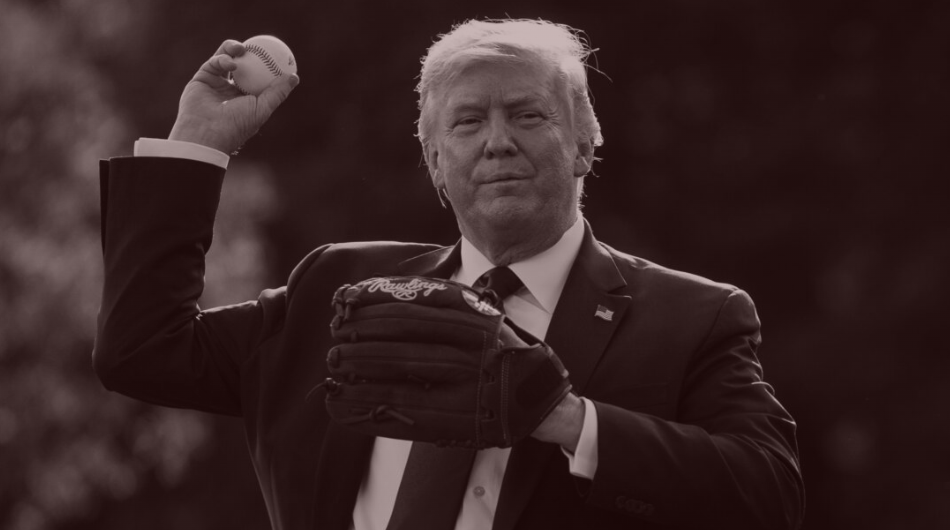
| The bull case for overcoming Trump begins with winning Iowa, consolidating the vote, and then carrying momentum through the primary. But posing with butter sculptures and eating deep-fried Oreos isn’t what it used to be. |
|
|
|
| If you squint hard enough, the Republican presidential race actually looks closer than the national narrative suggests. Only slightly, of course: Donald Trump still has a commanding lead in the nomination fight, even as he faces 78 criminal charges, and counting, from multiple indictments. But a new poll out of Iowa is giving a measure of comfort to his Republican rivals.
There’s been a frustrating dearth of good polling out of the early caucus and primary states, leaving us with national polling that shows Trump with a roughly 40-point lead over his closest rival, Ron DeSantis. High-quality polls are expensive, and cash-strapped news organizations are presumably waiting until the nominating contests get nearer to spend money on them. But last week, the polling gods finally smiled upon us junkies when The New York Times and Siena College dropped a detailed poll on the state of the race in Iowa. There are a lot of crappy polls out there these days. This is not one of them.
The headline: Out in corn country, Trump is still leading, but his poll numbers are worse. He’s up on DeSantis in Iowa by 23 points, not 40. That’s a big time lead, sure, but not exactly a determinative one with six months until the caucuses. In 2012, Rick Santorum gained 20 points in just the final month to win the state. That was a different time, yes, and the Republican Party wasn’t a MAGA personality cult like it is now. But the new data suggests Iowa Republicans aren’t ready to let Trump coast to the nomination just yet.
DeSantis, Tim Scott, and Vivek Ramaswamy are all doing slightly better in Iowa, where the candidates are spending more time and voters are paying closer attention to the race, the Times poll found. Ominously for Trump, a sizable number of Iowa Republicans—about 70 percent—are at least considering dumping him for one of his challengers. Looking at the race through that prism, Trump’s legal problems aren’t exactly the rally-the-troops political boon that many have assumed. And of course, just two years ago, you would have been called a lunatic for floating the idea that 70 percent of Republicans anywhere would be open to a Republican nominee other than Trump.
In Iowa, DeSantis also has a higher favorability rating than the former president, even after an incident in which the frowny-faced governor told a Wayne County child that his Icee had too much sugar. The G.O.P. frontrunner still has the most dedicated base of support, of course, but for his primary opponents, the poll has to be a breath of fresh air after a summer of fatalism. Especially for DeSantis, who has promised a scrappy campaign “reset” and is posting up in Iowa for the rest of the cycle doing retail, while Trump travels the country giving big speeches.
David Kochel, a longtime Republican strategist from the state, told me that “Iowa represents the best opportunity to put the brakes on the Trump train to the nomination.” Iowans, he said, “mostly ignore national polls, and they want to see the upcoming debates. Iowa always breaks late, and this cycle will be no different. Trump is leading in Iowa, but he has by no means put it away.” Iowa, it should also be noted, is the one big contest that Trump lost in 2016, succumbing to Bible-thumping Ted Cruz by three points in a state where churchgoers still count for something in a caucus. |
| The State of the State Fair |
|
| This bull case for a non-Trump candidate depends on the signals above, and a specific set of dominos to fall: somehow steal a win or a strong second place finish in Iowa, make Trump look suddenly vulnerable, consolidate the anti-Trump vote, watch other candidates drop out, and hopefully carry momentum through New Hampshire, South Carolina and beyond.
The bear case might be more compelling. Trump is a juggernaut because local politics—county fairs, Pizza Ranch visits, endorsements from activists and Christian leaders—don’t really matter much anymore in presidential politics. With today’s tribalism and social media shaping our views, all politics is now essentially national—and it has been for over a decade, no matter how much Iowa or any other nominating state wants to politely raise its hand.
The reality is probably somewhere in between. But I remember texting some friends back in June, laughing to myself, when the New Hampshire Federation of Republican Women released a statement attacking DeSantis for planning an event in Concord at the same time as their annual fundraising lunch with Trump. The group was aghast. How dare he breach such treasured decorum! “To have a candidate come in and distract from the most special event [the women’s group] holds in the year is unprecedented,” they said. Politico characterized this “unprecedented” error—again, a scheduling issue with a group of local blue-hairs who lunch—as yet another disastrous DeSantis stumble, emblematic of his ongoing failure to appreciate the texture of early state politics.
New Hampshire, like Iowa, cherishes its precious role in the nominating process. Party leaders and activists get to be locally famous, and plenty of them cash in on the attention. Reporters—myself included, admittedly—love to hold onto the idea that provincial traditions in places like Iowa can still have a momentous impact on national politics and shape the direction of the free world. The Iowa State fair starts later this week, and national reporters will be traveling there en masse to post pictures of the butter sculpture, eat deep-fried Oreos, and watch the Republican candidates cosplay Huey Long from the Des Moines Register Political Soapbox.
Iowa Gov. Kim Reynolds, who Trump has criticized lately for supposedly favoring DeSantis, will also be interviewing the G.O.P. candidates at the fair over at JR’s Southpork Ranch—an event I will definitely be attending because they serve “Bacon Pickle Mac N’ Cheese” at the restaurant. But while it’s important for the candidates to make nice with the popular sitting governor, it’s unlikely any Iowan will make their caucus decision come January based on the softball questions tossed their way by Reynolds.
Anyway, there’s no such thing as local politics anymore when every interaction is instantly documented, decontextualized, and uploaded to social media for national consumption. All of those speeches will be livestreamed for anyone, anywhere to see, whether you live and vote in Iowa or not. Which means the candidates are more likely to get attention by talking about issues and culture war topics that animate national Republicans these days, not biofuel subsidies. Of course, Donald Trump won’t bother with that soapbox at all, and he didn’t bother with it back in 2016 either, instead landing his TRUMP-emblazoned helicopter at the state fair and taking local kids for rides. It flew in the face of tradition, but it got Trump more attention than flipping burgers.
I say this as someone who proudly lived in South Carolina during the 2008 primary and has spent more money on beers at Strange Brew in Manchester than I’d care to admit: The early primary states still matter, but they’re mutating into something different and unrecognizable. They’re either the purest form of presidential campaigning, or a simulacrum of a kind of down-home politics that no longer exists. Is Trump winning Iowa by 40 points or by 20 or by 10? I don’t know. Are Iowa Republicans getting their news from the Sioux City Journal, or a funny meme someone texted them? Are they watching KCCI, or Fox News? Are they taking cues from their local church leader, or Dan Bongino’s podcast?
It’s hard to tell these days if the Iowa caucuses are a Grant Wood painting, or a Grant Wood painting created by generative A.I. in a Republican Super PAC office located in northern Virginia. The line between national and local is as blurry as my vision after staring at my screen all morning watching clips from the Iowa G.O.P. Lincoln Dinner. A good example: Mike Pence showed up at the Iowa Family Leader Summit a few weeks ago, thinking it would be a safe space to talk about his faith with some fellow Midwestern evangelicals. Instead, he got grilled by Tucker Carlson about Ukraine and January 6th. |
|
|
| This past weekend, an image circulated on social media of a DeSantis event in Tama, a railroad town somewhere between Des Moines and Cedar Rapids. Tim Miller, the NeverTrump political strategist and writer who doesn’t have much love for Tiny D, was on hand to witness the event, held at Spanky’s Livestock Auction. The crowd was modest, and Miller went up to the rafters and snapped a photo that would give any advance staffer a heart attack, showing DeSantis talking to a mostly empty room with only a handful of Republicans in attendance. Of course, it was that image that went viral.
Susan Sontag once described the medium of photography as “a soft murder”—and this was exactly that. The picture fed into the wider narrative that the struggling DeSantis campaign is on its last legs. Trump’s campaign saw Miller’s photo, and Trump himself posted it on Truth Social. After that, the image spread to millions, and later reached millions more on television and other platforms.
That photo, decontextualized and shared widely, gave order to the notion that DeSantis is sputtering. But even Miller admitted in a later tweet that DeSantis’s crowds were actually pretty good at his other events in Iowa before and after the debacle at Spanky’s. He got a standing ovation at a cattle call in Cedar Rapids later that day, too. DeSantis also had the warmest reception at that big Iowa G.O.P. dinner last week, second only to Trump that evening, giving him some renewed hope even before the Times poll came out. If you missed his speech, well, you had to be there. Or maybe you didn’t. |
|
|
|
| FOUR STORIES WE’RE TALKING ABOUT |
 |
| Strike Setbacks |
| Is Hollywood’s labor dispute back to square one? |
| JONATHAN HANDEL |
|
 |
|
 |
|
 |
|
|
|

|
 |
|
|
|
Need help? Review our FAQs
page or contact
us for assistance. For brand partnerships, email ads@puck.news.
|
|
You received this email because you signed up to receive emails from Puck, or as part of your Puck account associated with . To stop receiving this newsletter and/or manage all your email preferences, click here.
|
|
Puck is published by Heat Media LLC. 227 W 17th St New York, NY 10011.
|
|
|
|