|
Hello and welcome back to The Best & The Brightest, I’m Leigh Ann Caldwell, back in D.C. after meeting many of my New York–based Puck colleagues last night at our new tradition—trivia night. Even though my team did not win (the results were rigged, obviously), I work with a lot of great people who make Puck thrive.
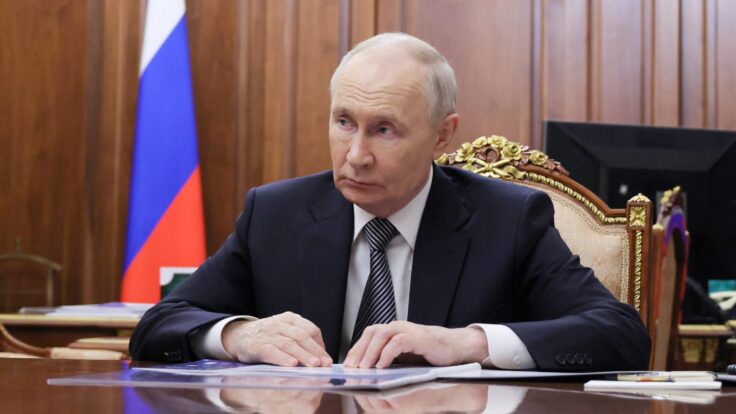
Meanwhile, the world is watching and waiting for Trump’s decision on Iran. Will a president who campaigned on ending costly foreign wars join Israel’s bombing campaign, and possibly push for regime change in the Islamic Republic? “Nobody knows what I’m going to do,” he told reporters today proudly. No truer words…
Trump is busy on the home front, too, and today I’m taking a look at the massive stick/carrot combo he’s dangling before Senate Republicans who might dare to vote against his Big Beautiful Bill: endorsements. Trump is strategically withholding them from the members most likely to oppose him, and specifically those facing the most challenging primary prospects.
But first…
|
- The online MAGA war over war: Anyone with a broadband connection has probably seen the social media sparring over whether or not to bomb Iran, an issue that has bitterly divided old-school, hawkish Republicans from the more isolationist MAGA set. In short, we are told, there’s only so much damage that Israel can do to Iran’s alleged nuclear facilities without American heavy ordinance, such as the GBU-57 “bunker buster,” which can only be carried by the B-2 stealth bomber.The intraparty dispute was perfectly encapsulated by Tucker Carlson and Ted Cruz, who got into it this week, with the host accusing the senator of wanting to bomb a country he doesn’t even understand. (Cruz didn’t know the population of Iran, which is roughly 90 million, on the grounds that “I don’t sit around memorizing population tables.”) Good theater, perhaps, but there are real stakes: Along with Steve Bannon, Carlson is trying to publicly persuade the president not to get involved in another war in the Middle East.Republicans tell me they wish that these MAGA stars with massive followings would stop fighting in public, particularly over such a serious matter. On the other hand, both Carlson and Cruz have built their livelihoods on debating issues and persuading audiences, and they’re unlikely to stop now. Plus, if Cruz does run for president in 2028, the exchange could be a defining one—and who knows whether his support for attacking Iran (whatever he knows or doesn’t know about the country) will fly with the G.O.P. by then?
|
|
|
|
A MESSAGE FROM OUR SPONSOR
|
bp supports ~300,000 US jobs. Jobs that serve you across our US family of brands – like bp, Amoco, ampm, Thorntons and TravelCenters of America. And jobs that produce, refine and transport the energy that you get here. See how else bp is investing in America.
|
|
|
- D.N.C. drama, cont’d: My colleague Abby had a great piece yesterday on the D.N.C.’s own intraparty bickering. Democrats, too, are frustrated that their private squabbling is spilling out into public view. As Abby noted, though, chair Ken Martin still has a lot of support within the organization, notwithstanding the exits of vice chair David Hogg and two of his high-profile supporters, Randi Weingarten and Lee Saunders.
One former top D.N.C. official told me the party went through something similar after John Kerry’s loss to President George W. Bush in 2004, when Howard Dean served as chair, and after the 2016 election, when the party was divided between Bernie bros and Hillary superfans. This person went on to suggest that, really, no one cares about D.N.C. infighting, and few will remember this episode—especially if the national party follows through on its promise to spend millions of dollars across all 50 states to help state-level Dems rebuild. “Ken should reach out to Howard Dean for some advice,” the former D.N.C. official suggested.
|
|
|
|
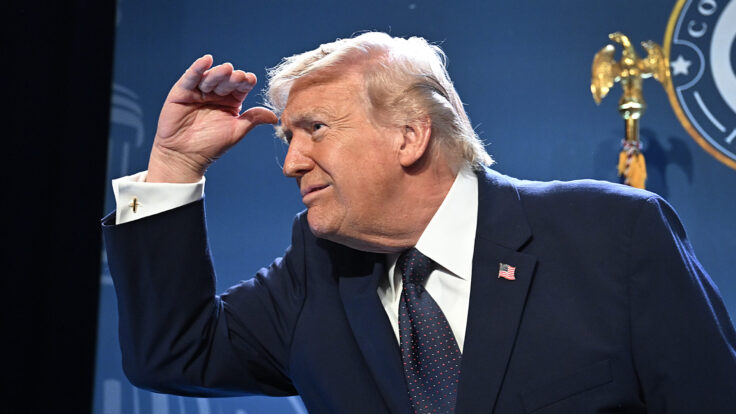
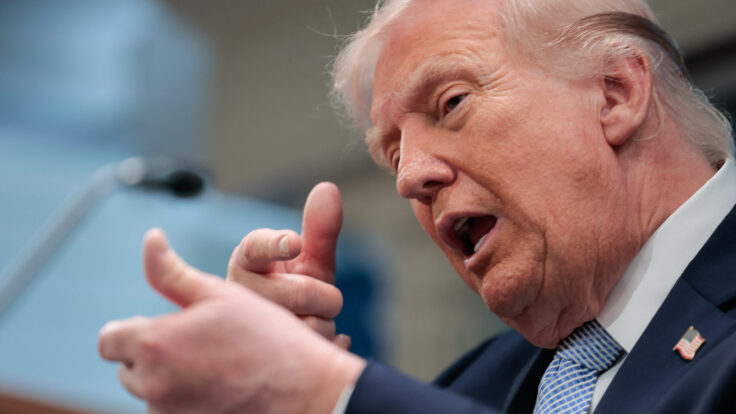
The president is strategically withholding endorsements for senators who may need them to hold on to their seats. But would he risk losing the Republican majority—and face very real political consequences himself—for the sake of spite?
|
|
|
|
President Donald Trump has endorsed about half of the senators running for reelection in 2026, including his golfing buddy Lindsey Graham in South Carolina; Montana’s Steve Daines, the campaign maven who helped Republicans gain control of the Senate last cycle as head of the National Republican Senatorial Committee; and blindly loyal types like Cindy Hyde-Smith of Mississippi and Markwayne Mullin of Oklahoma, who serves as a liaison between the Senate, the House, and the White House. J.D. Vance’s
Ohio replacement, John Husted, has also received the president’s blessing.
But there are some notable names missing, including senators who could really use the assist, since they’re likely to face tough primaries or general elections. These include Sens. Thom Tillis of North Carolina and John Cornyn of Texas, both of whom are considered weak with their respective Republican bases. Sen. Tim Scott, the current N.R.S.C. chair, urged Trump this spring to just go ahead and endorse all the Senate Republicans running for reelection, per two sources familiar. Senate Majority Leader John Thune has pressed Tillis and Cornyn’s cases in particular. But Trump has refused. In fact, per two other people familiar with Trump’s thinking, he’s withholding those endorsements on purpose, to keep certain senators in line.
|
|
|
|
A MESSAGE FROM OUR SPONSOR
|
bp added $190+ billion to the US economy over the last three years. Like starting up our fifth offshore production platform in the Gulf of America – home to some of our lowest-emission barrels of oil and gas. Bringing more US energy online right now is one more way bp is investing in America.
|
|
|
Senate Republicans, of course, are grappling with Trump’s tax and spending bill, which is looking more and more like a politically risky vote on account of the cuts to Medicaid—especially states that have expanded the program, like North Carolina, and have a high number of citizens who depend on it, including Maine. In any case, Trump is using the prospect of his endorsement (or non-endorsement) as leverage to make sure they can get to “yes.” (The bill text is not final, and negotiations are ongoing to make it more palatable—a complicated puzzle of trying to satisfy the centrists without further alienating the fiscal hawks.)
But it’s a tough bind for Republicans, especially in the swingier states, since multiple recent polls demonstrate the unpopularity of the Big Beautiful Bill—64 percent of adults viewed it unfavorably in one poll, 53 percent opposed it in another, and a plurality of 42 percent were against it in a third. Those are daunting numbers for vulnerable Republicans, especially as Democrats argue that the bill will increase healthcare and energy bills, and promote income inequality.
There are other warning signs for the G.O.P. Some recent polls show that voters are looking for Republicans in Congress to show independence from Trump—16 percent of Republicans said in the Quinnipiac poll that their party wasn’t doing enough to check Trump, among the 58 percent of voters in general who feel that way. A Democratic operative told me last week they were starting to see the same thing in their own polling, which gives them hope that Trump’s support, nationally and within the G.O.P., is softening.
Republicans still maintain that a Trump endorsement is more than enough to compensate for any immediate political damage from a risky vote. Standing with Trump, especially on his core legislative goal, goes a long way to prevent an effective primary challenge, and can motivate his voters to turn out in the general election—a metaphorical golden key (not unlike the real one Elon Musk got on his way out of the White House) to electoral success. “There’s an understanding that none of the in-cycle vulnerable members can afford to vote against the bill,” one Senate Republican operative told me. Not only do they have to be seen to be delivering on Trump’s priorities, this person reasoned, “they have to be able to say that they extended the tax cuts” in the bill.
|
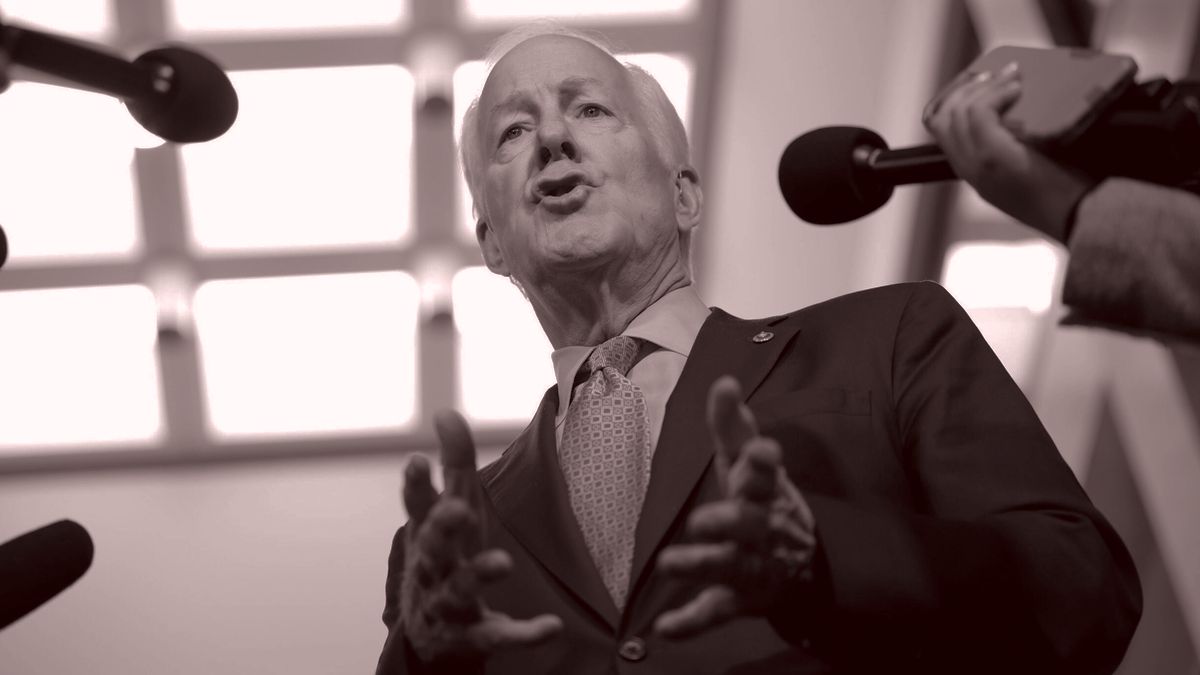
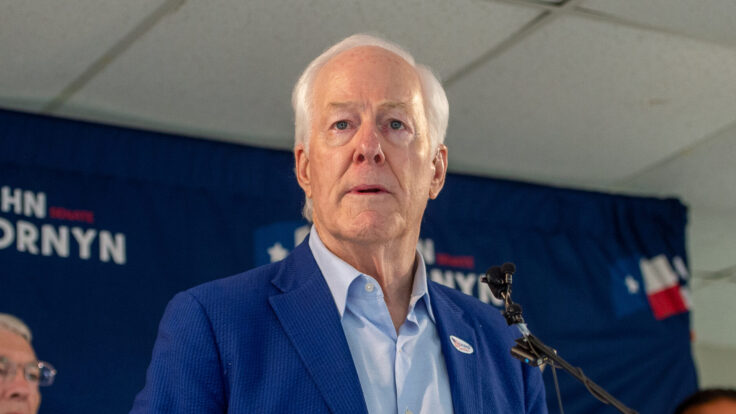
For certain senators, the risk of getting knocked off in a primary is real. It’s clear why Cornyn and his team, for instance, are at pains to point out that the senator votes with Trump 99 percent of the time; in fact, some blame Cornyn’s softening appeal with the base on his shepherding of a bipartisan gun-safety bill during the Biden administration. Texas’s senior senator faces a primary challenge from the state’s scandal-plagued, but MAGA-approved, attorney general, Ken Paxton, and currently trails in the polls by 17 points. Perhaps not coincidentally, in recent weeks, Cornyn has tacked to the right, demanding steeper budget cuts in the Big Beautiful Bill.
|
|
|
Meanwhile, Tillis and his team maintain they’re in contact with Trump’s team, but that the senator doesn’t ask for endorsements, even from the president. Too bad for Tillis. When weighing endorsements, one Republican told me, Trump considers an actual request for one to be an important factor in the decision. Meanwhile, recent polling shows that the North Carolina senator only gets positive marks from 42 percent of Trump voters in his state. He has, after all, flirted with bucking Trump, nearly voting against Defense Secretary Pete Hegseth’s confirmation, and helping tank Ed Martin, Trump’s original nominee for U.S. attorney for the District of Columbia.
Tillis has also quietly raised concerns over the Medicaid provisions in the G.O.P. tax and spending bill. Tillis insists he’s not worried about a primary from the right by retired businessman Andy Nilsson. Perhaps more concerning is the general, where he may face the popular former governor Roy Cooper.
Some who have been on Trump’s shit list, like Louisiana Sen. Bill Cassidy—who voted to impeach Trump in 2021 and refused to endorse Trump in 2024—haven’t expressed major reservations with the Big Beautiful Bill; Sen. Joni Ernst has defended it, and its Medicaid cuts, memorably telling a constituent, “We are all going to die,” when asked about them. Trump has endorsed neither. The Wall Street Journal reported that there’s speculation Ernst won’t seek reelection, which I’ve also heard, but Republicans say she is now making moves as if she’s going to run again. Also endorsementless so far are centrists like Mike Rounds of South Dakota and Susan Collins of Maine. Rounds, a close friend of Thune’s, is showing no signs of dissent. Collins, however, has several issues with the bill, chief among them are the Medicaid cuts. The White House has made clear that they will let Susan be Susan for now, but you never know if, on a whim, Trump wakes up and decides to encourage former Maine governor Paul LePage, who’s running for Congress in Maine’s rural 2nd district, to challenge Collins.
But the people causing the biggest stir aren’t even in-cycle, which pretty much neuters Trump’s endorsement leverage over them, and those three alone could be enough to sink the bill. Sen. Rand Paul has said he won’t vote for it if its $5 trillion increase to the debt limit remains. Sen. Ron Johnson of Wisconsin is complaining about the bill’s cost. Sen. Lisa Murkowski, the fiercely independent member who won her last election in 2022 despite Trump’s best efforts, doesn’t love the Medicaid cuts and has issues with the speedy phase-out of some of the renewable energy tax credits. Chances are still good, however, that Thune gets the BBB over the finish line in the Senate, but he needs to manage which members have the least to lose by voting for it—or the most to gain by voting against it.
|
|
|
|
Join Emmy Award-winning journalist Peter Hamby, along with the team of expert journalists at Puck, as they let you in on the conversations insiders are having across the four corners of power in America: Wall Street, Washington, Silicon Valley, and Hollywood. Presented in partnership with Audacy, new episodes publish daily, Monday through Friday.
|
|
|
|
Unique and privileged insight into the private conversations taking place inside boardrooms and corner offices up and down Wall Street, relayed by best-selling author, journalist, and former M&A senior banker William D. Cohan.
|
|
|
Need help? Review our FAQ page or contact us for assistance. For brand partnerships, email ads@puck.news.
You received this email because you signed up to receive emails from Puck, or as part of your Puck account associated with . To stop receiving this newsletter and/or manage all your email preferences,
click here.
|
|
Puck is published by Heat Media LLC. 107 Greenwich St, New York, NY 10006
|
|
|
|