 |

|
|
Hello, and welcome back to The Best & The Brightest, your Tuesday foreign policy edition. I’m your host, Julia Ioffe. Before we get started, a few notes on the Middle East.
Israel just launched a ground invasion of southern Lebanon—Hezbollah territory—and, this evening, Iran retaliated by firing nearly 200 missiles at Israel. (Most of them were shot down by Israel and the U.S.) This comes after weeks of Israel softening up Hezbollah with targeted assassinations and attacks on communications infrastructure (i.e., the exploding pagers and walkie-talkies), and taking out the group’s top commanders, including its leader, Hassan Nasrallah.
Hezbollah, which was formed as a Shia resistance army in response to the Israeli occupation of southern Lebanon from 1982 to 2000, is now the strongest force in the country—as evidenced by the absolutely useless protestations and hand-wringing from the official Lebanese government. It is also the most important and powerful Iranian proxy in the region. The group has been designated as a terrorist organization by the U.S. government for nearly three decades.
These are among the reasons we’ve seen such muted reactions from the Biden administration. There have been some attempts (including one led by France) to get Israel and Hezbollah to agree to a ceasefire, but none so formal or comprehensive as the multinational efforts to end the war in Gaza. That’s in part because, as odious as Hamas is, the U.S. has a far more personal beef with Hezbollah, which blew up the Marine Corps barracks in Beirut in 1983, killing 241 American service members. The group also kidnapped the C.I.A. station chief in Beirut and tortured him to death in 1985. And again, they are a proxy of Iran, an adversary responsible for the I.E.D.s that killed and maimed many hundreds of American military personnel in Iraq. Hezbollah has also been one of the pillars propping up Bashar al-Assad’s brutal regime in Syria.
In short, there is no love lost for Hezbollah in Washington. And while there is some worry that the conflict could spiral out of control, the prevailing feeling in the national security community has, until today, been satisfaction that Israel has effectively decapitated the group. “Israel is taking out our trash, too,” I heard one former intelligence officer say—a sentiment that only grew stronger after Israel hit the Houthis in Yemen. This is also why you’re not seeing much protest from other Gulf countries regarding Israel’s recent actions; they hate Iran (and its proxies) even more than the West.
The question now is whether Iran’s retaliation will be limited to today’s air strike or whether it will go further—and what Israel will do in response to Iran’s response. Few people in Washington minded the decapitation of Hezbollah, but no one wants a wider regional war—which is why there was a hope that Israel would limit itself to air strikes and targeted assassinations without resorting to the far riskier, messier option of a ground invasion.
Now, before tonight’s main event—my conversation with Matt Olsen, who heads the Justice Department’s national security division, where he has been leading the battle against foreign election interference—here’s Abby Livingston with an update on how the devastation in North Carolina could impact the election in November…
|
|
A MESSAGE FROM INSTAGRAM
|

|
|
Introducing Instagram Teen Accounts: a new experience for teens, guided by parents.
Instagram is launching Teen Accounts, with built-in protections limiting who can contact teens and the content they can see. Plus, only parents can approve safety setting changes for teens under 16.
So parents can have more peace of mind when it comes to protecting their teens.
Learn More
|
|
|
|
|
When it’s this late in a campaign, and the polls are this historically tight, it would be political malpractice for strategists not to consider the implications of Hurricane Helene’s trail of destruction across the Southeast. At a minimum, the impact of a natural disaster is rarely clear until after the votes are counted. The aftershock can disrupt routines, sure, but also completely dislocate families and shut down polling locations. Here’s a preliminary snapshot of the Helene fallout…
- The national stakes: Republicans are closely watching Joe Biden’s relief effort, looking for any sign of incompetence (meanwhile, Donald Trump is just making shit up…). Following the now-forgotten Ebola outbreak, in October 2014, it’s worth recalling that Republicans effectively weaponized the Obama administration’s response to expand their House and Senate gains that cycle. On the flip side, this is the kind of administrative deployment of government resources that Biden—with his 36 years in the Senate and 12 in the White House—is exceptionally good at managing. It also seems obvious that Harris will own Biden’s response, however it goes.
- All eyes on W.N.C.: Helene hit Georgia hard, but the region that bore the brunt of the storm—western North Carolina—is polling closely, and is at the center of the fight for presidential delegates. Western North Carolina features the Democratic bastion of Asheville, which is surrounded by rural Republican territory. The overlaying congressional district, North Carolina’s 11th, is repped by Republican Chuck Edwards, who won his first race here by about 9 points in 2022. This cycle, the differential will probably be in the same ballpark, given the new map drawn in 2023.
Meanwhile, the state’s only competitive district, North Carolina’s 1st, which features a tossup fight between Democrat Don Davis and Republican Laurie Buckhout, was comparatively out of Helene’s path. Democratic gubernatorial nominee Josh Stein also appears to be running away with his race after the controversies surrounding Republican rival Mark Robinson (the “Black Nazi” guy). In any case, given that a few thousand votes cast in the state could determine the presidential contest, North Carolina will be watched exceedingly closely.
- The known-unknowns: Back in 2012, in the aftermath of Superstorm Sandy, Republicans strategists attributed the underperformance by northeastern House incumbents and challengers to the disaster. At this point, it’s hard to predict which Senate and House races will feel the impact of Helene, but at least one race—Florida’s 13th District, which has seen major damage—is worth watching on this front. The Cook Political Report currently rates this one as “Likely Republican,” although Democratic challenger Whitney Fox is running a serious campaign against controversial MAGA freshman Anna Paulina Luna.
- Funding fights: Finally, in terms of post-election fallout, one of the uglier developments, in recent years, has been the subsequent funding fights in the aftermath of natural disasters. There are, of course, Republicans who fancy themselves fiscal conservatives and love to vote against disaster aid, only to parade around the Capitol, hat in hand to appropriators, when disasters hit their own districts. Democrats seethe over these fights (and keep literal lists of their Republican colleagues who pull these stunts). But even the biggest Democratic brawlers generally refrain from punishing a colleague’s dispossessed constituents to make a point.
|
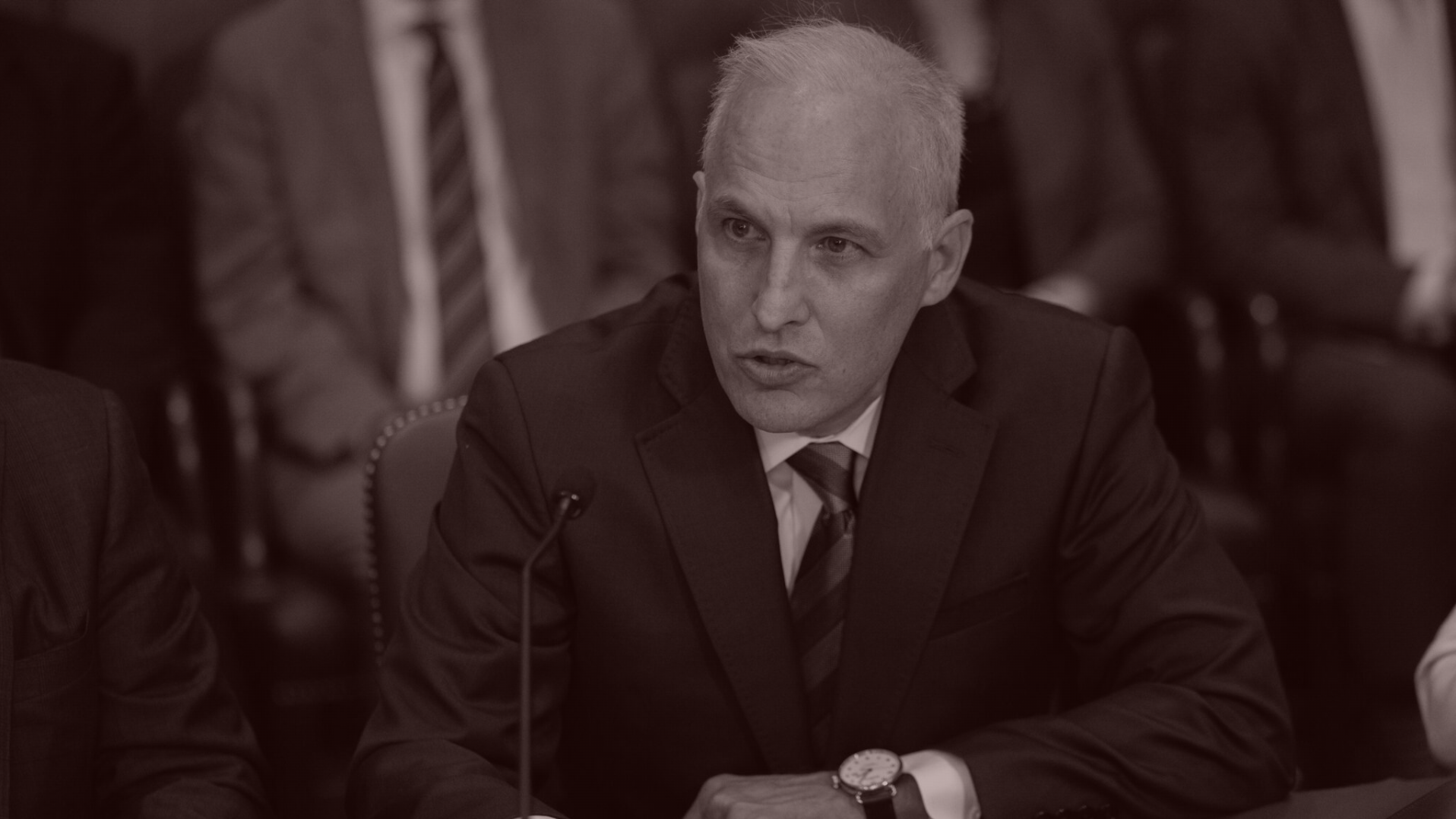 |
| Biden’s Election Cop Tells All |
| A timely conversation with Matt Olsen, head of the Justice Department’s national security division, about Russia’s ’24 election meddling efforts, Iran’s aggressive hacking of the Trump campaign, and why declassifying information about these attacks may be the best antidote. |
|
|
|
| The 2016 presidential election was a traumatic disaster for Democrats. Not least because of the Kremlin’s interference on behalf of Donald Trump, but also because, once he became president, Trump continued to flirt with Vladimir Putin and not do much to head off Russian election meddling during the 2018 and 2020 election cycles, when it was his people at the helm.
This time around, however, the Biden administration is not taking any chances. Starting over the summer, the Department of Justice began flagging foreign election interference and issuing indictments. One such action, against RT (formerly Russia Today, the propaganda network funded and controlled in full by the Kremlin), also implicated a half-dozen of the most notorious right-wing American influencers, among them Tim Pool, Benny Johnson, and Dave Rubin. The D.O.J. indictment alleged that the Kremlin funneled some $10 million through RT to an unnamed American company (later revealed to be the Tennessee-based Tenet Media) to essentially launder their anti-Ukrainian propaganda, making it come out of trusted American mouths, rather than Russian ones. Careful to maintain their apolitical bona fides, the D.O.J. has also outed the Iranian hacking of the Trump campaign as well as Tehran’s various plots to kill Trump as well as alums of his administration.
The tip of the spear inside the D.O.J.’s anti-interference efforts is Matt Olsen, who heads the department’s national security division. Olsen, who has a background in counterterrorism and intelligence (he was, for a time, the N.S.A.’s general counsel), was also part of the team that dealt with the classified documents cases involving both Trump and Biden. With just over a month until the election, I sat down with Olsen to discuss what’s keeping him up at night, how the Kremlin has learned from past mistakes, and how none of this will stop on Election Day. Our conversation has been edited for length and clarity. |
|
A MESSAGE FROM INSTAGRAM
|

|
|
Introducing Instagram Teen Accounts with automatic protections for teens.
Instagram is launching Teen Accounts, with built-in protections limiting who can contact teens and the content they can see. Plus, only parents can approve safety setting changes for teens under 16.
This means parents can have more peace of mind when it comes to protecting their teens.
Learn More
|
|
|
|
|
| Julia Ioffe: What has changed since 2016, when the U.S. government revealed that Russia was trying to meddle in that year’s presidential election?
Matt Olsen: I think Russia learned in 2016 that trying to affect our elections was a fruitful way to advance their interests and weaken the United States. The lesson they took away is, perhaps, that we were not going to take their actions seriously enough.
And so I think what we’ve seen as a consequence is that Russia’s efforts have really ramped up this election cycle. They are the most active threat we face from the perspective of an adversary engaged in election interference. And other countries are right there with them following suit. I would identify Iran as the number two concern, along with Russia and China.
In terms of methods, have they evolved at all? Have they gotten better?
In terms of methods and tactics, I think Russia is adapting and using the latest technologies, particularly artificial intelligence. And we’re seeing them use A.I. along with their standard means of propaganda and then spreading disinformation. They’re using A.I. to increase the resonance or salience of the misinformation. They’re using it to generate content that they then spread through different mediums, and also using A.I. to establish fake social media accounts that are then the vector for spreading Kremlin propaganda inside the U.S.
Some industry folks I’ve spoken to—including at OpenAI, Meta, etcetera—have been tracking this and taking these accounts down. They say that these attempts are pretty ham-fisted, that the Russians are posting even the error messages that ChatGPT gives them.
I think we’re seeing some sophisticated efforts. Look at our recent indictment around RT, where you had a sophisticated effort to fund a company inside the United States that then funded influencers who were unwittingly spreading Russian propaganda. And so while that’s not necessarily a technically sophisticated method, it is a concerted and I think sophisticated effort.
The other related Russia case is the Doppelganger case that we brought, where we took down 32 domains that had been set up to spread Russian propaganda. And this goes to the highest ranks of the Kremlin. They were spoofing real news sites, like Fox News and The Washington Post, and putting out their propaganda through those sites. And they look very real. A lot of effort goes into creating that. I don’t know, maybe it’s not that hard. Maybe it’s not that sophisticated from a technical perspective, but it’s a significant level of effort.
If you look at the memos from the Social Design Agency that The Washington Post reported on, the Russians are very clear about targeting one side of the political spectrum over the other because they think there’s ideological alignment there. I’m wondering, in the RT case, did the Kremlin overpay? Would these influencers have been saying this stuff anyway?
Russia is very sophisticated about making judgments about what pays off and what doesn’t. They see this as an opportunity to exploit our free and open society. And they clearly have geopolitical goals that they’re trying to achieve. At the very top of that list, especially for Putin, is trying to weaken U.S. support for Ukraine. So they’re pulling out all the stops to undermine our support for Ukraine, and if they can get influencers to repeat Russian talking points, that’s all to the benefit of Russia.
Sure, but to what extent were the influencers parroting Russian propaganda, and to what extent were they being paid to say what they were going to say anyway? To what extent is it just a feedback loop?
From our perspective at the Justice Department, our goal is to enforce the criminal laws. The criminal laws require that when there’s a foreign actor acting inside the U.S., they do so overtly and not covertly, not secretly. So what matters to us is the fact that disinformation was being fed to these individuals without their knowledge and not transparently. And so the harm is not necessarily the information. When it comes to the information, we’re neutral on that. The harm is the lack of transparency by the foreign actor, that they were acting covertly and secretly to put out their information.
There’s been a clear effort by the Biden administration, especially around Ukraine, to use transparency as a weapon against the Kremlin. Declassifying intelligence, publicly unmasking these propaganda campaigns. To what extent, given the perceived politicization of the Justice Department, is this breaking through to Americans?
I have confidence that, when the intelligence leadership, the Justice Department, when we take the steps we’re taking, those messages are getting through. Could they get through more, could people pay attention more? I think probably. My message, in part, is: listen to what the director of national intelligence, listen to what the director of the F.B.I., are saying. They are sounding the alarm, and they’re doing so in ways they’ve never done before. I have never seen the intelligence community be so forward-leaning in telling the story about interference from foreign adversaries.
Looking back to what happened in the run-up to Russia’s invasion of Ukraine is a good example of a lesson learned from the intelligence community—there’s a benefit to putting out more information rather than less. And even some information that was close to the line of classified, very sensitive information that we put out was a benefit to the American people and the broader world community understanding [what was going on]. And I think the same lesson holds here. |
|
|
|
|
| You mentioned Iran as the number two threat. We’ve seen them try to hack both campaigns, which seems like a lesson from what Russia did in 2016. To what extent do you think Iran and China have learned from what Russia has done over the last eight years?
I think that they’ve seen the same dynamic: that there are moments in which the United States is vulnerable, and that there are ways in which our society is quite divided, and those divisions can be exploited to the benefit of our adversaries. That’s an obvious lesson that I think any adversary would be able to learn over the past several years. Russia is certainly the most active. Iran is much more aggressive now than they were in past election cycles. We’re very concerned about Iranian interference. We just put out an advisory from the F.B.I. about Iran’s efforts to target the Trump campaign. That’s absolutely not acceptable. And you have to look at that activity in the context of Iran’s lethal plotting activity inside the United States, going after [Iranian] dissidents and former U.S. government officials inside the country.
Why do you think Iran has gotten so much more aggressive during this election?
I think it reflects the broader conflict between the United States and Iran. They’re being very aggressive in lethal plotting inside the United States. Obviously, they are an extraordinarily malign force in the Middle East. This is against the backdrop of increasing tensions and full-blown conflict in Gaza. I think it’s of a piece with the rest of the ways in which we are facing Iran, on a number of fronts.
Do you think they have a preferred candidate the way the Russians do?
It’s certainly clear that they targeted the former president’s campaign. And they’ve been very clear that they are targeting former [Trump] officials in retaliation for the killing of Qasem Soleimani. They’ve made no secret of that. That’s their goal.
Interesting that they’re kind of working at cross-purposes with the Russians. What about the Chinese government?
It’s interesting. We’ve not seen them target the presidential campaign. They have targeted down-ballot and congressional campaigns. They are looking to send messages that align with the P.R.C.’s interests, obviously, but they are not as aggressive on the presidential campaign as Iran and Russia. |
| Post-Election Interference |
|
| We’re 34 days away from the election. What’s keeping you up at night? What’s the worst-case scenario for you?
The thing that I’m probably most concerned about is the increasing pace of election interference, particularly from Iran and Russia—that they have gained access to information, [that they would use it in the kind of] hack-and-leak type of operation that we saw [in 2016]; or increasing disinformation empowered by generative A.I. that overwhelms our ability to warn the American people about it. I can’t predict the future, but that scenario is what I think those of us who are working on this problem set are determined to prevent.
Are you worried at all about this kind of foreign malign interference after the election?
This won’t stop with the election. We’ll still be vulnerable in the immediate aftermath of the election. Our country still has divisions that these countries will seek to exploit.
By sowing disinformation about the results?
In the immediate aftermath of the election, the election results could be a target of misinformation. We have to be really thoughtful about how we talk about those results and to ensure that we are resilient.
Have you seen foreign actors already starting to sow doubt about whether results are to be trusted?
We haven’t. Not that we won’t. They’re looking at moments when we were vulnerable; and the distrust in the actual election results is a vulnerability in our country. So yes, I think we have to be mindful of that possibility. |
|
|
| That’s all from me this week, friends. I’ll see you back here next week (hopefully) for what will be my last dispatch before my maternity leave begins. Until then, good night. Tomorrow will be worse.
Julia |
|
|
|
| FOUR STORIES WE’RE TALKING ABOUT |
|
|
|

|
 |
|
|
|
Need help? Review our FAQs
page or contact
us for assistance. For brand partnerships, email ads@puck.news.
|
|
You received this email because you signed up to receive emails from Puck, or as part of your Puck account associated with . To stop receiving this newsletter and/or manage all your email preferences, click here.
|
|
Puck is published by Heat Media LLC. 227 W 17th St New York, NY 10011.
|
|
|
|