 |
|
Welcome back to The Best & The Brightest.
|
|
I’m Peter Hamby, coming to you from New York City, where the Puck team will be joining Bill Cohan tonight for his invite-only Powers That Be: Live event with Goldman Sachs C.E.O. David Solomon. I’m actually putting the finishing touches on this newsletter a few desks down from Abby Livingston as she fields calls from distressed legislators. Retro newsroom vibes!
Tonight, I have new data from our polling partners at Echelon Insights on Joe Biden’s continuing weaknesses with Black and Gen Z voters, and how their stubborn lack of interest in the election could imperil his reelection hopes. The bright side for Dems? Early support for upstart independent candidates like Robert F. Kennedy Jr. is strikingly soft.
But first, here’s Abby Livingston with the latest from the Capitol Hill money trail…
|
|
|
This fall, as debates raged within the Democratic Party over Israel’s response to the terror attack of October 7, several members of the Squad found themselves with meager fundraising numbers that dampened their hopes of prevailing against pro-Israel primary opponents. But, as recent campaign finance reports demonstrate, all of the Squad members have since jump-started their fundraising. Here’s a deeper look into their bank accounts:
- Detroit strong: No one from the Squad came out of this tumultuous fall with more money than Rashida Tlaib, who started the fourth quarter with about $620,000 in cash on hand and ended it with $3.8 million. Tlaib faces no viable Democratic primary opponents at this point, and her cash hoard would likely scare off most would-be challengers. Ilhan Omar had a strong quarter as well—she raised $1.6 million, which overwhelmed her best-funded Democratic challenger, Don Samuels.
- Endless Summer: Pennsylvania’s Summer Lee, one of only 10 House members to vote against the bipartisan resolution “standing with Israel” in October, pulled down about $1 million last quarter, and banked a nearly million-dollar cash advantage over her Democratic rival, Bhavini Patel. Lee, the first Black woman elected to Congress from her state, also stands out among the Squad for retaining robust institutional support throughout the cycle, including from Democratic colleagues Maxwell Frost, Nancy Pelosi, James Clyburn, Jamie Raskin, Katherine Clark, Sydney Kamlager-Dove, and Ted Lieu, along with the Congressional Black Caucus PAC and Jane Fonda’s climate PAC.
- Bush v. Bell: Cori Bush has a real race on her hands against Democratic challenger Wesley Bell—and it’s not just due to reports that the Justice Department is investigating her campaign disbursements. Like the other Squad members, the Missouri sophomore enjoyed a fundraising surge last quarter. And while she narrowly outraised Bell, he kept his burn rate low and maintained his cash-on-hand advantage over Bush—a major warning sign for any incumbent.
- Meanwhile, in New York: Jamaal Bowman raised more than $700,000 in the fall, but still found himself outraised two-to-one by his Democratic challenger, George Latimer. Bowman’s financial supporters over the course of the cycle include activist Abigail Disney, actress/activist Cynthia Nixon, 2017 Women’s March organizer Tamika Mallory, and N.Y.C. liberal fixtures Ruth Messinger and Diane Ravitch.
- Deutsch’s bank: Sitting members generally avoid aiding primary challenges to their colleagues, even the ones they despise. But a handful of former Democratic members donated against Squad members this cycle—including Nita Lowey, the retired House Appropriations chairwoman, who donated $4,000 to Latimer from her old campaign account, and Colorado Gov. Jared Polis (also a former House member), who made a personal donation to Wesley Bell. But the biggest Squad player hater of all may be Peter Deutsch, who left Congress in 2005. He’s made a habit of making earmarked contributions to the opponents of Bowman, Omar, and Bush. (A source reminded me that Deutsch splits his time between living in Israel and Florida.)
|
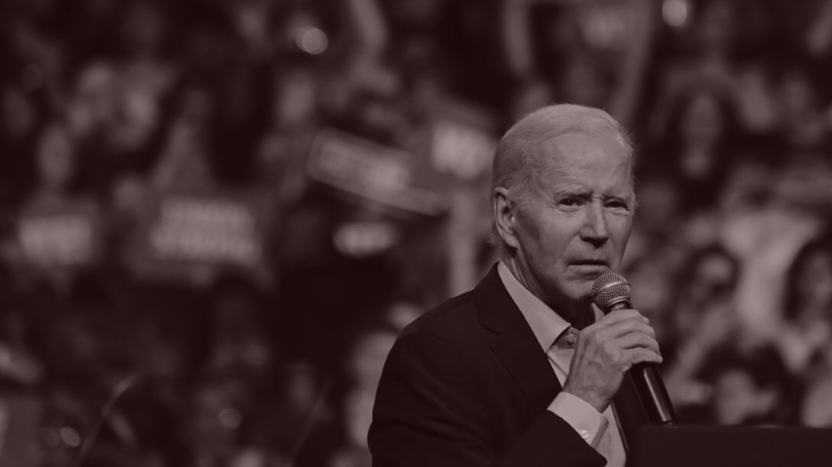 |
| Biden’s World War Z |
| Exclusive new polling from Echelon Insights, in partnership with Puck, shows a significant Democratic enthusiasm deficit among two key demographics: Gen Z and Black voters. So why isn’t the White House all that worried? |
|
|
|
| Maybe you’re following every bilious gurgle of the political news cycle. Maybe you’ve tuned it all out. Whatever the case, there’s still a good chance you could recite the conventional wisdom of the 2024 election if asked: Voters are apathetic and tired of politics. The two likely choices on the presidential ballot are less than ideal. Joe Biden is old, uninspiring, and historically unpopular. Donald Trump is venal, felonious, and may bring about the end of American democracy. The economy is either good or bad, depending on the last thing you read or purchased. As for Congress, well, they’re useless.
Read any poll, listen to any focus group, talk to your pals at the office or in your group chats, and the verdict these days is generally the same: Politics sucks. But there’s a reason this miasma of bad vibes is currently tilted more against Biden than Trump. It’s not just the onslaught of polls showing Trump beating Biden nationally and in key battleground states. It’s the data points underneath those headline-grabbing poll numbers that crystallize Biden’s challenge—primarily, his weakness with core Democratic voting groups that he needs to recapture the White House in November.
For Biden, the math is actually very simple. Trump, of course, has both a floor and ceiling with voters: He is all but guaranteed to hit 48 percent or 49 percent of the vote in key swing states, as he did in 2016 and 2020, but it’s unlikely he will reach 50 percent. Hillary Clinton failed to pass that mark in crucial battleground states in 2016. Four years later, Biden passed the test. Now, though, Biden is struggling to rekindle that same level of support he once enjoyed—and the glaring reason is lack of interest from both Gen Z and Black voters. Both groups are more likely than others to say that the 2024 election won’t make a difference to them personally, that their votes don’t matter, and that they’re exhausted by politics.
That’s according to our latest exclusive poll from Echelon Insights, which is partnering with Puck this year to deliver proprietary data about the 2024 presidential election. Echelon surveyed 1,015 likely voters, matched to the L2 voter file, from February 12-14. On the whole, the vast majority of likely voters—76 percent—said whether Biden or Trump wins “would make a difference to me personally.” Only 13 percent said the election would not make a difference to them either way. But that number was more pronounced among Black voters (18 percent) and voters between the ages of 18 and 29 (23 percent).
Non-college-educated voters of color—a key part of Barack Obama’s coalition—were also far more likely to express disinterest in the election, with 20 percent of them saying the outcome would make no difference to them personally. “If elections hinge on persuasion and turnout, it is a bit of a red flag for Biden that some important pieces of the Democratic coalition assembled under Obama seem to be the least likely to view 2024 as having major stakes,” said Kristen Soltis Anderson, the veteran pollster and founding partner at Echelon. “Democrats are gambling that as November approaches, these voters will come around to feeling personally invested in seeing Biden win, but many just aren’t there yet.”
Young voters and Black voters were also more likely than other groups to say they were “not very” or “not at all motivated” to vote in November, the Echelon poll found. Exacerbating the enthusiasm gap: Voters who cast ballots for Trump in 2020 were 15 points more likely than Biden 2020 voters to say they are “very motivated” to vote.
Another troubling sign for Biden in the poll: Even college graduates—a cornerstone of the Democratic coalition in the Trump era—narrowly disapprove of Biden’s job performance and his handling of the economy. Among all education groups, only voters with a postgraduate degree gave Biden a positive job approval rating (54 percent). In a country where a mere one in three citizens has graduated from college, Democrats are slouching toward the political graveyard if they become a party ruled only by MSNBC viewers with master’s degrees. The modern electorate is divided and defined by education and class. If Biden can’t even marshal majority support among college grads, his re-election hopes are all but toast. |
|
|
| Despite the “lesser of two evils” fatalism coursing through the electorate, a paltry 6 percent of voters said they are “not very” or “not at all motivated” to vote come November, and another 12 percent said they were only “somewhat” motivated. When that 18 percent of voters was asked a follow-up, they expressed a range of reasons for not participating: They don’t feel like their vote matters, they’re tired of politics, they’re disappointed with the likely nominees, or that presidential elections don’t have an impact on their lives. Again, Black voters and young voters were far more likely than other groups to express those sentiments. Glaringly, a third of unmotivated Gen Z voters chose “I don’t feel like my vote matters,” and a quarter responded that “the process of voting is too much of a hassle”—multitudes higher than any other demographic in the poll.
But 85 percent of unmotivated voters said they were open to changing their mind about voting before November. Only 12 percent of this small subgroup said they would definitely sit the election out.
This happens to jibe with the Biden campaign’s theory of this election. His aides are confident that Biden can make history—winning back the White House despite having an underwater job approval rating—by making the election a choice between his competence and the chaos (and mounting litigious morass) represented by Trump. Regular Democrats and other low-propensity voters, they argue, will get off the couch and turn out for Biden once they understand the stakes of the election. CNN reported Monday that Biden has instructed his deputies to “significantly ramp up the campaign’s efforts to highlight the ‘crazy shit’ that Trump says in public.”
It’s clear that Biden needs to go on offense. In a potential horse race matchup that included independent candidates Robert F. Kennedy Jr., Cornel West, and Jill Stein, Echelon found Trump leading Biden, 42 percent to 37 percent. Kennedy netted 8 percent, and the others came in at 2 percent. These outsider candidates have yet to secure a spot on most state ballots, but their potential threat to Biden is obvious, as I wrote about Kennedy’s gadfly bid last year. In the Echelon poll, Kennedy’s support is high with Republicans, but also with Black and Gen Z voters, subgroups where Biden can’t afford to shed enthusiasm. The Biden campaign isn’t ignoring their threat, either. The Democratic National Committee recently signed up communications strategist Lis Smith, a ruthless and experienced rapid response savant, to ramp up their messaging efforts against Kennedy and other third-party wannabes.
But when it comes to these outsider candidates, there was another positive kernel for Democrats in the poll: Support for third-party candidates is soft. Their supporters, for now, are only lightly committed and could change their minds later in the year. Only 24 percent of Kennedy supporters, for instance, said they were definitely going to vote for him in November. A whopping 65 percent of his backers said there was a chance they would change their mind, and 12 percent said they were unsure. Stein and West supporters were even less committed.
Echelon also found some evidence that support for Kennedy is surface-level and based on his famous last name. In the online survey, they tested whether likely voters could identify R.F.K. Jr. in a side-by-side image comparison with his legendary father, the late Robert F. Kennedy. Well, a full third of voters confused R.F.K. Jr. with his father. In other words, even if a lot of American voters say they know who R.F.K., Jr. is in polls, they actually don’t. |
|
|
| The tepid support for third-party candidates, and the willingness of voters to change their minds about the election, suggests that the Biden campaign has an opportunity to grow his support in the coming nine months. Of course, it will be difficult: Even before his presidency, the marble-mouthed Biden never had a reputation as a great communicator. The task of connecting with voters is getting more difficult by the day, with public attention scattered across myriad platforms and the declining power of traditional media.
Indeed, voters are tuning out the news—and fact-based media—in historic, unprecedented fashion. The gods of information are not the Morning Joe hosts or New York Times op-ed writers that Biden consumes. In 2024, they are instead faceless technologists at major social media platforms, some of them owned by hostile foreign entities programming directly to the very Gen Z voters who could decide the election. Many of these players no longer care about healthy news ecosystems, if they ever did.
It’s not an environment that plays to Biden’s old-school interests or his communications efforts, despite the many good young staffers working to help him. A nugget from the Echelon poll proves this out: When asked who voters blame for the tanking of the bipartisan border security package, you’d think they’d point the finger at the congressional Republicans who abandoned it. Or at least at Trump, who demanded that Speaker Mike Johnson and other G.O.P. members kill it so that the former president could spend the fall running on “chaos at the Southern border.” Biden took to the bully pulpit after the package died, and promised that Trump and Republicans would take the blame for it.
But that’s not what voters heard. The Echelon poll found that of all the Washington actors involved in the border package, Biden was blamed the most. “How much blame do the following groups or individuals deserve for the lack of federal action on immigration?” the poll asked, after telling respondents that the recently-released-and-then-immediately-killed Senate border security bill was endorsed by leaders in both parties but vocally opposed by Trump. Biden deserved most of the blame (40 percent), the poll found, followed by Trump (35 percent), Republicans in Congress (35 percent), and Democrats in Congress (34 percent).
“It’s telling that more voters would blame Biden for the lack of a border deal when Trump instigated Republican opposition to it,” said Patrick Ruffini, a founding partner at Echelon. “These numbers show just how far Biden has to go before his immigration message appears the least bit credible to voters.” |
|
|
|
| FOUR STORIES WE’RE TALKING ABOUT |
|
|
|

|
 |
|
|
|
Need help? Review our FAQs
page or contact
us for assistance. For brand partnerships, email ads@puck.news.
|
|
You received this email because you signed up to receive emails from Puck, or as part of your Puck account associated with . To stop receiving this newsletter and/or manage all your email preferences, click here.
|
|
Puck is published by Heat Media LLC. 227 W 17th St New York, NY 10011.
|
|
|
|