{{ 'now' | timezone: 'America/New_York' | date: '%b %d, %Y' }} |
|
|
|
Welcome back to The Best & The Brightest. I’m Leigh Ann
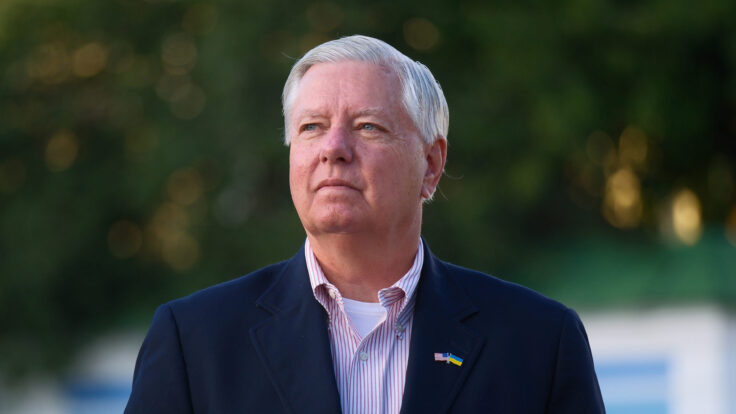
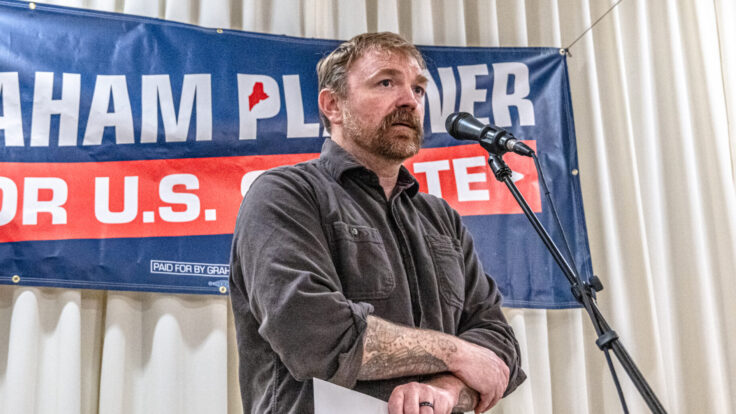
Caldwell. The Senate has a new Sen. Graham: Lindsey’s sister, Darline Graham Nordone, who has dropped her married name for her temporary role. A tribute to her late brother? Or a little odd?
In tonight’s issue, Ian Krietzberg returns with some exclusive data that helps explain why Democrats are running against Big Tech—even if A.I. isn’t showing up in polling as a
breakthrough issue… yet. Plus, up top, I have a look at the cantankerous likely new chair of the Senate Budget Committee, Sen. Ron Johnson, and how he might address a third party-line reconciliation bill. And Marianna Sotomayor digs deep into the latest divisive Israel dynamics roiling the Democrats.
Also mentioned in this issue: Thomas Massie, Hakeem Jeffries, Benjamin Netanyahu,
Trump, Pete Aguilar, John Thune, Mark Kelly, Kathy Hochul, Chris Lehane, Abdul El-Sayed, Valerie Foushee, William Lawrence, Bernie, Dario Amodei, John Della Volpe, Joe Biden, Jesse Stinebring, Clayton Allen, Colin Bortner, Chad
Maisel, and more. |
- Thune’s
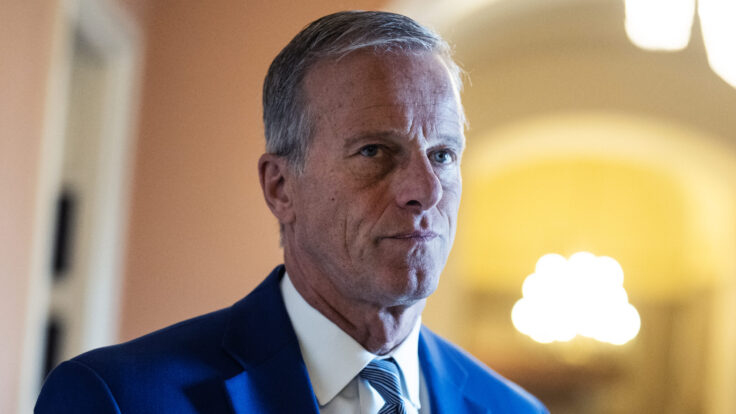
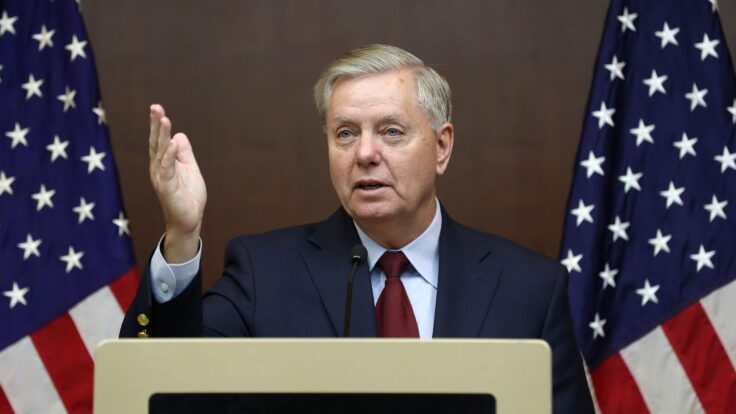
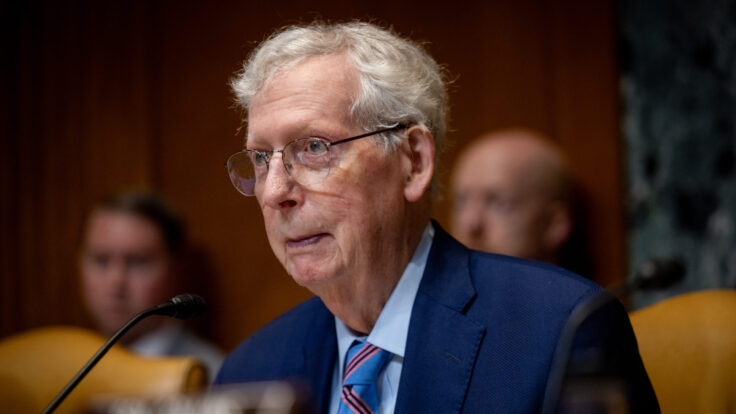
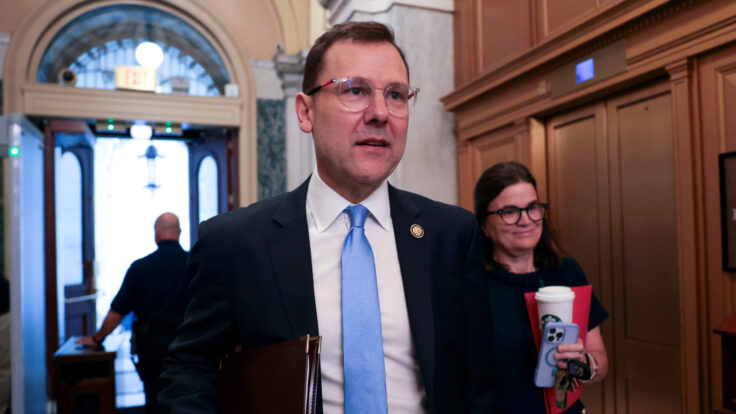
warning: Sen. Ron Johnson, who is expected to take over as chair of the Senate Budget Committee from the late Lindsey Graham, could make life more complicated for Senate Majority Leader John Thune. Unlike his predecessor, Johnson is hardly a leadership ally. A fiscal hawk elected in the 2010 Tea Party wave, he’s a major proponent of the SAVE America Act, which House Republican leadership says they’ll tack onto any
forthcoming reconciliation bill—which Johnson would oversee from his new perch in the Senate. Thune, for his part, has repeatedly stated that Senate Republicans don’t have the votes to get Trump’s beloved proof-of-citizenship bill past a filibuster. He doesn’t believe they can slip the bill through the reconciliation process, either. And, in fact, he would prefer not to attempt a new reconciliation bill at all.
Indeed, Thune told me that he warned Johnson this very
morning of the potential challenges, noting that Senate budget rules would likely prohibit the SAVE Act from being included in a third reconciliation bill. Moreover, Thune said, he reminded Johnson that any new reconciliation bill would allow Democrats to put forward a slew of amendments to trip up Republicans facing tough reelections—and that the bill could fail, given the tough political environment in the midterms. (Johnson has served on the Budget Committee for years, so he does understand
the tricky dynamics. “They’re never easy, and I don’t expect this one to be easier,” Johnson told me.)
In our conversation, Thune was adamant as ever that the House needs to appreciate the Senate’s limitations. “The key—and [Johnson’s] aware of this, and we’ve talked about it—is whatever we do is going to have to be carefully coordinated in the House,” he told me. Thune also said that Johnson has already reached out to the House Budget Committee to try to coordinate their strategies. Good
luck…
|
|
|
|
Building healthier communities means addressing the 80% of health that happens outside the
doctor's office. By working with local partners, UnitedHealth Group is helping communities across America live healthier lives. For example, UnitedHealth Group partners with The Good Acre and local farmers to deliver over 45,000 nutritious meals in the Twin Cities. This partnership helps participants lower their A1C and manage chronic conditions like diabetes, helping to build a better system for
everyone. Learn more. |
|
|
|

| Marianna Sotomayor
|
|
- The Israel aid divide:
The Democratic schism over Gaza is expected to come to the fore on Wednesday as Rep. Thomas Massie forces the House to consider blocking $3.3 billion in annual military funding for Israel. As recently as a year ago, only a few progressive Democrats might have supported such a bill. But the ground has shifted beneath the party amid a series of primary contests in which Democratic voters have made opposition to Israel’s conduct a decisive litmus test for candidates. I’ve spoken to
many Democrats who say they still don’t know how they’ll vote, but expect many of their colleagues to flip on the issue.
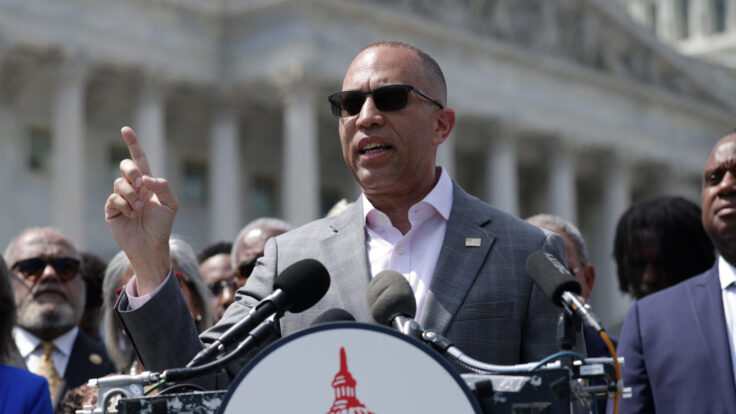
Minority Leader Hakeem Jeffries has been listening to all corners of the debate for weeks, finally clarifying his stance this morning in a characteristically something-for-everyone letter. He called for a two-state solution—the long-standing party position—and squarely placed blame on Israeli Prime Minister Benjamin Netanyahu
for poisoning relations with the U.S. Still, Jeffries said that he would vote against the amendment, describing it as “overly broad” and arguing that there are “more decisive ways to achieve the urgent change necessary”—such as President Trump negotiating new terms with Israel before the 10-year memorandum of understanding between the countries is set to expire.
While many House Democrats I’ve talked to agreed with Jeffries’ position and described his M.O.U. proposal as a
road map for the party heading into 2028, some also believe that he’s taking a risky position in voting against the amendment. In particular, some rank-and-file members think that backing Massie’s bill—even if it will never become law—would be a way for the party to essentially defang the far left, which has leveraged a majority issue with the base to strengthen its appeal. Members are concerned that Jeffries’ vote would ultimately
empower the incoming democratic socialist bloc to make ultimatums before giving him the speaker’s gavel.
When I asked Democratic Caucus chair Pete Aguilar about the issue, he told me that leaders are “not thinking about what a Democratic candidate is going to say in December after they’re sworn in. That’s not part of the
calculus.”
Others, however, may be responding to their own evolving constituent calculus. Rep. Valerie Foushee, who nearly lost her primary to a progressive challenger who was aided by $1 million from an anti-Israel super PAC, told Leigh Ann that she is leaning yes on tomorrow’s vote—adding, pointedly, that Jeffries represents “a constituency that is not mine.”
|
|
|
|
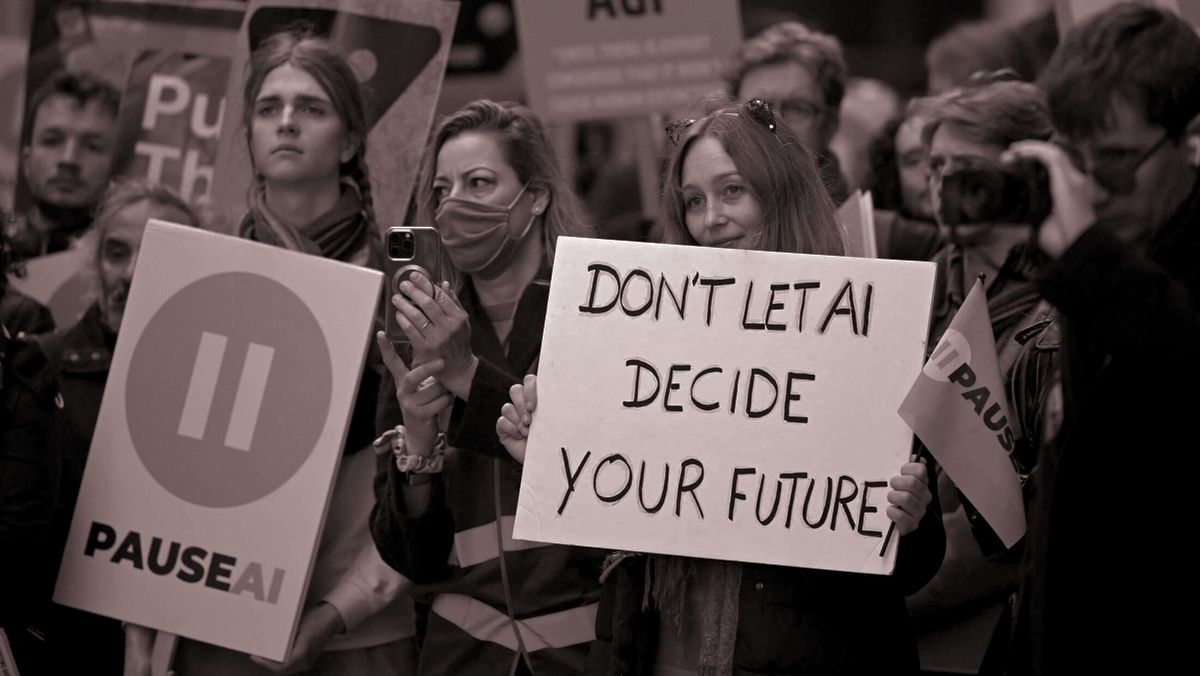
The polling says artificial intelligence isn’t a top-tier issue for voters… yet. But beneath
the affordability crisis, Washington’s top political strategists are picking up early signals of an anti-tech populist revolt. |
|
|
|
Over the past year, I’ve spoken to dozens of politicians and political operatives—Arizona Sen.
Mark Kelly, New York Gov. Kathy Hochul, OpenAI’s Chris
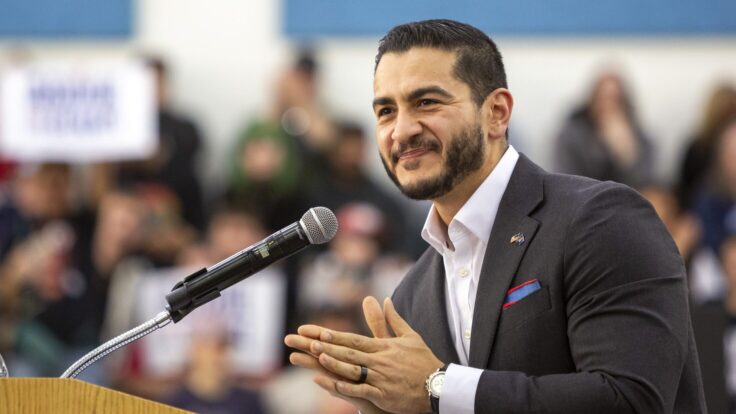
Lehane, Michigan Senate candidate Abdul El-Sayed, and many more—about the coming war to
regulate artificial intelligence, and their own plans to get ahead of what everyone in Washington expects to be one of the defining issues of the decade. Just this week, I hopped on the phone with William Lawrence, a Bernie-endorsed congressional candidate who is running a fierce anti-tech campaign in Michigan. “It wasn’t something I
expected to be talking about when I got into the race,” he told me. But that was before his district received proposals to build four giant data centers. “I’ve seen people packing township halls and high-school auditoriums on a weekly basis since last fall on this issue,” he continued. “People are incensed.” |
|
|
|
Stable jobs help build healthier
communities. That’s why UnitedHealth Group invests in job training programs for high-demand careers like medical coding across the country. So far, UnitedHealth Group has helped more than 300,000 people start or advance their careers, which means better health for them, and their communities. Learn more. |
|
|
|
Of course, there’s no question that data center construction is a salient issue at the local level—as ever,
NIMBYism is one of the most powerful forces in American politics, across party lines. But the extent to which A.I. itself is top of mind for voters is a lot less clear. On the one hand, plenty of surveys have found that Americans are generally anxious about a potentially job-killing technology. According to a new poll from the Artificial Intelligence Policy Institute, large
majorities support more regulation and safety guardrails, while Blue Rose Research found that nearly eight in 10 Americans worry the government doesn’t have a plan for potential job displacement. In late June, Athena Insights found that 66 percent of Americans are concerned about A.I., up nearly 10 points from earlier that same month.
But when you ask Americans to rank their top political issues, A.I. isn’t one of them: A recent Emerson College survey identified the economy as the number one issue for voters, followed by threats to democracy, immigration, healthcare, crime, and
housing affordability. When Harvard and Yale polled young voters earlier this year, respondents overwhelmingly mentioned rising prices and other cost-of-living issues as their most urgent concerns.
And yet, among the most plugged-in political observers,
there’s a feeling that Americans’ current economic anxiety is a leading indicator that A.I. is likely to cause a political earthquake in the coming months and years—even if it’s too early for many voters to connect their feelings of precarity to the technological shock waves that Dario Amodei says are headed their way. “I don’t think we’re picking up the right signals,” said John Della Volpe, the director of polling at Harvard’s Institute of Politics. The
surface-level summary of recent polling, he acknowledged, is that voters are focused on affordability. But “the real issue is that people just want to have some sense of stability in their lives.” And A.I., according to recent focus groups he’s conducted, has the potential to impact that sense of stability enormously. |
“The Most
Underpriced Issue in Politics”
|
Della Volpe, who advised Joe Biden’s 2020 presidential campaign, believes there’s an obvious
thread between A.I. and general aversion toward the billionaires at the center of it, and that the most-successful politicians will be those who anticipate the backlash before it fully arrives. “Candidates win—movements win—when you find the signals for the things that aren’t the top issue,” he told me. Lawrence, the progressive candidate running for Congress in Michigan, agreed that A.I. is perhaps most potent as a political metaphor. “It’s really about who decides,” he told me. “It’s
about control.”
The challenge for these politicians, as Della Volpe pointed out, is that A.I. seems likely to have economic benefits as well as harms. Forthcoming data shared with me by Athena Insights shows that half of voters expect that A.I. will “likely” lead to both existential challenges, like the proliferation of weapons of mass destruction, and important medical and scientific breakthroughs over the next two decades. At the same time, none of the most utopian or
dystopian predictions have yet come to pass, leaving voters somewhat confused. A whopping 70 percent told Athena that they feel no sense of agency either way, agreeing that “A.I. is coming into our lives whether we want it or not.” Still, only 38 percent ranked A.I. as a top priority—the same share as those who prioritized climate change. |
|
|
|
I asked Jesse Stinebring, the C.E.O. of Blue Rose, what to make of this apparent divergence.
“I think that the most important fact about public opinion around A.I. has nothing to do with A.I.,” he told me. “And that fact is we’re in the most populist economic moment in recent American political memory.” Under Biden, Stinebring noted, voters felt like their concerns over affordability weren’t “taken seriously.” So they took a chance on Trump to shake things up, economically speaking (something he certainly accomplished, for better or worse). “A year and a half in, they
feel like that was an abject failure,” Stinebring said. “And increasingly, they feel as if their experience in the economy is a reflection of a system that is rigged for the elite. So that is the lens through which you should view everything as it relates to A.I.”
Americans, Stinebring continued, do perceive the potential of the technology. But they’re worried about what it might mean for their jobs and society at large. “They assume this thing that is coming fast—that they don’t fully
understand and that they don’t know the implications of—will be used to leave them behind,” he added.
According to Clayton Allen, the head of the Eurasia Group’s U.S. practice, A.I. will matter for 2026… just not as a stand-alone issue. “The only thing that really matters in U.S. elections is, and always will be, the economy,” he told me. As a background issue, Allen continued, A.I. will shape “people’s perceptions of affordability, and so it
becomes a necessary talking point.”
For his part, Della Volpe hypothesized that, in the near term, A.I. “may not be an issue that is meaningful enough to enough people.” In the context of the midterms, he continued, “I don’t see this as a dominant issue. The reason is that there’s no clear victim, or hero, or enemy yet.” That’s not the case at the local level, where voters on both sides of the aisle mostly agree that they don’t want hulking data centers driving up electricity prices in
their backyards. But it’s an open question whether anti-A.I. activism manifests as a major issue nationally. As Athena research lead Colin Bortner put it, “Is this NIMBYism? And if it’s not NIMBYism, what is it?”
Nevertheless, most everyone I spoke to was united in the impression that A.I. will likely become a central political topic in 2028. “This will be a story that will unfold over many years,” said Chad Maisel, a senior fellow at the Center for
American Progress. “There’s at least some chance that in 2027, 2028, there’s an acute reckoning, and a moment that will bring lots more eyes to the issue, and people will have some expectation for what those running for president, for example, will offer to solve the problem.” According to Allen, the impetus for such a reckoning could be twofold: Either the technology fails to deliver “all of the benefit it was supposed to,” or it has a materially negative impact on jobs. In the meantime,
Stinebring told me, A.I. remains “probably the most underpriced issue in politics today.” |
Thanks, Ian. That’s all for today. |
|
|
|
Finally, a media podcast about what’s actually happening in the media—not the oversanitized, legal-and-standards-approved
version you read online. Join Dylan Byers, Puck’s veteran media reporter, and Julia Alexander, a longtime media analyst, as they sit down with TV personalities, moguls, pundits, and industry executives for raw, honest, sometimes salacious conversations about the business of media and its biggest egos. New episodes publish every Tuesday and Friday. |
|
|
|
Unique and privileged insight into the private conversations taking place inside boardrooms and corner offices up and down Wall
Street, relayed by best-selling author, journalist, and former M&A senior banker William D. Cohan. |
|
|
|
Need help? Review our
FAQ page or contact us for assistance. For brand partnerships, email ads@puck.news.
You received this email because you signed up to receive emails from Puck, or as part of your Puck account associated with {{customer.email}}. To stop receiving this newsletter and/or manage all your email preferences, click here.
|
Puck is published by Heat Media LLC. 107 Greenwich St., New York, NY 10006 |
|
|
|
|