{{ 'now' | timezone: 'America/New_York' | date: '%b %d, %Y' }} |
|
|
Hello and welcome back to The Best & The Brightest. I’m Leigh
Ann Caldwell. Happy Rosh Hashanah to those who celebrate.
By now, you’ve seen the news that Jimmy Kimmel is returning to late-night television tomorrow, after his show was taken off the air following F.C.C. Chair Brendan Carr’s threat to local ABC affiliates’ broadcast licenses. My partners will have more on this tonight, and in the coming days: Look out for what Matt
Belloni, Kim Masters, Dylan Byers, and Julia Alexander have to say about Disney and Bob Iger’s volte-face, what it portends for other late-night shows, and ongoing threats to broadcast licenses. Just sign up for their private emails, What I’m
Hearing and In the Room.
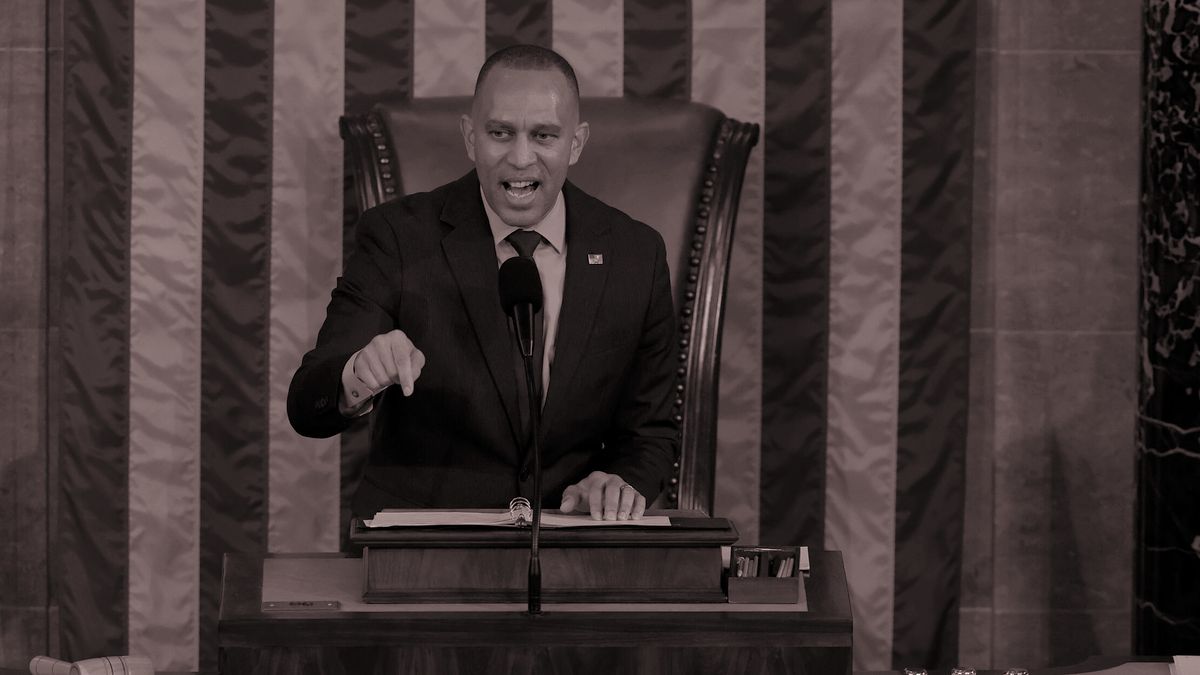
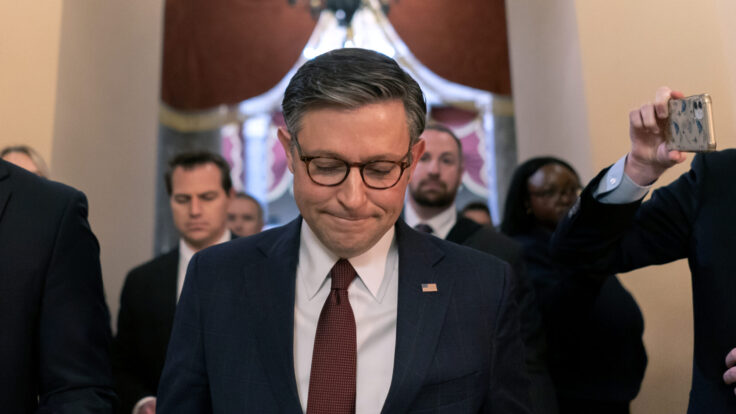
Below the fold, my partner Abby Livingston digs into the mounting frustrations within the House Democratic caucus—which, as you know, will face a number of challenges this fall—surrounding House Minority Leader Hakeem Jeffries.
But first… |
- The
“turning point” debate: Charlie Kirk’s memorial at State Farm Stadium in Arizona was packed with tens of thousands of supporters. Meghan McCain called it “the day Democrats lost 2028.” But was it really the cultural turning point in America—toward conservatism, nationalism, and Christianity—predicted by conservative
podcaster Benny Johnson and others? I’ve been posing that question to plenty of Democrats, many of whom feel like they’ve been on the losing end of the culture war lately.
A handful of party strategists and Hill aides, however, told me they didn’t think this was a seminal moment for conservatives. After all, Trump’s threats to free speech and effusive talk of punishing political enemies may stoke the base, they argued, but otherwise have limited appeal. An early test will
be former Democratic Rep. Abigail Spanberger’s gubernatorial race in Virginia. She’s led in every poll this year, and a loss six weeks from now will certainly indicate some sort of sea change. Meanwhile, Turning Point USA, the organization that Kirk founded, just announced an 11-stop college tour featuring Virginia Gov.
Glenn Youngkin, Utah Sen. Mike Lee, Utah Gov. Spencer Cox, and conservative media figures Glenn Beck, Megyn Kelly, and Tucker Carlson.
|
|
|
A MESSAGE FROM OUR SPONSOR |
Hospitals are here when you need us most – but hospitals across America are at risk of closure. |
|
|
- Trump
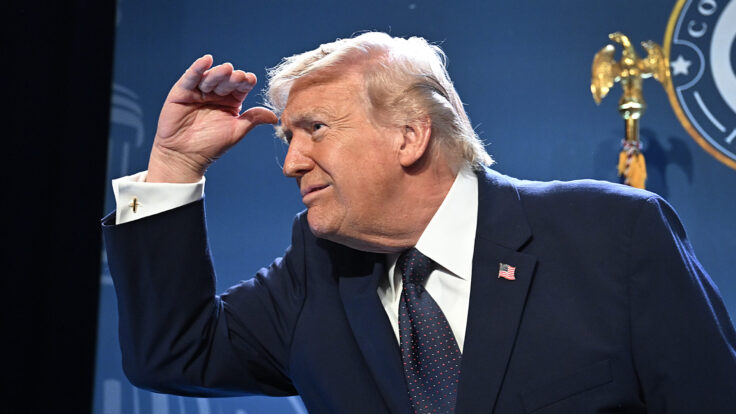
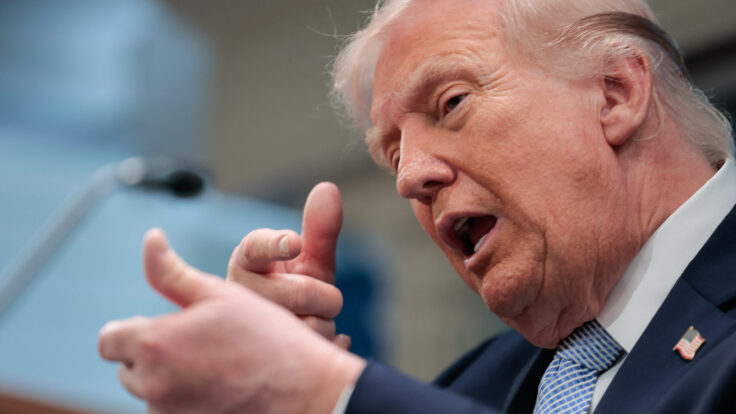
vs. Tylenol: In a remarkable press conference, during which Trump voiced his personal opinions on the vaccine schedule, the president announced that Tylenol is linked to autism, despite a lack of evidence. Sounding not unlike his embattled secretary of Health and Human Services, R.F.K. Jr., whose past claims linking autism to childhood vaccines were based on debunked studies, Trump mentioned a “rumor” that people in Cuba can’t afford
Tylenol and therefore have no autism. He then brought up the Amish—some of whom shun Western medicines—as having “essentially no autism,” before seeming to catch himself, noting, “I’m not so careful with what I say.”
Still, the message from the White House was clear: If you’re pregnant, “don’t take it,” Trump said, referring to Tylenol, unless you have a very high fever and “can’t tough it out.” Afterward, a spokesperson for Kenvue, the company that manufactures Tylenol, told CNBC, “We
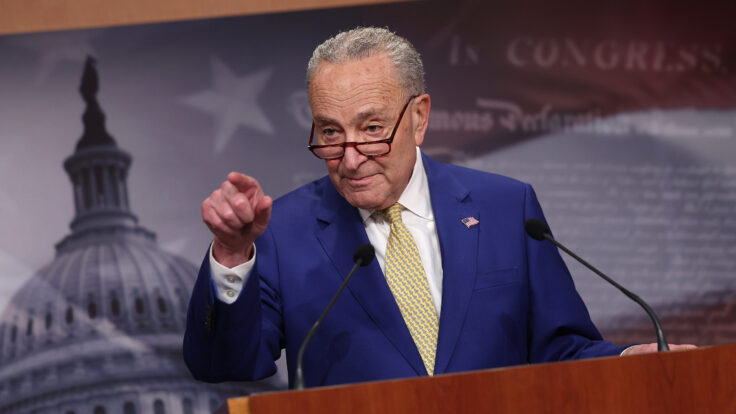
believe independent, sound science clearly shows that taking acetaminophen does not cause autism. We strongly disagree with any suggestion otherwise and are deeply concerned with the health risk this poses for expecting mothers.” - Shutdown politics: Democratic leaders Chuck Schumer and Hakeem Jeffries will meet with the president on Thursday to discuss the upcoming government funding
deadline, according to two people familiar with the meeting. (Punchbowl was the first to report the news.) Schumer and Jeffries wrote Trump a letter demanding to meet with him about “a bipartisan spending agreement that involves the lives of American families and addresses the Republican healthcare crisis.”
Of course, government funding expires on September 30. It’s hard to imagine this meeting will lead to a bipartisan deal—Trump has said repeatedly that Republicans shouldn’t
work with Democrats. Perhaps he has calculated that a government shutdown isn’t in his best interest, and there will be a breakthrough. Or Trump, ever the showman, just wants a show. We’ll see.
|
|
|
Once again, House Democrats appeared scrambled after a split vote on a ceremonial resolution
honoring Charlie Kirk. But the simmering discontent, which spilled into Monday, largely underscored frustrations surrounding House Minority Leader Hakeem Jeffries. |
|
|
On Friday, House Democrats found themselves divided and under attack from Republicans over a ceremonial
resolution concerning the slain conservative influencer Charlie Kirk. Dozens of Democrats had voted against honoring his “life and legacy” over what they said were his views on race, antisemitic rhetoric, and instances of tacit support for political violence—which meant they were also voting
against the language condemning his murder. Many Democrats denounced the killing in separate statements, but Republicans clearly saw an opening: The R.N.C.’s comms shop blasted out a release declaring that, counting “present” votes and absences, “the majority of House Democrats just refused to condemn an assassination.”
But
the Democratic anger that simmered into Monday was less about the Republican messaging than the lack of direction from their own boss, Hakeem Jeffries, whose guidance ahead of the vote was that leadership would support the resolution but members should vote their consciences. The result was a strange breakdown of 95 Democratic yea votes, 58 nays, 38 presents, and 22 absences. “It gave Republicans exactly what they wanted,” an uber-wired Dem lobbyist grumbled. “It
divided the party.” The discord underscored the most common criticism of the House Democratic leader: his propensity to be an indirect, unclear communicator at a time when the party is desperate for marching orders. |
|
|
A MESSAGE FROM OUR SPONSOR |
Hospitals need your help to stay. Protect 24/7 care—because when the doors close, it is too late. |
|
|
Many feared that this indecision might foreshadow Jeffries’ approach to the significant tests the party will
face this fall: To start, Democrats will be confronted with a new phase of the Trump administration, wherein the president has vowed to expand ICE and deploy the National Guard to new cities. Meanwhile, most of Washington believes a government shutdown next week is nearly inevitable. Then come the midterms, which would normally favor the out-of-power Dems, but Republican-led redistricting efforts are scrambling the map despite California’s best defensive efforts. Jeffries, a
politician best known for caution, will be at the center of all these fights. |
When Jeffries took leadership of the caucus, House Dems actually welcomed his lighter-touch approach. But
these days, some members long for his predecessor Nancy Pelosi’s more centralized style. Pelosi was decisive, highly organized, and almost always offered explicit guidance to members casting hard votes—and, in particular, the language they should use to defend them. In May, ex-Pelosi aide Ashley Etienne went
nuclear over Jeffries’ leadership style to Politico, criticizing his failure to circulate talking points and remarking that Pelosi’s team “actually landed punches” on Trump. (Pelosi, who has closely mentored Jeffries, implicitly distanced herself from those comments.) Since then, some of Jeffries’ Democratic critics on the Hill have admitted that he’s grown into the role, but those
frustrations are once again coming to the surface.
Naturally, his most immediate problem is shutdown politics. Jeffries and his Senate counterpart, Chuck Schumer, are presenting a united front this time around. (During the negotiations last March, Jeffries got his members to vote a near-unanimous “no” on the last Republican spending bill, only for Schumer to save it in the Senate.) Historically, the House Democratic caucus is almost always united on spending fights, and
last week’s vote was no exception; only one Democrat, Maine’s Jared Golden, voted in favor. And yet, if the Senate eventually fails to pass the bill, Democrats will have to figure out how to avoid being blamed for the results—which is why messaging discipline will be so crucial in the next few weeks. To that end, Democratic leaders are building out a bicameral war room and a rapid response effort.
And while many Democrats yearn for clear guidance from leadership, one of
the main complaints about Jeffries is stylistic. In many ways, Jeffries’ leadership style seems to have been forged during his time as a corporate attorney, a profession where risk aversion, hunting for win-win outcomes, and consensus-building are paramount—basically, the exact opposite profile of the wartime leader that many Democrats are craving. In short, his calm demeanor doesn’t always accord with the rage that Democrats want him to channel. When D.H.S.
detained one of Jerry Nadler’s staffers in his New York City district office, Jeffries told CNN that House Dems would respond “in a time, place, and manner of our choosing.” At the time, many were furious at his tepid response to the detainment of a House staffer cuffed on House premises. |
|
|
Sure, some Democrats have argued that Jeffries should be given some leeway to figure out how to navigate
Trump 2.0. As the leader of a House minority party, indeed, he has little power to actually sink legislation. “There’s frustration all over the place,” the Democratic lobbyist told me. “We’re looking for a messiah who’s going to step in, but that doesn’t work when you’re in the minority and not in the White House.” But that logic, obviously, hasn’t completely permeated a frustrated party looking for answers. |
When it comes to the looming midterms, however, Jeffries has operated the Democratic campaign with
effectiveness. “In the end, he will be judged on whether he wins back the House of Representatives, and that is his North Star,” a source close to Jeffries told me. To that end, many Democrats credit Jeffries as a strong steward of the D.C.C.C. and its coffers. Even a Republican source pointed me to the August committee filings, which showed that House Democrats raised $7 million to the Republicans’ $4 million—an achievement during an otherwise challenging era for Democratic
fundraising.
As Republicans continue to pursue a mid-decade redistricting effort to gain House seats for their party, Jeffries has struggled against largely endemic forces to redraw maps in blue states, which either face higher barriers for redistricting or are already maximally gerrymandered in Dems’ favor. (California’s redistricting, led by Gavin Newsom, will have to be approved via popular referendum in November; Texas and Missouri have already passed new maps through
their Republican-held legislatures.) Still, Jeffries traveled the country to rally the troops and shipped money to the California fight, and the party is largely optimistic that California will neutralize Republican redraws.
But the political climate seems to have changed in the wake of Kirk’s assassination, and it’s unclear what impact that will have on the midterms. The president, after all, has threatened to go after the “radical left,” and his vice president has discussed disrupting
funding for liberal N.G.O.s that he claimed were promoting violence, while name-checking specific left-leaning foundations like the Ford Foundation and Open Society Foundations, whose founder, George Soros, is a Democratic megadonor. And Democrats were uniformly rattled by the short-lived suspension of Jimmy
Kimmel. “We’re not going to make it to the midterms at this rate,” said a Dem strategist. “The harm that has been done is irreparable.”
In short, the challenges continue piling higher and higher—and many Democrats view it as Jeffries’ duty to cleave some sort of path forward. Meanwhile, one source close to Jeffries offered some guidance to the more freaked-out portions of his party: “Don’t despair while the gloves are up.” |
|
|
Join Emmy Award-winning journalist Peter Hamby, along with the team of expert journalists at Puck, as they let you in on the
conversations insiders are having across the four corners of power in America: Wall Street, Washington, Silicon Valley, and Hollywood. Presented in partnership with Audacy, new episodes publish daily, Monday through Friday. |
|
|
Unique and privileged insight into the private conversations taking place inside boardrooms and corner offices up and down Wall
Street, relayed by best-selling author, journalist, and former M&A senior banker William D. Cohan. |
|
|
Need help? Review our FAQ page or contact us for assistance. For brand partnerships, email ads@puck.news. You received this email because you signed up to receive emails from Puck, or as part of your Puck account associated with {{customer.email}}. To stop receiving this newsletter and/or manage all your email preferences,
click here. |
Puck is published by Heat Media LLC. 107 Greenwich St, New York, NY 10006 |
|
|
|