 |
 |
|
Hello, and welcome back to The Best & The Brightest, your daily dispatch concerning all things politics. As always, it’s foreign policy Tuesday and I’m your host, Julia Ioffe.
What a week it’s been, and it’s only Tuesday. There’s lots and lots to dissect: What is Kamala Harris’s foreign policy? Does the Kremlin love J.D. Vance? How relieved, exactly, are our allies? But first...
🎧 Biden’s fall & Kamala’s rise: On today’s rollicking episode of my colleague John Heilemann’s Impolitic podcast, he was joined by NBC News’s Michael Beschloss, the author of nine books on the presidency, and CBS News’s chief election correspondent Robert Costa, to unravel the internal (and external) forces that compelled Biden to bow out, the overnight anointment of Kamala Harris, and how Donald Trump is likely to react to being stripped of his preferred foil.
🗳️ And a quick note from Tara Palmeri about her exchange with Karen Finney: Shortly before Harris locked up the delegates, I recorded an episode of my show, Somebody’s Gotta Win, with one of Harris’s fiercest defenders, the political strategist Karen Finney, who made the case to Biden in 2020 that he should add her to his ticket. I wanted her to articulate why Harris would make a strong candidate, and the ways in which she might distance herself from a president, no matter how accomplished, with a 36 percent approval rating. “She will have to figure out how she wants to talk about the places where she might’ve had disagreements with the president. We know, for example, behind the scenes, she’s been one of the advocates around changing the classification of marijuana,” said Finney. “I think, largely, the platform is the platform, frankly, at this point of the party. So I don’t think you’re going to see a lot of big changes. She’ll have to outline, over the next hundred days, places where she might deviate.”
Of course, Harris will also have to undertake the unseemly task of cutting the fat from the campaign and bringing in her own people—although, frankly, it’s hard to identify who the “Harris people” actually are. In the meantime, the party will be gritting its teeth for the next 10 days while it awaits more reliable polls—although even Republicans expect that she will get a number of bumps riding into the convention.
Speaking of which, here’s Abby Livingston on the challenges ahead for Harris…
|
|
A MESSAGE FROM OUR SPONSOR
|
 |
| The 340B drug pricing program is supposed to help vulnerable patients access medicines at qualifying hospitals and clinics. It’s meant to be a safety net for those who really need it. So why is the 340B program padding profits for large hospitals, PBMs and chain pharmacies?
Hospitals that participate in the 340B program contract with more than 33,000 pharmacies to dispense the program’s drug prescriptions. More than 40% of these pharmacies have financial ties to one of the three largest PBMs – CVS Health, Express Scripts and OptumRx. 340B hospitals and the PBM-owned pharmacies they contract with are profiting off discounted medicines while uninsured patients are left paying full price for their medicines. Let’s fix 340B so it better helps patients. |
|
|
| The G.O.P.’s Kamala Playbook |
|
Republican lawmakers and officials, initially caught off-guard by the speed with which Joe Biden ended his candidacy and the Democratic party rallied around Kamala Harris, are beginning to telegraph their plan to attack her on the campaign trail. The playbook, as previewed by Trump campaign co-manager Chris LaCivita, generally revolves around several themes:
- Harris owns Biden’s record: On immigration, the president appointed Harris to oversee the crisis along the Southern border and, on her watch, record numbers of undocumented, unscreened immigrants entered the country. On the economy, she supported the president’s spending and economic policies, which resulted in high interest rates—or so the Trump campaign will argue.
- Kamala is too soft on crime…: During the George Floyd protests, she supported the “woke” liberal Minnesota Freedom Fund and other bail funds, which allowed violent offenders to go free. As San Francisco’s district attorney, she rejected calls for the death penalty, including from the state’s own Democratic senators, for a gang member who murdered a police officer. Also as D.A., she granted probation to a man who then participated in the shotgun killing of a well-loved newspaper editor.
- …and too tough on crime: As S.F. district attorney, she turned down a request from a death row inmate for DNA testing to prove his innocence. Republicans will also hammer the notion that she’s responsible for over-incarcerating Black men, with a punitive agenda that includes things like bringing criminal charges against parents whose kids skipped school.
- She’s complicit in the cover-up: Perhaps most notably, the Trump campaign is ramping up messaging painting Harris—and the Democratic Party writ large—as having lied to the American people by repeatedly denying that Joe Biden had suffered any cognitive decline and remained fit to campaign for a second term. Yesterday, the National Republican Congressional Committee released its first ad of the cycle, hitting Rep. Mary Peltola of Alaska for defending Biden’s mental acuity. While this ad may be a remnant of a now-antiquated political reality, it also serves as a test case for whether the “my opposing candidate knew Biden was in decline and covered it up” attack will have legs into the fall.
|
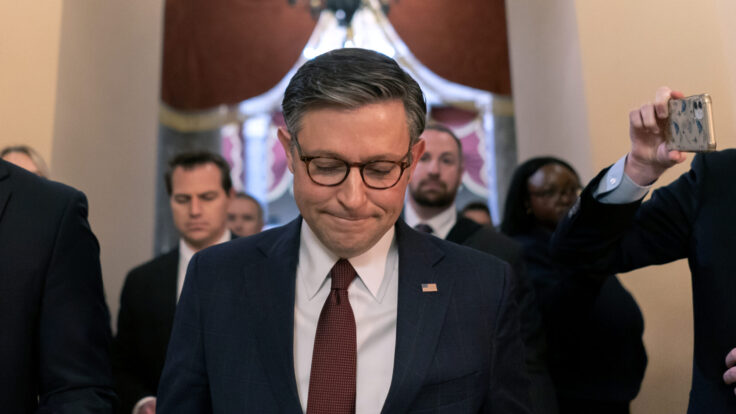
| Meanwhile, earlier today, in response to several impolitic comments by congressional Republicans, including Rep. Tim Burchett referring to her as the “D.E.I. vice president,” House Speaker Mike Johnson told colleagues to stay away from personal attacks on Harris. “Listen, this election, as I noted at the outset, is going to be about policies, not personalities,” Johnson said, according to CNN. “With regard to Kamala Harris and her ethnicity, or her gender, have nothing to do with this whatsoever.” The N.R.C.C. sent around a memo echoing Johnson. “Do Not: Waste time talking about anything other than what Harris would do as President,” the memo reads.
Of course, it will take another round of emergency polling to sort through the state of the presidential race, and wise political hands have cautioned me to avoid predictions based on a single event, like Biden’s withdrawal or Kamala’s overnight campaign windfall—particularly given the turbulence that’s already buffeted both parties’ campaigns. What’s clear is that Democrats have a surge of momentum. A new Reuters/Ipsos poll released today has Harris leading Trump nationwide 44 percent to 42 percent. What’s not clear is how long that will last.
✍️ Finally: We’ve updated our Newsletter Experience questionnaire for Puck subscribers. If you haven’t filled yours out, it takes less than 3 minutes, and your feedback will help us develop new products and services. Click here to complete the brief survey—no need to log in. Thanks! |
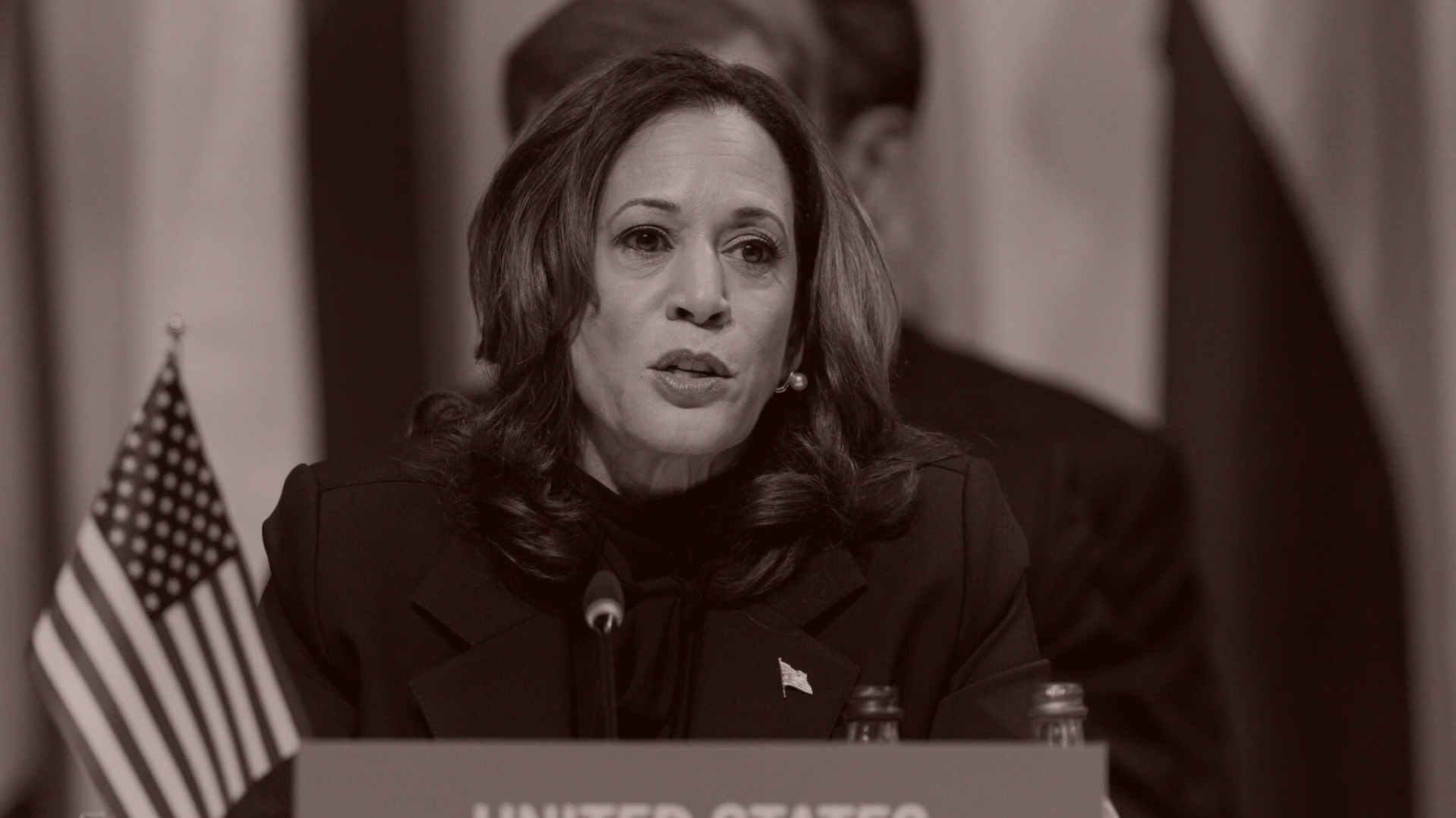 |
| The Treaty of Harris |
| In the wake of Biden’s departure from the race, the foreign policy crowd is experiencing all the feels—jubilation, resentment, excitement, agony, and the sense that “the chessboard is empty” with Harris atop the ticket. Plus, the view from the Kremlin on the new Democratic nominee (and, for what it’s worth, J.D. Vance). |
|
|
|
| Though it feels like years have passed since, just a few days ago, I was in Aspen at the Security Forum, where all anyone wanted to talk about was Joe Biden and whether and when he’d drop out of the race. People were frustrated that the panels were still about things like drone warfare in Ukraine and the Global South when it seemed like the sky was falling right here at home. “How hard is it to say ‘constitutional crisis’?!” one participant fumed.
Others, including donors and bundlers, talked about how Biden needed to get out of the race already—like, a year ago. One longtime Democratic bundler refused to raise another cent for Biden but said they would be all in for whoever replaced him—and that they’d be able to raise millions in a heartbeat. Since it was now clear that Biden would lose spectacularly, another donor wondered aloud about donating to Biden. “Why would you throw good money after bad?” they exclaimed. A few hours after the White House announced that the president had tested positive for Covid, this donor asked, “How many signs” did Biden need from his God Almighty—the polls, the assassination attempt against Trump, and now his diagnosis—before stepping aside.
Even Biden administration officials, normally so careful and circumspect, privately switched the subject from Ukraine or Gaza to the mess in D.C. The national security team had been completely out of the advisory loop in this process, with the president apparently feeling that the foreign policy wonks may know a thing or two about weapons procurement but bupkis about electoral politics. (He was turning instead, one administration official told me, “to the people who actually run,” i.e., the Democratic Hill leadership, the people who know what it’s like to stand for election.) The national security dorks were all strapped into the speeding car with grandpa—“We’re all going to die,” a former Biden foreign policy advisor groaned—and it was very clear that he was not interested in their advice.
Cut to Sunday and Monday and the downright ebullience I heard from this same crowd. One administration official I know posted a photo on social media of a rainbow cresting over the West Wing. Where sheer panic once reigned, people now were calm—“to a ridiculous extent,” as a senior campaign source told me. The relief was palpable among everyone I spoke to, from members of Congress to Democratic staffers to administration officials, especially as Kamala Harris’s campaign raised more than $100 million.
It was especially pronounced in the foreign policy realm, where the idea of a second Trump term seems (understandably) cataclysmic not just for the policies the Biden team put in place, but also for the American-led liberal world order (of which all these people are champions). “At least we have reason for cautious hope,” one senior administration official on Biden’s foreign policy team told me last night.
That was not all they felt, though. “My crowd also has lots of anger toward the hangers-on in the insular circle who got us into this mess just so they could preserve their own meal ticket,” said one. This person felt Biden should never have run for a second term to begin with and was angry at all the “gaslighting of any skeptics” who dared to say so.
The foreign policy crowd, especially the people my age, are mostly Obama veterans. They have served Biden loyally, but they know what it’s like to work for an exciting, inspirational figure, and they knew this wasn’t it—at least not this time around. They also understand keenly the stakes of this election, and the fact that they had zero influence on Biden’s tight inner circle. In this way, Tommy Vietor and Ben Rhodes—who were their colleagues in the national security space during the Obama years—were their voice. |
|
A MESSAGE FROM OUR SPONSOR
|
|
| The 340B drug pricing program is supposed to help vulnerable patients access medicines at qualifying hospitals and clinics. It’s meant to be a safety net for those who really need it. So why is the 340B program padding profits for large hospitals, PBMs and chain pharmacies?
Hospitals that participate in the 340B program contract with more than 33,000 pharmacies to dispense the program’s drug prescriptions. More than 40% of these pharmacies have financial ties to one of the three largest PBMs – CVS Health, Express Scripts and OptumRx. 340B hospitals and the PBM-owned pharmacies they contract with are profiting off discounted medicines while uninsured patients are left paying full price for their medicines. Let’s fix 340B so it better helps patients. |
|
|
|
|
| That said, no one has much clarity about what kind of foreign policy a President Harris might pursue. Most people I asked in the Democratic national security establishment can’t quite pinpoint the particulars of such a policy, but most cluster around two points: that Harris is still a clean slate, and that there will likely be a large degree of continuity from Biden because she comes from a similar foreign policy tradition (American-led, rules-based order, standing up to dictators, sticking by allies, etcetera).
Harris wouldn’t be coming into the White House with the same fully formed, instinctual policy ideas as Biden did in January 2021, but she’s learned a lot in the last three and a half years. “She’s in all or most of the Situation Room meetings where the secretary of defense, the secretary of state, the national security advisor, etcetera are all talking about key decision points,” said one source close to the administration. “She has been in the mix, she knows the intent and logic. It doesn’t mean she won’t change things, but she understands what they’re trying to do, and it augurs toward continuity.”
And though many don’t anticipate major change on foreign policy, they do foresee some change. Philip Gordon, her national security advisor, is an old Clinton-Obama hand, and he has been much more aggressive on aid to Ukraine “where Jake [Sullivan] and the president have been more cautious,” and on pushing the Israeli government harder on Gaza, said a friend of Gordon’s. “I assume they’re aligned,” they told me when I asked if Harris supported these views.
There’s likely to be other changes, too, namely in personnel. Harris didn’t have to endure a long primary fight, for instance, in which she had to promise plum jobs to opponents in order to secure their support. There was also no time to do what previous Democratic campaigns did and prepare a bunch of white papers that spell out her proposed policies or give tea-leaf readers hints of who might fill what policy role. “Unlike her predecessors, she has a lot of latitude to put together a team that she actually wants,” said the source close to the administration. |
|
|
|
|
| When Biden finally announced the inevitable, the relief was also palpable across the Atlantic. A couple of weeks ago, when America’s European allies were in Washington for the NATO summit, days after the debate, the dignitaries and aides I spoke to were approaching the fifth and final stage of grief: having accepted that Donald Trump would likely win in November, and discussing how to deal with it. “We can’t control who wins,” a European defense official told me, “but we’ll work with what we have.”
Now that Biden has quit the race, however, “The chessboard is empty,” the same official told me, and the Democrats have a path to stay in the White House again. “It is a narrow one, but it’s there for sure,” this person explained. When I asked a senior NATO official what things felt like at the alliance’s headquarters in Brussels, they responded simply: “Relief.” Elaborating, the NATO official added that “folks hope Trump will have a more difficult job with another Democratic candidate.”
In Moscow, on the other hand, things feel a little different. “It was strongly expected that Biden would resign,” said a well-connected Moscow source. “It was not a surprise. People can read.”
“It looks very entertaining,” a source close to the Kremlin told me. When I asked this source whether the people in Putin’s presidential administration are relishing the chaos, whether this buttresses their case that democracy is a messy circus and therefore inferior to autocracy, they said, “Of course. They like it when it’s a mess. It’s a common theme, and it comes from Soviet times: We have order, and they [in the West] have a mess. Of course, they’re happy with Trump and happy with the mess.”
As for Biden’s replacement on the ticket, Moscow seems unified in its disdain of Vice President Harris. It is a feeling that is saturated with the racism and misogyny that we’re used to seeing out of Moscow—remember how they spoke about Obama?—but this time, it’s also replete with G.O.P. talking points. One mocking and snide report about Harris on Channel 1, the Kremlin’s flagship TV network, went after her laugh and rhetorical vagueness, even explaining to Russian viewers “the American expression ‘word salad.’”
The propaganda machine is portraying Harris as a ditsy woman who “laughs first at her own jokes” and, “If Harris has nothing to say, she just starts giggling.” (This falls on fertile ground: Russians, who think even smiling publicly is a sign of stupidity, certainly don’t understand the cultural role of boisterous laughter in Black American culture.) Harris, the Channel 1 report said, has failed at managing flows of “illegals” and has avoided visiting the Southern border. (Sound familiar?) At one point, when playing the now meme-ified coconut tree clip, the Russian reporter even suggested that Harris was high. Another report implied she had slept her way to the top.
All of this is echoed by people I spoke to in Moscow, even those who are more liberally inclined. “I don’t think she’s a very smart woman,” the source close to the Kremlin told me. “She can speak smoothly because she’s a former prosecutor, but in terms of being smart in a wider sense, I don’t get that sense. She’s not a complete idiot, but she’s not a titan of thought.”
“People in Moscow are very skeptical” about Harris, said the well-connected Moscow source. “She hasn’t said anything that would have sparked interest or respect in Moscow. When people see quotes from Alex Soros about how he supports her, you can understand how that goes over in Moscow.”
What, I wondered, did these same people think of J.D. Vance, Trump’s vice presidential pick, a man who has said he doesn’t really care what happens to Ukraine and inveighed against the $61 billion aid package to Kyiv from the Senate floor? Did they like him? Did this choice cure Moscow’s sense of having been burned by Trump’s over-promising and under-delivering the first time around? “Of course they like it,” said the source close to the Kremlin. “It just strengthens the pro-Trump views in Moscow.” (The same Channel 1 story that implied Kamala had slept her way to the top, lauded Vance as someone produced by pure meritocracy, a scholar, a Marine, a brilliant mind, and best-selling author—unlike the ditsy Harris, of course.)
The Vance pick, the well-connected source said, “was a surprise but, for obvious reasons, people like him. He’s largely unknown in Moscow, and it’s still unclear how much stock you could put in all these statements. The majority opinion in Moscow is that [Trump et al.] say things that make Moscow happy, but when it comes time to making decisions, they turn out differently because of the ‘oligarchs’ who are actually in control. They feel that Russia shouldn’t count on a big change toward Moscow.”
People around the Kremlin are still bitter that Trump didn’t try harder to dissuade Mike Johnson from bringing the Ukraine supplemental to the floor, and, though they still prefer Trump to any of Biden’s Democratic successors, they are still wary of him. After all, said the well-connected source, how do you go from saying you wanted to work with Russia during the 2016 election to installing Fiona Hill as your point person on Russia?
That said, a Trump-Vance White House would still be an improvement from the Biden status quo. “No one will close the door to Trump,” said the source. “If he and Vance are elected, and if what they’re saying is really what they mean, of course no one will say no to them just based on past bitter experience.” |
|
|
| That’s all from me, friends. I’ll see you back here on Tuesday. Until then, strap in, I doubt things are calming down anytime soon.
Julia |
|
|
|
| FOUR STORIES WE’RE TALKING ABOUT |
|
|
|

|
 |
|
|
|
Need help? Review our FAQs
page or contact
us for assistance. For brand partnerships, email ads@puck.news.
|
|
You received this email because you signed up to receive emails from Puck, or as part of your Puck account associated with . To stop receiving this newsletter and/or manage all your email preferences, click here.
|
|
Puck is published by Heat Media LLC. 227 W 17th St New York, NY 10011.
|
|
|
|